


Table of Contents
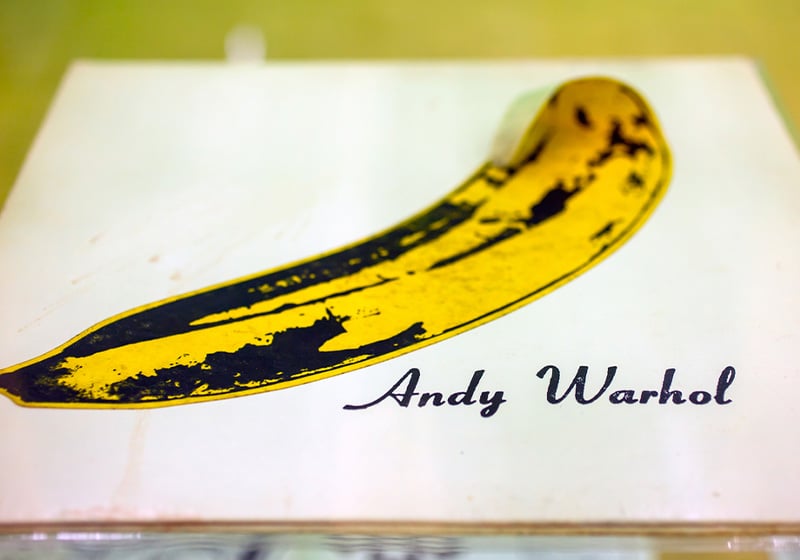
Some albums go down in history. And on one such record, the musical content – already legendary in its own right – was outshone by its cover… something that can only happen when the artwork is designed by the one-and-only Andy Warhol!
That’s right: we’re talking about The Velvet Underground & Nico and its iconic banana cover! The New York band’s 1967 record’s sounds and edgy lyrics seemed to pre-empt the arrival of punk and new wave a decade later, making it a landmark album in the history of rock.
But, be honest now: like the vast majority of people, when you hear this album mentioned, the first thing you think about is the banana, and the rest – the rough-and-ready sound, the violently explicit lyrics, and the suffocating, exciting and perverse evocation of underground life in New York – is more of an afterthought!
The Velvet Underground & Nico‘s cover is imbued with stories that reveal that Andy Warhol’s iconic banana is much more than just cover art… Let’s investigate some of them now!
The Velvet Underground & Nico: how the 1960s’ most influential record flopped on release
You don’t need official rankings to confirm The Velvet Underground & Nico‘s cover’s iconic status… but they do!
In 2023, the music magazine Billboard named Warhol’s creation the best album cover of all time, although this decision was not without some controversy. And Rolling Stone agrees that the cover is one of the best ever made: the eleventh best, to be precise.
However, while the album this cover accompanied is now considered one of the most significant in the history of rock, people didn’t grasp its importance immediately. Quite the opposite, in fact!
The Velvet Underground & Nico was the first album the band – which comprised Lou Reed’s vocals, Welshman John Cale‘s songs, Sterling Morrison’s guitar and Maureen Tucker’s drums – recorded. The German model and singer Nico, whom Andy Warhol introduced to the band, also made a vital contribution to the record. The album was a commercial flop: between 1967 and 1972 it sold just 30,000 copies. Yet it contains songs that are now considered essential listening: Heroin, which described a drug addict’s feelings more explicitly than ever before; the perverse and hypnotic Venus in Furs, the calmer Sunday Morning, and Femme Fatale, which cemented the legendary status of Nico’s voice.
Perhaps Brian Eno was right in his famous quote from 1982, describing a comment Lou Reed once made to him: ‘the first Velvet Underground record sold only 30,000 copies in its first five years […] [but] everyone who bought one of those 30,000 copies started a band!’
The Velvet Underground & Nico’s suggestive cover
You won’t find a paragraph in this article along the lines of ‘what does the cover of The Velvet Underground & Nico represent?’, because the answer is blindingly obvious! On early versions of the cover you could even peel the banana and reveal its pink interior! And this is especially blatant when you consider the record’s honest descriptions of the singer’s sex life in New York.
What is perhaps less well known is that Andy Warhol had a radically different initial idea for the cover. In his book Popism, in which he recounts his life in the 1960s, the artist wrote that he initially wanted to use a series of images of plastic surgery, so he asked his ‘minions’ to gather hundreds of photographs and illustrations of nose, breast and bum jobs. I can’t speak for everyone, but personally I would say… thank goodness Andy Warhol changed his mind!
A ludicrously expensive interactive cover
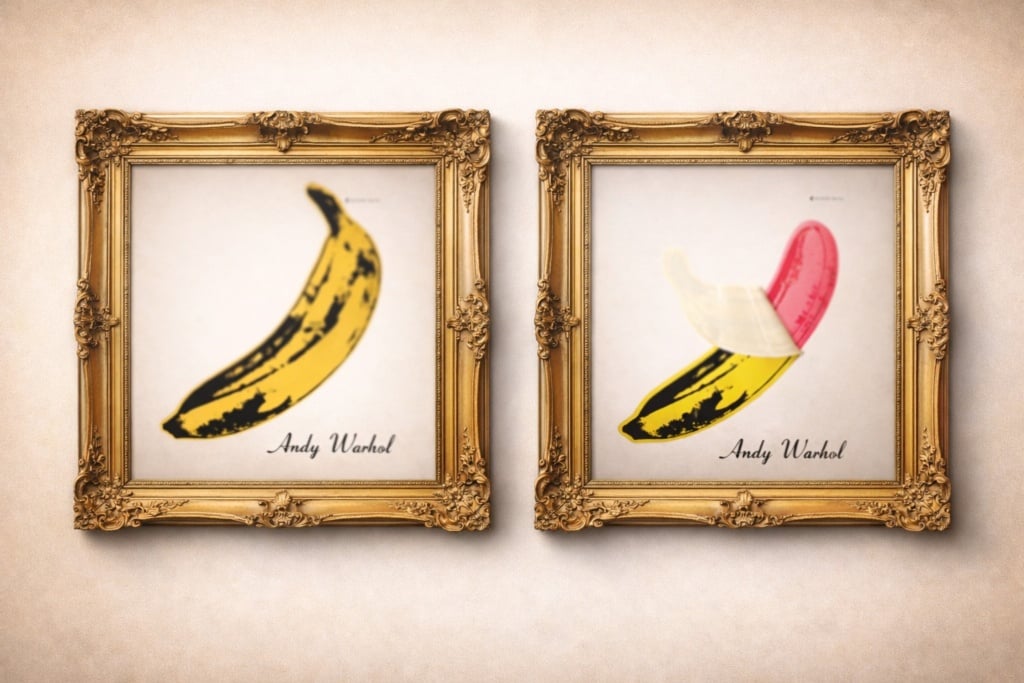
In the initial release, the cover of The Velvet Underground & Nico featured ONLY the banana and the famous pop artist’s signature: the name of the band, album and record label did not appear.
At the top edge of the banana, the words ‘Peel Slowly and See‘ implied that buyers could interact with the cover, giving it a tactile element. And this gimmick made producing the cover hugely expensive!
Producing The Velvet Underground & Nico‘s cover was nothing short of a nightmare for the label Verve Records: it required a special machine, and the sticky bit had to be applied by hand, one cover at a time. This all caused the album’s release to be delayed, and subsequent versions used a more traditional cover, without the peelable gimmick.
For decades, apart from the ultra-rare original edition, only the Japanese version of the album kept the interactive feature on the cover. It was only with the 2008 vinyl reprint that the sticker made another appearance in the west.
Curiously, the effort the record label put in to creating the cover was not replicated on some arguably more important aspects: the album was recorded in just eight hours and was not adequately promoted by the label; some people claim Verve didn’t really believe in the album’s potential.
Andy Warhol: much more than a cover creator for the Velvet Underground
The link between the quintessential pop artist and the Velvet Underground goes far beyond a simple album cover. In some ways, the band owed its existence to Warhol… or at least it was he who took them out of the underground scene and set them on the path to musical glory.
After seeing a Velvet Underground gig in late 1965, Andy Warhol became their first manager: he organised their early performances and paid for their rehearsals, their equipment and the release of their first album. He put them at the centre of the first multimedia show in history: the Exploding Plastic Inevitable Show, an unbridled display of music, lights, dance and video held at The Factory, Warhol’s headquarters in New York. And it was he who convinced the band to work with the beautiful and glamorous Nico.
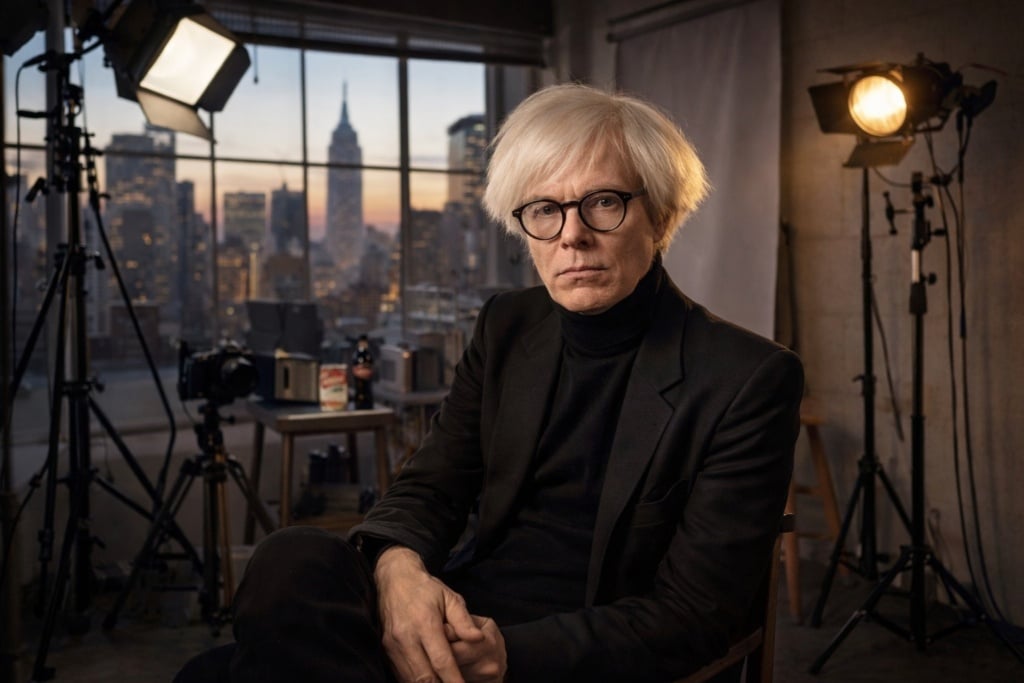
The relationship was not an easy one to maintain, however, with the eclectic star artist on one side and Lou Reed’s stormy character on the other. After the first record, the band ‘fired’ Warhol. However, John Cale later explained that Warhol had already lost interest in them: ‘I don’t think Andy was too bothered. He could make much more money with films, and as soon as that world opened up to him, he jumped in’, he said later in an interview.
All goes smoothly until the iPhone case saga
The relationship between the Velvet Underground, Andy Warhol and the legendary album cover had a final twist in 2012.
That year, the now defunct band sued the Andy Warhol Foundation for an unusual reason: the Andy Warhol Foundation had allowed Apple to use the famous banana image on a new range of iPod and iPhone cases.
The Velvet Underground ordered Apple to stop using the image, and claimed to be owed a percentage of the earnings for the cases that had already been sold: the band’s members contended that the image no longer belonged to Andy Warhol, since it had come to symbolise the Velvet Underground as a band.
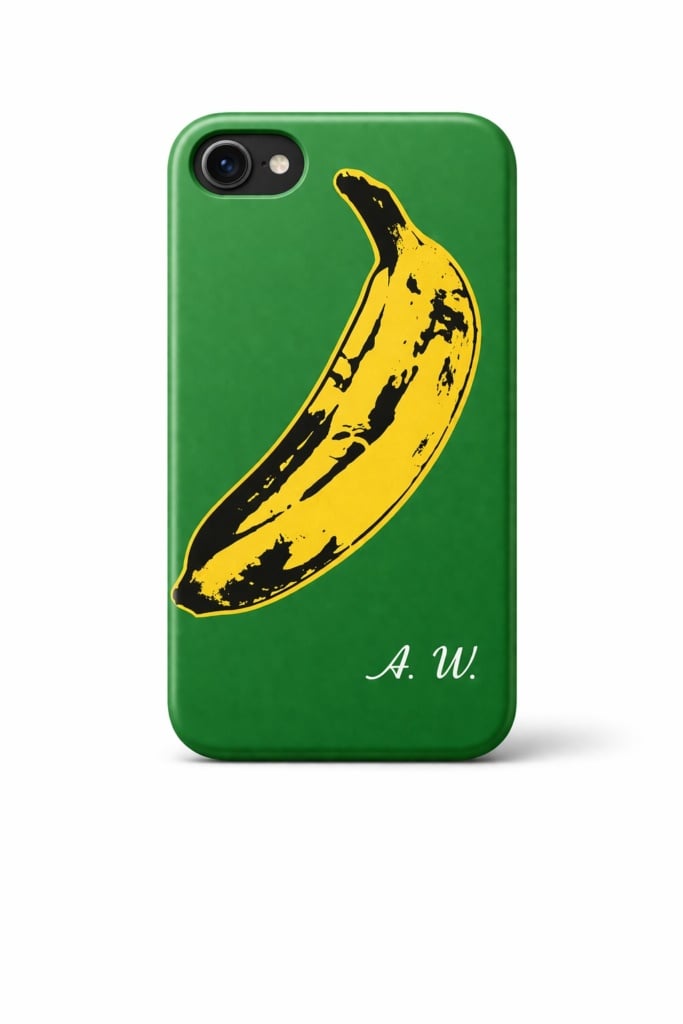
However, the judge sided with the Warhol Foundation. The remaining members of the Velvet Underground (Lou Reed died in 2013) had to give up: the banana had become part of the public imagination, and therefore was destined to become a consumer image… exactly as Warhol’s pop art teaches us!
What do you think about this story? How do you feel about the cover of The Velvet Underground & Nico? And has it given you any good ideas for your next project?