


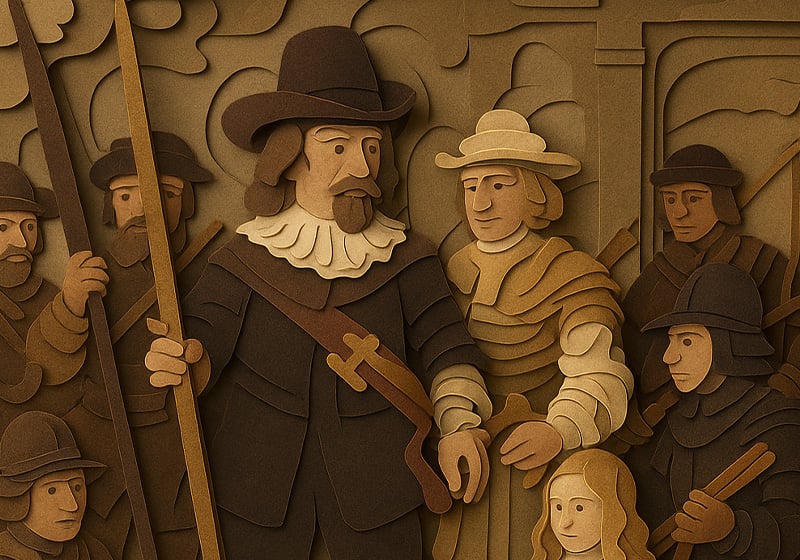
Paper, scissors and great precision. In the 17th and 18th centuries, many artists in the Netherlands created impressive works using just these three tools. What began as a hobby for the elite became increasingly popular as paper became cheaper. And so came about professional paper cutters, who worked to turn this simple material into fragile palaces, ornamental objects, landscapes and portraits.
Only a portion of the works created during this period have stood the test of time. They are stored in museum warehouses, such as the Rijksmuseum in the heart of Amsterdam, which boasts an extensive collection of pieces representative of “Knipkunst” (the art of paper cutting).
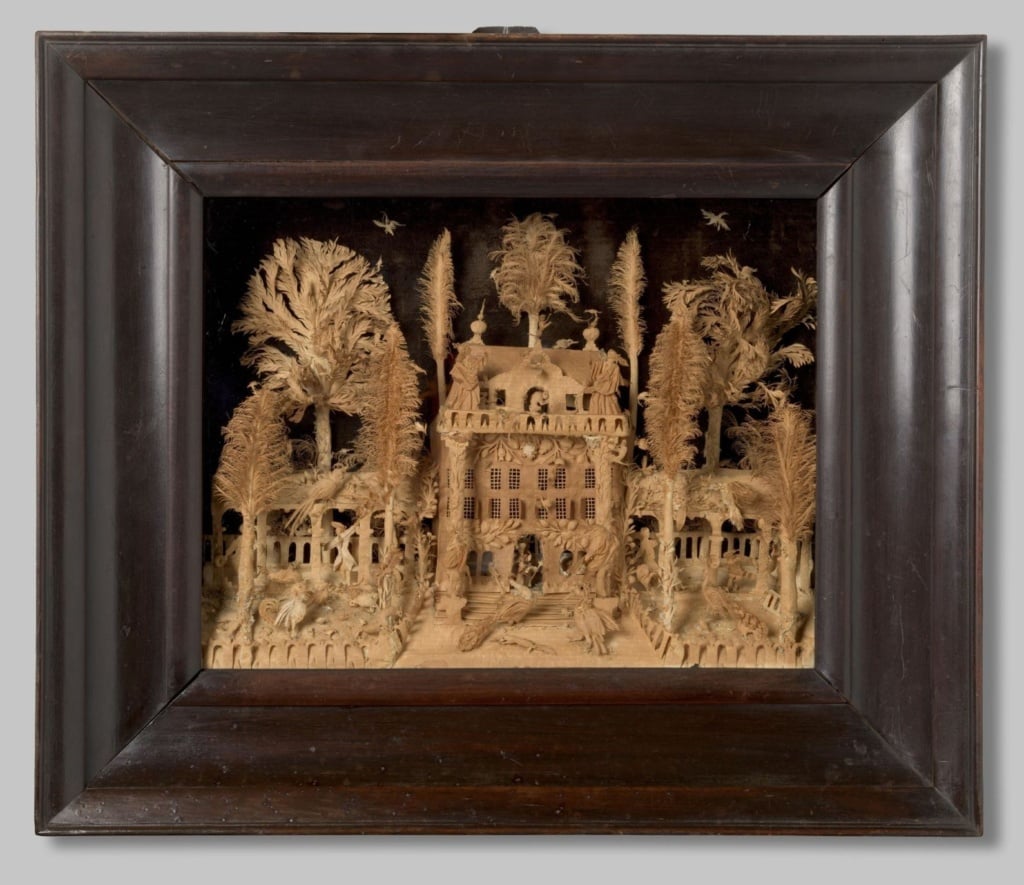
One of its most prominent figures is Elisabeth Rijbergh, a Rotterdam court artist known for her extraordinary paper dioramas of great levels of detail, such as the Honselaarsdijk Palace piece.
Public domain images from the Rijksmuseum’s paper collection website. Link to the website
Honselaarsdijk Palace (Paleis Honselaarsdijk), Elisabeth Rijbergh, circa 1698. Dimensions: 44.5 cm height x 52 cm width x 10.5 cm depth.
It was recently restored by the museum, which also has a section on its website where you can learn more about the techniques used to so masterfully design the palace and the fauna and flora surrounding it.
One of the Rotterdam-born artist’s most depicted themes were warships and maritime motifs. This was common at the time, as we can also see in works of artists such as Jan Adelaar, who captured the hustle and bustle of fishermen and merchants at the gate of the Church of Sint Laurenskerk, in Rotterdam, making masterful use of the paper cutting technique.
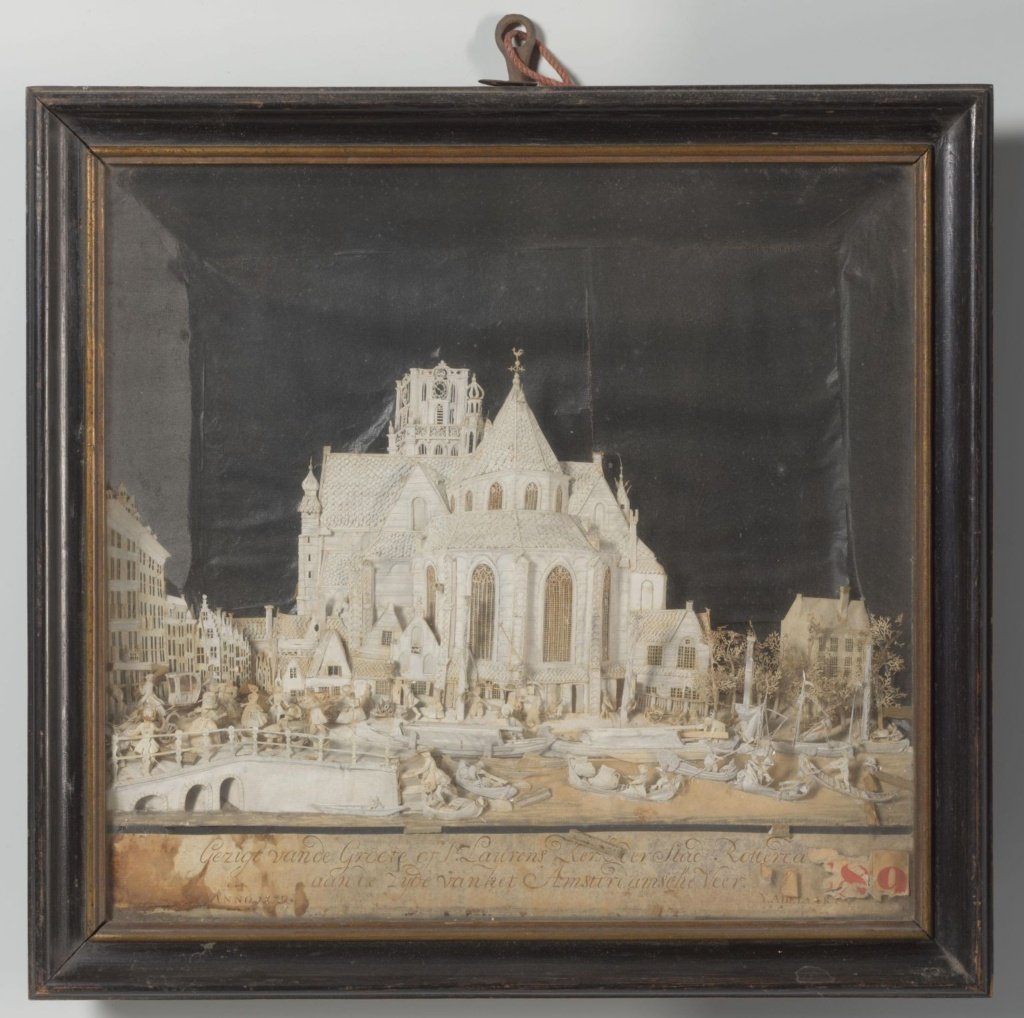
View of the Grote or Church of St. Lawrence in Rotterdam (Gezicht op de Grote of St. Laurenskerk in Rotterdam), Jan Adelaar, 1779. Dimensions: 45 cm height x 47 cm width x 7.5 cm depth.
The agricultural world also took centre stage in the 17th and 18th centuries in the Netherlands, with scenes featuring animals such as dogs, donkeys, cows, and life in the countryside.
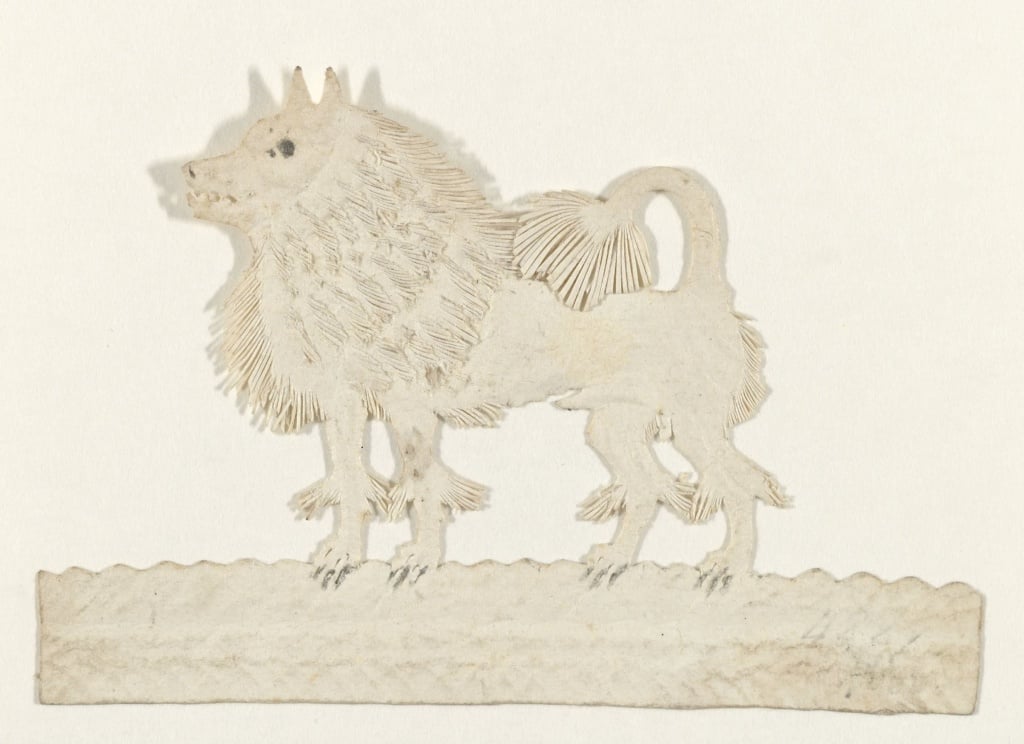
Keeshond, Anonymous, 1787. Dimensions: 65 mm height x 96 mm width.
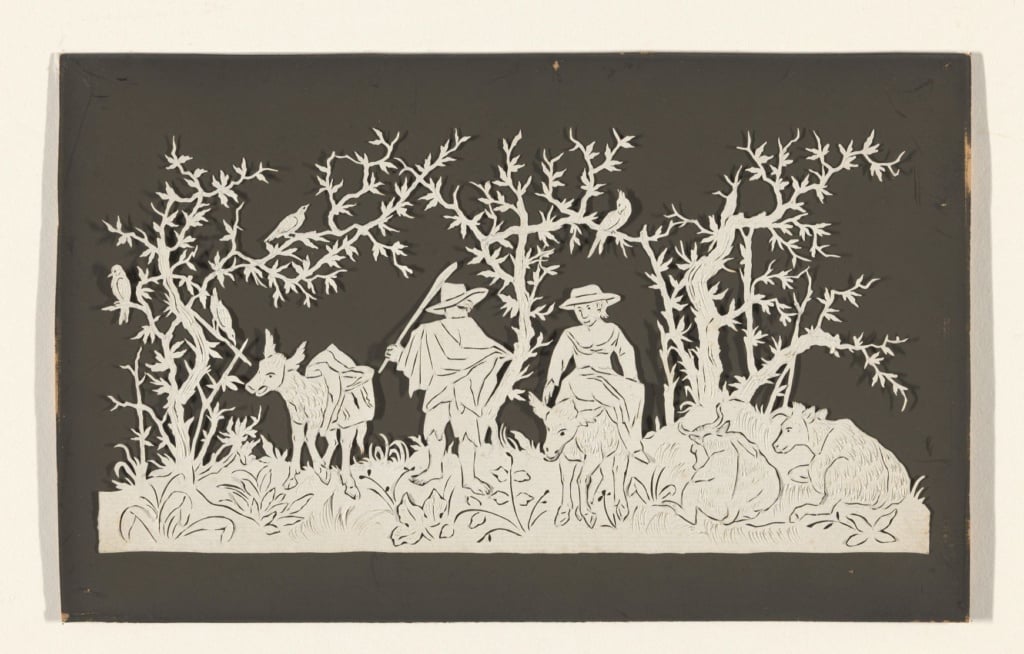
Pastoral scene (Pastorale scène), Anonymous, 1750. Dimensions: 120 mm width x 250 mm height.
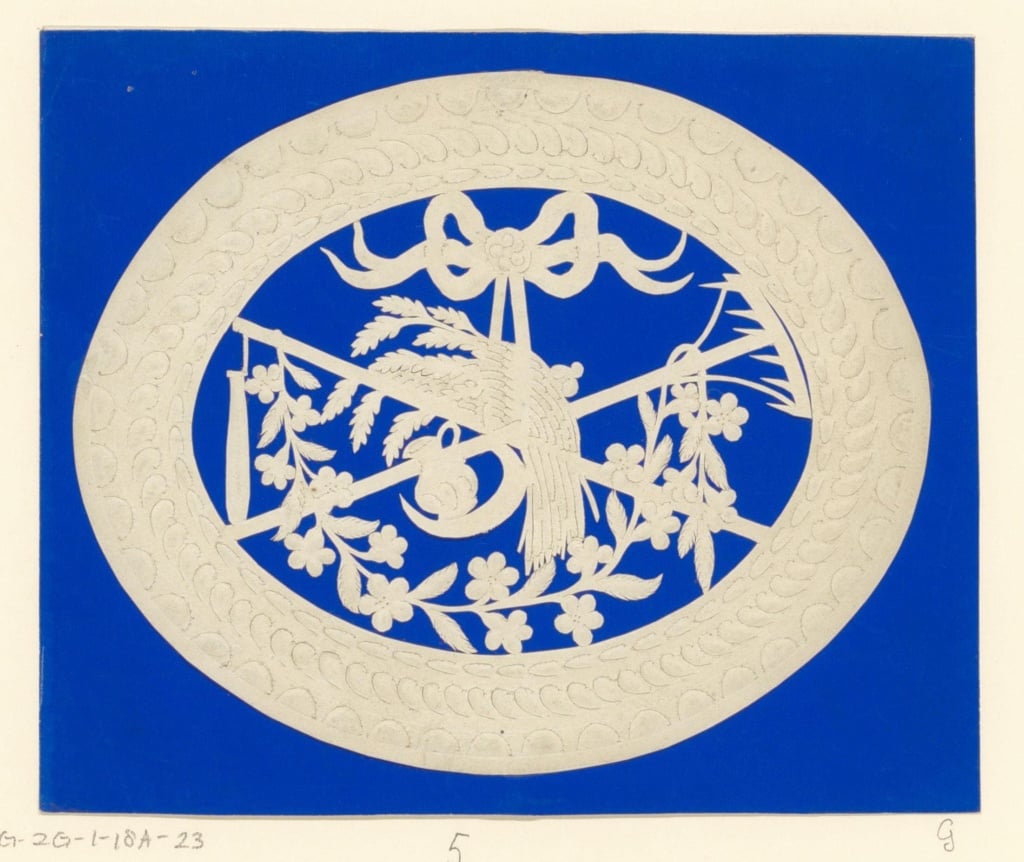
Allegory of agriculture (Allegorie op de landbouw), Johannes Sombeek Slijper, 1778. Dimensions: 144 mm height x 174 mm width.
Special mention should be made of the collages of Cornelius Schellinger, which combine animals such as deer and swans with characters from Greek mythology such as Narcissus, creating incredible scenes.
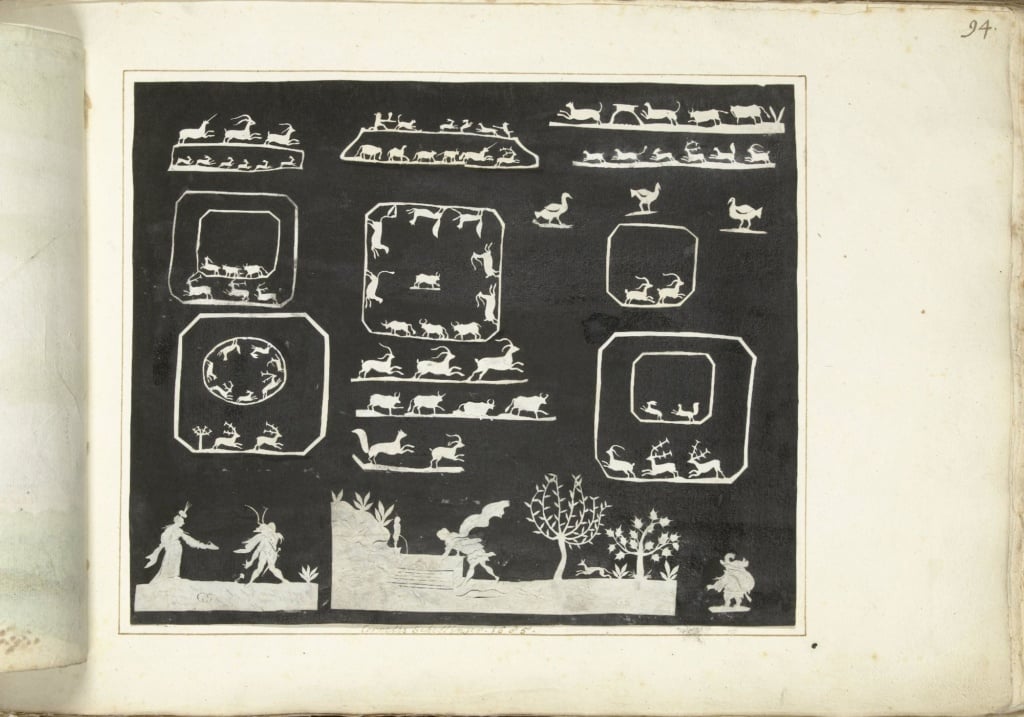
Running animals, figures and Narcissus (Rennende dieren, figuren en Narcissus), Cornelis Schellinger, 1685.
Here, the artist cut white paper and contrasted them with the black paper on which they are pasted. This technique was also common to Johannes Sombeek Slijper, who in addition to the Allegory of Agriculture stands out for another trend of the era: creating paper cuttings for special occasions such as weddings, using traditional motifs and the names or initials of the bride and groom.
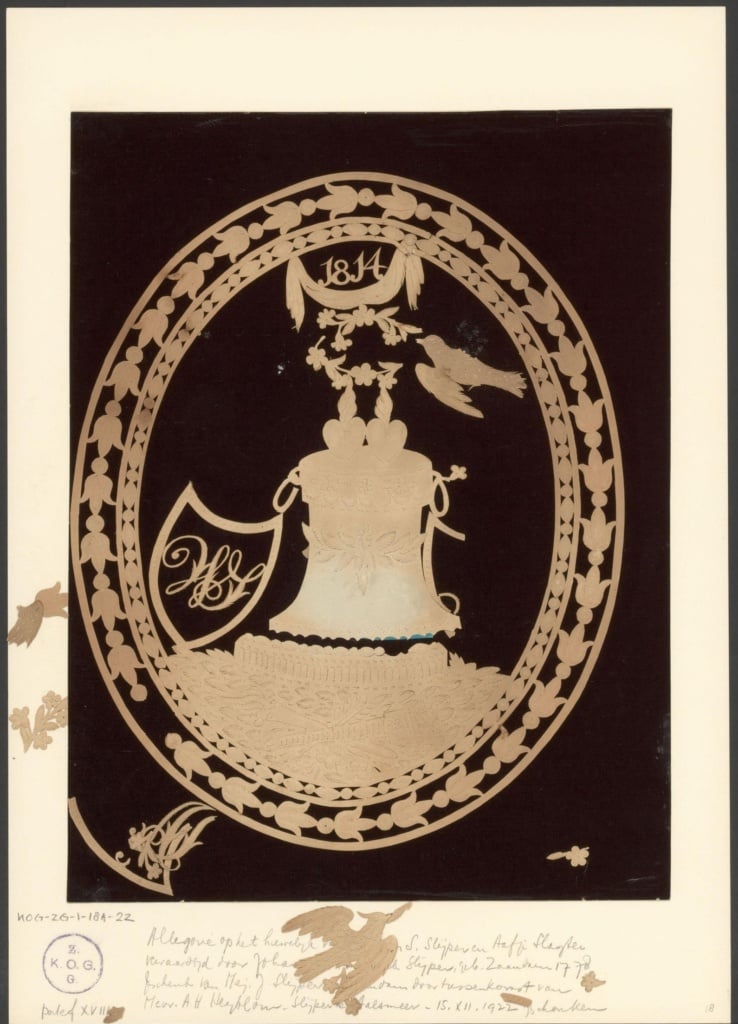
Wedding paper cutting for Willem S. Slipper and Aafje Slagter (Huwelijksknipsel voor de Willem S. Slijper en Aafje Slagter), Johannes Sombeek Slijper (mentioned in the object), 1814. Dimensions: leaf: 331 mm height x 252 mm width.
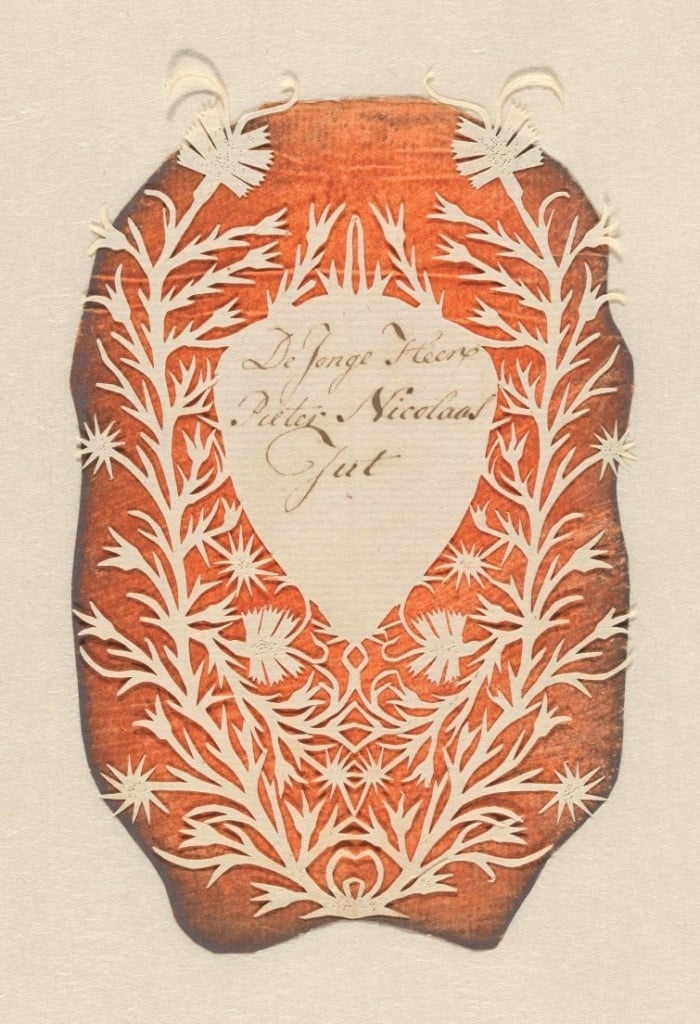
Wedding paper cutting for guest Nicolaas Jut (Huwelijksknipsel voor gast Nicolaas Jut), Anonymous, approx 1770. Dimensions: 125 mm height x 80 mm width.
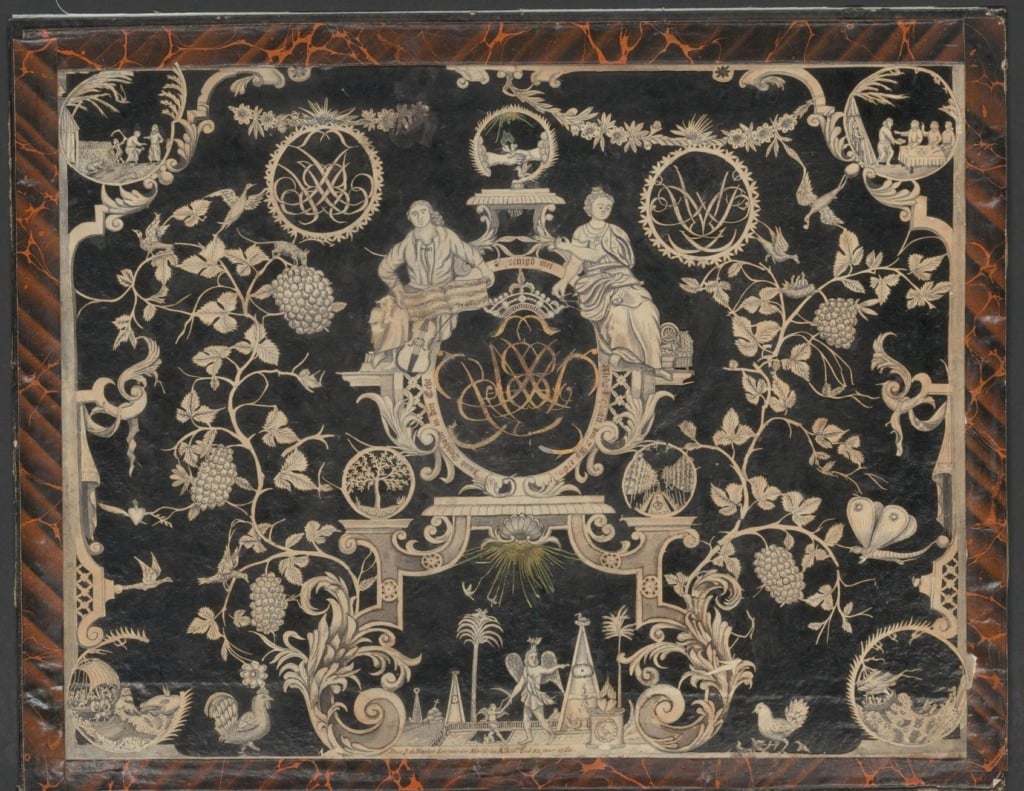
Wedding paper cutting for Jacob Berckhout and Alida Verlaan (Huwelijksknipsel voor Jacob Berckhout en Alida Verlaan), Jan de Bleyker, 1760. Dimensions: 240 mm height x 309 mm width.
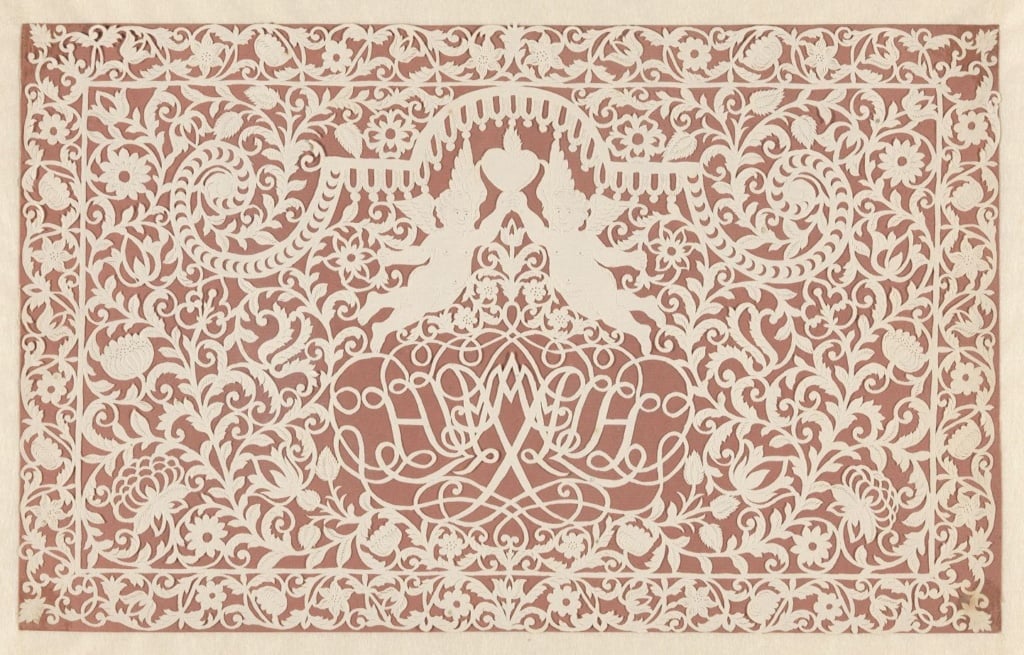
Wedding paper cutting for the Laars-Hooft couple (Huwelijksknipsel voor echtpaar Laars-Hooft), Anonymous, 1749. Dimensions: 230 mm height x 375 mm width.
In the Rijksmuseum, the biblical stories by the artists are displayed on unique backdrops, such as a gold-plated brass pendant. Or a die-cut imitation of the moulding of a church door.
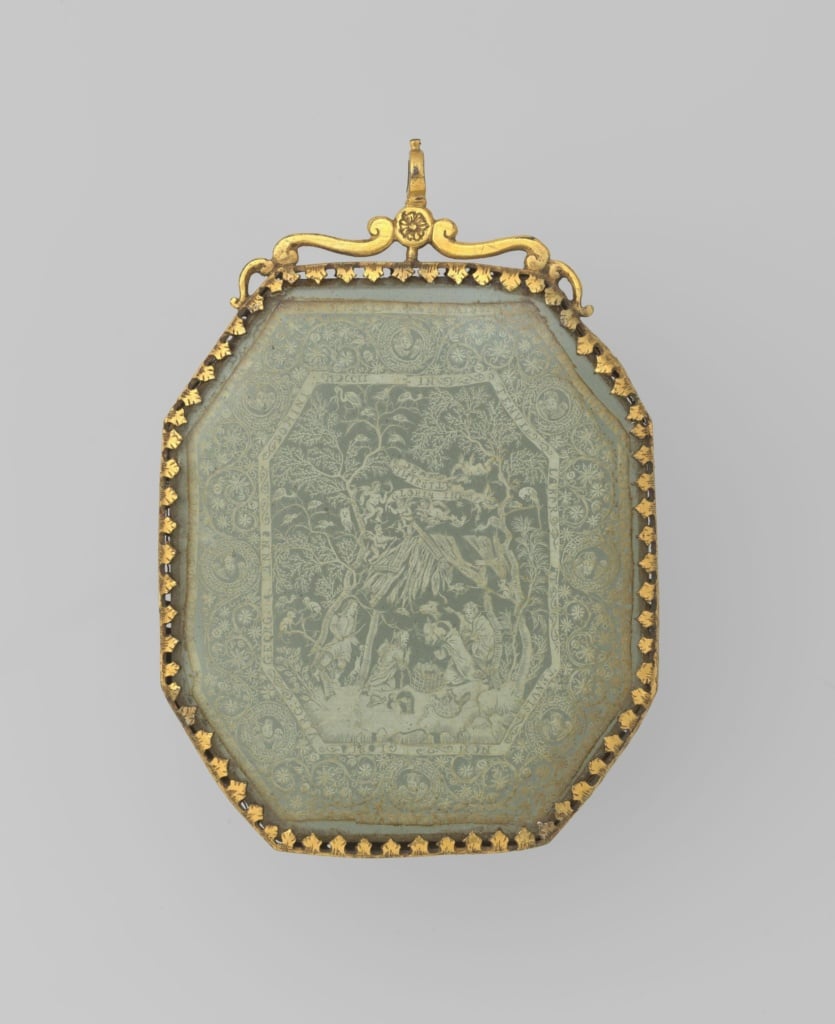
The Adoration of the Shepherds (De aanbidding van de Herders), Johannes van Achelom, 1702. Dimensions: 24 mm diameter, 82 g weight.
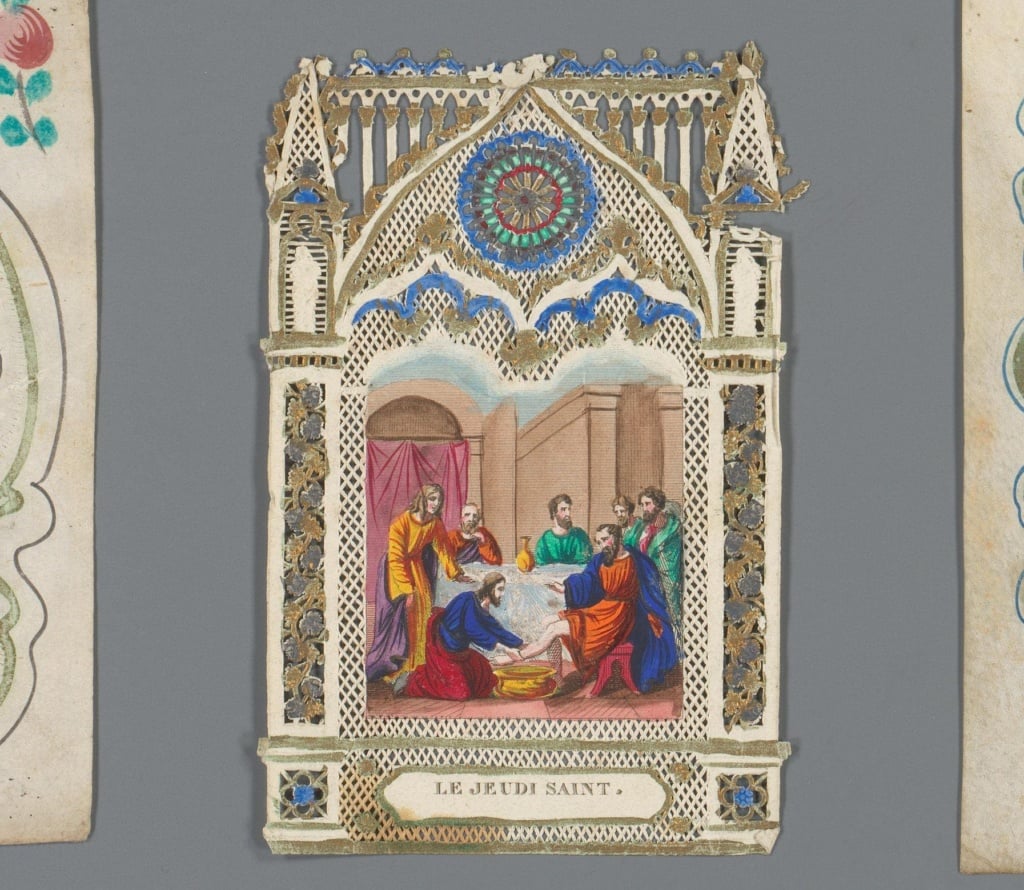
Footwashing, lace border (Kantprentje met de voetwassing), Anonymous, 1750-1784. Dimensions: 115 mm height x 75 mm width.
As we can see, when the paper cuttings are placed on different colour backgrounds, the outlines create a surprising contrast. This can be seen in the intricate equestrian portrait of Carlos III, King of Spain, with the coat of arms supported by two standing lions silhouetted against a red background.
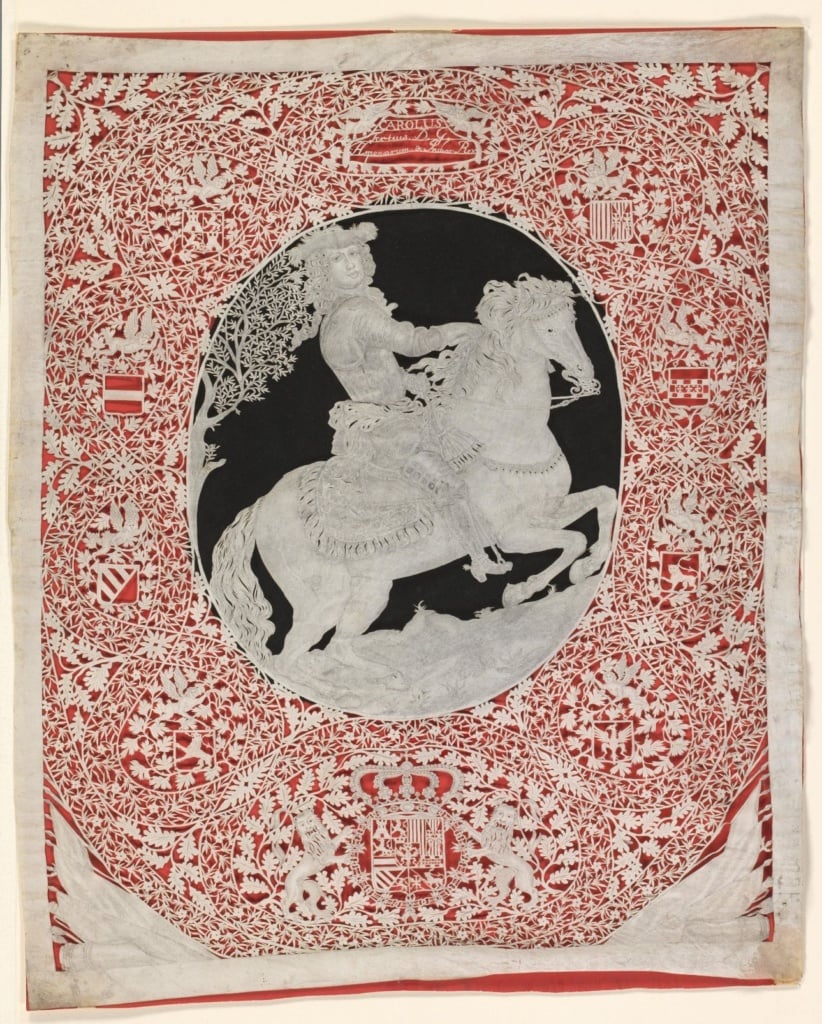
Equestrian portrait of Carloss III, King of Spain (Ruiterportret van Karel III, koning van Spanje), Anonymous, 1710-1760. Dimensions: 520 mm height x 420 mm width.
The design of the paper cuttings often reflects the prevailing styles of the time. For example, the works of Joseph Adolf Schmetterling capture the atmosphere of the Amsterdam bourgeoisie in the late 18th century, when cities became centres of cultural life.
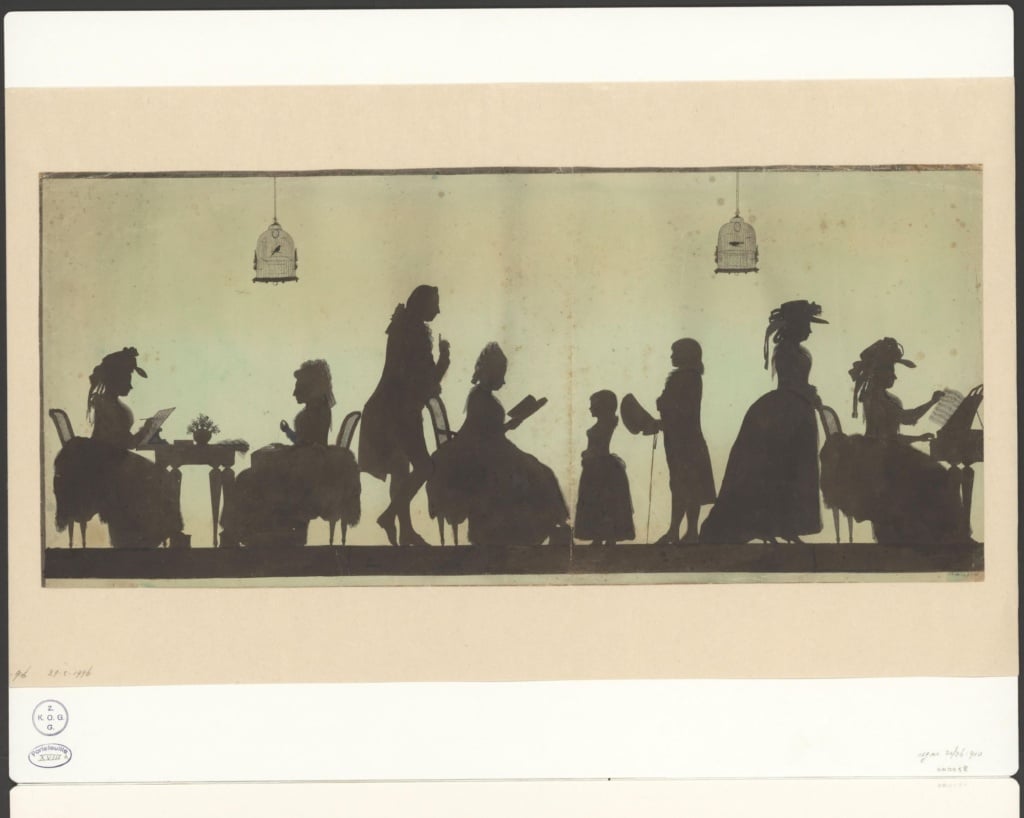
Silhouette of women playing music, reading and doing crafts (Silhouet van musicerende, lezende en handwerkende vrouwen), Joseph Adolf Schmetterling, 1786. Dimensions: 296 mm height x 674 mm width.
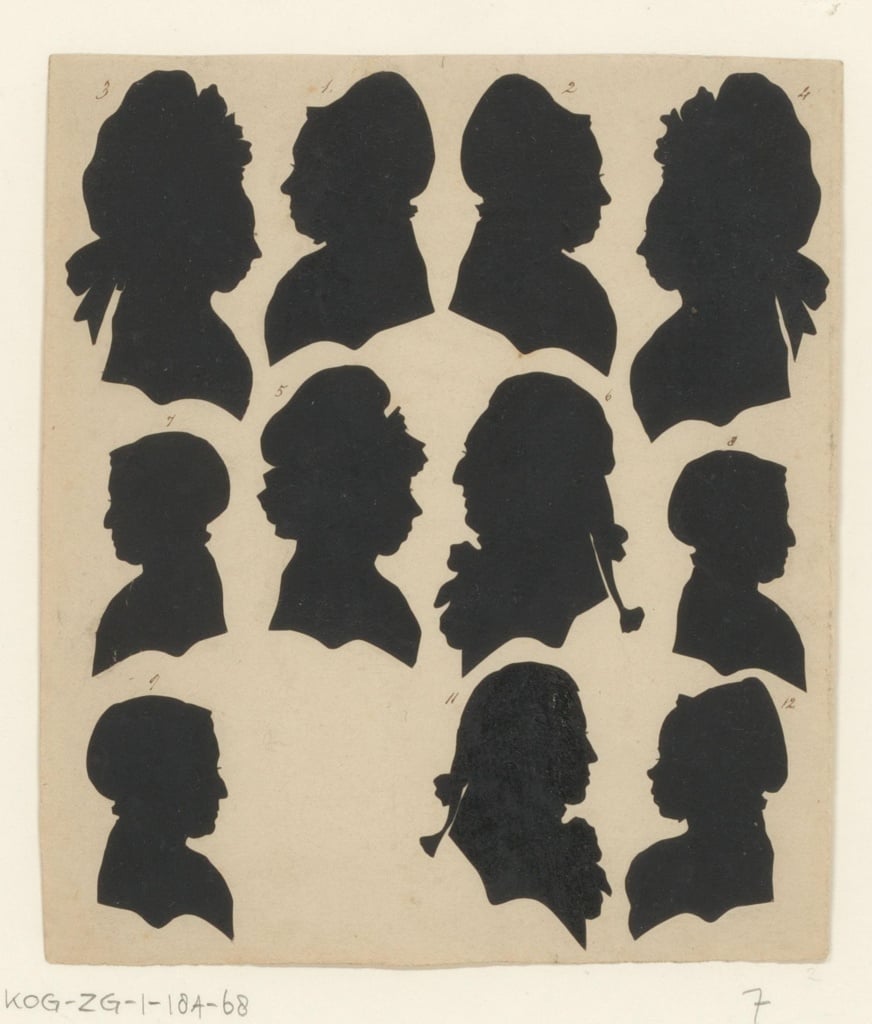
Portraits of eleven silhouettes (Elf silhouetportretten), Joseph Adolf Schmetterling, 1778 – 1828. Dimensions: 165 mm height x 147 mm width.
Silhouette portraits, made of paper cutting, are very common in the Dutch “Knipkunst movement.
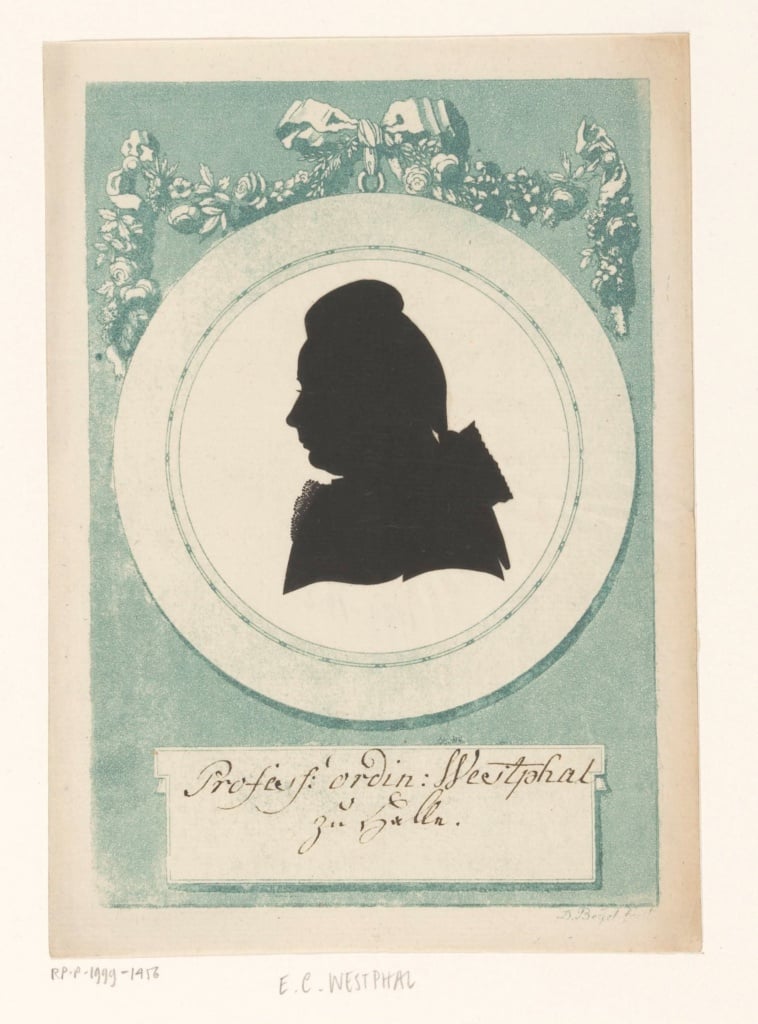
Silhouette portrait of Ernst Christian Westphal (Silhouetportret van Ernst Christian Westphal), Daniel Beyel, 1785-1792. Dimensions: 180 mm height x 128 mm width.
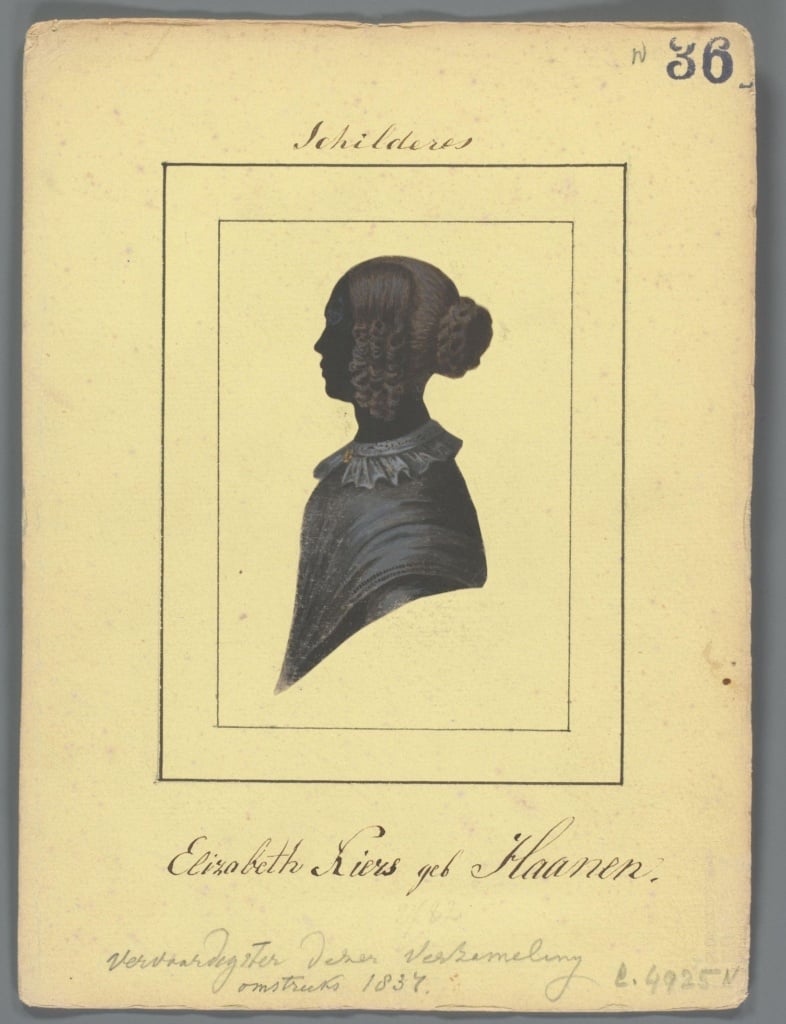
Self-portrait in silhouette (Zelfportret in silhouet), Elisabeth Alida Haanen, 1819-1845. Dimensions: 204 mm height x 151 mm width.
Although it reached its peak in the 17th and 18th centuries, the art of paper cutting in the Netherlands did not end there. Today, professionals in this discipline come together under platforms such as the Dutch Association for the Art of Paper Cutting. The general public can see a wide variety of works on display in museums such as the Museum van Papierknipkunst and the Rijksmuseum.
Editor’s note
All images included in this article are taken from the Rijksmuseum website and are in the public domain.
For further information: the Rijksmuseum website