


Table of Contents
Over the course of just 12 hours, four guys from Birmingham recorded their debut album, and, probably without realising it, took rock into a new, unexplored dimension, basically inventing heavy metal in the process. Their names? Ozzy Osbourne on vocals, Tony Iommi on guitar, Geezer Butler on bass and Bill Ward on drums, better known, of course, as Black Sabbath.
For their first, eponymous record, released by Vertigo on 13 February 1970, they made up for their lack of experience with a fearless approach. And as well as arguably playing a part in creating a new genre, it was also incredibly successful from a commercial perspective, selling over 1 million copies in the USA and entering the UK charts at number 8.
Black Sabbath’s debut album wove together numerous influences: Mario Bava’s horror films (which gave the band its name), some demonic notes, and the extraordinary charisma of Ozzy Osbourne, who became known as the godfather of heavy metal and sadly died in July this year.
But the record’s legendary status stems in part from its sleeve, with its enigmatic and sinister cover. And today we’d like to tell you the mysterious story behind it!
Black Sabbath: a cover full of mystery
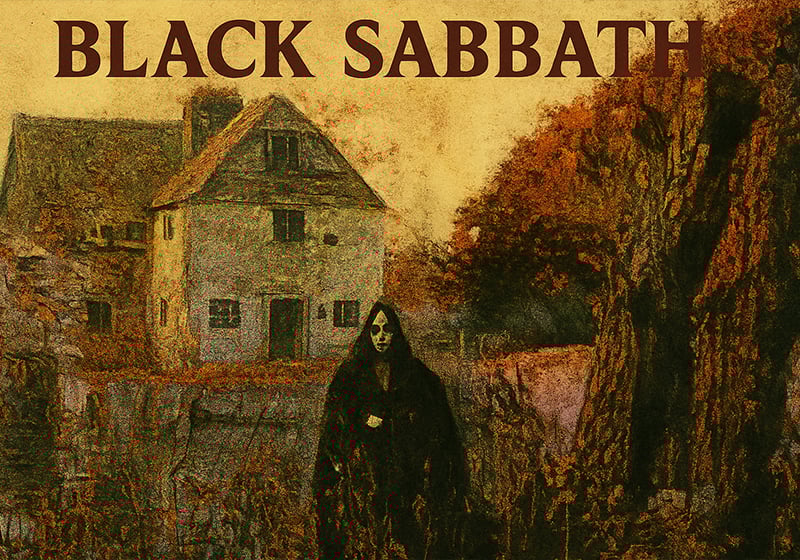
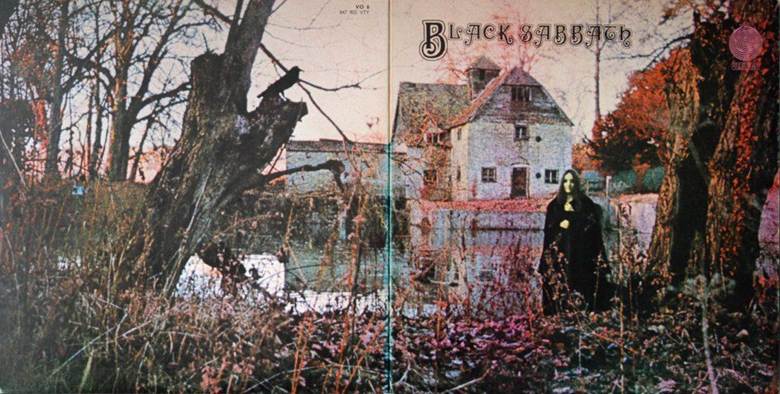
A woman dressed in black – a witch? – stands out, motionless, against a gloomy, grainy and shadowy landscape with an array of disturbing details. There is an indecipherable building in the background, the woman’s face is featureless and she seems to be holding something in her hands, and a crow in a corner adds a final gothic touch. But it’s not just the content of Black Sabbath‘s cover that makes it so enigmatic; it’s the entire story surrounding it.
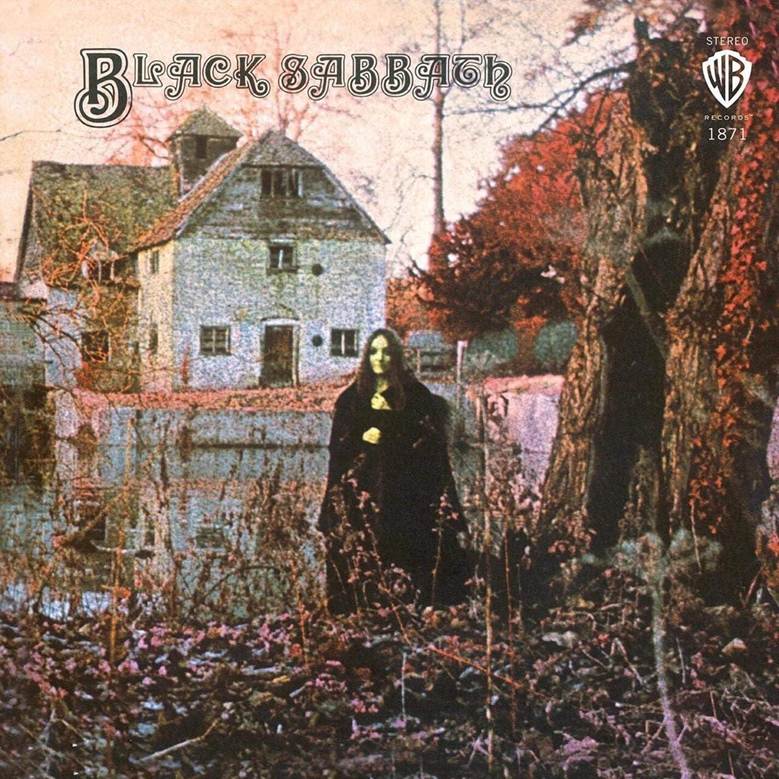
Or, to be more precise, the lack of a story. Until a few years ago, almost nothing was known about the cover of this historic record. The witch was the subject of numerous rumours: some said it was Ozzy Osbourne in a bizarre disguise, and some even claimed that the woman had not been there during the photo shoot, and that the dark figure only appeared once the film was developed.
The cover’s creator was also shrouded in mystery. The credits stated merely that it was designed and shot by ‘Keef’. Nothing more.
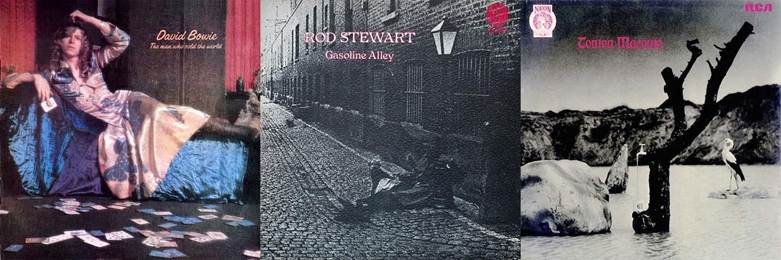
Only in recent years – and particularly around the record’s 50th anniversary – have various interviews started to shed light on the background to the legendary Black Sabbath cover, starting with its creator. Keef – who also worked on subsequent Sabbath records, sometimes signing himself Marcus Keef – turned out to be the photographer and artist Keith Macmillan. Keith Macmillan worked with many prog bands in the 1970s, most notably those on Vertigo, Black Sabbath’s record label, creating an instantly recognisable style.
It was the photographer and designer – along with the model who posed as the solitary female figure – who finally revealed how the Black Sabbath cover was made.
How demonic notes inspired the Black Sabbath cover
When Keith Macmillan/Marcus Keef was asked to produce the cover for Black Sabbath, he was just out of art school. One of the sources of inspiration he cited for the cover was the surrealist painter René Magritte. But it was listening to the first song on the album that gave him the idea for the design.
Black Sabbath opens with a sinister melody. The band’s guitarist Tony Iommi based this memorable riff on an interval that in the Middle Ages was considered to belong to the devil: the tritone. Over these disturbing notes, Ozzy Osbourne sings: ‘What is this that stands before me? / Figure in black which points at me’. Keef listened to those notes and those lines, and the concept for the artwork was born!
Freezing cold, a stuffed crow and a special film: making the Black Sabbath cover
Meanwhile, Louisa Livingstone – the model who posed for the image – revealed some details about the 1969 photo shoot for the record sleeve. It took place very early in the morning, and when Livingstone arrived she found the photographer tinkering with dry ice, trying to create fog. This didn’t work, and eventually he decided to switch to a more standard smoke machine. The artist had also tied Yorick, his stuffed crow, to the branch of a tree; its silhouette appears on the back of the sleeve.
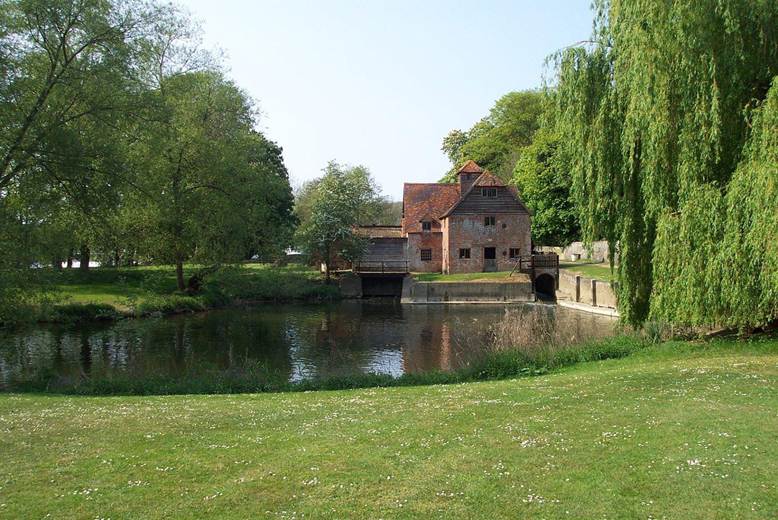
The location for the cover of Black Sabbath – Mapledurham, a fifteenth-century watermill on the banks of the Thames, around an hour and a half’s drive from London – was no random choice. The landscape had a ghostly feel to it, and the dense undergrowth that surrounded the building at the time made it even more appropriate for the photo.
The odd colours, meanwhile, stem from the use of Kodak Aerochrome, a film designed for aerial photography that can produce some rather creepy effects (the effect can also be recreated digitally). The cover’s pinkish, surrealist hue comes from this discovery: the film was then boiled and frozen to create the grainy, poorly defined image.
Other parts of the Black Sabbath cover: the logo and the controversial interior
Somewhat strangely, the band were not asked for their opinion on how their album should be displayed to the world: the record was simply presented to them already in its packaging. Having said that, Black Sabbath were an up-and-coming band (hence why they were only given one day to record the entire album) and so the label Vertigo did not feel the need to take their opinions into account.
The Black Sabbath logo that appears on the cover was therefore designed completely independently by one of Macmillan’s former classmates, Sandy Fiel, who also came up with the idea of including an upside-down cross containing the record’s credits and a strange poem written by one of Macmillan’s assistants in the artwork for the inside of the sleeve.
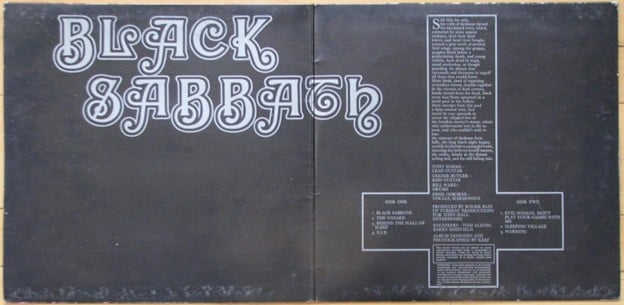
Field was trying to make the record even more disturbing, but the result was that the young and unknown band became associated with Satanist and occultist circles, which didn’t go down well with some members of the group. Nevertheless, this unusual, bizarre and unsettling cover undoubtedly contributed to the famous album’s air of mystery.
How about you? What do you think of the Black Sabbath record’s legendary cover? Were you aware of it before? And might you try to recreate its spooky atmosphere in one of your upcoming projects?