


Table of Contents
The Western has ebbed and flowed in popularity over cinema history. It enjoyed a golden age between the late 40s and early 50s, and another in the 60s and 70s when Italian directors – led by Sergio Leone – reinvented the genre with the so-called spaghetti Western.
Then the genre fell out of fashion, only to be revived in new forms: in the 2000s, films like Ang Lee’s Brokeback Mountain and the Coen brothers’ No Country For Old Men brought Western themes and feels to modern stories. And then came Quentin Tarantino’s homages to the genre made in his distinctive old-school style.
But what about the 90s? Well, in the autumn of 1990 what is perhaps the last great epic Western was released: Dances With Wolves. A box office smash, the film made a Hollywood A-lister of its director, producer and star, Kevin Costner, and was nominated for twelve Oscars, winning seven.
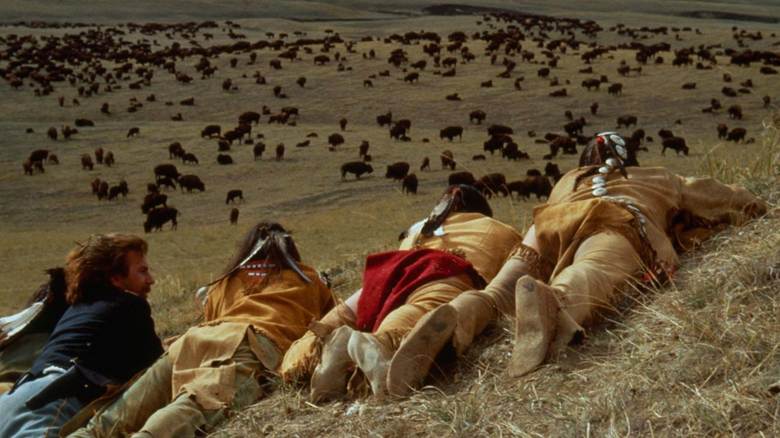
While keeping the typical epic feel of a Western, the film subverts the genre with its paean to the power of nature and the Native American way of life. Dances With Wolves was also one of the first Hollywood films to have much of its dialogue in a Native American language. Today, the film has faded from memory somewhat, and some aspects have not aged well, yet Dances With Wolves remains a great example of popular Hollywood film-making.
In this article, we’re going to look at the posters that promoted this nineties blockbuster around the world. And, in particular, we’ll be admiring those created by the great Italian poster designer Renato Casaro, who passed away in 2025 at the age of 89.
Renato Casaro’s Dances With Wolves posters
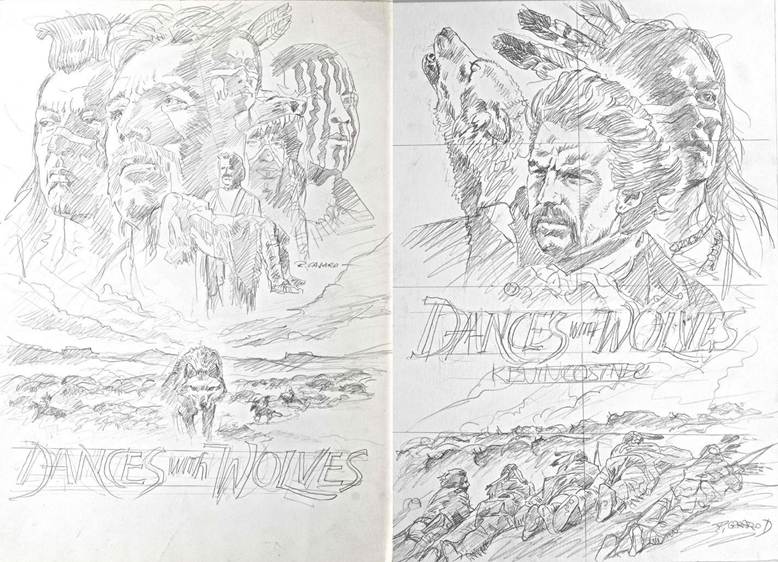
After first creating scores of drafts, Renato Casaro eventually produced two posters for Dances With Wolves. One of them was for the German version of the film. In the middle of the poster are two faces.
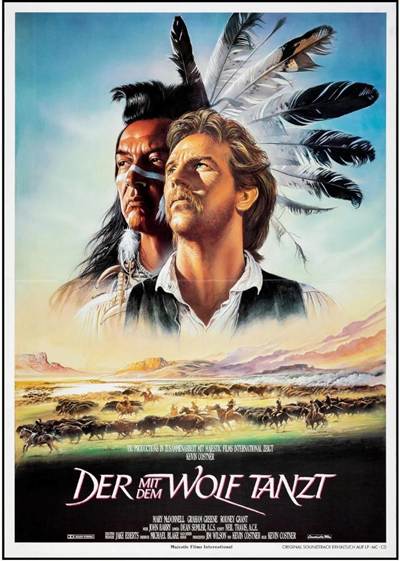
The face in the foreground is that of 1st Lieutenant John Dunbar, played by Kevin Costner. Dunbar is a union soldier who has been dispatched to an outpost in the Far West. Here, all alone, he learns the way of life of a Sioux Lakota tribe, which eventually adopts him as one of their own. Behind him in the poster is the tribe’s wise shaman, Kicking Bird, with whom Dunbar forges a strong bond.
In a single image, Casaro encapsulates the essence of this mould-breaking Western: a coming together – but not a clash – of two very different cultures. Indeed, the battle scenes so beloved of the Western genre are conspicuous by their absence in Dances With Wolves. In the background to his poster, Casaro depicts the film’s show-piece scene: the bison hunt, in which Lieutenant Dunbar – riding with the tribe – saves the life of a young Sioux.
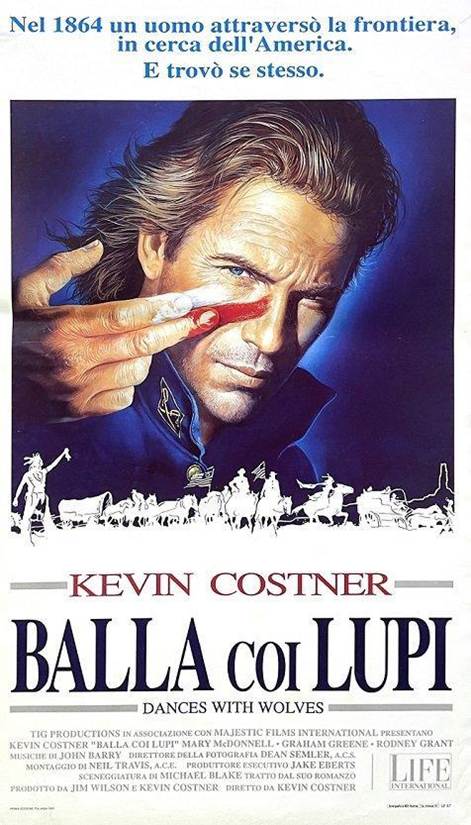
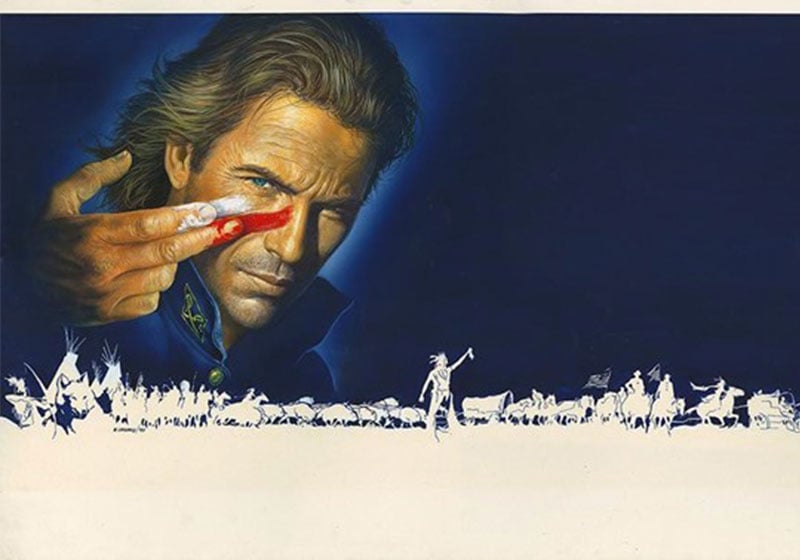
The other famous poster for Dances With Wolves created by Casaro is the Italian version. Even more evocative than the German one, it shows just the face of Lieutenant Dunbar in the foreground, wearing a proud expression tinged with sadness. But what really catches the eye is the hand that seems to reach in from the poster’s edge to smear the white man’s face in Sioux Lakota colours. Curiously, there’s no such scene in the film. But this simple gesture captures a key theme of the film: the assimilation of a white man into a Native American tribe.
A dark blue background – the colour of Dunbar’s Union uniform – completes the Italian Dances With Wolves poster, along with an almost cartoon-like frieze at the bottom which situates the film in the classic Western genre.
The king of the Western poster (and more): Renato Casaro
So who was the man behind these extraordinary posters? Renato Casaro was born and raised in the Italian city of Treviso, but moved to Rome at the age of 18. It was in the Eternal City that he designed his first poster for the cinema. He never looked back, creating hundreds of posters over the years for films made in Italy and abroad. Admired around the world, Casaro worked with cinema legends like Ingmar Bergman, Bernardo Bertolucci, Luc Besson, Miloš Forman, François Truffaut, Sidney Lumet, Sergio Leone, Mario Monicelli and Giuseppe Tornatore.
A true master of the medium, Casaro adapted and reinvented his style throughout his career, producing unique posters every time: from Conan the Barbarian to Octopussy, from Never Say Never Again to Once Upon a Time in America and Rambo.
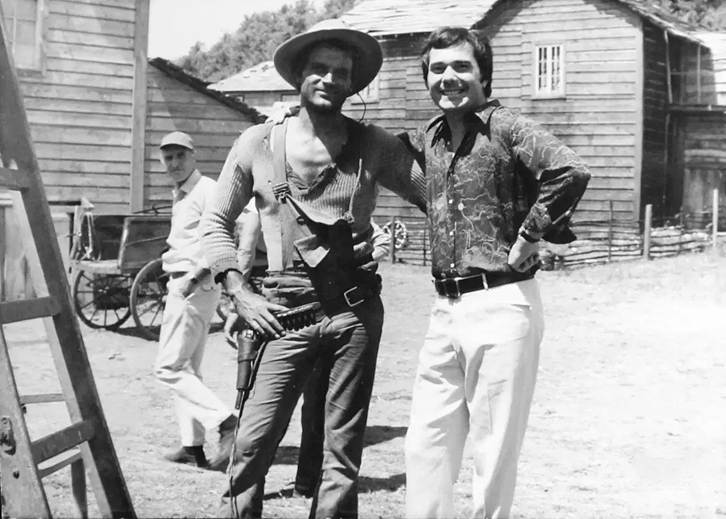
Perhaps one of the reasons why Casaro was hired for the Dances With Wolves poster was his long association with Western films – especially unconventional ones [a recent exhibition celebrated Casaro’s work on Westerns].

Renato Casaro designed a handful of posters for Sergio Leone, as well as one for the first comic Western, They Call Me Trinity, directed by Enzo Barboni (AKA E.B. Clucher).
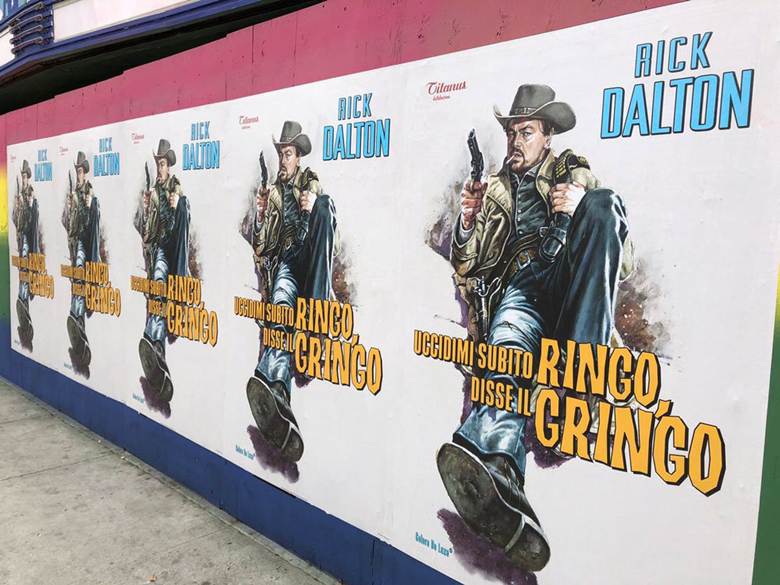
And Casaro’s love affair with the genre didn’t end there. In 2019, by now enjoying a well-earned retirement in Spain, the designer was persuaded to do one last job by none other than Quentin Tarantino. The director asked him to create fake movie posters to use in Once Upon a Time in Hollywood – these were used to both dress the set and promote the film itself.
The American Dances With Wolves poster
So far, we’ve focused on the Dances With Wolves posters designed by Renato Casaro. It seemed a fitting way to honour an all-time great of poster design. But we also wanted to show you the original Dances With Wolves poster that accompanied the film on its release in the US.
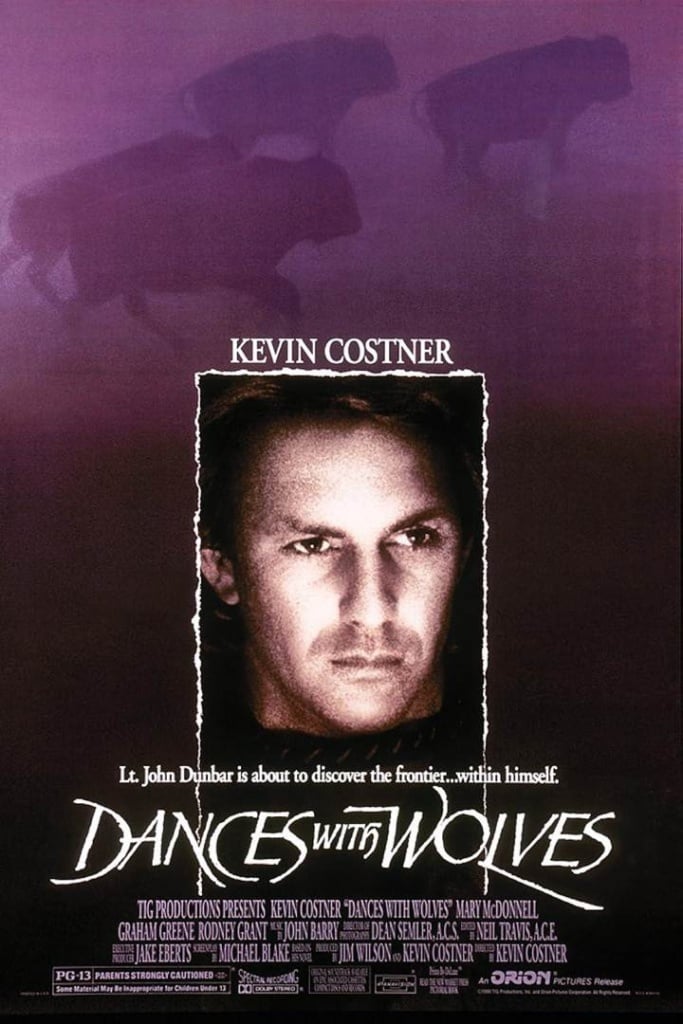
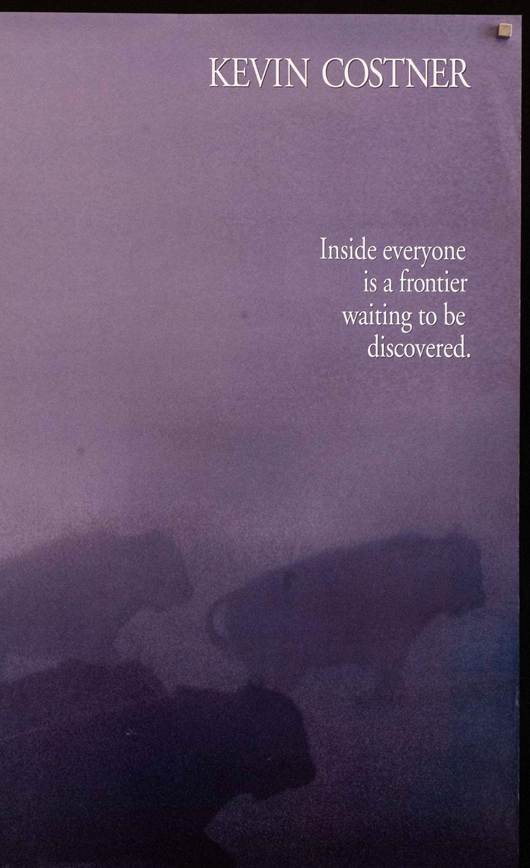
In the foreground is the face of Kevin Costner, the film’s star and director. But more interesting is the background: this depicts a group of buffalo in a foreshadowing of the famous hunt scene. And the hazy, purple hue brings a strong sense of mysticism to everything [we’ve talked about the power of the colour purple here].
Maybe that’s why there’s also this rare version of the poster out there, which only uses the evocative background image.
What do you think about the Dances With Wolves posters? And Renato Casaro’s work in general? Do you find it inspiring?