


Table of Contents
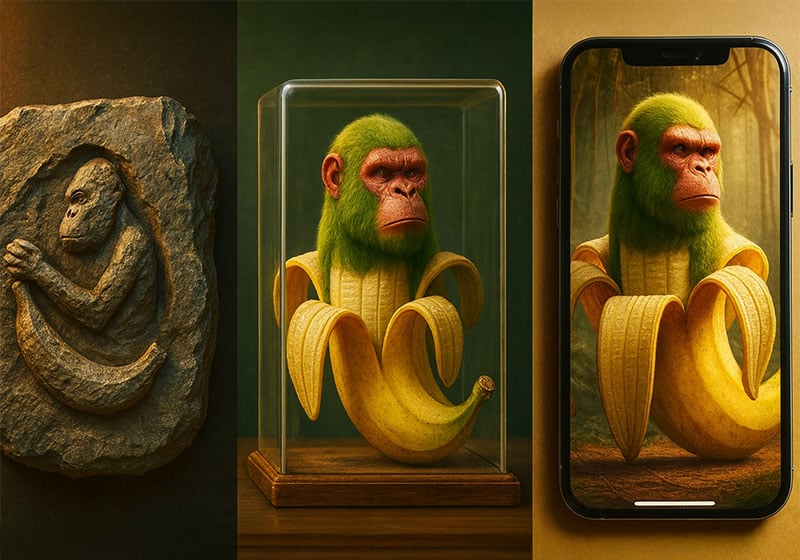
Images can sometimes have a power that is hard to explain. Who would have predicted that a series of grotesque, zany and meaningless AI-generated videos posted on TikTok could become a global phenomenon? But that’s exactly what happened with Italian Brainrot!
Before we start, a quick explainer for the few people who have yet to encounter it: Italian Brainrot is a series of surreal video memes featuring bizarre AI-generated creatures with ridiculous, vaguely Italian-sounding names, the epitome of the nonsensical humour that is popular with Generation Alpha.
The most unsettling thing about the phenomenon is the fact it is entirely meaningless. But could this also be its main strength?
Today we’d like to recount the origins of the Italian Brainrot phenomenon, explore its successful incarnations in print and look at various forerunners to the meme… some well-known, others more obscure!
Whether you like it or not, Italian Brainrot is by no means the first nonsensical fictional world to enjoy success!
How Italian Brainrot began
It’s worth making one thing clear: the phenomenon’s origins are shrouded in mystery. Like all self-respecting folklore, Italian Brainrot does not seem to have been invented by one individual; it is an impersonal, group creation produced using AI tools.
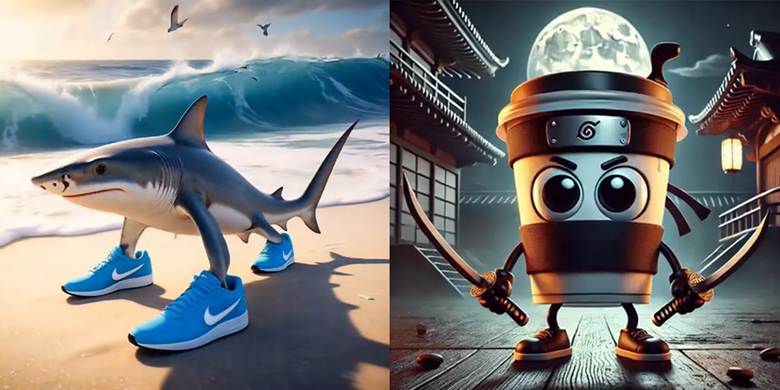
All we know about the genesis of these zany images is that it occurred within the Italian meme community on TikTok between late 2024 and early 2025. The images are now known collectively by a provocative name. ‘Brainrot’ (Oxford‘s word of the year) is a phenomenon caused by excessive scrolling through not entirely edifying social media content.
The ‘Italian’ part, meanwhile, comes from the names of these strange characters, which all have an Italian flavour. For example, there’s the shark Tralalero Tralala who wears designer trainers (and was probably the very first creation), the furry trout-bear Trippi Troppi, the crocodile-bomber plane Bombardiro Crocodilo, the young Ballerina Cappuccina, and so on. The designs get more and more grotesque, with a potentially infinite number of new creations!
Italian Brainrot… on paper!
The most incredible thing about the story of Italian Brainrot is that the memes have crossed over from the internet into the real world; something that rarely happens in such a clear-cut way.
A wide range of printed items on good old-fashioned paper have sprung up around the Italian Brainrot trend… most notably a collection of Panini stickers.
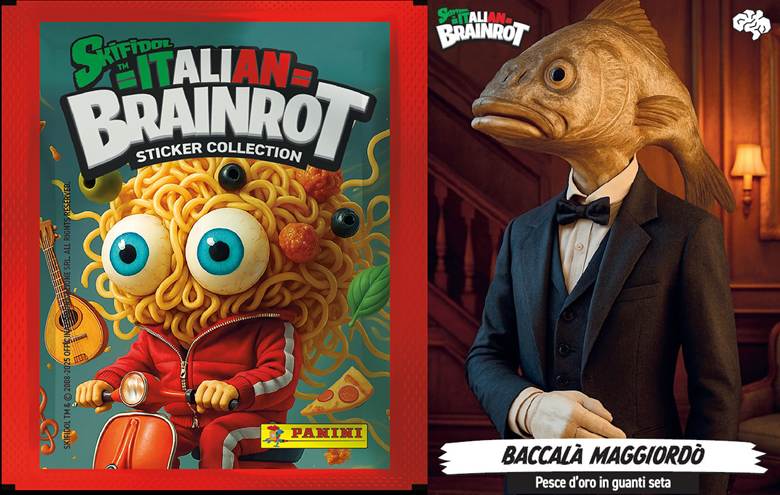
On this very blog we interviewed the marketing team from Panini Collectibles behind this successful initiative [read the interview here]: the collection of Skifidol Italian Brainrotstickers, which were launched with an incredibly quick turnaround following the phenomenon’s appearance on the internet, are proving very successful.
The stickers were soon followed by trading cards based on the Magic model, where each absurd character has its own characteristics and points, and players challenge their opponents following a precise set of rules.
Other products linked to the Italian Brainrot universe, both paper-based and more elaborate, are appearing all the time: from colouring books and school diaries to official handbooks, toys, backpacks and pencil cases. An Italian brainrot-themed show aimed at very young children has even recently started touring Italy.
Famous (and more obscure) forerunners to Italian Brainrot
Many people are still amazed at Italian Brainrot’s success and are at a loss as to how it achieved it. But the statistics and the phenomenon’s rapid spread speak for themselves: there is no doubt that it has turned into an incredibly powerful fictional universe.
In recognition of this, we decided to have some fun seeking out some older works that remind us in some way of the absurd 2025 memes. We let our imagination run wild a bit, so forgive us if some of the comparisons seem a little… tenuous!
Micrsoft’s quirky 1990s digital assistants
In the mid-1990s, Microsoft asked the children’s book illustrator Kevan Atteberry to design some new digital assistants to help users find their way around the company’s Office software. It was Atteberry who invented the much-maligned Clippy [we told his story here!].
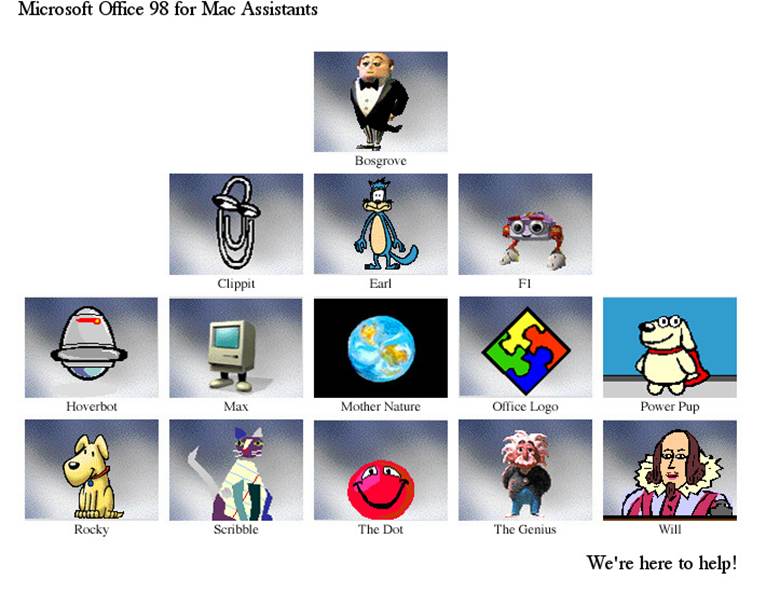
However, not many people know that as well as the ill-fated Clippy, or Clippit, the illustrator also created a large collection of digital assistants for users to choose from, to replace the default paper clip. From Max – a computer with legs – to F1 – a key with eyes and long, gleaming arms – we reckon they’d be quite at home in today’s Italian Brainrot world!
French surrealists’ ‘exquisite corpse’
Exquisite corpse – from the French ‘cadavre exquis‘ – was a surrealist parlour game. Curiously, it was played for the first time in Paris in 1925, exactly 100 years before the Italian Brainrot memes appeared from the depths of TikTok!
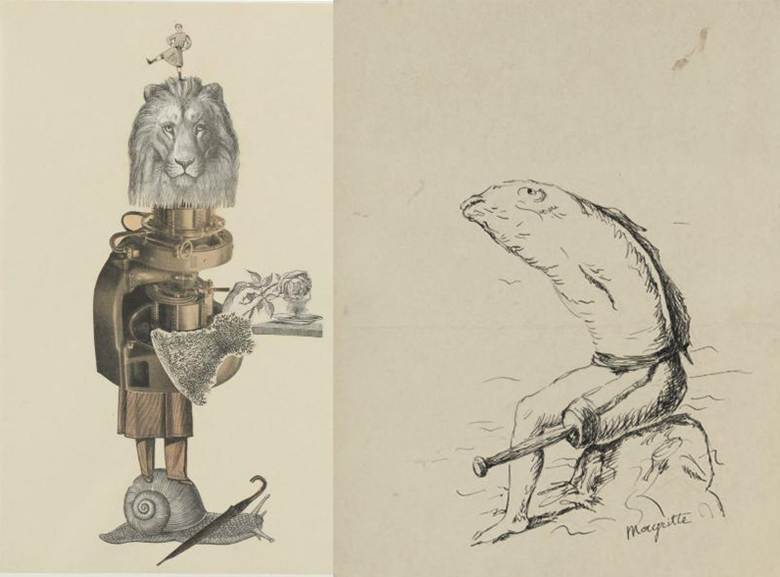
As you are no doubt aware, the surrealists were part of an artistic avant-garde that used nonsense, random associations and involuntary actions as the main source of their art and creativity. The game involved multiple people creating a single drawing, but without anyone knowing what the others were doing. Surprisingly, the randomly assembled elements seemed to reveal deep-seated, unconscious communication between the participants.
Could it be that the same mechanisms played a role in the AI-supported collective creation of Italian Brainrot a century later?
Medieval bestiaries of fantasy animals
Inventing ridiculous images is by no means a modern invention. Take, for example, the well-known reproductions and miniatures of the bizarre animals that populated people’s imaginations in the Middle Ages: the myriad creations included weasels that give birth through their ears, wild boar over 1000 years old, worms that could see through walls (like an X-ray) and hyenas that could change sex on demand, not to mention your more ‘classic’ fantasy animals like unicorns and bewitching mermaids.
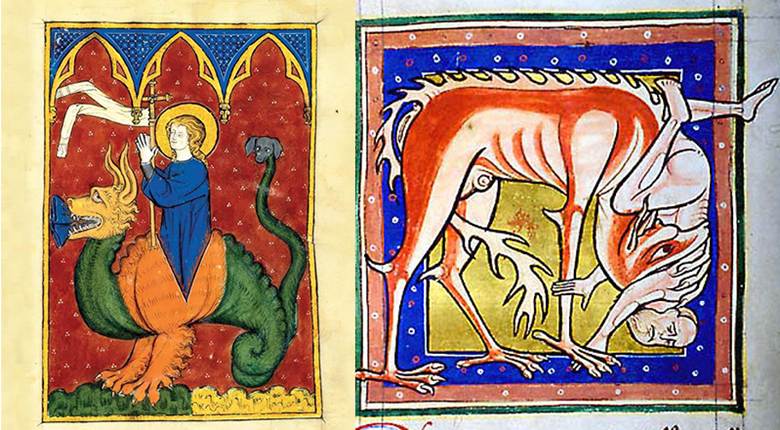
Although the miniatures depicting these strange creatures were drawn on parchment sent to bishops, monks and scholars, they often also made it out of dusty tomes and into decorations in churches and other buildings, and so entered the wider public consciousness.
Vaporwave’s nihilistic aesthetic
Now let’s move away from the works of medieval scribes and back to internet era memes. An artistic and aesthetic movement developed in the 2010s with a similar kind of feel to Italian Brainrot: Vaporwave [we discussed the Vaporwave aesthetic here].
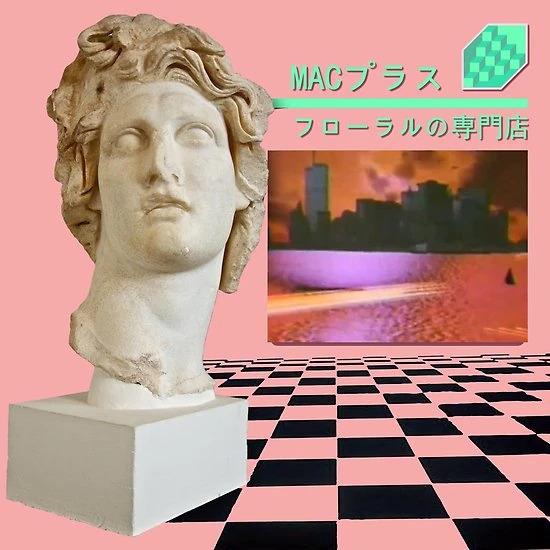
Some people describe Vaporwave as a nostalgic depiction of a futuristic past that never existed. In any case, there are certain similarities between Vaporwave and meme culture and Italian Brainrot. Both are certainly eclectic (mixing highly diverse things in a random and grotesque way), and both are rooted in internet culture, stemming from the time we spend in the digital world, not the real world.
But above all the nihilistic irony of the Vaporwave aesthetic provided fertile ground for Italian Brainrot’s development: it is a universe devoid of any meaning, the surreal product of a ‘broken’ internet… and that’s fine!
The zany 1980s trash Sgorbions trading cards
However, the closest ancestor of Italian Brainrot is perhaps something we’ve all almost forgotten about. Have you ever heard of the Garbage Pail Kids trading cards, which were launched in the USA in 1985?
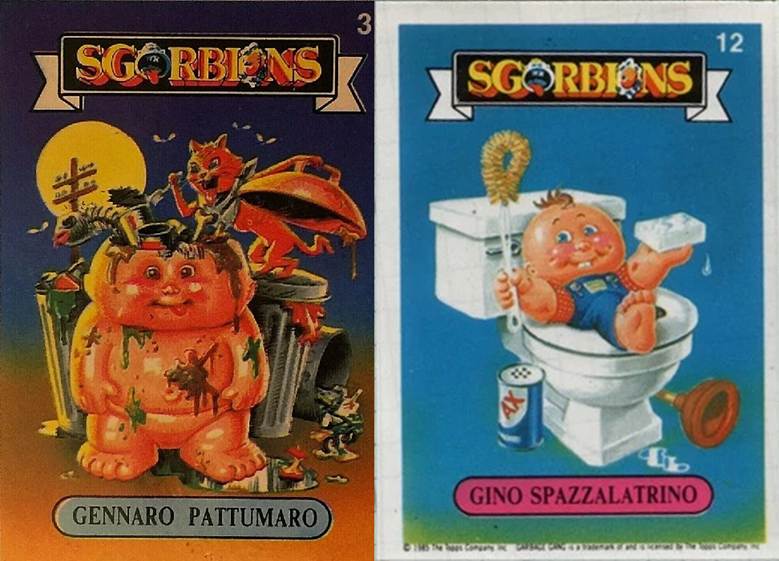
At the time they were truly revolutionary… and absolute trash! The highly sought-after trading cards (which are still on sale in the USA) depict bizarre dolls doing the most unspeakable things: from rummaging through rubbish and splashing in the toilet to throwing up and sticking their fingers up their noses.
But here we’re particularly interested in the Italian version of this series, because the names of the Italian characters are very similar to the Italian Brainrot monikers: ranging from Gennaro Pattumaro and Nippon Trippon to Gino Spazzalatrino and Marcello Sbudello.
Might a few millennials have created Italian Brainrot without knowing it?
Of course, Italian Brainrot also has some much closer relatives, like the incomprehensible animated series Skibidi Toilet. And perhaps none of these images really contributed to the creation of the famous TikTok memes, which might just stem from pure randomness and AI algorithms. But who knows: deep down, perhaps unwittingly, the collective creation of Italian Brainrot may have drawn on some of these fantasy worlds.
What do you think? Has the story of Italian Brainrot, with its absurd combinations and nonsensical comparisons, inspired you to put pen to paper? Let us know!