

Table of Contents
In the early 20th century, a revolution in printing technology meant that for the first time it was possible to mass produce magazines with high-quality images at low cost. It gave us a whole new genre of illustrated magazine where news and investigative reporting were brought to life with visual storytelling.
Italy’s OGGI magazine is very much part of this tradition. Founded in 1939 by Angelo Rizzoli as a “weekly news and literature magazine”, it followed the model of titles like LIFE magazine with its photographs, reportage and modern (for the era) graphic design.
The precursors to today’s gossip mags, illustrated magazines mixed in-depth reporting and essays with sensational crime stories and celebrity tittle-tattle.
Still going strong, OGGI is one of Italy’s longest-running and most successful magazines, whose influence at home rivals LIFE‘s in America.
The magazine that best chronicled post-war Italy
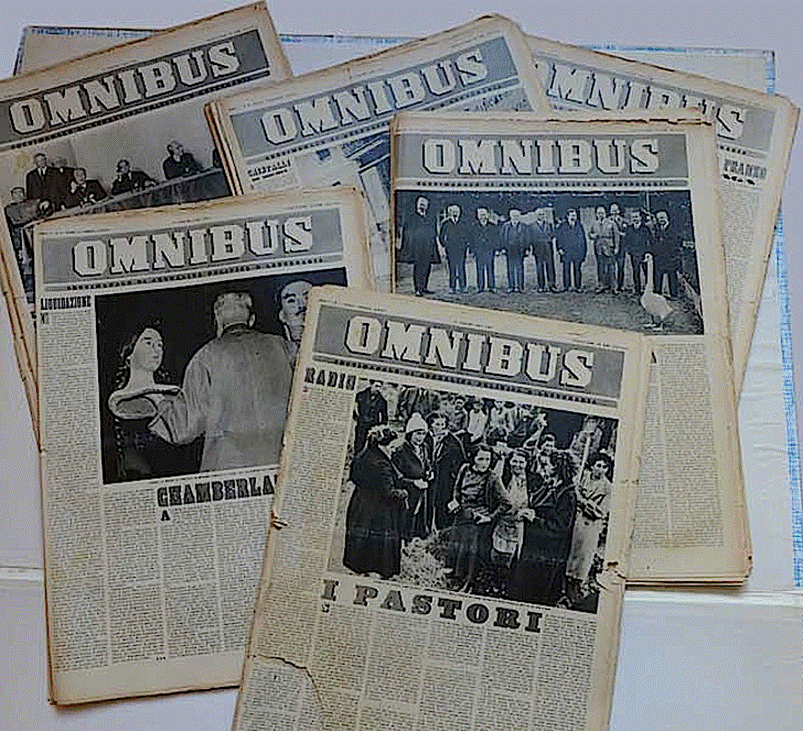
When the Fascist regime shut down Omnibus magazine in 1939, its publisher, Rizzoli, replaced it with a new title designed to bring readers the news in a modern format: OGGI (TODAY) magazine. Publication was halted briefly during the war, only to resume in 1945 in a tabloid format, with the outlet slowly establishing itself as a key chronicler of post-war Italy.
But OGGI didn’t truly hit its stride until the sixties, when Italy’s economy began to boom and sales exploded to reach over a million copies a week. Key to the magazine’s success was its careful blend of news, gossip and lifestyle coverage that remained focused squarely on its target audience – the average Italian family – and steered clear of politics.
OGGI has always been a “magazine that speaks to all Italians” with stories about everyone from celebrities to ordinary people. But recently, its tagline was updated to “Italy’s weekly”, marking a broadening of its focus beyond the family.
Telling great stories
Tabloid mags like OGGI are in the business of entertaining readers. They do so through tried-and-tested storytelling devices like serialisation and photo sequences. Whether they’re talking about the rich and famous or the average joe, they play on emotions and curiosity to draw in readers. This combination of glossy pictures, simple graphics and well-written articles has been employed by many other European mass-market titles as a less “shouty” approach to modern tabloid journalism (cf. The Sun).
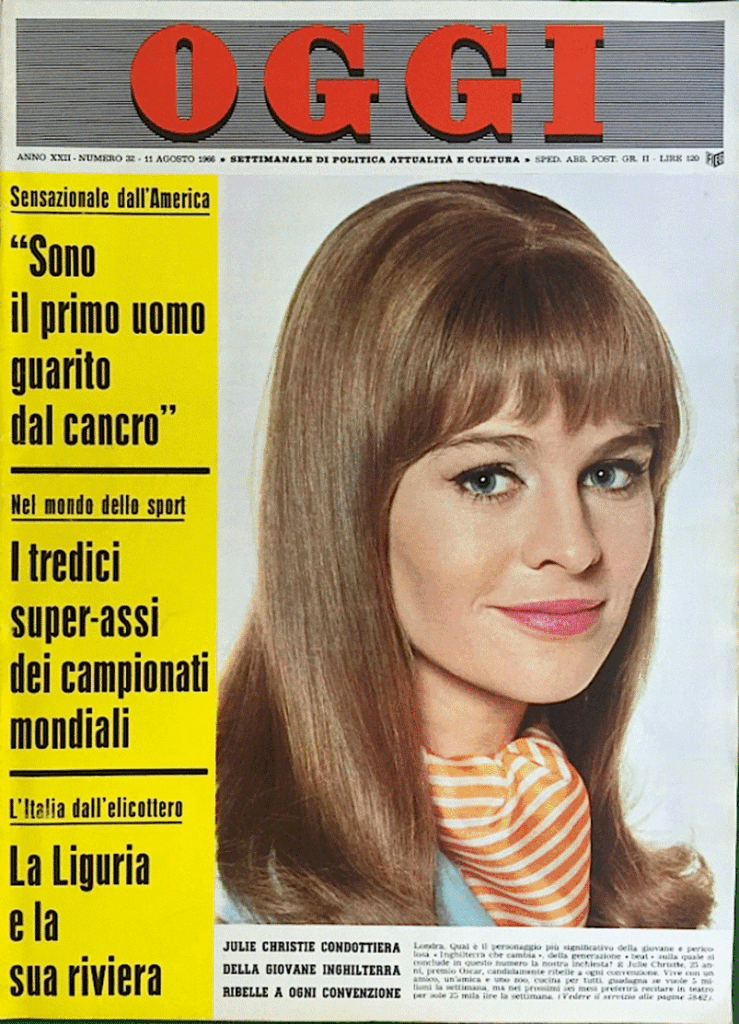
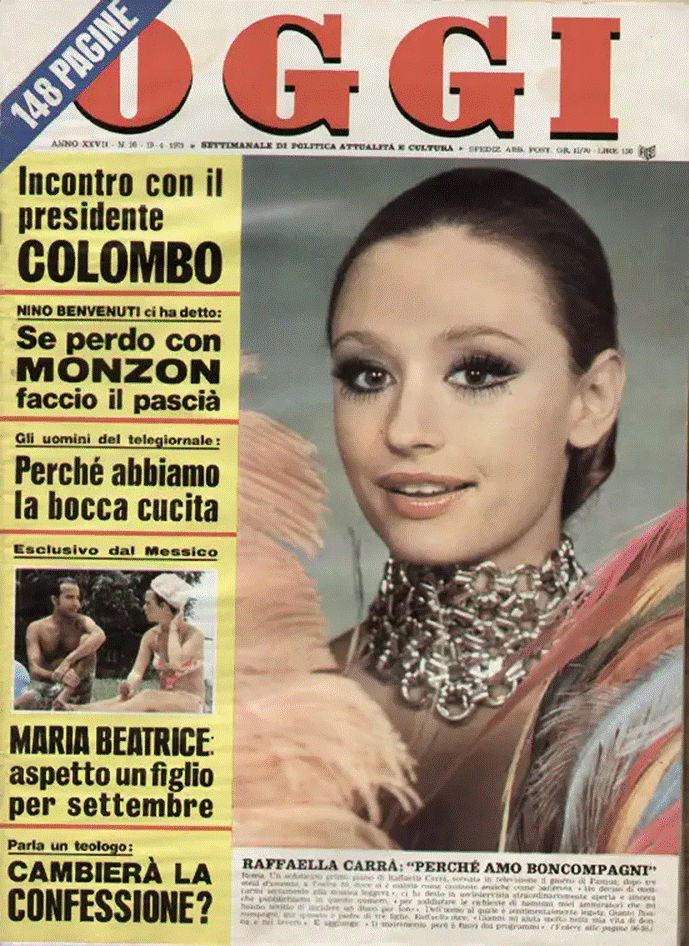
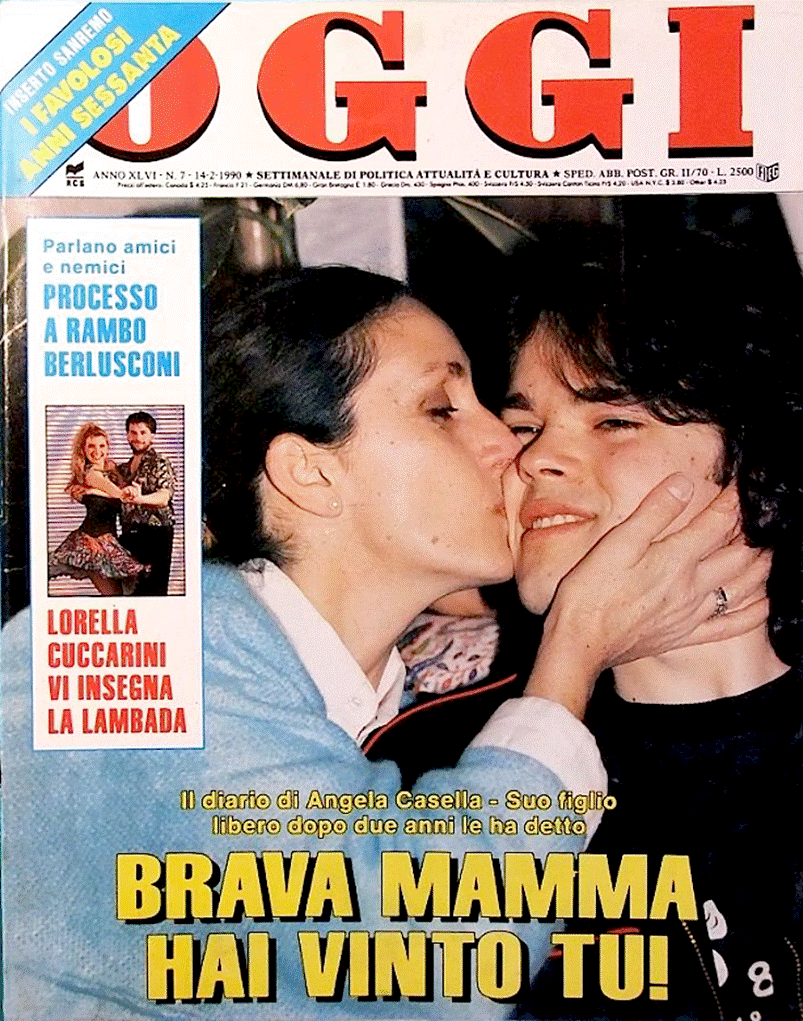
OGGI’s covers have always had a simple, well-defined layout: the logo running across the full width of the masthead, a large eye-catching photo (almost always a famous face or group of celebrities) and headlines laid over the main photo without crowding it out. Secondary stories occupy side boxes, which are sometimes yellow and always comprise a photo and headline.
The graphic design emphasises that exclusives and scoops lie inside. Photos are sometimes posed, sometimes candid, but always chosen to pull the reader into the story told inside.
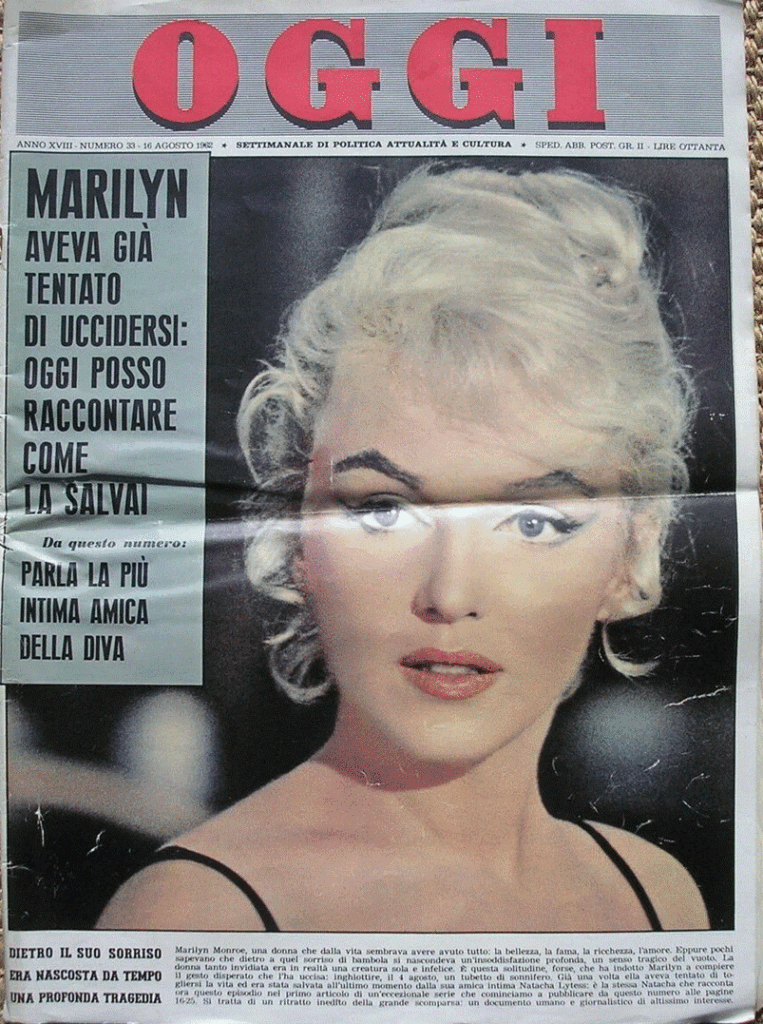
One of the first colour covers was devoted to the death of Marilyn Monroe in August 1962. In those days, OGGI went all in on scoops, flying reporters all over the world to try and get the jump on rivals for the biggest stories. This attitude shone through on covers, too, which were crafted to stand out on the newsstand with attention-grabbing headlines and compelling close-ups of celebrity faces.
A strong and distinctive graphic identity
Remarkably, OGGI has managed to survive 70 years of Italian history while keeping the same unmistakable visual identity. Indeed, the title reminds readers that the magazine is ever focused on today, on an eternal present that never ends. The content is, in a way, ahistoric: it doesn’t encourage readers to reflect on the past, but leaves them with a feeling that the same things happen over and over again. It only tells emotional stories, as if the events detailed in gossip columns and crime stories were the only ones that really matter.
This sense of simple and immediate storytelling is captured by the logo, which has remained practically unchanged over the years: bold capital lettering in the red so beloved of tabloid magazines and newspapers everywhere.

The simple power of tabloid design
In terms of layout and graphics, OGGI has never been especially innovative. But that’s because tradition, immediacy and consistency matter more in its market. The biggest goals have always been extreme legibility (given many readers are elderly) and minimal distractions: that’s why photos and text alternate to create photo stories. In an era when the internet didn’t exist and TV offered little variety, gossip magazines were an endless source of sensational images and hot takes on news events.
That’s why OGGI has always kept the layout simple. In the early years, when the title was still black and white, it was set over two or three columns. The switch to colour and a higher page count brought more sections and columns. Features began opening with large photos and big headlines, as well as summaries and standfirsts to guide the reader. Coloured boxes were added, too, along with callouts and pull quotes to aid reading and comprehension.
In recent years, OGGI has undergone a minor makeover aimed at differentiating the title from rivals and moving it upmarket. In this new, more refined graphic design, the layout is cleaner and features are given greater emphasis. The title now looks mores like a traditional newsmagazine, though it still maintains an accessible, mass-market appeal.
In the image era, the photo reigns
Not only do tabloids deal in images of the rich and famous, they also give ordinary folk caught up in news events their chance for 15 minutes of fame.
From the very beginning, OGGI was built around photography: it was born as a weekly illustrated magazine that used photo reportage and portraits for storytelling in the great tradition of 20th-century photojournalism.
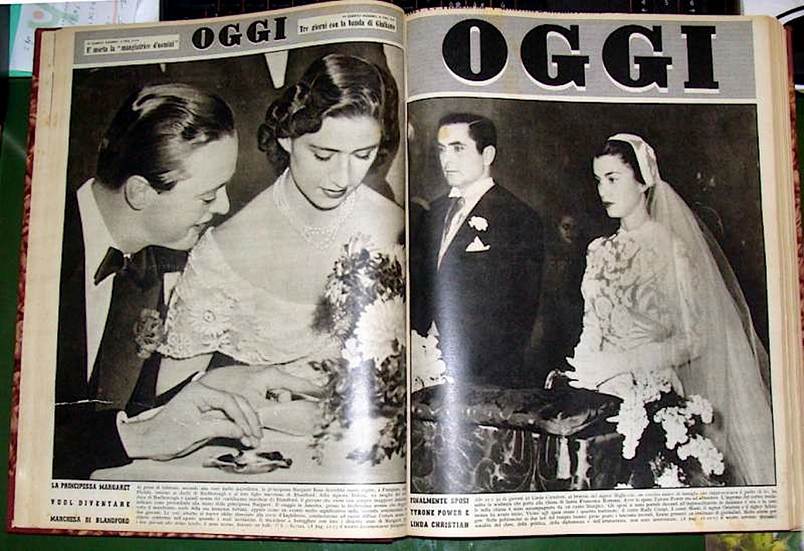
With the advent of colour and better printing techniques, photography took on an even more central role: large photos began to be used everywhere, not just on the cover, to emotionally engage readers in the stories. In showbiz and gossip sections, photo sequences (series of captioned images telling a story) became a mainstay, giving readers an almost “cinematic” experience. The publishers understood that high-resolution, colour-correct images are crucial to the appeal of photo-led magazines.
The quintessential Italian tabloid
Since beginning life as an illustrated magazine in 1939, OGGI has witnessed all of recent Italian history, from the Second World War to the economic boom and the digital revolution – and without ever losing its distinctive character. The logo in red capitals (a nod to LIFE magazine), eye-catching cover photos and dense but neat internal layout are key ingredients in a recipe repeated by mass-market magazines across Europe. OGGI shows how come tabloids remain a successful format and still chronicle life today with a sensationalist twist.
So far, they’ve among the print publications best weathering the digital era. But how long this lasts, only time will tell…
Circulation figures: 270,000 copies sold
All images used in this article are the property of their respective owners. The aim of this article is to highlight and pay tribute to the publishing houses that have left their mark over the decades.