

Table of Contents
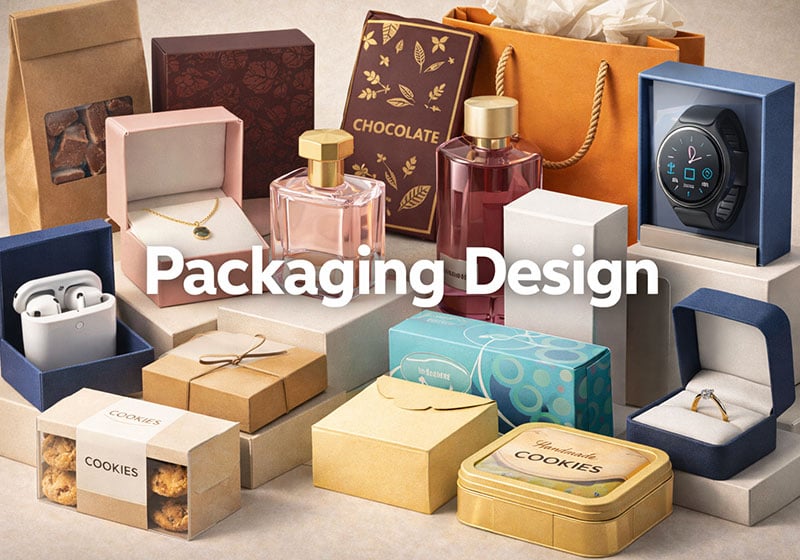
Packaging design is the design of a product’s “outfit”: the packaging that protects it, tells its story and makes it recognisable. Reducing it to a purely aesthetic matter, however, is a mistake. In reality, it is a meeting point between design, marketing, consumer psychology, logistics and production.
In practice, a good packaging design must answer four simple but decisive questions:
• What does it need to do? (protect, preserve, transport, inform)
• What does it need to communicate? (value, brand identity, brand promises)
• Where will it be seen and chosen? (shelf, e-commerce, pharmacy, marketplace, boutique)
• How much should it cost and how is it produced? (materials, finishes, volumes, lead times)
This guide explains what packaging design is, how it is developed step by step, and which choices really make the difference, with examples and practical criteria.
What is packaging design
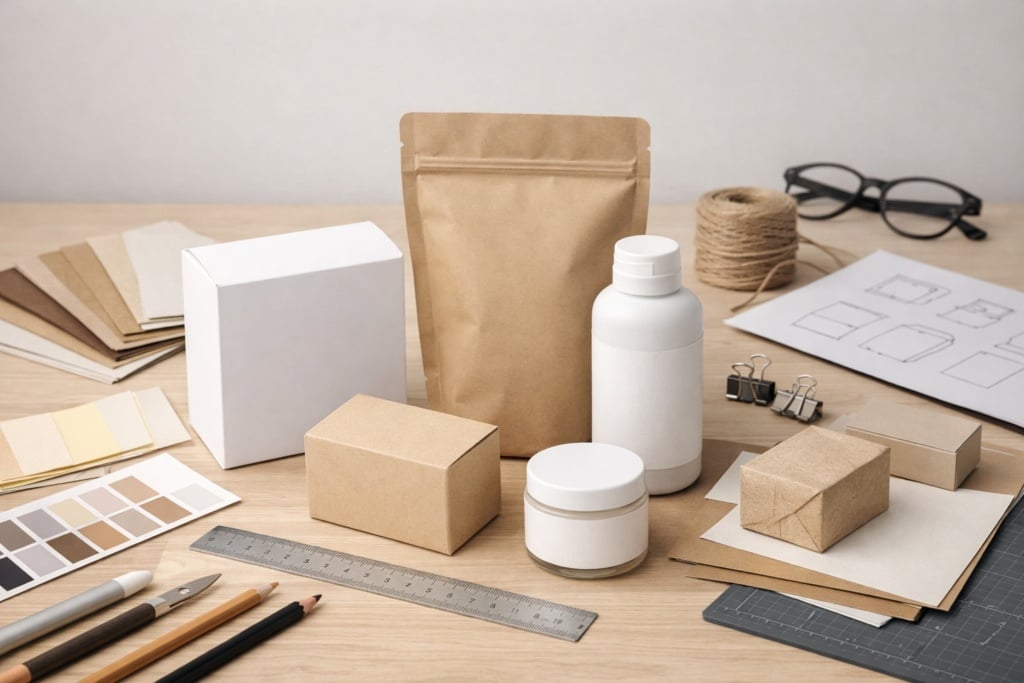
Packaging is the physical container (box, label, sleeve, carton, bag, presentation box).
Packaging design is the project that defines shape, materials, graphics, information and the overall “experience”.
It is not just “beautiful or ugly”: it is effective or ineffective.
An effective packaging design:
• increases product recognition among similar alternatives
• raises perceived quality (and therefore the price customers are willing to accept)
• reduces friction (opening, use, storage, transport)
• reduces returns and damage (especially in e-commerce)
• builds trust (clear information, brand consistency)
If you are working on packaging that needs to be printed and produced, it is worth thinking from the outset in terms of custom packaging: it helps connect design decisions with real choices around format, finishes and colour reproduction.
Why packaging design “sells” (even when you don’t realise it)
In many industries, packaging is part of the product. Sometimes it is even the reason why the product is chosen.
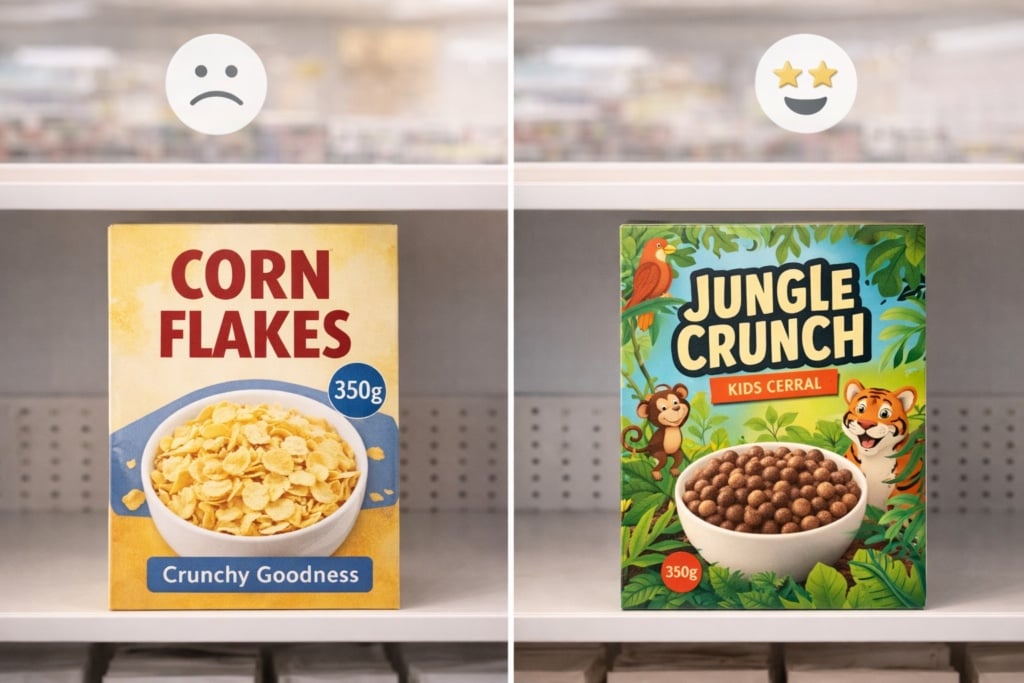
1) Attention: being noticed is the first goal
At the point of sale, packaging competes for a split second of attention.
Online, it competes for a click on a thumbnail or to remain memorable in an endless scroll.
What matters here:
• smart colour contrasts
• visual hierarchy (what I read first, what comes next)
• silhouette and shape (also in photography)
2) Perceived value: a legitimate “trick”
Materials, finishes and graphic cleanliness change perception. Rigid cardboard, high-quality printing or a matte finish can communicate “premium” without adding a single word, especially when working with professional packaging solutions designed to enhance the product.
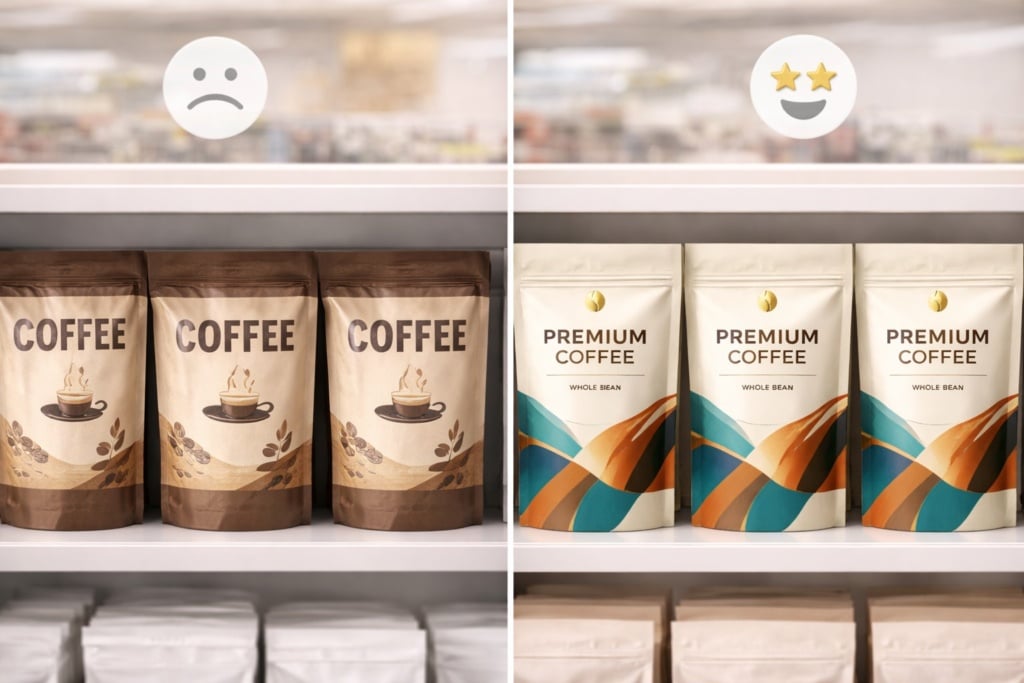
3) Trust: clear and reassuring information
Categories such as food, cosmetics, supplements and pet care require clarity. Confusing or poorly legible packaging creates doubt – and doubt leads to lost sales.
4) Experience: unboxing is free marketing
In e-commerce, the customer’s unboxing experience is often the first physical interaction with the brand. When well designed, it becomes:
• a reason for positive reviews
• social media content
• a memory (and repeat purchase)
The ingredients of successful packaging design
1) Strategy: positioning and target (before graphics)
Before choosing colours and fonts, clarify:
• Who is buying? Why?
• Is the product “premium”, “affordable”, “artisanal” or “technical”?
• Which 2–3 values should it communicate immediately? (e.g. natural, innovative, traditional, sustainable)
If you skip this step, you risk creating packaging that looks “nice” but lacks coherence.
2) Structure and format: shape communicates as much as graphics
Structure is design just as much as illustration. A minimalist carton with a magnetic closure communicates one thing; a kraft box with a simple closure communicates another.
Ask yourself:
• does it need shelf display or shipping?
• does it need protection from impacts, light or moisture?
• does it need to be stackable?
• how much “empty space” is there (and how much does it cost in logistics)?
3) Materials: touch, sustainability and performance
Materials are the product’s “voice”. Typical choices include:
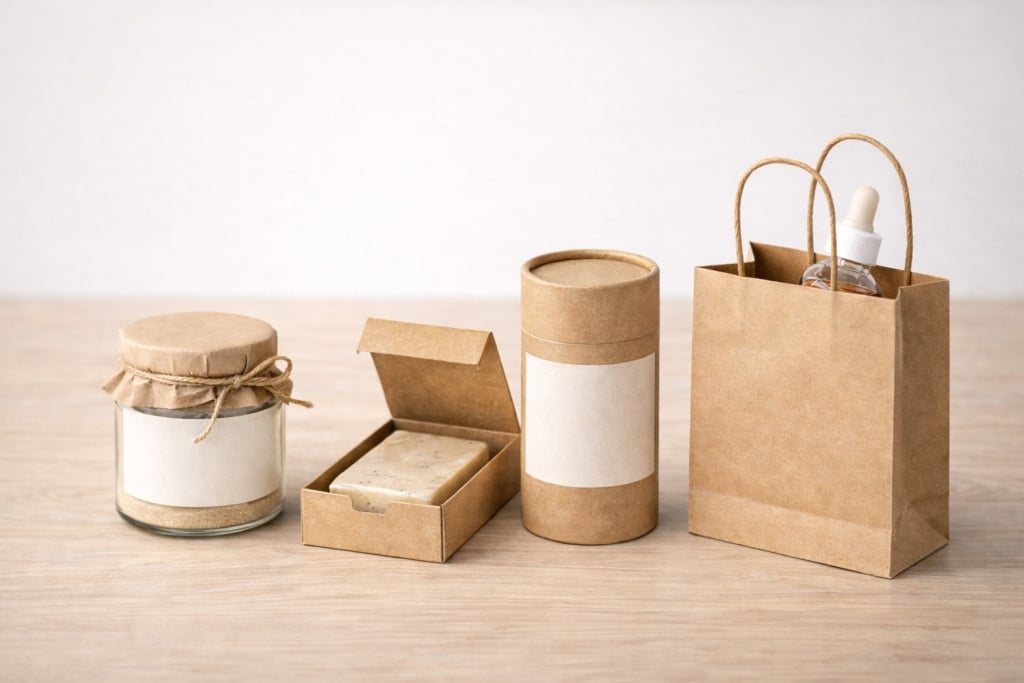
• kraft / natural papers → artisanal, sustainable, warm
• glossy coated stocks → bright, pop, often more “commercial”
• soft-touch matte finishes → premium, modern, design-oriented
• windows / transparencies → trust (showing the product), food-friendly in many cases
If you want a direct bridge between idea and execution, thinking about custom packaging printing from the outset helps avoid concepts that are impractical or too expensive to produce.
4) Graphics: hierarchy before style
Graphics must immediately answer:
• What product is this?
• Who is it for?
• What is the main benefit?
• Which variant am I looking at?
Golden rule: first build the hierarchy, then the style.
If hierarchy is wrong, even the most beautiful design will not work.
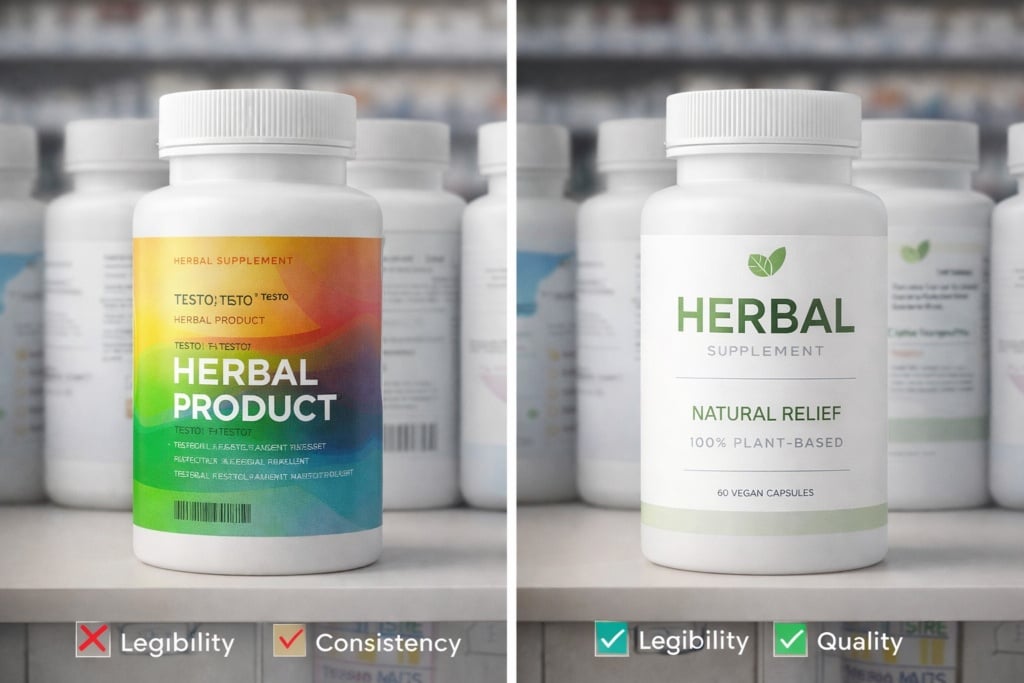
5) Typography and legibility: clarity is often the real “luxury”
Especially on small packs (labels, cartons, jars), typography makes the difference. Too many fonts, tiny sizes and low contrast lead to an amateur perception.
Types of packaging: what they are and when to use them
There are different types of packaging, each suited to specific contexts, products and objectives. Pixartprinting offers a complete range of solutions for custom packaging, designed to meet different product needs, sales channels and communication strategies.
Among the main types available on the site are:
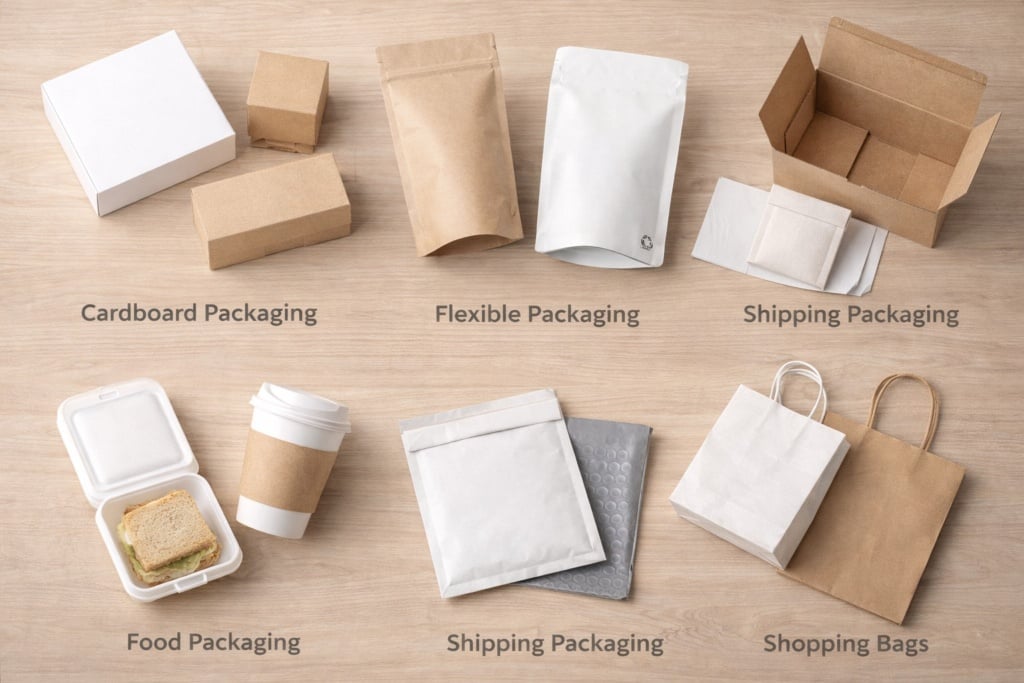
• Cardboard packaging – Includes boxes in various shapes and sizes, such as standard cartons, sleeve cartons, auto-lock bottom cartons, oval cartons and presentation boxes, ideal for retail products, gifts and premium packaging.
• Flexible packaging – Solutions such as doypacks (also recyclable) and flat pouches, perfect for food products or items that require lightweight, adaptable packaging.
• Shipping packaging – Postal boxes, shipping envelopes (cardboard or plastic) and other formats designed for e-commerce, protecting products during transport while optimising costs and volumes.
• Food packaging – Specific solutions for food products, designed to ensure safety, information clarity and compliance with sector requirements.
• Shopping bags and carriers – Customisable paper or fabric bags, ideal for retail stores, events or secondary packaging, combining practicality and branding.
The choice of packaging type depends on:
• sales channel (retail vs e-commerce)
• required function (protection vs communication)
• desired user experience (unboxing, reuse)
Choosing the right packaging for brands and businesses from the outset helps create packaging that is coherent with your strategy, communicates your values and optimises costs and performance.
How to design packaging step by step
Here is a concise but clear overview of the steps required to achieve high-quality packaging design.
1. Quick audit: competitors and context
Look at key competitors:
• which colours dominate the category?
• which promises are repeated by everyone?
• what can you do differently without seeming “out of place”?
Goal: stand out without becoming confusing.
2. Brief: measurable objectives
A useful brief does not say “I want modern packaging”. It says:
• it must communicate “accessible premium”
• it must highlight “sugar-free”
• it must work both on shelf and in photography
• it must stay under X € per unit
3. Concept: 2–3 directions, not 20 designs
Better to develop a few solid directions:
• Direction A (premium minimal)
• Direction B (natural artisanal)
• Direction C (tech / innovative)
Each direction with palette, typography, visual tone and references.
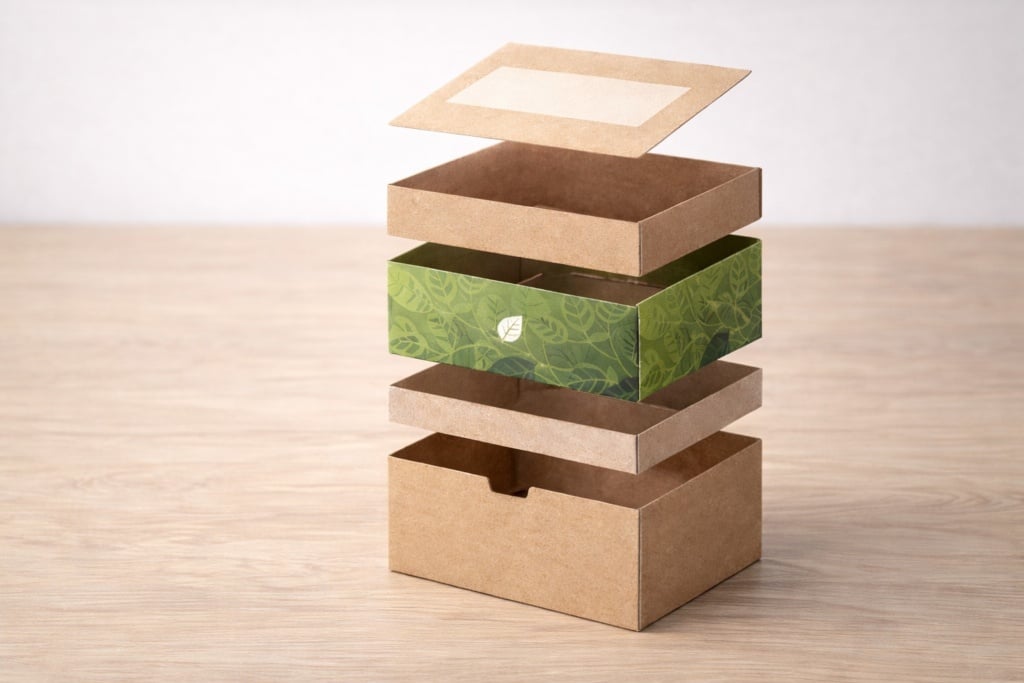
4. Prototyping and real testing
Test:
• legibility at a distance (shelf)
• performance in thumbnails (e-commerce)
• opening / closing
• robustness
If possible, print a mock-up. This is where costly mistakes are avoided.
5. Files and production: where the “real” design shows
Key checks:
• bleed and margins
• colours (CMYK, possible Pantone)
• blacks and small text
• finishes (laminations, varnishes, embossing)
• consistency across versions / variants
Successful packaging design examples (and what to learn)
It is not enough to say “that brand is good”: you need to understand why.
Premium minimalism: when “less” is worth more
In many premium categories (tech, high-end cosmetics, perfumery), what works is:
• reduced colour palettes
• plenty of white / negative space
• clean typography
• materials and finishes that convey quality
Lesson: premium rarely shouts; it whispers with confidence.
If your packaging has too many elements, it may look cheap even when it is not.

Artisanal and natural: trust and warmth
Food, specialty coffee and local products often benefit from:
• natural / kraft paper
• warm colours
• “human” illustrations
• storytelling (origin, ingredients, process)
Lesson: authenticity comes from coherence between materials and story.
If you claim “natural” but use ultra-glossy finishes and plastic-looking graphics, customers will perceive a disconnect.
E-commerce first: protection + experience
Brands selling online focus on:
• strong, well-sized boxes (less empty space, less damage)
• internal messages (inside print, cards)
• an opening experience worth sharing
Lesson: in e-commerce, packaging is customer experience.
It is often the only physical “store” you have.
Packaging design and sustainability: how to do it well (without greenwashing)
Sustainability is not just about “using green colours”. It is a set of choices:
• material reduction (fewer unnecessary layers)
• optimised formats (less empty space = lower transport costs and CO₂)
• recyclable or certified materials
• transparent communication (clear, verifiable claims)
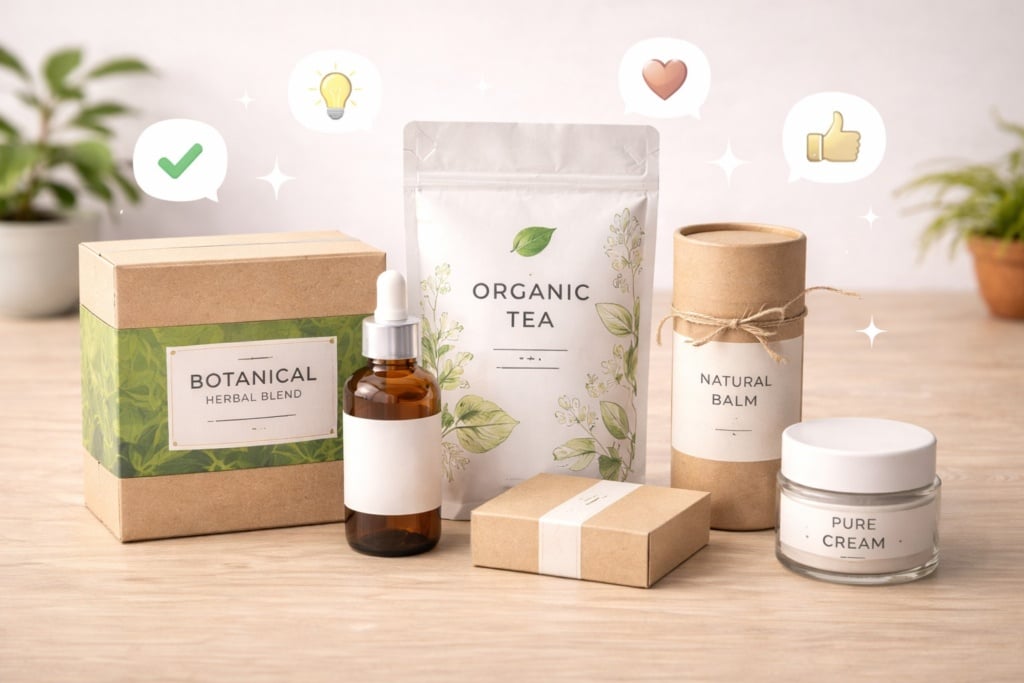
Practical tip: if your packaging is sustainable, say so precisely. Show concrete, real reasons why it is sustainable. Avoid vague claims such as “eco-friendly” without explanation.
Common mistakes that ruin packaging (even if the design is good)
- Wrong hierarchy: customers do not immediately understand what they are looking at
- Too much information on the front: visual overload and confusion
- Material inconsistent with the product (or positioning)
- Poor legibility: small fonts, low contrast
- Not thinking about photography: online, packaging must work at small size
- Skipping prototyping: issues only emerge once production has started
Mini-checklist: how to tell if your packaging design works
Try this 30-second test:
• At a glance, do I understand the category and main promise?
• In 3 seconds, can I read the brand and product name?
• Does the packaging feel coherent with the price I am asking?
• Is it recognisable in a small photo (thumbnail)?
• Does it open well? Can it be closed again if needed?
• Is it optimised for transport / shipping?
• Does the material support the story I am telling?
If 2–3 answers are “no”, you already have a clear list of priorities.
Packaging design FAQ
Packaging design and branding: what is the link?
Packaging is a key brand touchpoint. If it is coherent with tone, values and style, it strengthens recognition and trust.
How important is packaging design for a new product?
Extremely important: for a product without reputation, packaging is a mental shortcut to assess quality and reliability.
Is custom packaging always necessary?
It depends on the objective. If you want to differentiate and build a strong identity, often yes: custom packaging allows better alignment between design and production than generic solutions.
Should packaging differ for retail and e-commerce?
Often yes. Retail requires visual impact and legibility at a distance; e-commerce requires protection, volume optimisation and unboxing experience.
Packaging design: an ally for businesses
Packaging design is a concrete positioning lever: it can increase sales, perceived quality and brand loyalty, provided it is developed with a complete approach (strategy, structure, materials, graphics and production).
Well-designed packaging is not an extra cost, but an investment that works on product value every day, online and offline.