

What is creativity?
This broad question is perhaps the best place to start when it comes to telling Irene’s story.
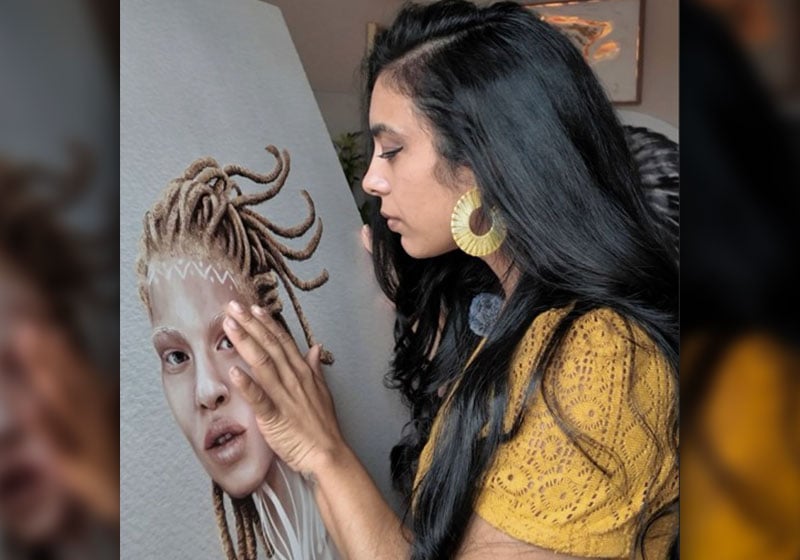
Her work reveals an incredible journey that begins with a vague idea and moves on to become a thought, a plan and a tangible action, followed by printing and hand finishing to create a work of art.
Irene has chosen to be fearless in her work, trusting her intuition as she gives form and substance to her artistic nature.
Her works perfectly combine the potential of digital technology and print on demand with exceptional manual skills.
The process that Irene narrates for us here started with a long-held desire for self-expression that took root at precisely the right moment, when everything was ready for her aspirations to turn into fully fledged, tangible artworks.
There is something fascinating about seeing her digital art come to life one pixel at a time and then become reality through digital printing.
Then she uses paints, resins and fabrics to complete the transformation and to give her creations extra vitality.
Irene demonstrates how human creativity, digital tools and printing can give rise to unique pieces of art.
Original items that convey ideas, personality and sensations.
Happy reading!
Who are you? Tell us about yourself, what you get up to in life, and your dreams, aspirations and talents. A short but faithful portrait!
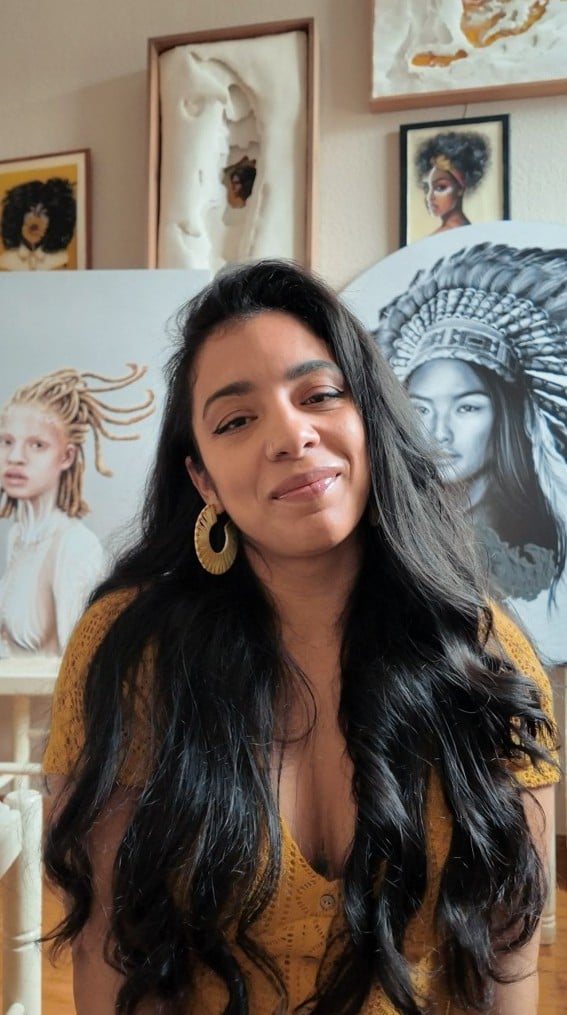
My name is Irene Díaz, and I’m a visual artist based in Spain. My work blends digital illustration with physical materials such as resin, texture and sculptural elements. I was born in Cuba and grew up surrounded by creativity, but it wasn’t until I moved to Spain that I finally allowed myself to pursue art fully. My dream has always been to build a world where my pieces feel alive — not just something to look at, but something to experience. I love creating portraits that connect with people, especially women, and transforming digital designs into tactile artworks with depth, texture and emotion. Art for me is both healing and expressive, and every project feels like a new chapter of my personal and creative journey.
Before telling us how your idea was born, can you explain to our readers what you produced using our printing services?
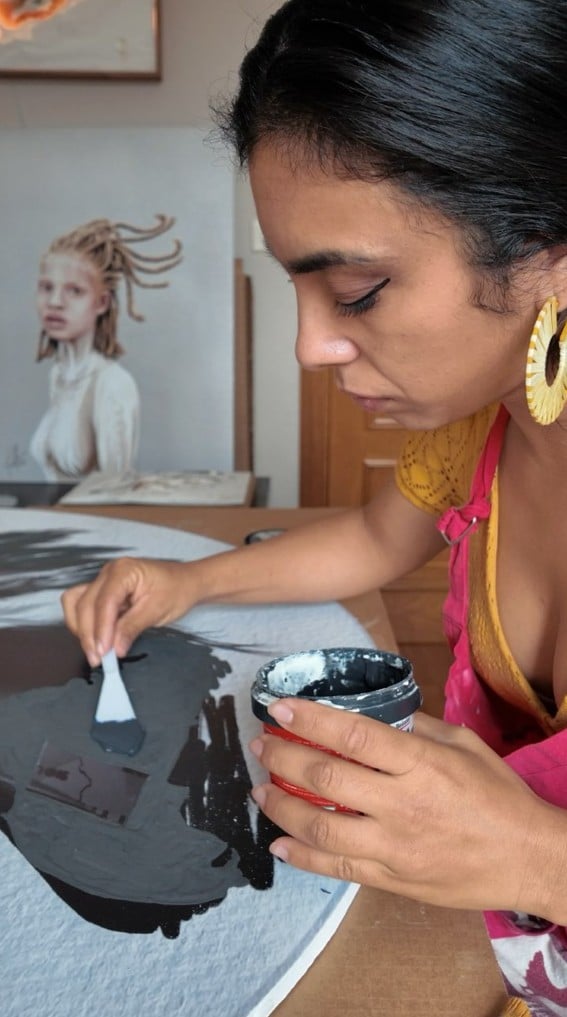
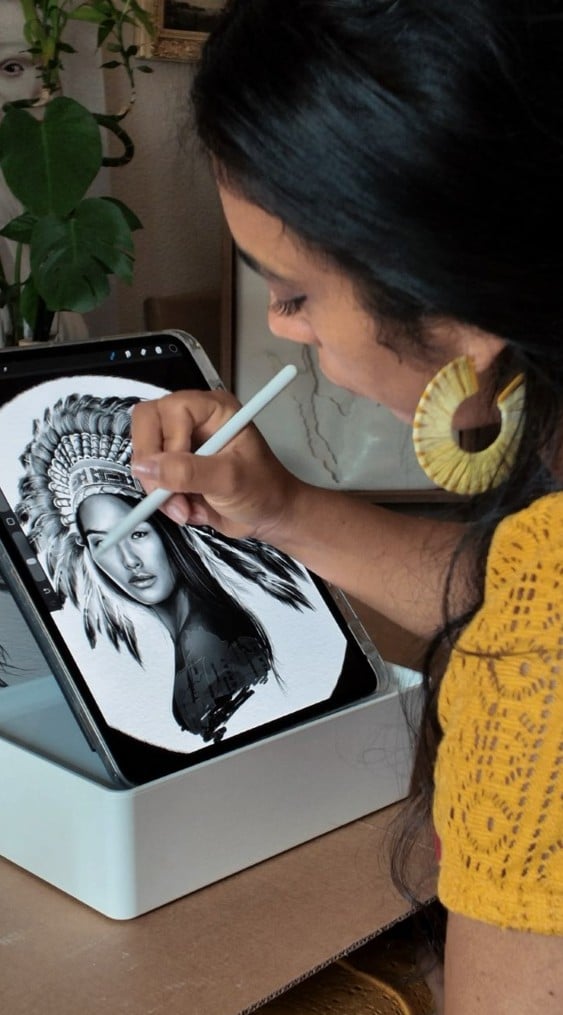
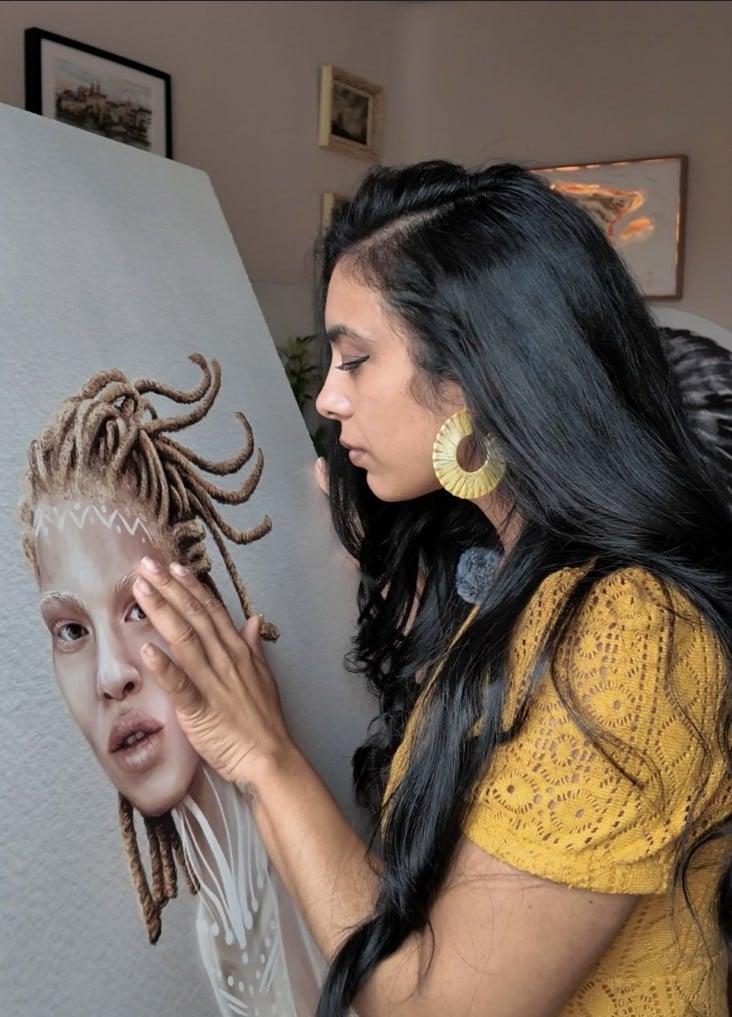
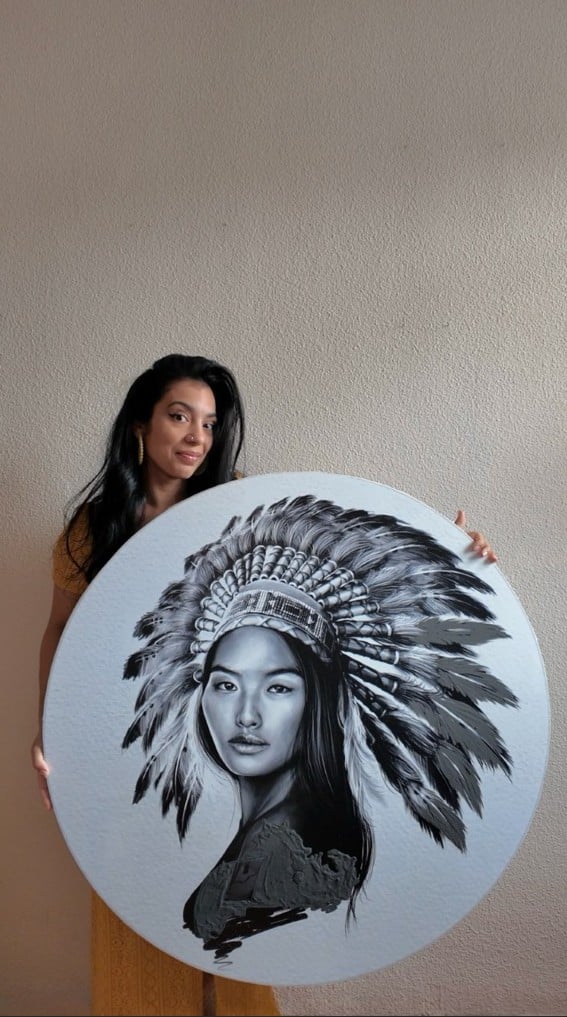
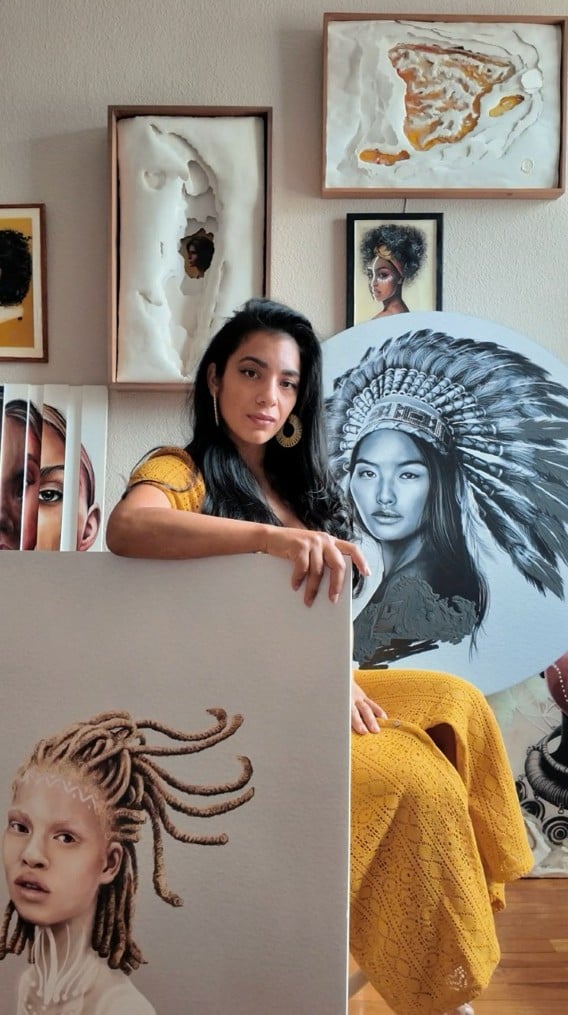
I used Pixartprinting to produce high-quality prints of two of my artworks: a portrait of an Indian woman and one of the albino women from my upcoming “Tree of Life” collection. These prints serve as the foundation for my mixed-media process — I print the digital artwork first, and then I transform it into a physical piece by adding layers of texture, sculptural details and resin. The quality of the printing is essential for me, because the colours, contrasts and details need to be perfect before I begin the transformation stage.
Let’s go back to the moment it all began. When did you come up with the idea for this design? Did you stumble across it by chance? Tell us a bit about how you devised the concept.
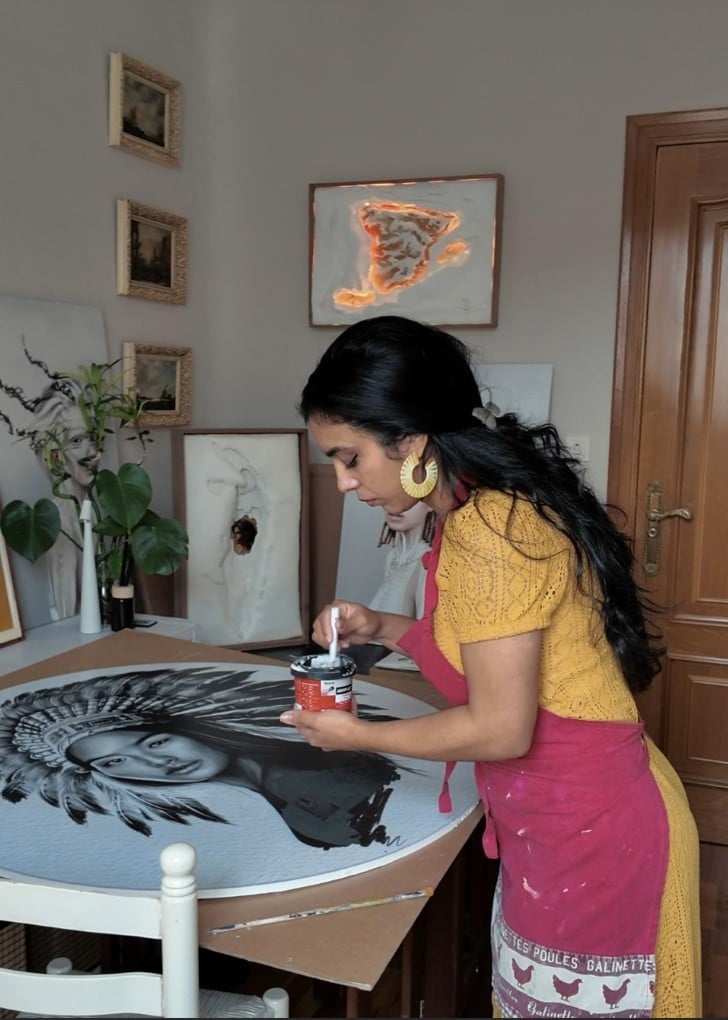
The idea came from my desire to combine two worlds I love equally: digital art and physical, handcrafted techniques. I didn’t want my illustrations to stay on a screen — I wanted to bring them to life. The concept for the Indian woman started with my fascination for powerful feminine expressions and cultural beauty. The “Tree of Life” albino woman came from a deeper artistic exploration: contrast, connection, and the idea that every woman carries her own story, her own roots. Little by little, I realised that printing my digital art was the perfect bridge between the digital world and the sculptural world I wanted to create.
Once you had found the right idea, you had to set an objective. What did you want to achieve with your idea?
My objective was to create artworks that feel multidimensional — pieces that begin digitally but end as physical, textured objects with presence and personality. I wanted the viewer to feel something beyond the visual: to sense the volume, the texture, the depth. I also wanted to develop a signature artistic style that represents me: warm, intimate, feminine and tactile.
With the idea for the design and the aim you wanted to achieve sorted, all you had to do was create it! How did you do it? What were the design phases and how many were there? Tell us about the process that brought your idea to life and made it ready for printing.
I always start digitally, sketching the character, refining the face and choosing the colours. Once the illustration feels complete, I prepare it for print by adjusting colour layers and ensuring it will translate perfectly to paper. After receiving the print, the second phase begins: the transformation. I add texture using modelling paste or sculptural materials, building depth in the skin, hair or background. Then I apply layers of resin to give the artwork shine, dimension and a sense of life. The process goes from digital → print → texture → sculptural layers → resin. Each step brings the piece closer to becoming a unique physical artwork.
It’s time to print! How did you use print-on-demand to produce your design? Which materials did you choose? And why did you choose these materials and this printing technique?
For both artworks, I chose high-quality paper with a smooth finish to keep every detail crisp and vibrant. Pixartprinting’s colours and definition give me the perfect base to work on. I use print-on-demand because it allows me to print exactly what I need, in the size I need, without compromising quality. Since my work requires durability — especially because I add texture and resin afterward — choosing reliable printing materials is crucial. Pixartprinting’s prints hold up perfectly during the transformation process.
Now it’s time to make the most of the products you created. How did it feel to see them finally printed?
It’s an amazing feeling. When I see the print for the first time, it’s like meeting the artwork in person after seeing it digitally for so long. Holding it in my hands makes the piece real — and it’s also the moment when my imagination starts running, thinking about all the textures and details I’ll add. It’s a mix of excitement and inspiration. Printing is when the artwork begins its second life.
This is only the start! What other projects do you have planned for the future? Can you share them with us?
I’m currently developing a new body of work that combines digital portraits, sculptural texture, resin and conceptual lighting. My “Tree of Life” series will expand with more pieces, including larger formats and more experimental finishes. I’m also planning to create sculptural artworks using white cement and 3D-printed elements, integrating digital and physical techniques even further. There’s so much I want to explore — and Pixartprinting will definitely continue being part of the beginning of each new piece.
@irene.diaz.art