

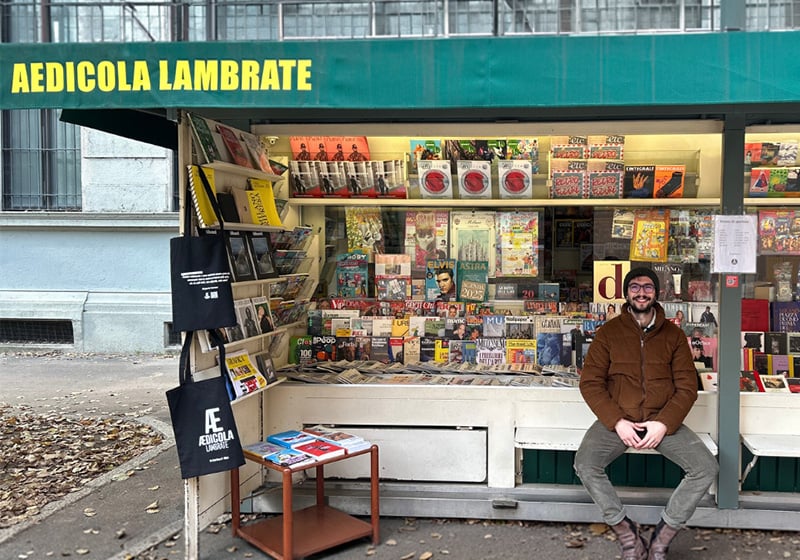
Can a simple stand selling books and newspapers drive social and cultural innovation in a city, halting gentrification along the way? That’s the idea behind AEdicola Lambrate, in Milan’s Lambrate neighbourhood, which has given a new lease of life to a newsstand that served residents for over 70 years until it was shuttered in 2022.
The project – conceived by a group consisting of Paolo Iabichino, Alioscia Bisceglia, Martina Pomponio and Michele Lupi, and later joined by journalist Alessandro Ghidini – is ambitious. The goal is to transform the kiosk from just a place to buy newspapers and magazines into a meeting spot where people can escape the solitude of the city and perform those “humble but vital rituals” that, as Alessandro wrote in one of his newsletters, make us feel real.
Since opening on 25 April 2024 – a date chosen for its special significance, as we’ll see later – AEdicola Lambrate has become what the founders like to call a “cultural outpost”: a place for locals and fans of the written word and printed page to hear readings and debates, talk about ideas, take part in workshops, see concerts and listen to radio programmes. In May 2026, the organisation launched its first open-air reading and publishing festival, Carta Canta, funded through a campaign on crowdfunding platform Rete del Dono and supported by the Fondazione di Comunità Milano. Alongside titles found on traditional newsstands, the shelves of AEdicola Lambrate carry a selection of books and magazines from small independent publishers, all meticulously selected by Alessandro.
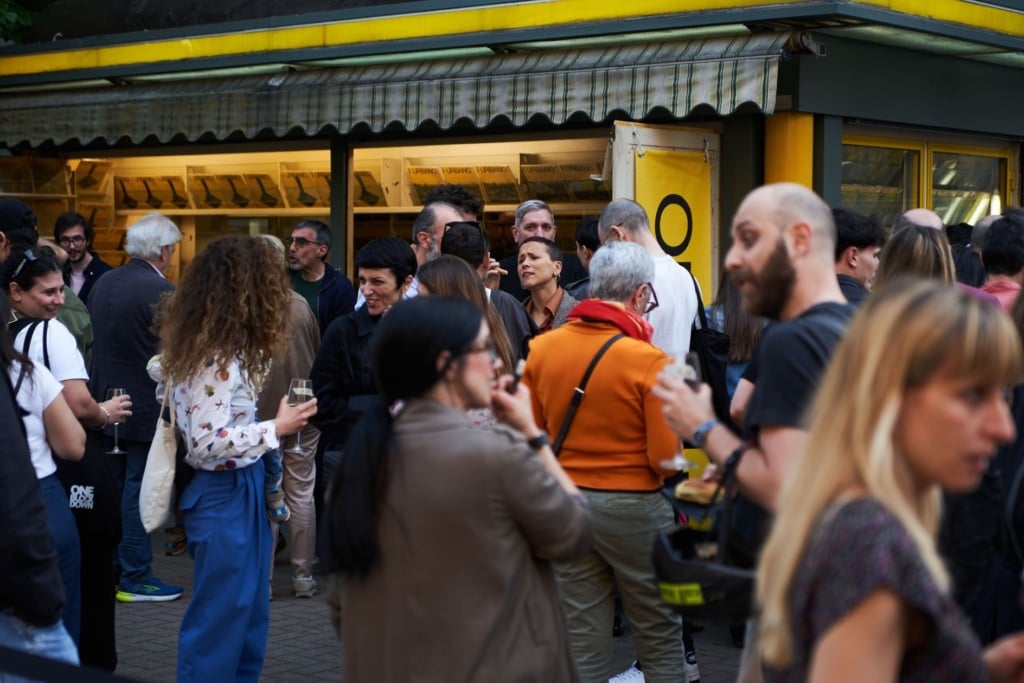
AEdicola Lambrate is a space – or a “little temple of culture”, if we go by the Latin etymology its name suggests – where paper is restored to its original function as a vehicle for expressing and spreading ideas. Here it carries a social value, too, fostering forms of in-person meeting and discussion that counter the alienating logic of digital media.
It’s an urban island of ink and paper where people can enjoy a leisurely chat about books and magazines, take part in a writing workshop or discuss the finer points of the Italian Constitution. It’s a place to regain the critical thinking and sense of civic duty that we seem to have lost in the grey area that separates the digital world from the real one.
Alessandro, running a news kiosk is a tough job, with early starts and late finishes for little pay. Why did you make the switch from journalist to news agent?
While I still write for some publications, AEdicola has become my main job. There’s no denying that there’s a very physical side to this work: you’re on your feet all day, moving heavy things about, enduring the cold in winter and heat in summer. But there’s also a strong social aspect, too: we don’t just sell newspapers and books, we talk to customers, we listen to their stories. In a society that has lost the habit of interacting with individuals as human beings rather than just human resources, I think this job has become more vital than ever.
Today, we need to rediscover those human intermediaries who can create direct contact with different communities and forge relationships between people. At AEdicola Lambrate, we’ve been working on this community model for the past two years, making the kiosk a meeting point that’s open to everyone, where they can read, swap ideas and even make new friends. We’re now seeing the fruits of our labour, financially too, and I’m really proud of what we’ve achieved so far.
The curtain just dropped on your Carta Canta festival. How did it go?
Carta Canta was a great big community workshop that gave readers and publishers the chance to not only buy and sell books and magazines, but also get to know one another and share ideas. We decided not to charge admission to the public and publishers, or to take a commission on sales, because we’re well aware of the challenges facing independent publishing. But without the backing of those who supported the project, either by funding it or providing venues for different events, we wouldn’t have been able to put on a three-day festival involving over 40 publishers.
Copyright: @parolemigranti_traduzione
I think it would have been hard to do better with the resources we had: there was an incredible turnout from Lambrate locals as well as people from the rest of Milan and beyond. Even on the rainy Sunday, people still turned up to events, umbrellas in hand. Perhaps the highlight for me was the Saturday, when we opened the publishers fair and saw the pavement fill with people. And then the Sunday evening, as I rolled down AEdicola’s shutters, when I sensed the event was drawing to a close, but not entirely.
The success of the first edition showed us that it really is possible put on this type festival, and we intend to run it again in the next few years. We’re convinced that the city and its neighbourhoods need regular events to get the most out of initiatives like these.
When you opened AEdicola Lambrate on 25 April 2024 [the day Italy celebrates its liberation from Fascism], you stocked the shelves with a single publication: the Italian Constitution. And you also closed the Carta Canta festival with a reading from this foundational text. Why was it important for you to talk about the Italian constitution at a literary festival?
To wrap up events at AEdicola, we borrowed the format from Rocco Rossitto’s podcast “Cara è la fine”, inviting people to read aloud the ending from a book they love. I chose to read the last page from our constitution, because I wanted to highlight the fact that any cultural festival, like any printed page, rests on two fundamental principles: democracy and freedom of thought. AEdicola is guided by these principles, which is why we don’t do marketing or branding for businesses. We want to promote the idea that the constitution, like any other text, is a living document, imbued with the humanity of reader and writer: we readers shape the message as much as the author. Through this and other initiatives, we want to nurture a social movement in which reading is a connector that helps people build relationships.
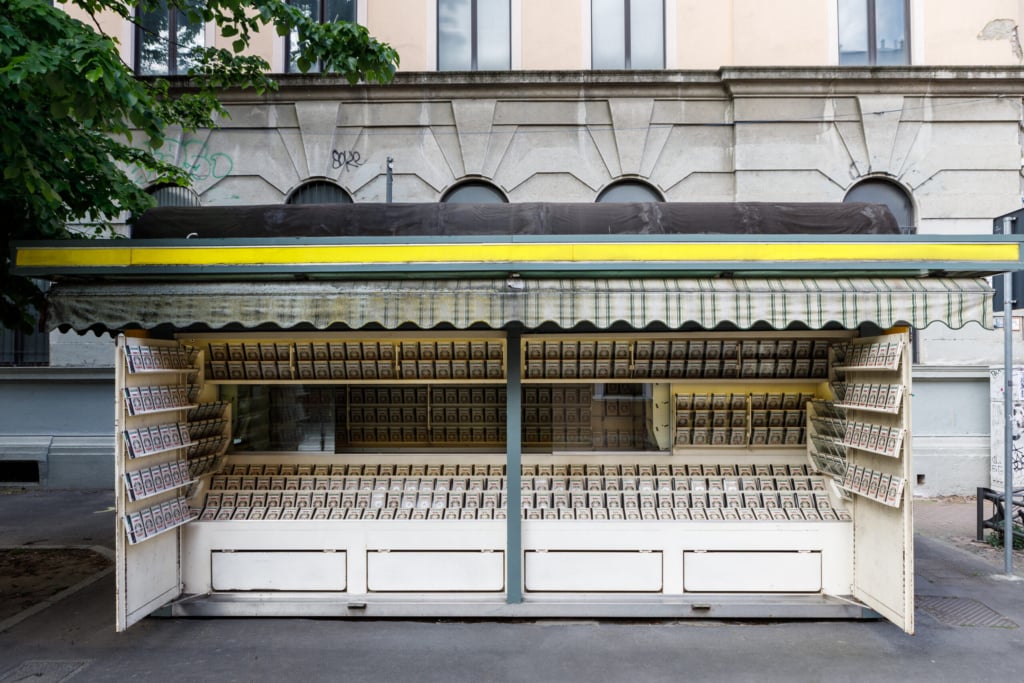
AEdicola Lambrate is part news kiosk, part independent bookshop, but most of all a space for kids and adults to meet. Is it hard using the printed page to build relationships and (re)create a sense of community and civic engagement?
It’s always a big gamble, because running an independent organisation
takes a strong identity, a clear vision of its mission and a consistent direction of travel. It’s normal for this to resonate with some people and to put others off.
The architect Marco Casagrande uses the term “urban acupuncture” to describe an alternative to major urban renewal projects. It’s an approach that involves local communities and encourages residents to take part in the creative process by using city spaces for new purposes and transforming their environment as they see fit. Through this strategy, a small-scale intervention can have a large-scale impact. That’s why I think AEdicola Lambrate can be one of the city’s urban acupuncture points: when left to its own devices and organised at the grassroots, culture creates a structure that supports healthy streets and neighbourhoods, because it fosters participation and brings people together.
We live at a time dominated by a performance mindset in which success is measured in quantitative terms (ticket sales, shares, likes etc.), but I believe that the value of initiatives like ours and that of NGOs, independent bookshops and cultural centres must be measured differently and take into account its long-term impact.
In a society where myriad forces are driving us towards a cultural homogenisation dictated by the market – think chain retailers and bookshops that tend to favour big publishers to the detriment of smaller ones – we’ve chosen to swim against the tide by adopting an inclusive and participatory approach to culture.
From silent book clubs to book presentations and workshops for adults and children, your calendar is packed with events for different types of reader. What has been the most surprising discovery since you opened two years ago?
I’ll give you two: the first was in January 2025, when we played host to Rocco Rossitto’s podcast “Cara è la fine”. Despite the cold and rain, 35 people turned up to read the end to their favourite book in front of our kiosk. This taught us that readers feel the need to bring books into their lives and share them with others, and that some forms of social interaction resist digitalisation because they are good for us. The second is the regulars who come to AEdicola to buy their favourite newspaper or magazine. In an ever more digital and frenetic world, it’s an act of resistance and a show of faith in the value of the printed word.
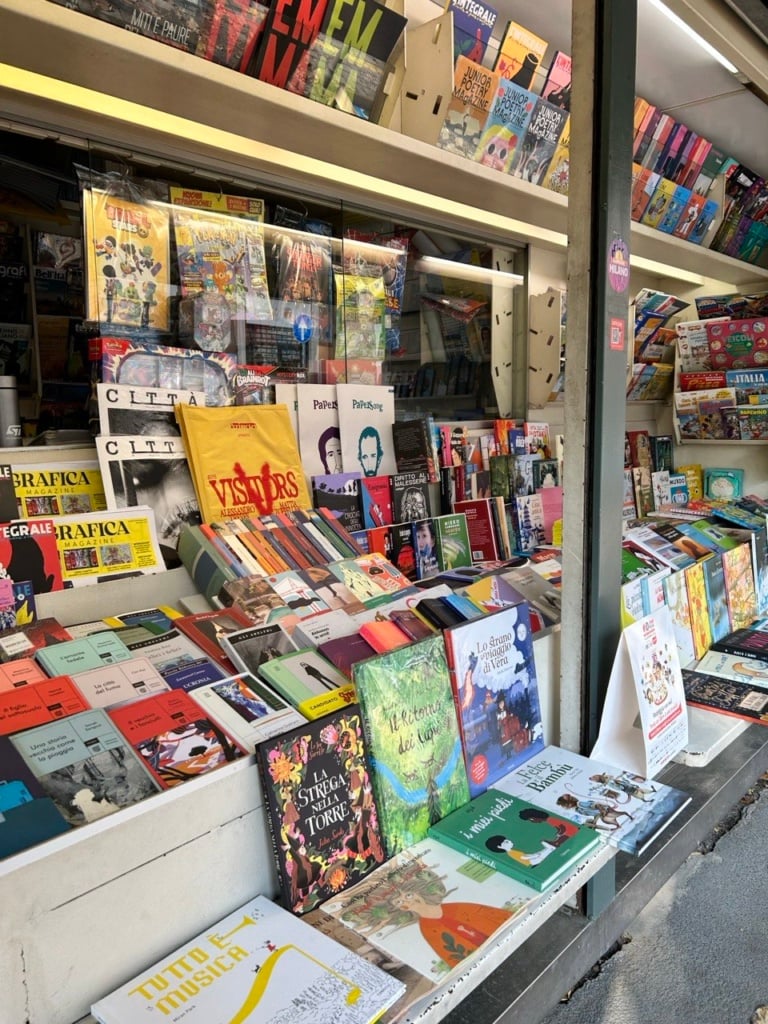
What challenges are there in doing culture “on the pavement”?
We believe in shared, horizontal culture, and we give everyone the chance to come to our events and exercise their liberty of thought and expression, without tickets, barriers to entry or other restrictions. We have to stop seeing culture as an abstract and elitist phenomenon, reserved for a few people and places only. For us, culture is also the absolutely extraordinary everyday stories that happen to us and that we choose to share: over the past few years, I’ve heard incredible tales from people who have come to see me. The pavement is the right place to hear them and discover that there’s also dignity in the ordinary.
How do you pick the books and magazines that you stock?
As well as the newspapers, magazines and stickers sold on traditional newsstands, I try to stock titles from the most interesting high-quality independent publishing houses on a range of topics. Sometimes publishers approach me, but customers give me recommendations, too. In any case, people can order any book or magazine at AEdicola, just like in a bookshop.
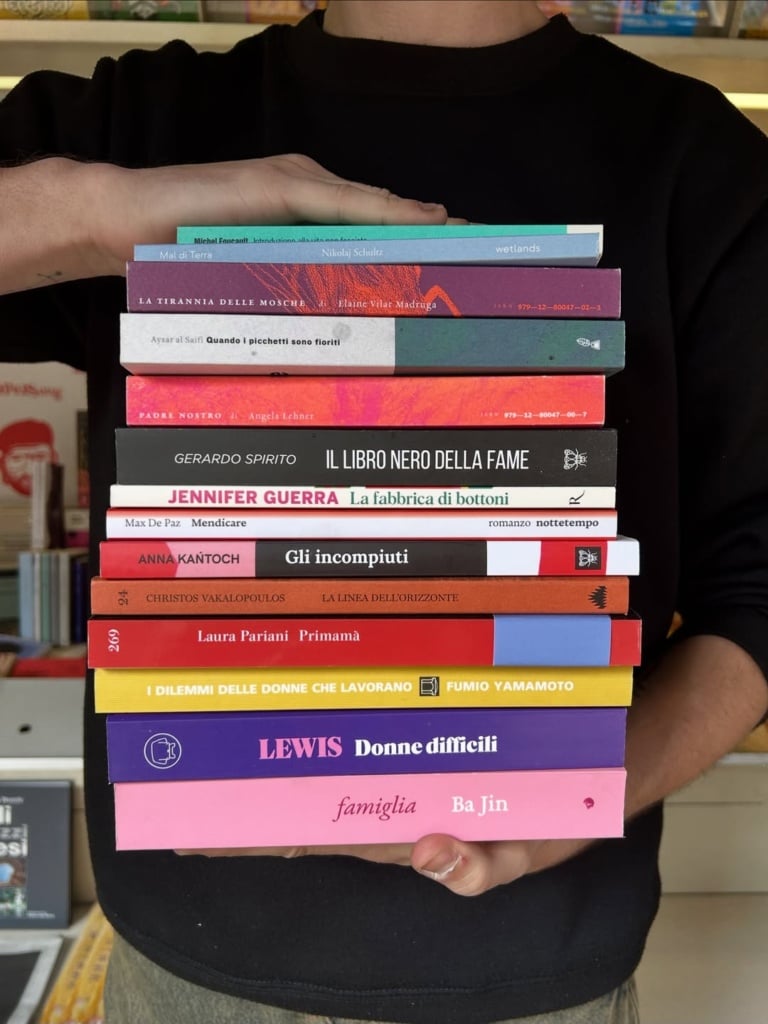
Which titles would you recommend readers of the Pixartprinting Blog?
Definitely PRINTLovers, a magazine for publishers, designers, print buyers and creatives that takes an in-depth look at trends, materials and techniques in printing and design. Then there’s Selvatico, a bi-annual magazine that explores a different topic in each issue through interviews, photo essays and short stories, taking an approach that blends art, design, words and pictures. Lastly, I recommend the Italo Svevo publishing house, which is fastidious about graphic design and the quality of its books.
Has anyone in Milan or elsewhere tried to replicate your model to try and stop the decline of neighbourhood newsstands?
A newsstand in Lecce is considering opening a kiosk using the AEdicola Lambrate logo, while newsstand owners and book sellers in a number of Italian cities have written to us for advice on how to run similar events and initiatives. Our model is replicable anywhere, by anyone who wants to take culture onto the street to promote reading, critical thinking and civic engagement.
If you want to say up to date with AEdicola Lambrate’s initiatives, you can sign up to their newsletter or follow their Instagram profile @aedicola_lambrate.
We would like to thank Aedicola Lambrate and the interviewee, Alessandro Ghidini, for kindly providing us with the images and granting us permission to use them in this article.