


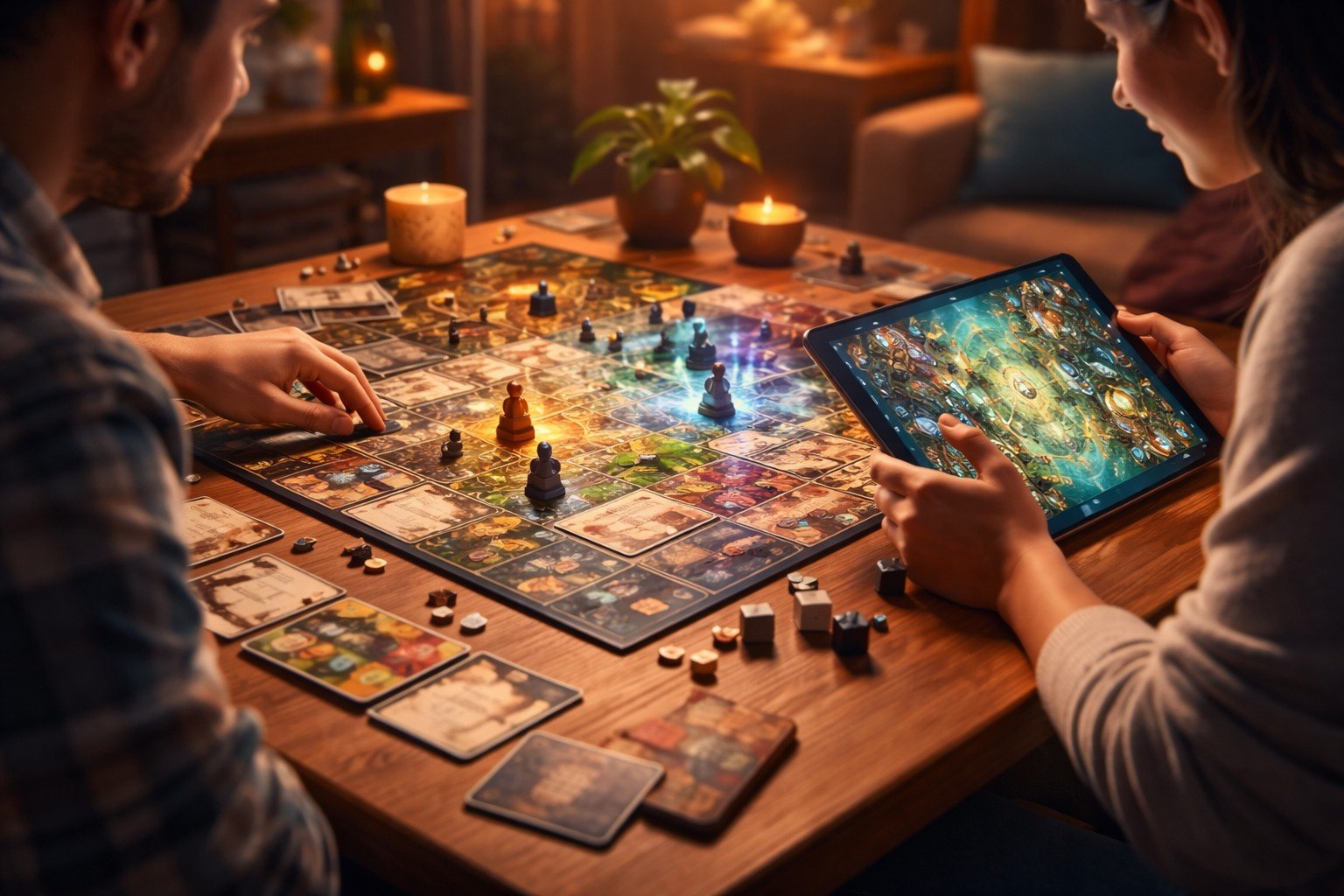
Table of Contents
RPGs have become increasingly complex and sophisticated over time. And their creators are always looking for new gameplay mechanisms to keep players’ interest.
Traditional board games like Vampire: The Masquerade, Cyberpunk and Call of Cthulhu revolve around paper-based materials like rulebooks, data sheets and playing cards, and, of course, dice.
Recently, however, new titles have come out that expertly mix exceptionally high-quality printed materials with interaction through apps on digital devices like smartphones and tablets.
How board games are integrating paper and digital
The board game sector is growing incessantly: according to Global Market Insights data, the global market was worth $12.2 billion in 2024. This growth is in part due to the launch of ‘hybrid’ games that mix traditional mechanics and materials with digital elements.
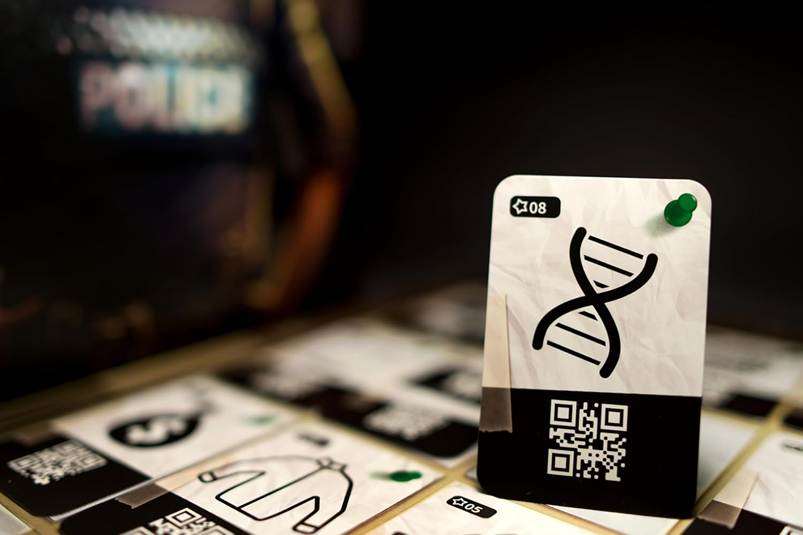
This is not simply a case of classic games being moved onto tablets, or people playing Dungeons & Dragons on their iPad. These are brand-new games that require players to be physically sat around a table, but which use digital technology as an ‘invisible engine’.
These new releases typically combine paper-based materials with apps or web platforms that act as the Dungeon Master or narrator. In this article, we’ll explore three games that make use of particularly innovative gameplay.
Alice is Missing: played in silence through texts
Alice is Missing is an unusual game devised by Spenser Starke and illustrated by Julianne Griepp. The game is designed for 3–5 players and stands out for the way it subverts the classic board game: players play in total silence.
The premise for the story reads like a modern thriller. The game is set in Silent Falls, a sleepy town in northern California, during the Christmas holidays. Alice Briarwood, a high school student, has been missing for three days. The players take on the roles of her family and friends (including her brother Jack, best friend Dakota and her secret boyfriend) and are tasked with finding out the truth about her disappearance.
However, instead of talking to the narrator around a table like traditional RPGs, players communicate exclusively via text message on their smartphone (using WhatsApp, Telegram or Discord), whether they are connected remotely or sat in the same room.

Printed materials are still an essential part of the game, however. The box contains 72 playing cards and a rulebook, and these are essential for defining the characters and guiding the pace of the narrative.
The gameplay is very simple. You create the characters (with others already predefined) during an initial 45-minute period, and the game session lasts a total of 90 minutes, accompanied by a video that acts as a timer and also provides a soundtrack to proceedings.
Players follow three key steps to create the characters and define the network of relationships:
- They choose a character card, which defines their past, and answer a specific question on their role;
- They record a voice message in complete secrecy, the last one their character sent to Alice but never received a reply;
- Each player is assigned a drive card that describes their reaction to the disappearance and their relationship with the others (for example it might reveal that Charlie is in love with Alice, or that Dakota hates Julia).
But the Clue Cards are the cornerstone of the gameplay: they are all numbered (80, 70, 60, etc.) and players must turn them over when the timer reaches that exact minute. These printed cards act as narrative ‘triggers’, providing secret instructions to the player who draws them and obliging them to add new plot elements to the chat. It could be the discovery of one of Alice’s personal items, or revealing a suspicious location, like the Lighthouse. The final Clue Card is number 10, which is therefore played during the final stages of the game and indicates how Alice is found.
The physical action of turning over a card in a silent room while the soundtrack builds in intensity generates enormous dramatic power. Players cannot talk out loud; they can only exchange messages via chat, while the mystery is slowly revealed before their eyes.
Without the tangible cards deciding players’ fate, the experience would clearly be nothing more than a chat room; with them, it becomes a profound and exciting RPG.
Chronicles of Crime: a tactile detective game in virtual reality
While Alice is Missing explores emotions, Chronicles of Crime is based on pure deduction; a mix of old-school crime fiction and modern technology like QR codes, virtual reality, smartphones and tablets.
It is a collaborative detective game for 1–4 players, set in contemporary London. The game’s unique feature is the fusion of a set of physical cards and an app, which is an essential part of the game.
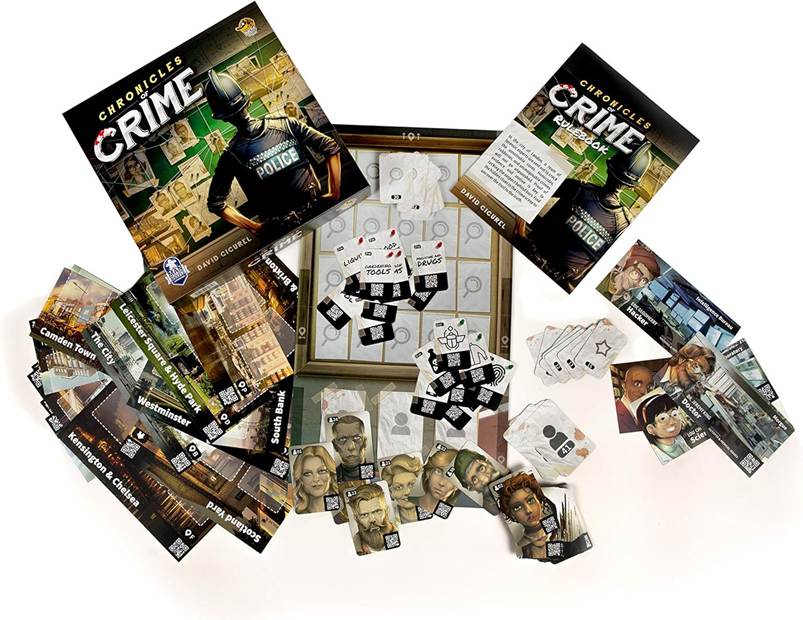
The box contains various printed materials:
- VR glasses to pair with your smartphone (deluxe version only)
- 55 character cards
- 52 evidence and special item cards
- 1 evidence board
- 17 location boards
- 4 forensic contact boards
- 1 rulebook
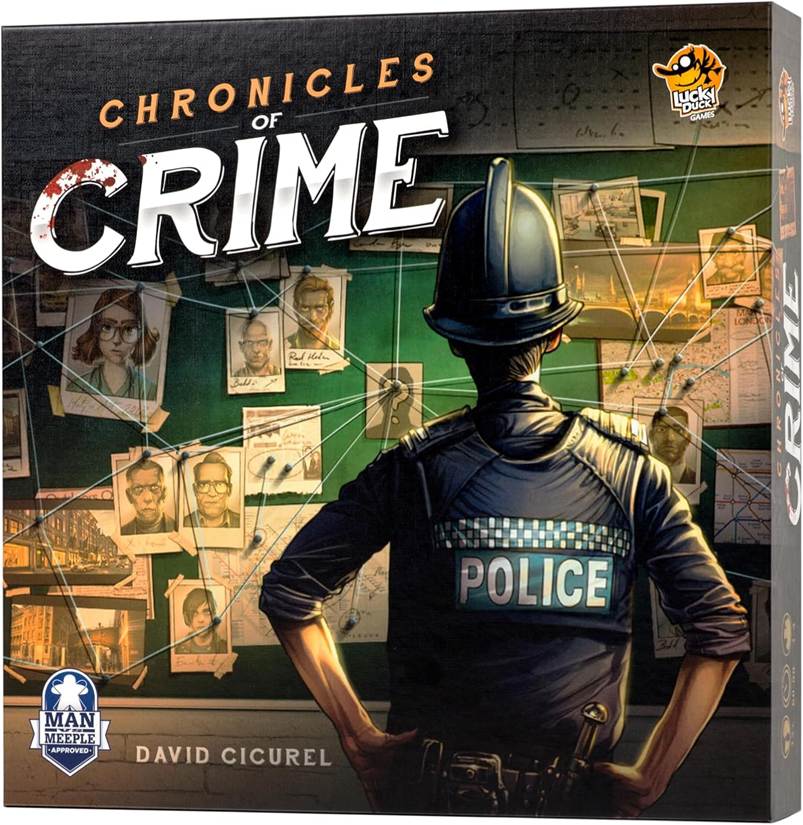
The aim of the game is simple: players must work together to solve a murder, theft or disappearance case by collecting concrete evidence to report to Scotland Yard.
Unlike classic detective games based purely on analysis and logic (like Sherlock Holmes Consulting Detective), here the action is more dynamic, and driven by three main mechanisms:
- Scanning QR codes: there are no dice or rulebooks to read through; every card (character, location or evidence) has a QR code that, once scanned using the app, allows the players to hunt for clues, move around, question suspects or request forensic investigations of artefacts. The app therefore literally decides the narrative context in real time. For example, scanning the ‘scientist’ card could reveal a frightened witness or a figure with evil intentions.
- Virtual reality investigations: using a smartphone, tablet or the VR glasses provided in the box, players can literally ‘view’ the crime scene from all angles and identify the physical clues to look for in the pack of cards.
- The time factor: each action (question or move) takes up virtual minutes within the game. The passing of time may change events in the story (for example a character may only be in a certain location at a particular time) and it also affects the final score.
Overall, the game offers a hybrid experience that in many respects recalls a ‘point and click’ video game, but which is played in person around a table, and where the deduction involves asking the right questions and finding the required evidence.
My Father’s Work: narrative legacy and digital memory
The final title in our selection has made exquisitely crafted materials its trademark feature. My Father’s Work is a competitive game for 2–4 players that requires a substantial time commitment: each game lasts approximately three hours.
The story describes ‘crazy’ experiments conducted over three generations. Players do not control a single character, but rather a dynasty of scientists attempting to complete their ancestor’s ‘masterwork’, balancing outlandish experiments with the need to maintain their sanity and not provoke fellow citizens’ wrath.
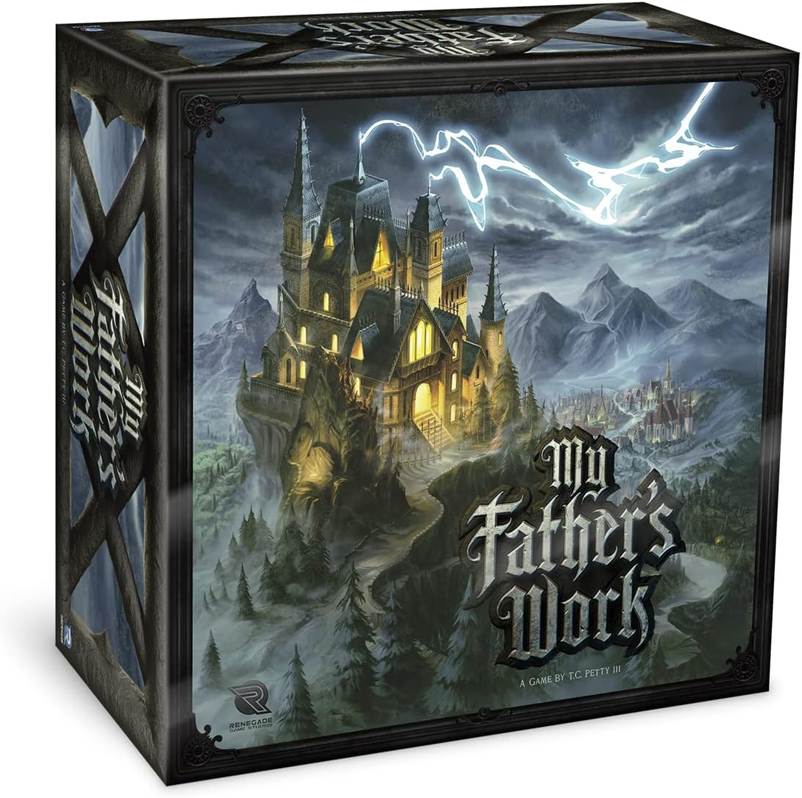
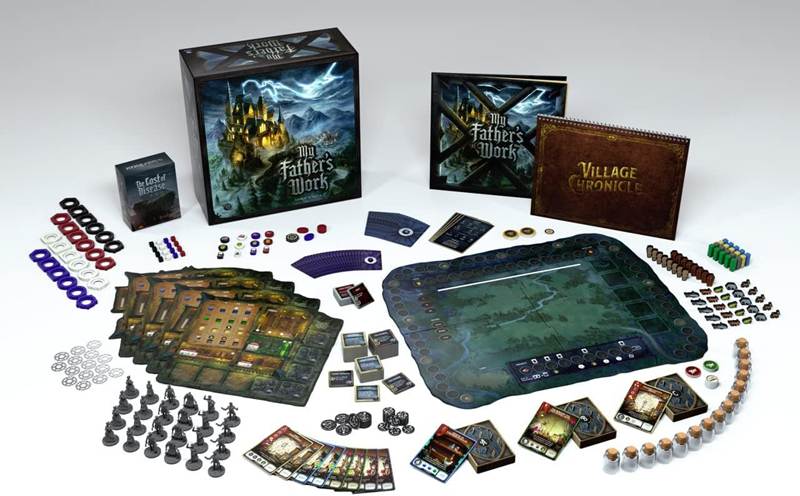
It has to be one of the most finely tuned board games on the market. The box is packed full of contents, including:
- 1 board book
- 4 player boards
- Lots of miniatures
- Cardboard coins
- Over 100 playing cards
- 3 replayable game scenarios
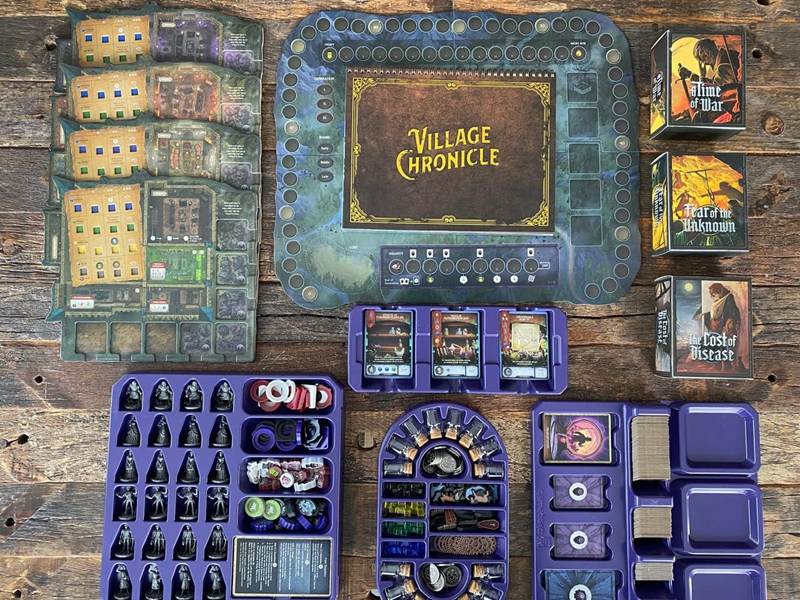
All this and much, much more besides. At the heart of the game is a blend of the tradition of beautiful printed materials – particularly the Village Chronicle book, which unveils how the story evolves based on players’ choices – and the use of an app, which never intrudes on the gameplay.
The app tells players to open the book on specific pages based on the decisions they have made, effectively creating a gradually evolving board. The combination works brilliantly: the app manages the complex logic of the various narrative ramifications (e.g. ‘If you unleashed a plague in generation 1, read page Y in generation 2’), but the content is presented in a printed, tactile and wonderfully illustrated format.
A symbiosis of physical and digital
The conclusion we can draw from analysing these three board games is that paper and digital technologies are not enemies: they can be used together as tools to create new stories and new ways of interacting.
The printed items are not devalued in these games; on the contrary, paper becomes an essential, tangible key used to unlock new digital content.
Even when apps, platforms, chats and virtual reality are being used, the action of shuffling the cards and turning the pages is still at the heart of the experience, while smartphones guide the players through their adventures.
All in all, this blend provides new and intriguing gameplay options for board game fans to enjoy. And for those who want to try their hand at devising and producing original board game adventures, there are countless avenues to explore!
As they say… ‘the only limit is your imagination’!