


Table of Contents
A brief history of stamps: from the Penny Black to modern philately
The tiny piece of paper that is the postage stamp has had an outsized impact on modern culture. Introduced to make collecting payment for postage simpler, it soon also became a highly visible design object and a medium where artists and illustrators could experiment with new techniques and express their creativity. At the same time, nation states capitalised on its ubiquity in society to promote national identity and celebrate cultural, political and scientific achievements.
From the very moment stamps were introduced, people started collecting them, a practice that became known as philately. Below we’ll look at the major milestones in their history and the reasons for their rapid spread. We’ll then show you a selection of famous stamps issued at historic moments to send important cultural and social messages.
The birth of the stamp
The world’s first postage stamps entered circulation on 1 May 1840 in England. The brainchild of Sir Rowland Hill, they were introduced as part of reforms he proposed to simplify the payment of postage. Under the new system, payment was to be collected from the sender rather than the recipient, as had been the case previously. Once parliament had voted through his changes, Hill personally oversaw the design of the stamp, hiring Henry Corbould to reproduce the profile of Queen Vittoria that William Wyon had sculpted for a medal commemorating the monarch’s visit to the City of London. Hill then had the stamps printed on special paper using a process called intaglio printing. He even devised a simple but effective counterfeit prevention system: the two bottom corners of each stamp carried letters showing its exact position in the printed sheet.
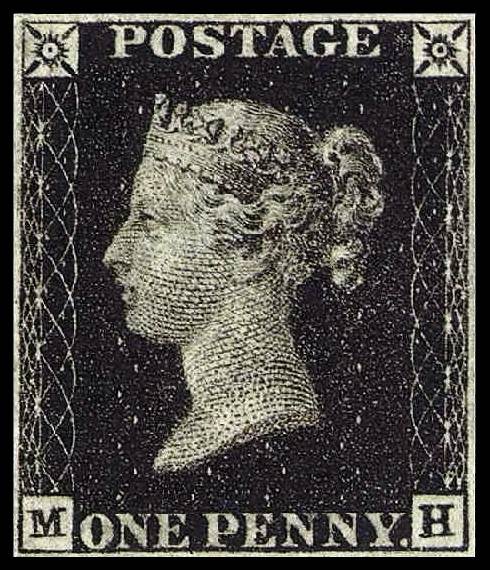
Known as the Penny Black, this first stamp could be used to send a letter weighing up to 14 g anywhere in the United Kingdom for a fixed rate of one penny, regardless of distance travelled. Unlike today’s stamps, Penny Blacks didn’t have perforated edges to separate them easily – you had to cut them out from the sheet with scissors.
Adoption spreads
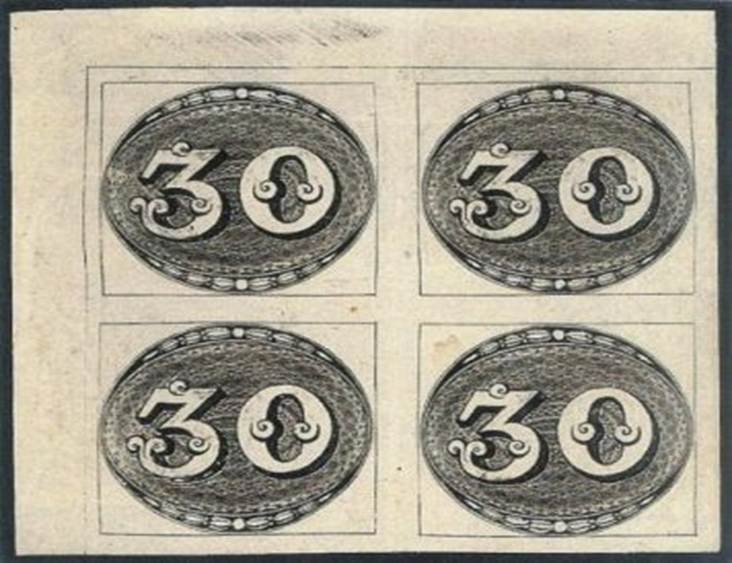
Postage stamps were soon adopted by other nations: in 1843 Switzerland became the second country in the world to use them, followed later that year by Brazil, which issued a series of 30, 60 and 90 reis stamps known as “Bull’s Eyes” because of their oval settings.
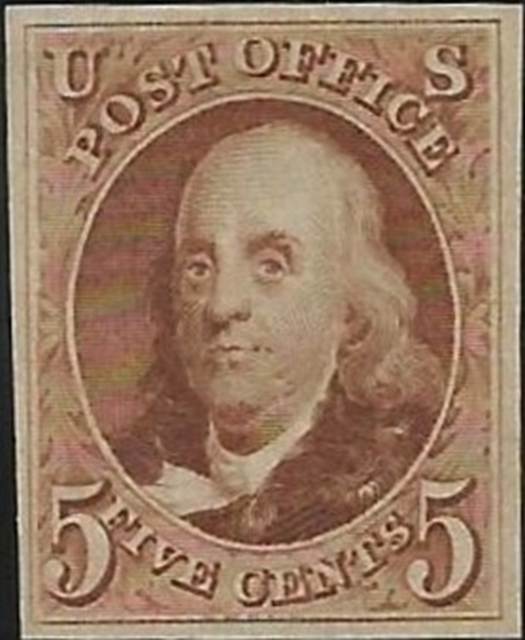
The United States got in on the act in 1847, issuing a series of 5- and 10-cent stamps featuring Benjamin Franklin, the first postmaster general of the United States Postal Service, and George Washington, one of the founding fathers and the first president of the country. These stamps began a long tradition of iconography designed to create a sense of belonging to a young nation by symbolically bringing together territories that were far apart geographically and culturally.
Before long, every European nation was printing stamps, and stamp collecting was all the rage. There were two main reasons for the rapid uptake of stamps: first, their convenience made the mail system accessible, simplifying payment and favouring the circulation of documents and goods within countries. Second, the stamp was a highly symbolic piece of graphic design that gave artists and printers the chance to try out new graphic styles and printing techniques, leading to a flood of miniature masterpieces.
The origins of philately
People were quick to grasp the artistic and historic value of stamps, so they naturally began to collect and classify them. In 1862, John Edward Gray, a zoologist at the British Museum, published the world’s first stamp catalogue, A Hand Catalogue of Postage Stamps for the Use of the Collector. Classifying stamps by country of issue, variant and other characteristics, it marked the birth of philately, the systematic study of stamps using a common set of terms. At the same time, philatelic societies began springing up all over the world, as stamp collecting became a fashionable hobby.
The members of these organisations – collectors, historians, scholars of graphic design, printers, stamp traders, librarians or just stamp buffs – swapped stamps, published specialist magazines and catalogues, and devised ever more rigorous and scientific systems for classifying them. They also studied methods for detecting counterfeits, which were widespread at the time due to soaring demand, and shared their hallmarks to make spotting forgeries easier. Philatelic societies also researched printing techniques, organised conferences and exhibitions, and helped to preserve the first public stamp collections.

When stamps celebrate history
Thousands of stamps have been made to mark political and cultural moments in modern history, helping governments shape collective imaginations and rally citizens behind causes. Below we’ve put together a selection of famous examples from around the world.
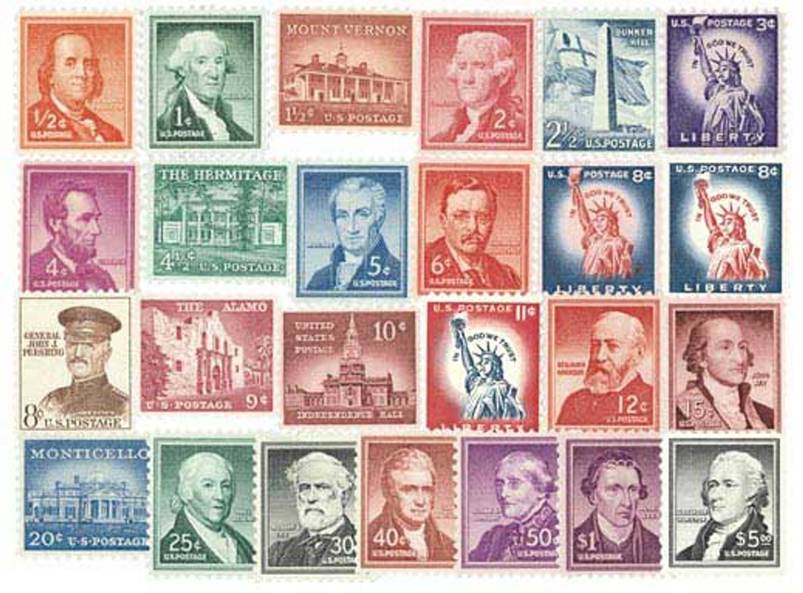
The Liberty Issue was a series of stamps produced in the United States between 1954 and 1965. With the Cold War at its height, these designs were meant to counter Soviet ideology by promoting the values of democracy and national unity. As well as symbols of American identity such as the Statue of Liberty, they featured historic figures from the nation’s history, including Abraham Lincoln and George Washington.
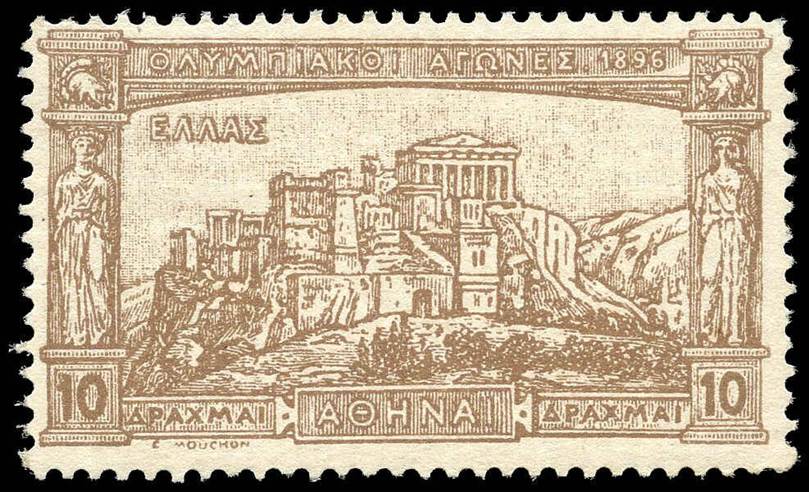
The stamps issued by Greece in 1896, the birth year of the modern Olympics, are one of the first examples of international visual marketing for a sporting event. As the host of the first Olympic Games, Greece released a series of 12 stamps to mark the occasion. They carried classic iconography of columns, temples and athletes, creating a symbolic bridge between past and present.
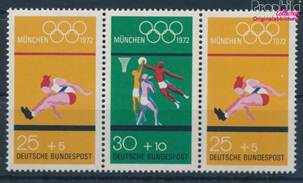
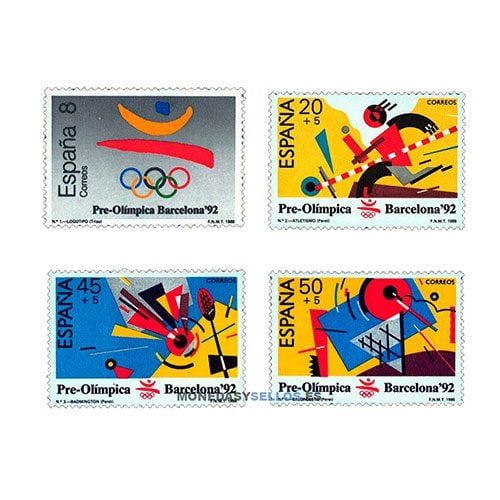
Other host nations have followed Greece’s lead over the years and issued their own stamps commemorating the games. These series reflect artistic trends and show how, despite their diminutive size, stamps can be a canvas for artistic experimentation as well as a medium for visual communication with mass reach.
In 1972, UNESCO established the World Heritage List as part of a new international system to protect the world’s sites of cultural and natural heritage. Since then, many countries have used stamps to promote these archaeological sites, historic cities, religious monuments and national parks. And as technology has advanced, so too has the design language used. Today, stamps feature complex colour palettes and layouts that wouldn’t be out of place on a poster or postcard.
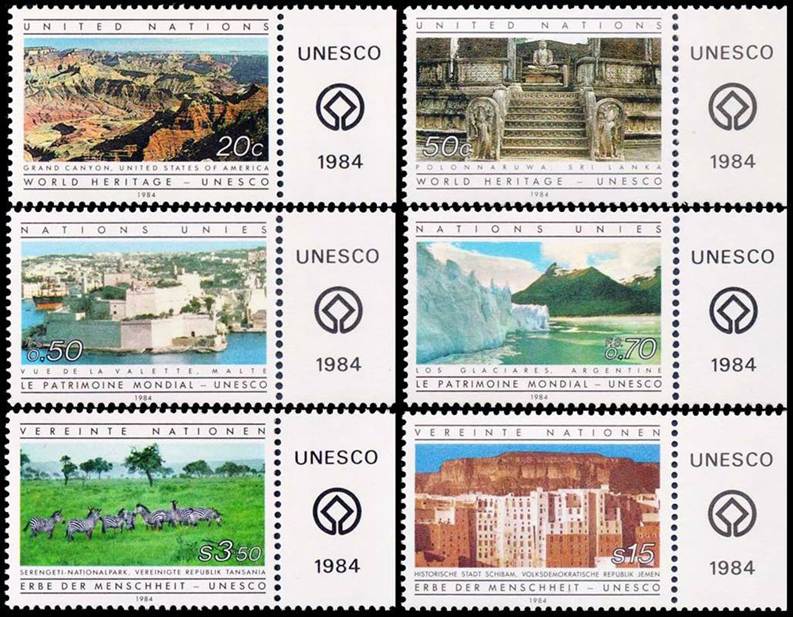
Despite the relentless digitalisation of communications, we still use stamps for postage, and countries still use them to promote their heritage and values.
Experimentation and innovation by artists around the world continues to make the humble postage stamp a fascinating design object to admire, covet and collect.