


Table of Contents
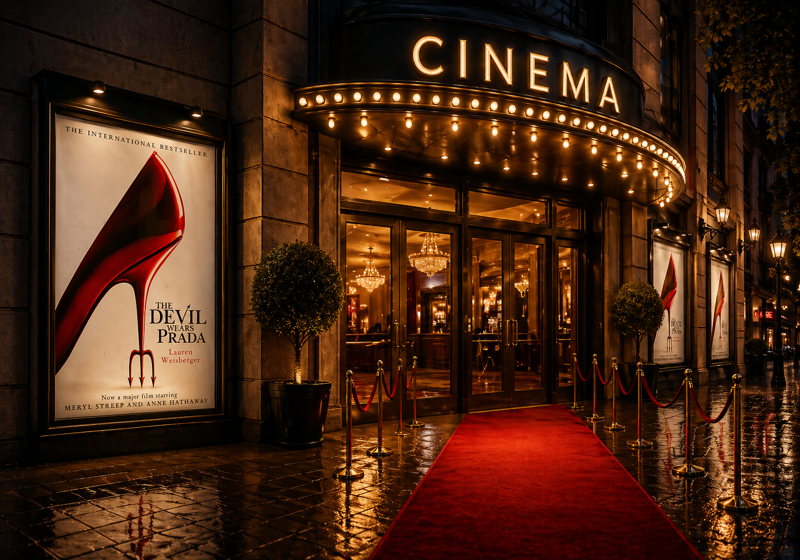
One of the most eagerly anticipated sequels of recent decades is now showing in cinemas around the world. Exactly twenty years on from the release of the instant classic The Devil Wears Prada, the tales of cinema’s most famous fashion magazine and its tyrannical editor-in-chief are once again on the big screen.
The 2006 film was an absolute masterpiece. It was as engaging, exciting and absorbing as the mainstream American cinema of the 1980s and 1990s, attributes that seemed to have vanished with the turn of the millennium!
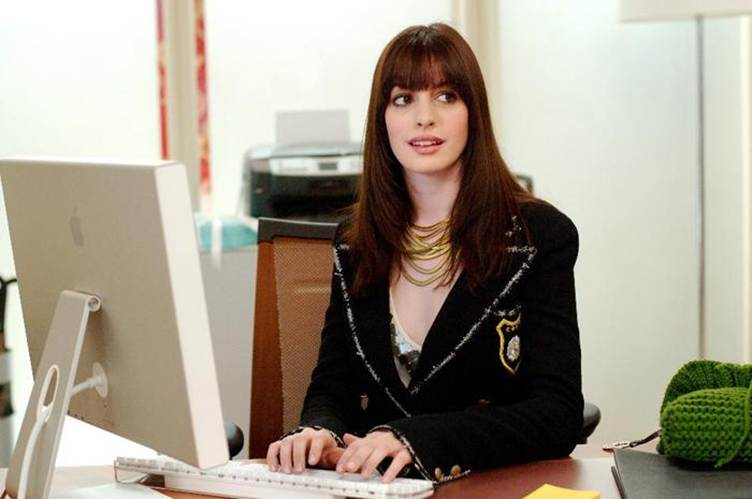
The film’s plot – in which the young and inexperienced journalism student Andy Sachs (Anne Hathaway) finds herself out of her depth working in an ultra-competitive environment and in the clutches of an icy boss, the now iconic Miranda Priestly – was both funny and astute, describing circumstances that would become commonplace in many offices in the years that followed.
And then there was the stellar cast, good enough to rival the finest pop cinema creations. The director, David Frankel, who had directed several episodes of another 2000s cult favourite, Sex and the City. And the producer, Wendy Finerman, who – speaking of legends – had previously produced Forrest Gump.
In this article, to mark the release of The Devil Wears Prada 2, we thought we’d celebrate the best posters made to advertise this legendary glamour-filled comedy, as well as the universe in which the film is set, one we now look back upon with a touch of nostalgia: the world of fashion magazines!
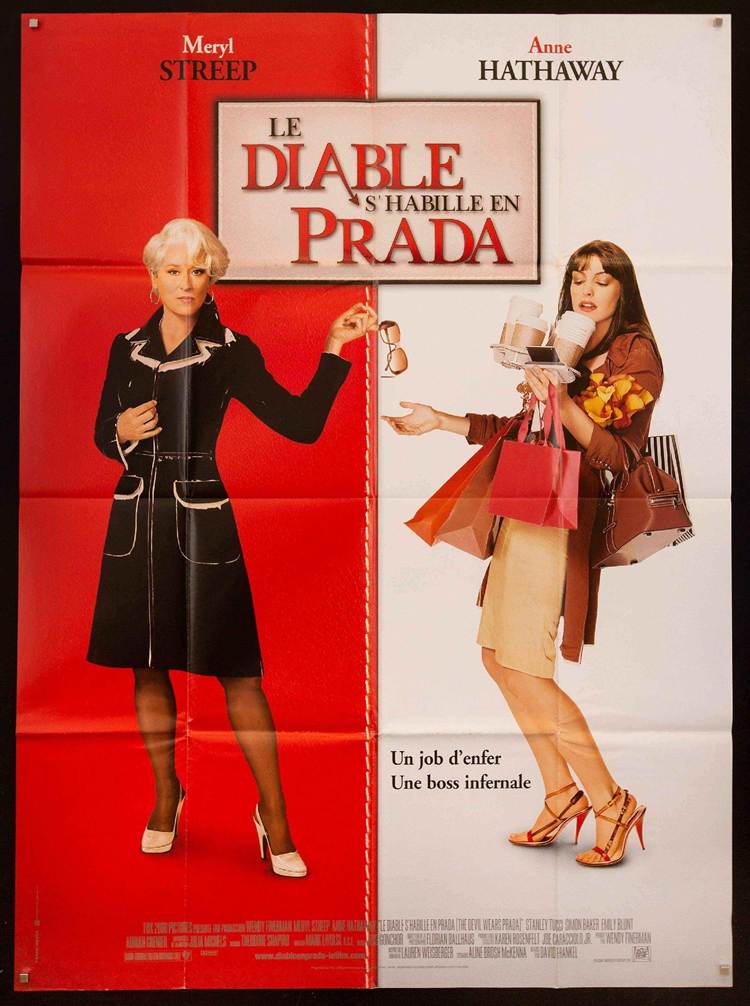
The original The Devil Wears Prada poster
As we’ve already mentioned, The Devil Wears Prada was unforgettable for several reasons.
Not least the two lead characters: the tyrannical Miranda Priestly, whose famous lines have now become household expressions, and who was modelled on Anna Wintour, Vogue’s former editor. And Andy Sachs, the young and inexperienced small-town girl (who asks a rather famous caller ‘Can you please spell “Gabbana”?’) and aspiring writer who ends up working in the editorial office of the fashion sector’s most influential magazine.
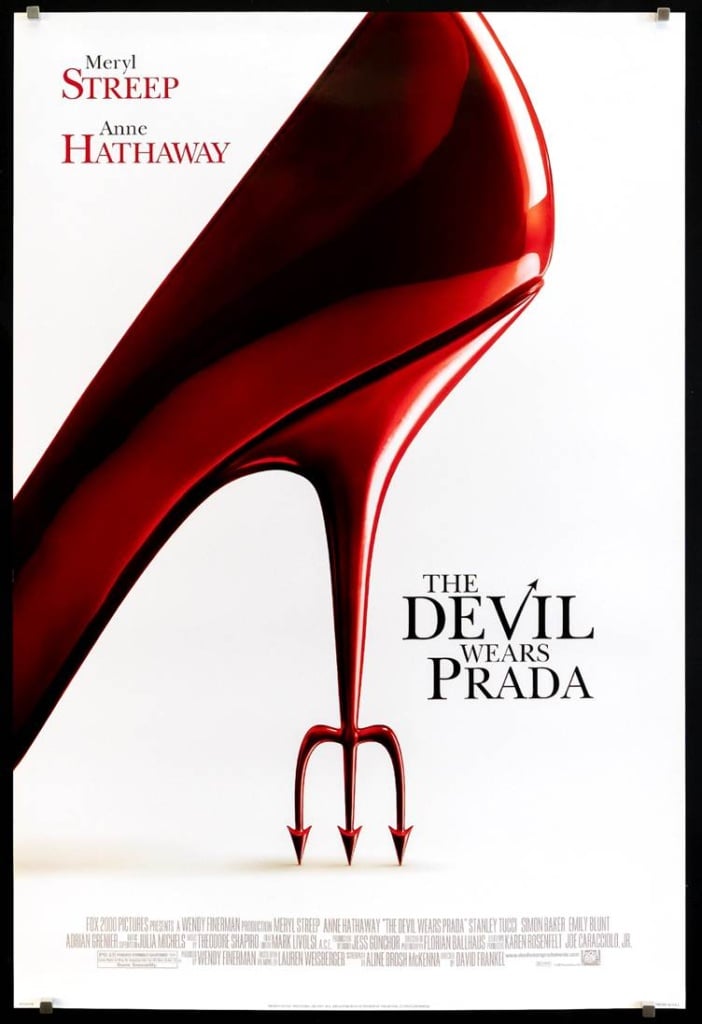
And then, of course, there was the poster, featuring a devilish 12-inch heel shoe ending with a Luciferian trident.
This iconic image has a curious backstory. It was only meant to be used as a teaser for the film, and then replaced by the official poster when the movie was released. But it was so effective, it came to symbolise the whole film.
The poster was designed by Twentieth Century Fox‘s marketing team, led at the time by Pam Levine and Tony Sella. The producer Wendy Finerman described their brilliant idea in an interview at the time of the film’s release: ‘[They said] let’s figure out what we can make our symbol. What is our thing so that when you [see it] it says Devil Wears Prada? I think they achieved everything they set out to [do]. You know, you see the bus stops now with that shoe on it. See – shoes matter!’.
The marketing for The Devil Wears Prada 2 and nostalgia for the bygone world of printed magazines
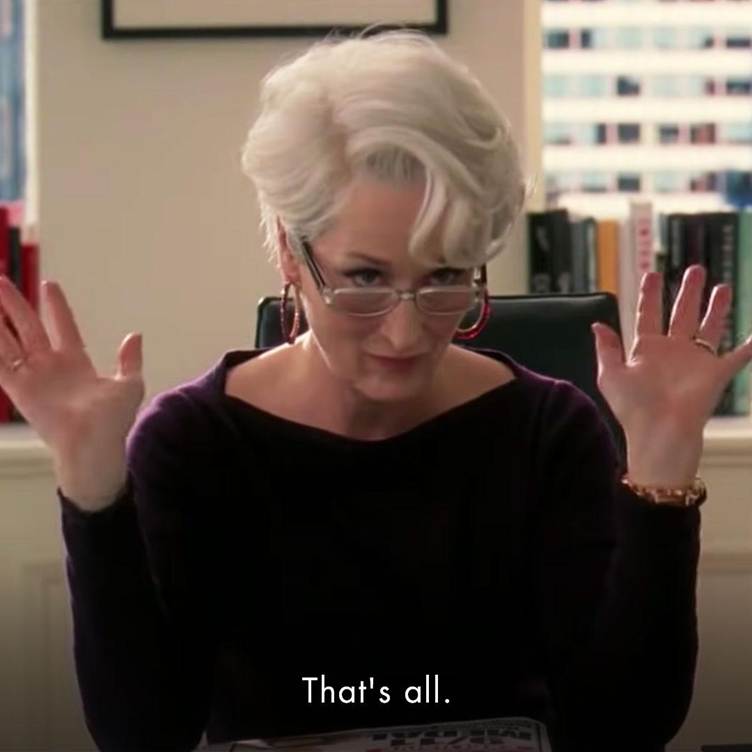
Speaking of unforgettable gems from The Devil Wears Prada, we shouldn’t forget the film’s much-quoted lines, and in particular, Miranda’s scathing comments, like her famous rebuke ‘Florals? For spring? Groundbreaking!’ or the pithy ‘That’s all’, which has become an internet meme.
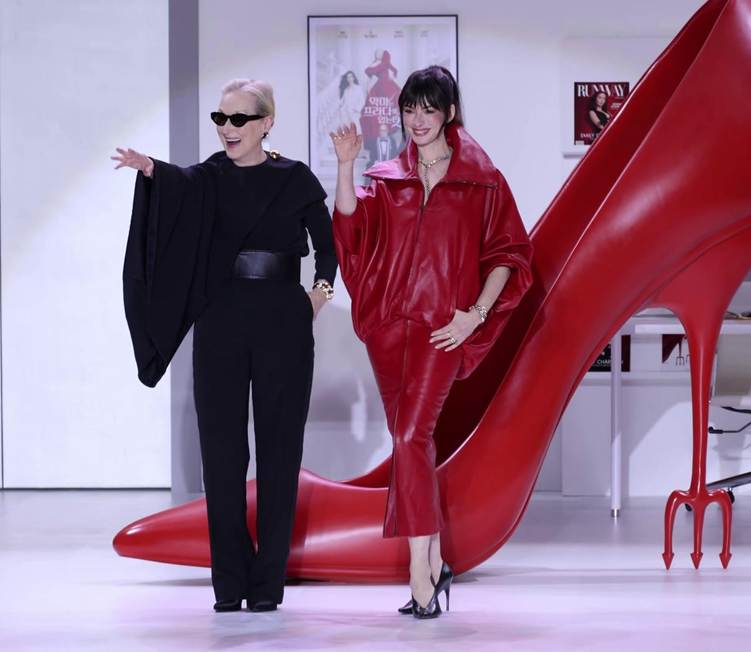
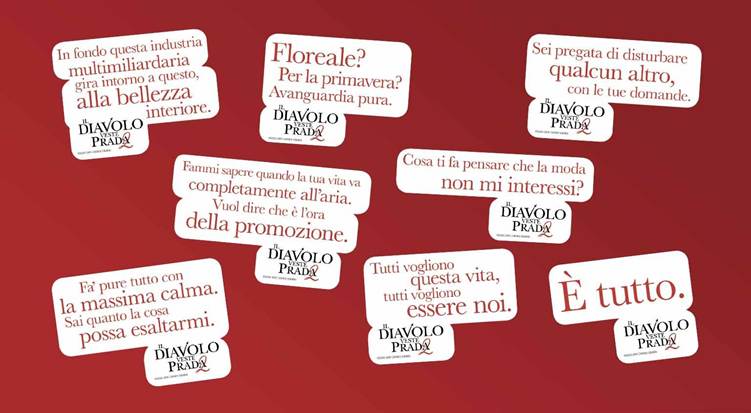
It’s no surprise, then, that some cinemas have combined the release of the sequel to The Devil Wears Prada with a marketing campaign based on stickers featuring famous lines from the film. Meanwhile, Meryl Streep has been wearing a cerulean blue sweater – the star of one of the 2006 film’s most iconic scenes – during the sequel’s launch tour, and even appeared on the cover of Vogue in character as Miranda Priestly, posing alongside the icon that inspired the character: Vogue’s former editor-in-chief Anna Wintour.
These gimmicks work partly because they reference elements from The Devil Wears Prada that have now gained cult status, and partly because they make us cast our minds back to twenty years ago. As marketing expert Ali Kaltman noted, the campaign ‘feels less like a movie rollout and more like a full cultural takeover’.
And there is also nostalgia for a something that has now almost entirely disappeared: the world of fashion publishing. WhenThe Devil Wears Prada was released, glossy fashion mags were thriving on the back of their 1990s wave of popularity. The golden age of New York-based fashion publications like Vogue and Vanity Fair combined a touch of madness, sky-high salaries for editors, despotic power for the visionary editors-in-chief, and legendary parties attended by high society. As well as shaping the glamour scene, these publications successfully forged the middle classes’ desires and impulses, both in America and around the world.
The Devil Wears Prada describes the fashion publishing sector quite accurately, satirising its most ludicrous aspects, but also revealing its power and importance in those years. Lauren Weisberger, the author of the book that inspired the film, had actually held Andy Sachs’ role in the Vogue editorial team for many years.
But around the time the film was released, printed fashion publications became facing a crisis from which they never recovered, due in part to digital technology and social media, of course, but also to changes in society.
As Giuliana Matarrese described perfectly in her newsletter Sulla Moda (in Italian): ‘The momentous results achieved by the magazines of the time were funded by huge sums of money that no longer flow into current accounts, in part because the investors (fashion and beauty brands) now have to divide their marketing budget between many more areas (the web, YouTube, TikTok, influencers, etc.) Vogue stopped promoting trends and supporting new designers some time ago, making do – like all the other magazines – with following microtrends on TikTok, in the hope of capturing the zeitgeist again’.
The Devil Wears Prada 2 is set in this new world.
The poster for The Devil Wears Prada 2
One anecdote provides a good explanation of the difference between the world of fashion mags at the time of the cult film’s release in 2006 and the situation in 2026. For The Devil Wears Prada, the production team had difficulty getting their hands on designer outfits for the set: the major fashion brands kept their distance from the film, worried about upsetting the powerful fashion publications it mocked.
In 2026, however, everything has changed. Not only is Vogue itself promoting the sequel, but brands like Dolce & Gabbana, Balenciaga, Dior and Phoebe Philo are using the film to promote themselves.
And this is clearly apparent in the film’s official poster.
In it, Meryl Streep is wearing a ‘devil’ red dress specially designed for the posterby Pierpaolo Piccioli, Balenciaga’s creative director: a sumptuous ball gown made of silk taffeta. Alongside Miranda, the poster also features the three other stars of the cult film whose new lives the sequel narrates: Andy, Nigel and Emily!
But, of course, there simply had to be a poster featuring the now legendary diabolic shoes. They are such a powerful symbol that the designers could get away with omitting the film’s title: a pair of the shoes was enough to get fans salivating! This time, however, the production company stuck to the poster’s original purpose and only used it as a teaser!
Runway magazine becomes reality: the special issue released to mark the launch of The Devil Wears Prada 2
As we often remark in this blog, paper magazines are far from dead: they’re constantly reinventing themselves and generating new loyal readers. And then, every now and again, something extraordinary happens: such as a fictional magazine becoming real!
This is precisely what happened with Runway, the legendary fashion magazine at the heart of the events in The Devil Wears Prada, which for the sequel’s launch has become a real ink-and-paper publication. The ‘miracle’ was announced on social media by the film’s actors.
The special, limited-edition printed issue (which also has a web version) comes with its own small editorial team, various goodies, some subtle references for long-standing fans, and even a letter from the editor-in-chief, Miranda Priestly herself!
What do you think about The Devil Wears Prada and its eagerly anticipated sequel? Has learning about their posters’ history given you any good ideas? And how do you think the world of fashion publishing will reinvent itself?