

Table of Contents
There’s a very specific moment, when talking about book printing, when the question becomes inevitable:
“So… how much does it actually cost to print a book?”
It sounds like a simple question, but it isn’t. Unlike many other products, a book doesn’t have a standard price. There is no universal pricing model that works for every case. And for someone approaching the world of publishing for the first time, this can feel confusing.
But there’s also good news: precisely because the cost isn’t fixed, it’s possible to build a tailored solution, adapting the project to your budget without necessarily sacrificing quality.
To do that, however, you need to understand how book printing really works today — in 2026 — and which factors actually make a difference for those with a project in mind.
You’re not paying for a book: you’re paying for a system of choices
The first mistake many people make is to imagine book printing as a linear process:
file → print → book
In reality, what you’re buying is a set of decisions.
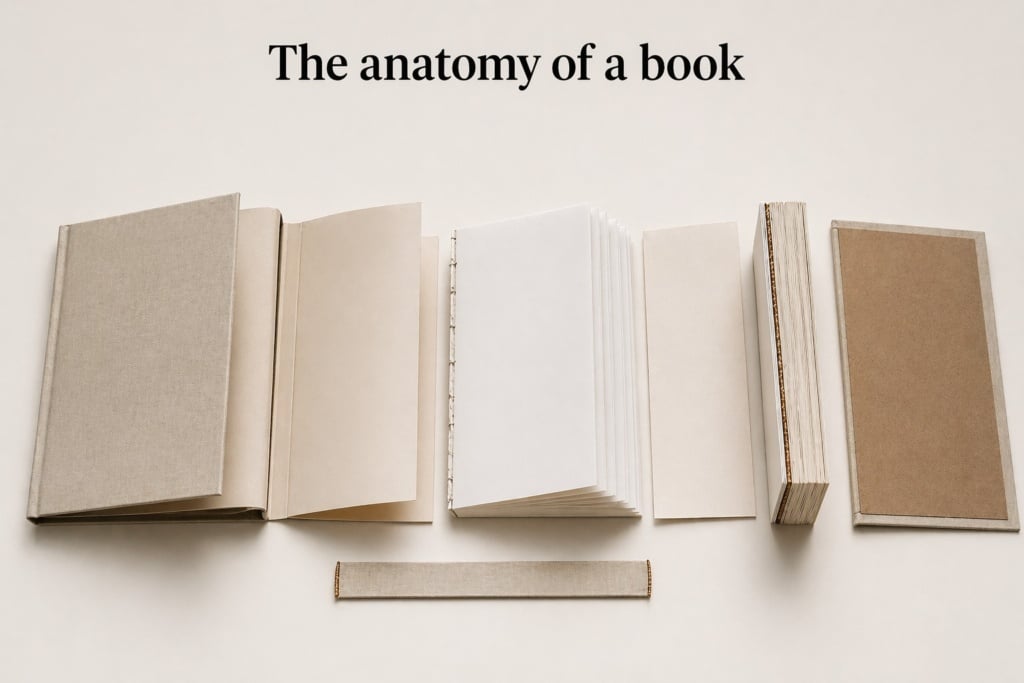
Every book is the result of a combination of variables:
- how many copies you print
- which format you choose
- how many pages it has
- what type of paper you use
- which binding you select
- whether it’s printed in black and white or in colour
And each of these choices has a direct impact on the final cost.
For this reason, the exact same book — same content, same layout — can cost twice as much or half as much simply by changing some of these variables.
As you can see, the cost of printing a book is really the result of a set of decisions that, combined, determine the final price.
You’re not paying for an object: you’re paying for the way that object is produced.
A first answer: how much does it actually cost?
If we want to give a general idea of book printing costs, we can say this:
- a single copy can cost between €10 and €25
- a print run of 100 copies can drop to €5–€10 per copy
- more than 1000 copies can go as low as €2–€5 per unit
These figures aren’t fixed formulas, but they help illustrate a key concept:
the unit cost decreases significantly as the print run increases.
To make this more concrete, let’s look at a real example.
A book of around 150 pages, A5 format, printed in black and white on uncoated paper:
- 1 copy may cost around €12–€18
- 100 copies may drop to €6–€8 per unit
- 500 copies may go below €4–€5 per unit
If the same book were printed in colour, on coated paper and with a more refined binding, the price could increase by 30% to 60%.
So the exact same content can end up with completely different price points.
And this is where the first real decision comes into play.
Print run: the decision that changes everything
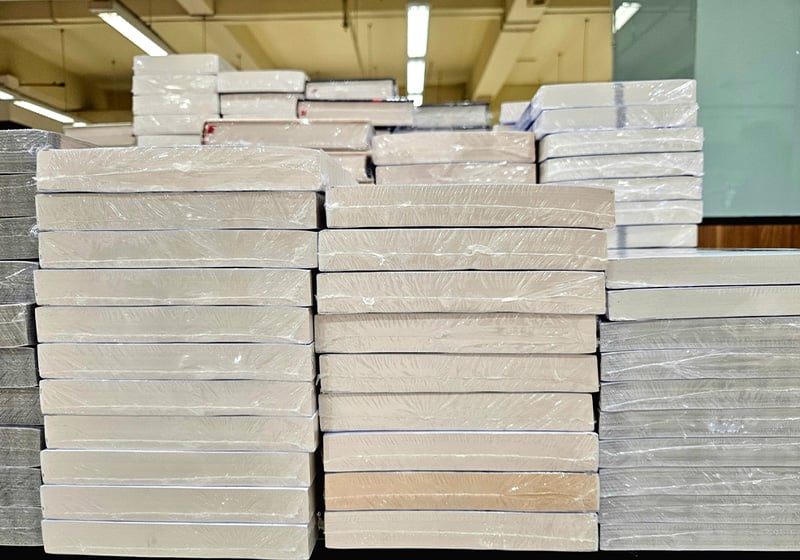
Printing a small number of copies is reassuring. It reduces risk, limits the initial investment and allows you to “test” your project. It’s the natural choice for someone starting out.
Printing a large number of copies, on the other hand, is a more strategic move. It requires a higher upfront budget, but lowers the cost per copy and can make the project more sustainable in the long run.
This isn’t just a technical decision — it’s an editorial and often a commercial one.
An independent author might choose to start with 20 or 50 copies.
A company distributing catalogues or branded materials will think in terms of hundreds or thousands.
And this is where the key question emerges:
are you trying to minimise risk, or optimise cost?
Everything else follows from that.
The book takes shape: pages, format and paper
Once the print run is defined, the physical characteristics of the book come into play.
Page count
The number of pages is the most intuitive factor: more pages mean more material, more printing and more processing. But it’s not just about quantity.
An 80-page book has a completely different production balance compared to a 300-page one. The recommended binding changes, the spine becomes more relevant, and even the perception of the final product shifts.
A thicker book tends to feel more “important”, but it also requires more careful technical decisions to ensure readability and usability.
Format
Format is another often underestimated factor.
Standard formats — such as A5 or 17×24 cm — are more efficient from a production standpoint. They fit better on printing sheets and reduce waste.
Custom formats, on the other hand, can increase costs significantly, as they require less optimised processes.
In other words, choosing a format is not just an aesthetic decision — it’s also an economic one.
Paper
Then there’s paper — and this is where things get really interesting.
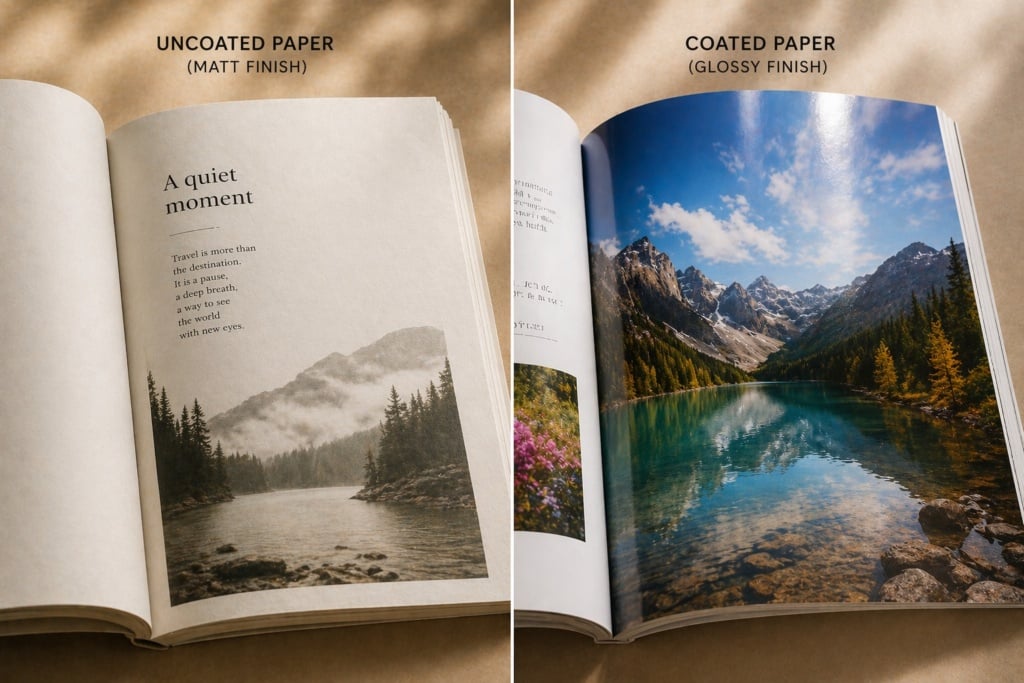
Paper is not just a material: it’s a language.
Imagine two identical books in terms of content:
one printed on 80 gsm uncoated paper, the other on 135 gsm glossy coated paper.
The first will feel lighter, more “editorial”, perfect for long reading sessions.
The second will feel brighter, more visual, ideal for images and colour.
The content is the same, but the experience is completely different.
Choosing paper means deciding what kind of object you’re putting in the reader’s hands, and what feeling it should convey at first touch.
Binding: the detail that defines durability
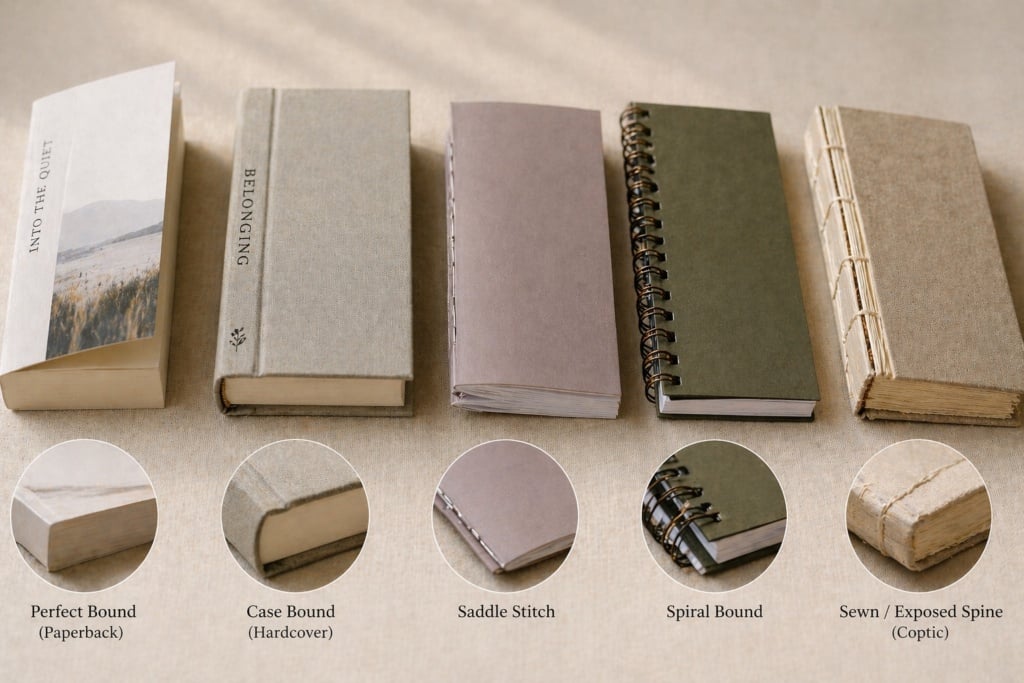
Binding is one of those elements that often goes unnoticed — until the wrong choice is made.
Perfect binding is the most common option: cost-effective, fast and suitable for most books.
Sewn binding, on the other hand, offers greater durability and a higher perceived quality.
If the book is meant to be used frequently or last over time, binding is not a detail:
it’s a structural choice that affects both durability and user experience.
Colour vs black and white: a key decision
Printing in colour has a significant impact on cost.
A novel can work perfectly in black and white.
A catalogue, an illustrated publication or a photo book, on the other hand, relies on accurate colour reproduction.
In these cases, the higher cost is not an extra —
it’s part of the product’s value.
Digital vs offset printing: two different approaches
At this point, another important distinction comes into play: the difference between digital printing and offset printing.
Digital printing
Digital printing is flexible, fast and perfect for short runs. It doesn’t require complex setup and allows you to print even a small number of copies with ease.
Offset printing
Offset printing, on the other hand, is designed for large volumes. It requires a more complex initial setup, but once running, it significantly reduces the cost per unit.
It’s not about choosing the “best” technology — it’s about choosing the right one.
In simple terms:
digital printing is agility, offset printing is efficiency at scale.
The turning point: which scenario are you in?
So far, we’ve talked about variables. But the truth is, these variables only make sense when they are applied to a real scenario.
Because the way you print a book changes completely depending on your goal.
Let’s look at a few situations you might find yourself in.
📘 If you want to print a few copies (self-publishing)
Imagine this: you’ve finally written your book. Maybe it’s your first one. You’re excited. You want to hold it, share it, maybe even start selling it.
In this case, your priority is not to optimise the cost per copy. It’s to make the project real.
Digital printing is the natural choice. It allows you to start small, without a major investment, and see the result quickly.
The real risk here isn’t spending too much — it’s saving in the wrong places.
Choosing materials that are too cheap can undermine a project that deserves to be valued.
Balance is everything at this stage.
📗 If you’re printing for your business
Here, the perspective changes completely.
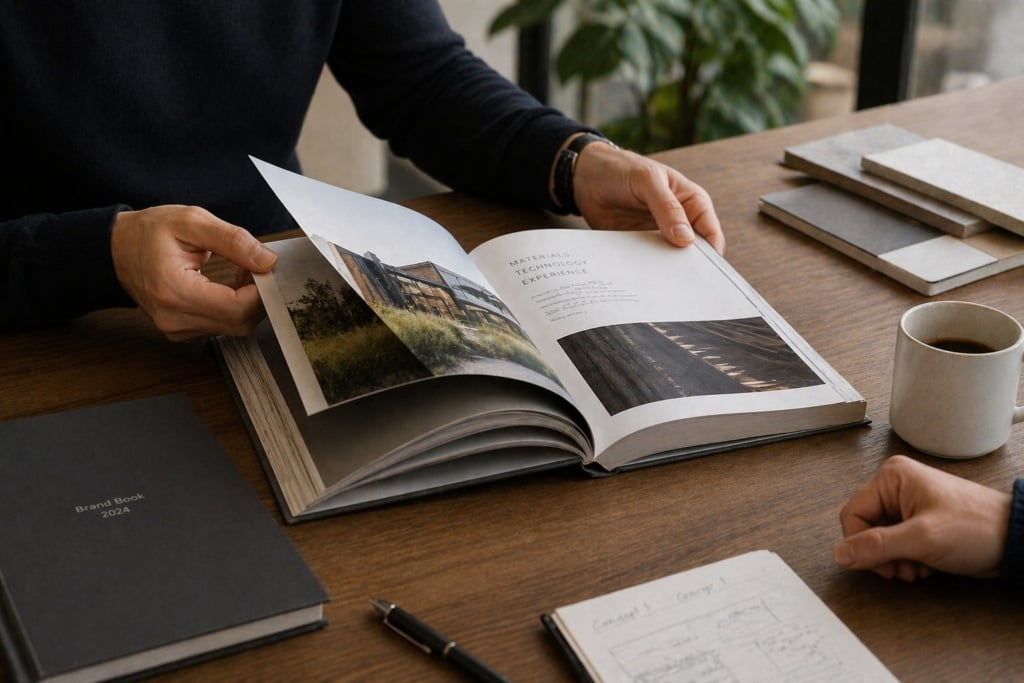
You’re no longer just printing a book. You’re creating a communication tool.
A catalogue, a brand book, a corporate publication: every detail contributes to your brand image.
Other factors come into play:
- brand consistency
- perceived quality
- communication effectiveness
And as a result, your strategy shifts.
Increasing the print run can make sense. Investing in better materials can make sense. Evaluating every choice carefully is essential, because every choice communicates something.
In this context, services such as custom book printing allow you to configure format, paper and binding in just a few steps and immediately see how the price changes depending on the print run.
For a printed product that truly reflects the work behind it.
📙 If you’re still evaluating
There’s also a third, very common situation.
You don’t yet have a defined project. You’re trying to understand whether it’s worth it. You’re exploring.
At this stage, the risk is looking for an answer too early.
Because cost, on its own, means nothing.
It only makes sense to talk about price once you know:
- how many copies you want
- what type of book you’re imagining
- what its purpose will be
Without that, any number is just a guess.
The most useful thing you can do is explore. Simulate. Understand how costs change based on your decisions.
Where to print a book today
Compared to a few years ago, there are now many more options for printing a book.
But the real difference isn’t just where you print, it’s how much control you want over the final result.
Traditional printers
Traditional printers offer direct, personalised support, but often less immediacy when it comes to quotes.
Self-publishing platforms
Self-publishing platforms simplify the process but limit control over materials and configuration.
Online printing services
Online printing services, on the other hand, represent an increasingly popular middle ground:
they allow you to configure your product, compare options in real time and immediately understand how each choice affects the price.
And it’s precisely this transparency that is changing the way books are designed and printed today.
That’s why more and more professionals are choosing tools that allow them to configure their product independently and get instant quotes, such as online book printing, which makes the process clearer from the very beginning.
The hidden cost: publishing, not just printing
One last aspect, often overlooked, concerns everything that happens before (and after) printing.
A book is not just a physical object. It’s a project.
Editing, layout, graphic design, cover design and potential promotion all contribute to the overall cost.
In many cases, printing represents only part of the total budget.
And this completely changes how the project should be approached.
Before printing a book, it’s essential to account for all the preparatory work required to produce a print-ready file of acceptable — or ideally professional — quality.
FAQ – Frequently asked questions about book printing
How much does it cost to print a single copy of a book?
Typically between €10 and €25, depending on format, page count, paper and printing method.
How much does it cost to print 100 copies of a book?
Generally between €5 and €10 per copy, with potential savings at higher volumes.
Is it better to print few or many copies?
It depends on your goal: fewer copies reduce risk, larger runs reduce unit cost.
What’s the difference between digital and offset printing?
Digital printing is ideal for short runs, while offset is more cost-effective for large volumes.
Conclusion: the right price is the one that makes sense
At this point, the original question changes.
How much does it cost to print a book?
It depends.
But not in a vague sense. It depends on what you’re trying to achieve.
A book is never just a cost. It’s a decision.
It can be:
- a personal object
- a working tool
- a commercial product
And each scenario comes with different choices, different costs and different logic.
Understanding this means moving beyond “how much does it cost” and towards “what makes sense to spend”.
Because the value of a book is not just in how much you pay to print it,
but in how well that cost aligns with the result you want to achieve.