



Table of Contents
We live in trying times. Firms are grappling with multiple challenges, from geopolitical instability to globalised competition and technological change.
To survive and thrive in this environment, organisations must recruit and retain the right people. Key to this is effectively communicating the workplace culture and positioning the firm as an employer of choice.
This post will try to address these challenges by asking:
- Why is it important to talk about people and talent on a blog that’s mainly focused on graphic design and marketing?
- What is employer branding and how does it differ from traditional branding?
- What useful tips, tools and case studies are there on employer branding?
- How do you create an effective value proposition for positioning the organisation as an attractive destination for the best talent?
Read on for the answers…
In the beginning there was reputation
If you’ve ever worked on corporate reputation, you’ll likely be familiar with the model for measuring it: the framework developed by RepTrak®, one of the word’s foremost reputation management firms.
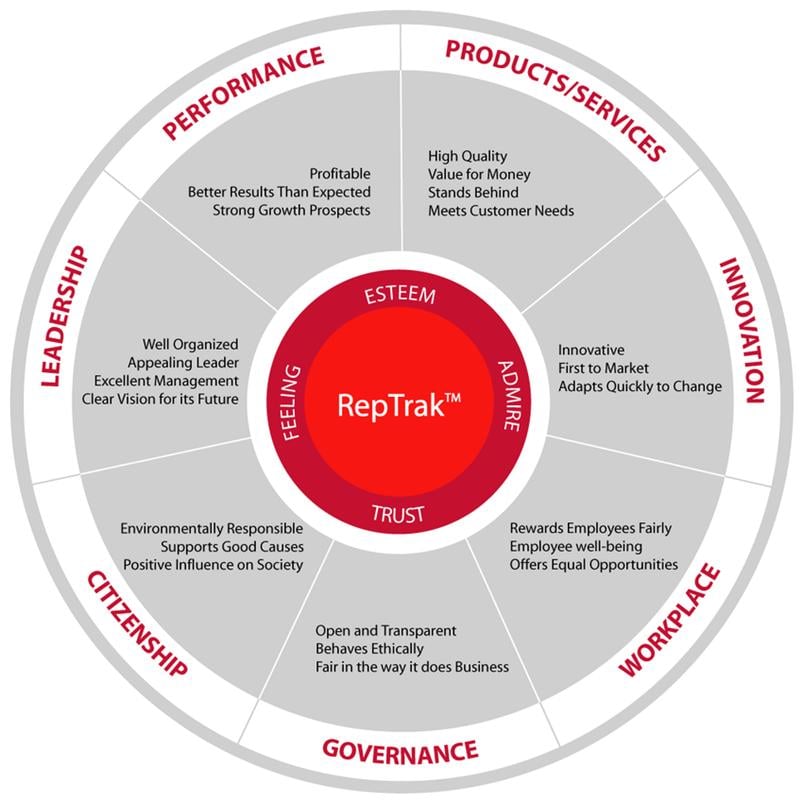
The RepTrak® framework measures reputation by identifying and tracking factors that influence it. Specifically, it calculates the strength of emotional bonds between stakeholders and the company in terms of four attributes:
- esteem
- trust
- admiration
- feeling
… and their strength in seven dimensions.
1. Products and services. The quality of a company’s products and services profoundly influences its reputation.
2. Innovation. Where’s the company heading? How’s it evolving? Firms that are forward-looking and creative are better liked.
3. Workplace. Workplace culture has never been more crucial for hiring and keeping talent.
4. Governance. Are there effective systems of governance inside the organisation?
5. Citizenship. Firms that score highly in this dimension actively work to make the world a better place, usually through environmental and social initiatives.
6. Leadership. Is the company well led? Are its vision and mission clear? Where does the buck stop when things go wrong? Organisations that have CEOs aligned with their purpose perform better than those that don’t.
7. Performance. While viewed as less important these days and given less weight by stakeholders than other dimensions in the model, numbers matter and profitability remains a KPI in measuring reputation.
As we’ll see later on, point 3 is particularly important, because it introduces a fundamental idea: the need for companies to not just have coveted product brands, but to have a desirable employer brand, too.
Brands and employer brands
The relationship between brand and employer brand is often perceived as distant and disconnected. That’s the flaw highlighted in the Harvard Business Review by Bryan Adams, founder and CEO of consultancy Ph.Creative.
He explains how the problem with many employer brands is that within the firm they’re seen as disconnected from the corporate brand and the main business drivers. They’re generally managed by the HR department and too often don’t go beyond perks like free meals or unlimited holiday.
Yet good employer branding actually involves positioning and promoting the company as a desirable place to work: a community of like-minded people who work well together and have a shared commitment to a common goal. So it makes sense to see branding and employer branding as two sides of the same coin. After all, who hasn’t dreamt of working for a favourite brand of theirsone day?
Corporate and employer branding, then, overlap far more than people think. So much so that Adams suggests a new approach:
We should stop talking about employer branding as a separate concept and instead make talent a key dimension of corporate branding.
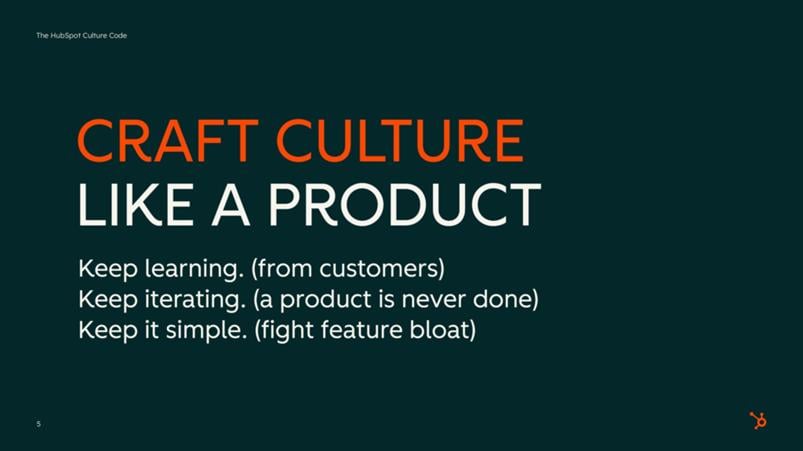
Marketing software giant HubSpot does just this: in its Culture Code, the company stresses the importance of building a culture for employees as if it were a product.
A useful way to test the strength of a company’s employer brand is the 3C model.
- Career catalyst: “will working for this firm help me get ahead in my career?”
- Culture: “is the work environment a good fit for someone like me?”
- Citizenship: “what impact does the business have on the local community and society in general?”
Which brings us to an amusing yet instructive case study.
It’s 2013. Videomaker Marina Shifrin is sick of gruelling workdays churning out content at Next Media Animation for scant reward or recognition. So she quits… by posting a video on YouTube. And a reputational crisis for the firm ensues. The moral of the story? Never forget that workplace culture is a key part of a company’s brand…
Where to start: analysis and insight
We’ve established that building our employer brand is just as important as building our corporate brand. But how do we do this?
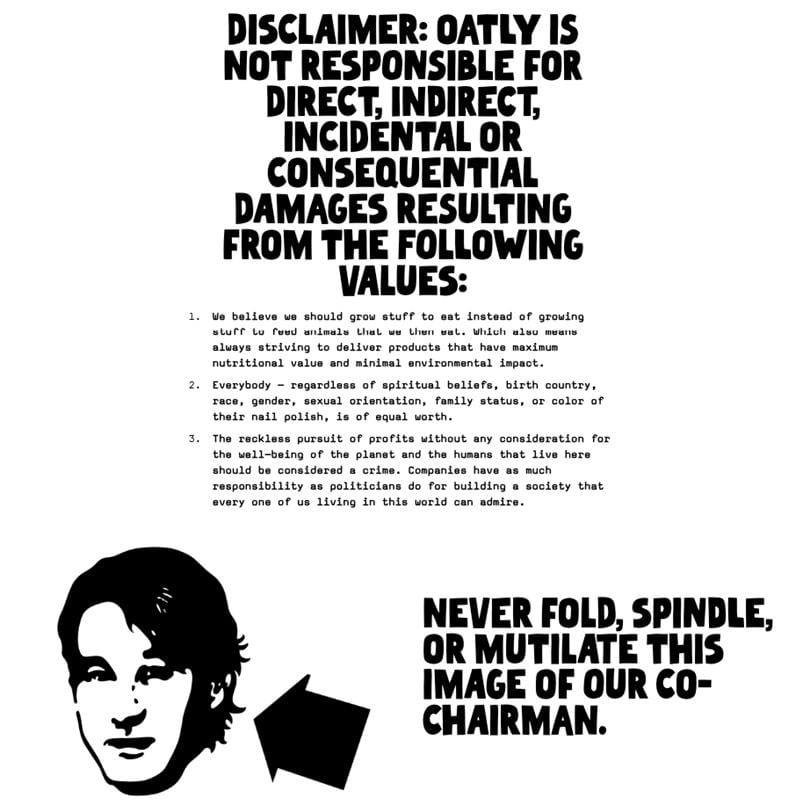
First, we need to do an internal audit to understand the culture inside the organisation. That means getting feedback, reflecting on our role, involving the CEO and other leaders to see clearly and concretely how the organisation lives its values and purpose and what it feels like to work there. This will highlight strengths and weaknesses, as well as any threats and opportunities on the horizon. Here’s how Oatly talks about its values…
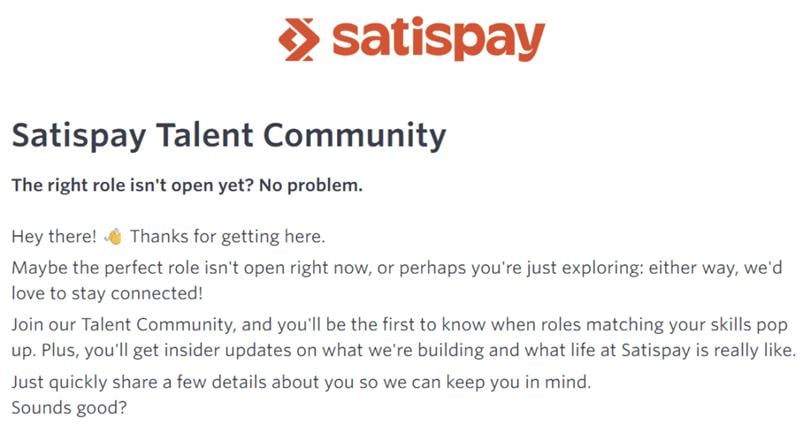
Next, we need to look around us and see how our competitors are navigating the talent market. What are they saying and how? Do they have campaigns, channels or people dedicated to their employer brand? For example, Satispay, an Italian company that simplifies the way we pay, gets so many job applications that it created its own Talent Community: a (digital) place where you can stay connected with the brand and make sure you don’t miss any new openings.
Once these audits are done, we can scour them for insights that can inform our positioning as an employer. A few years back, Heineken noticed that conversations with candidates in job interviews were often the same, and with a standard approach it was hard to see who was the best fit for its values and corporate culture. This insight led to a marketing campaign called The Candidate, which brilliantly positioned the brand as a fun, creative and slightly quirky place to work.
Defining the employer value proposition
Now it’s time to define something that is key to all successful employer branding: the employer (or employee) value proposition (EVP).
The employer value proposition shapes a company’s identity as an employer. It’s a set of values often expressed as simple sound bitesdesigned to make people want to work for the organisation.
Writing in The Branding Journal, subject matter expert James Ellis argues that an EVP begins where branding and employer branding meet.
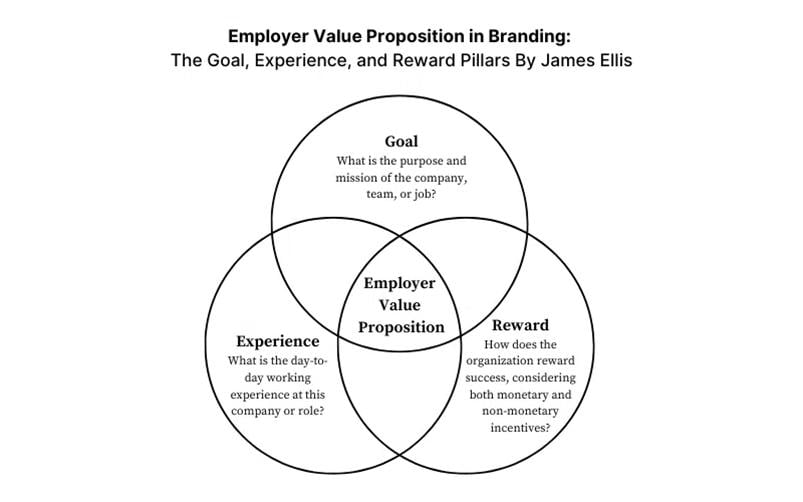
The employer value proposition is aimed at specific candidate personas. These are like the buyer personas used in consumer marketing, except they are built around the characteristics of fictional current or potential employees of the company rather than buyers of its products. And these personas travel along a candidate journey, an HR version of the customer journey.
N.B.: The candidate journey can have multiple entry points and paths, but it should always be as linear, rapid and rewarding as possible, both for the candidate and the HR, function.
An effective EVP consists of four core components.
1. Setting: the context in which the brand is positioning itself.
2. Values: the aspirational ideals that guide its actions.
3. Culture: the wealth of experience and knowledge that form the backbone to the brand.
4. Promise: the opportunity for growth and fulfilment offered to the candidate.
A great real-life example can be found on the careers page of the LEGO website.
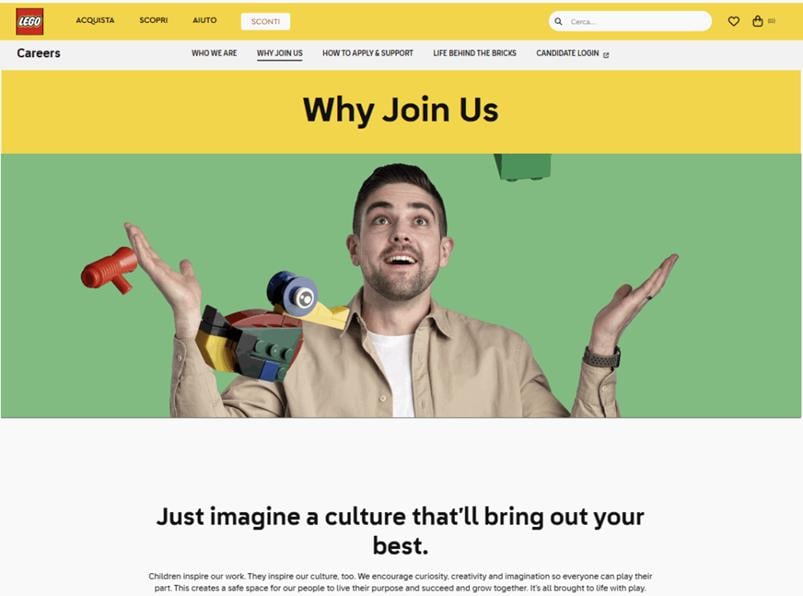
I’ve taken the section outlining their EVP and broken it down into the four core components set out above:
Joining the Lego family means building your career with (1) one of the world’s most recognised and loved brands. You will experience (2) a safe place to grow, learn and do your best work. (3) We believe leadership is for everyone, not just people leaders and (4) we succeed together.
Stylistically speaking, an employer value proposition needs three key ingredients to stand out.
It must be…
- Evocative: distinctive, recognisable and desirable.
- Relevant: aligned with the reader’s aspirations and ambitions.
- Reciprocal: beneficial for both the company and the candidate.
Bringing your employer value proposition to life
Website, blog, social media, outreach, PR: there are plenty of ways to do employer branding. The main thing is to use data to select the right channels for reaching the target audience.
For most organisations, the careers page lies at the heart of any employer branding project. It could be a section of the corporate website, or a standalone website like Satispay’s.
Having an owned-media channel that can host long-form content like a blog can do wonders. Employee stories are a great way to show people what it’s like to work for a company, because of the power of social proof. And a site frequently updated with fresh content will help grow “loyalty” among visitors.
Socials can be challenging. While their potential reach is huge, they require constant posting of optimised content, a media budget and can also be spaces where brand reputation can come under attack. Amplifon, for example, decided to call its Instagram account Life at Amplifon to stress that the channel is focused on people at the firm and its workplace culture.
Intranet and internal social media (e.g. digital workplaces) are safer spaces, but the most important conversations in an organisation probably happen elsewhere (like on WhatsApp).
PR, press and outreach are also effective tools for employer branding. Outreach can build perceptions of trust and authenticity through face-to-face contact with people. Influencers can help, too: for example creator Fabiana Andreani (@fabianamanager) – “the aunt who helps you find a job” – partners with businesses to create social campaigns that show people what it’s like to work for them.

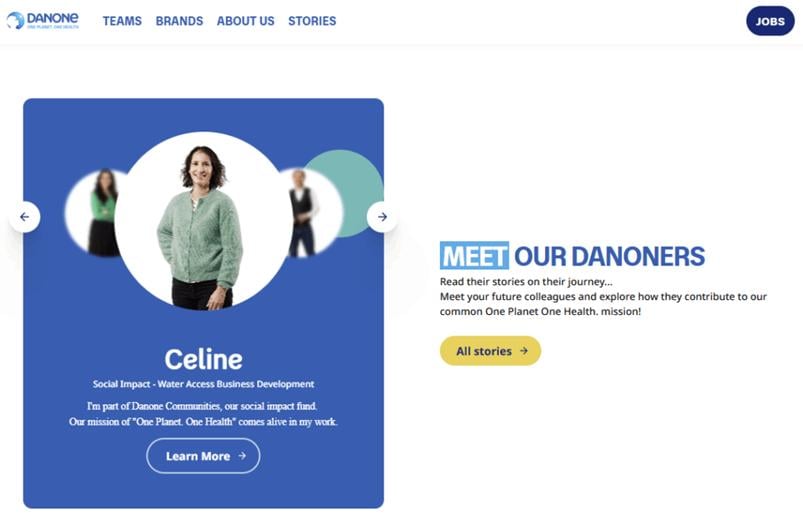
When employers foster a genuine sense of community, a place where people can thrive and grow together with like-minded professionals, it creates a sense of identity and belonging. A case in point: Danone employees call themselves Danoners, and the company leans into this idea on its social media and corporate website.
In a similar vein, IKEA places great store in the value of #togetherness and talks about how team work is central to its identity as an employer.
Employer branding as strategic pillar of your marketing
In this article, we’ve seen the value in expanding how we think about branding to include the employer dimension. Because employer branding done right allows an organisation to attract and retain the talent it needs to stay competitive in today’s market.
But to do so doesn’t require a big budget or complex projects: Italian textile manufacturer Miroglio Group has built its employer brand on family values, employee wellbeing and personal development. It runs initiatives ranging from internal training courses to corporate social responsibility, all of which strengthen the company culture and staff retention.
Employer branding lays the groundwork for building great companies. And something that can help firms do this will is the annual Employer Brand Research report from global recruitment firm Randstad. It’s packed with valuable insights and data.
Good luck!