


Table of Contents
Despite their active contribution to the history of graphic design and typography – the first printers and typographers date back to the 15th century – the role of women in this field did not become truly visible until the 1950s and 60s, when they became consolidated in advertising agencies and design magazines. It is within this context that we must consider Jacqueline S. Casey, whose posters for the Massachusetts Institute of Technology (MIT) in Cambridge marked a watershed moment in the field of visual communication, and served as inspiration for future generations of designers.
Casey was born in 1927 in the city of Quincy, near Boston. After graduating from the Massachusetts College of Art and Design (MassArt) in 1949, she worked in fashion illustration, advertising, interior decorating and commercial publications.
In 1955 her college classmate Muriel Cooper, who worked in the newly created MIT Publishing Office, commissioned her to design materials for the summer courses. This was a beginning of a more than three decade-long career with the institute, one of the first to hire graphic designers – particularly women – on its staff. The work of Muriel Cooper and Jacqueline S. Casey helped to position MIT as a place where art and design were integral to the educational process, not just for publicity or by-products.
Design that makes you think
Jacqueline S. Casey’s designs – a poster for an academic programme, a scientific conference, an art exhibition or social cause – appeal directly to the viewer’s intellect. It is a matter of carefully observing and thinking up new relationships between words, colours and images.
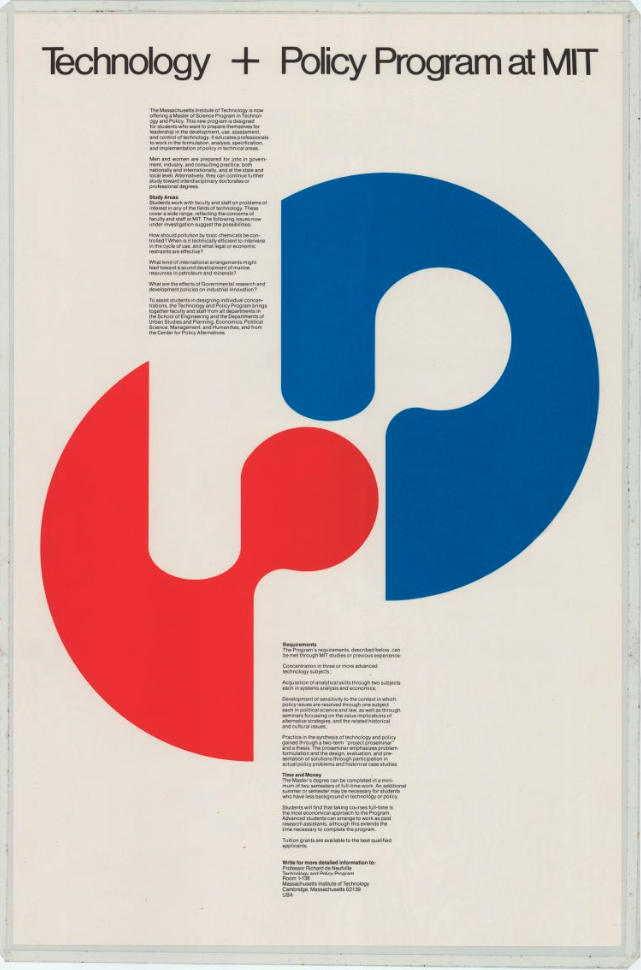
For example, in her Technology and Policy Program (1975), the two large puzzle pieces – one red and one blue, the colours of the US flag – visually connect technology and political planning. Together they form a complete circle, like yin and yang, subtly highlighting the importance of this relationship for the future of the country.
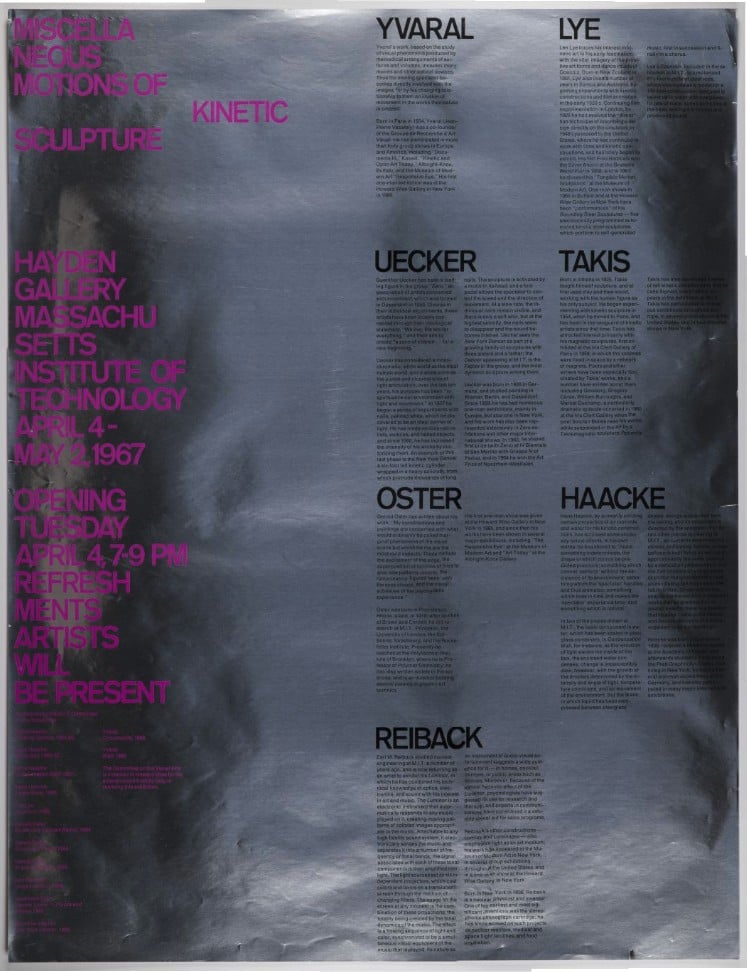
The poster for the kinetic art exhibition Miscellaneous Notions of Kinetic Sculpture (1967) is a large surface divided into 16 portrait oriented rectangles featuring information about the show and the artists. As it is unfolded, reflecting the surrounding colours and structures, the poster itself becomes a kinetic sculpture.
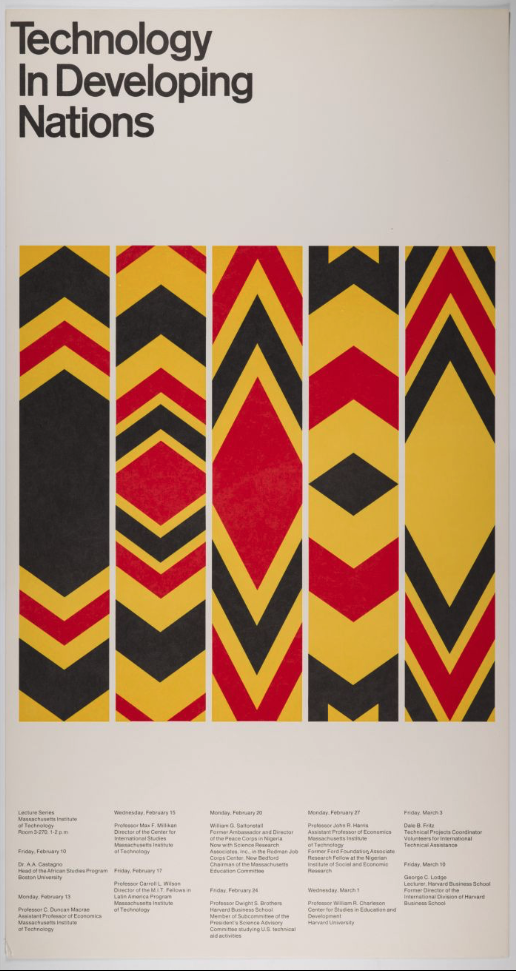
The design for the poster for the Technology in Developing Nations conference (1968), focusing on the development of industrial resources in developing countries, is based on a traditional Nigerian method of weaving thin strips to form a fabric made up of geometric patterns, symbolising protection.
Influence of 60s Swiss design
Jacquline S. Casey’s work is clearly influenced by the Swiss design style of the 1960s, also known as International Typographic Style, which is defined by minimalism, functionality and clarity. An example of this is the use of grids to structure a page, as can be seen in Ocean Engineering at MIT (1971), in which the waves breaking on the shore are actually two columns with a grid of five.
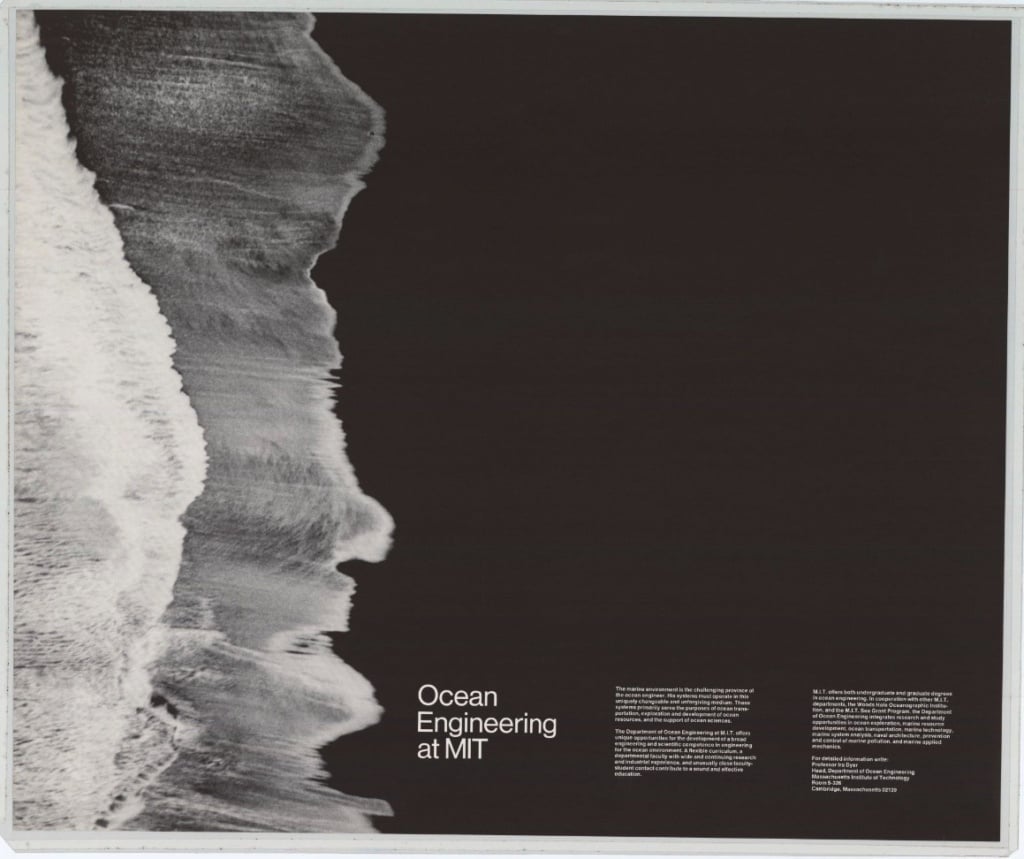
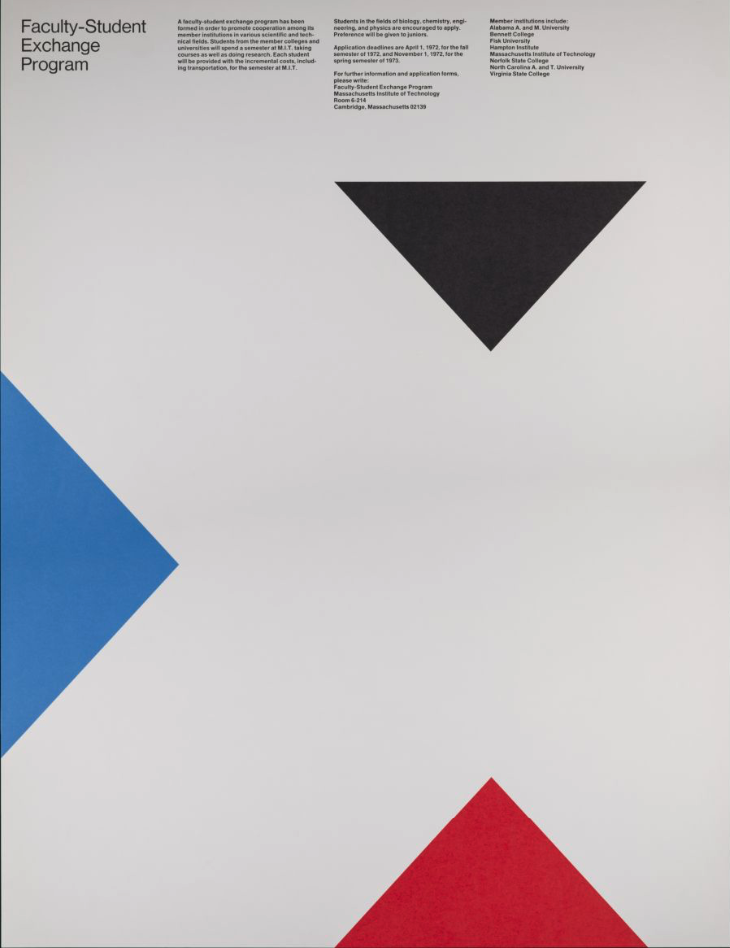
Additionally, the fact that the waves are much larger than the text forces the viewer’s attention to the bottom half, forcing a union between the vertical image and the horizontal layout of the words. This use of blank space can also be seen in the poster for the Faculty-Student Exchange Program (1972), where the negative space created by three red, blue and black triangles form a large white “X” to represent the “Exchange”.
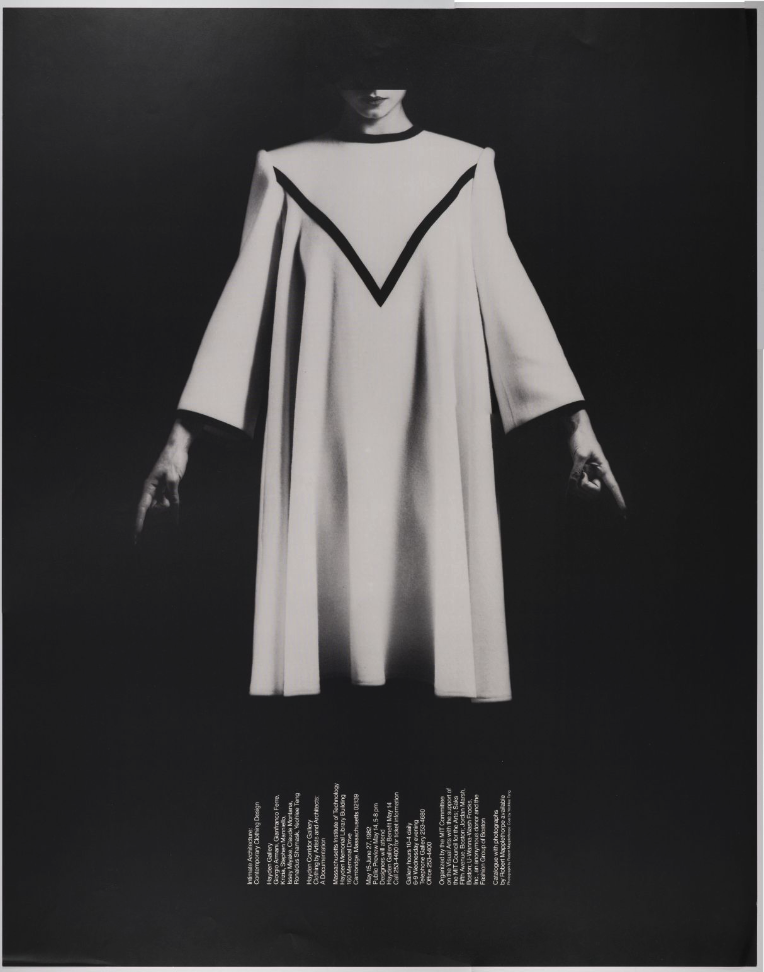
The contrast between large typographic headings and very small text is another hallmark of the MIT graphic designer’s style. In Intimate Architecture. Contemporary Clothing Design (1982), the orientation is reversed as if on the spine of a book (from bottom to top) and follows the structure suggested by the folds of a dress.
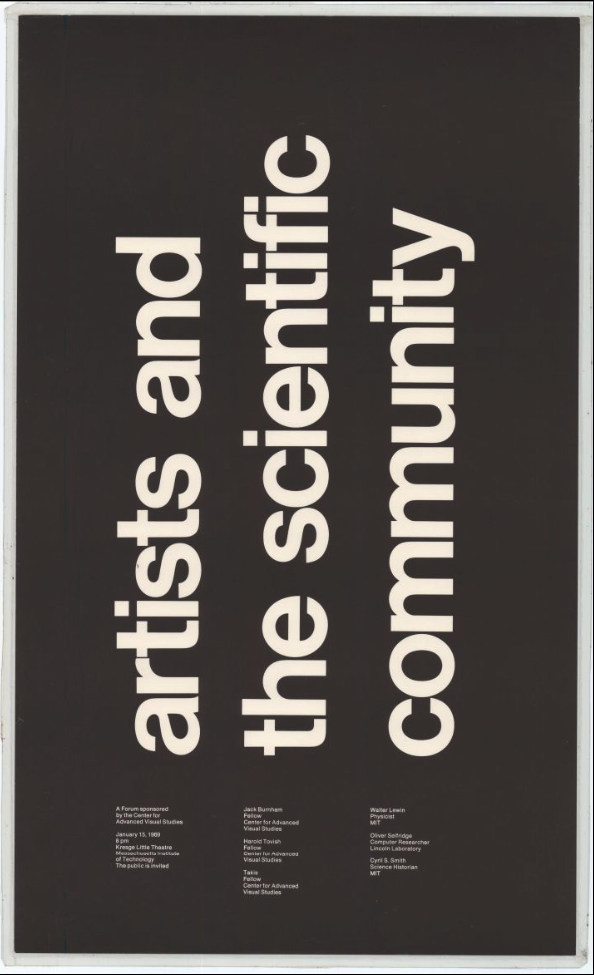
Although this text placement would be unacceptable for many designers, for Jacqueline S. Casey it is never arbitrary: the text must be legible and contribute to the general poster design, as seen in Artists and Scientific Community (1969).
Typography with hidden meanings
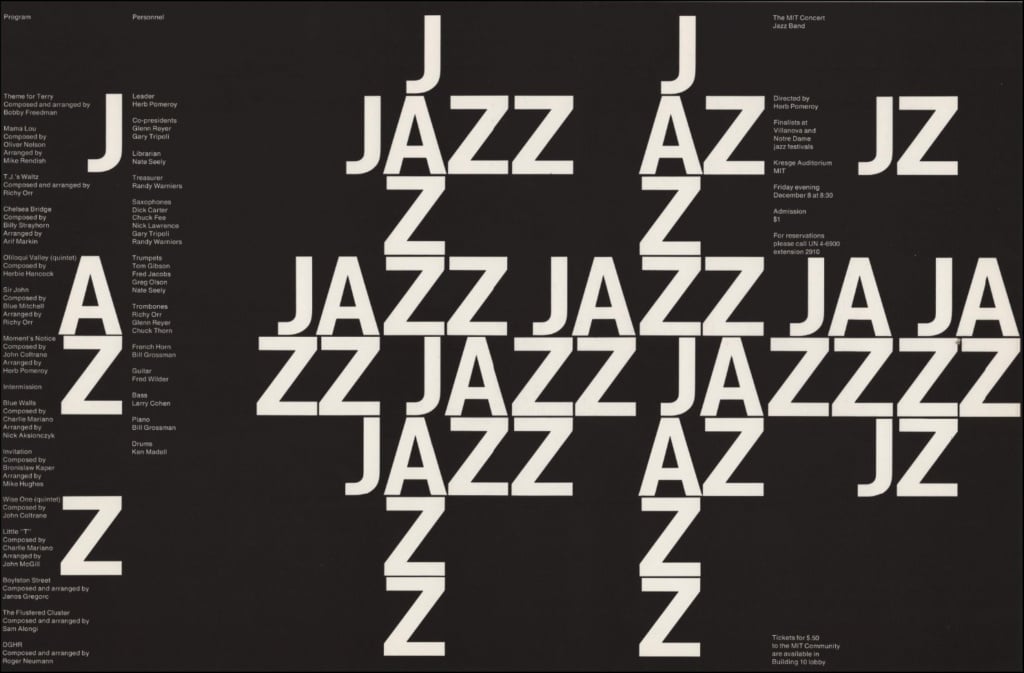
Typography plays a crucial role in all of Jacqueline S. Casey’s posters. The Swiss design of the 60s consolidated the use of sans-serif typefaces such as Helvetica and Univers, and the posters on the crowded noticeboards of MIT were testament to this trend. But the designer of the Publications Office always managed to give a twist to the typography, revealing meanings that would not otherwise be apparent to the viewer, through metaphors and ingenious plays on words.
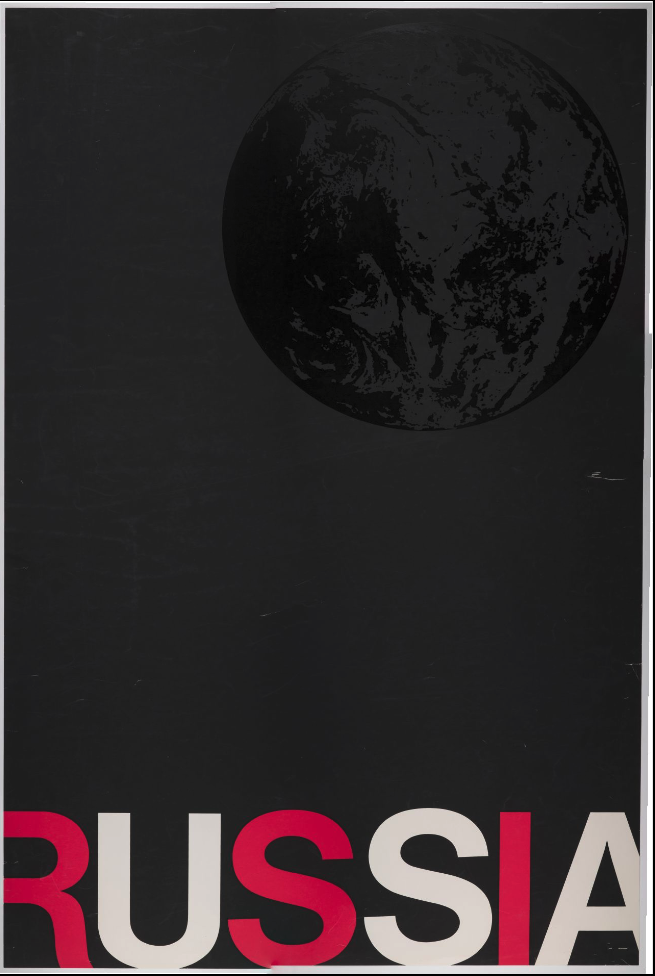
Russia/USA (1985)
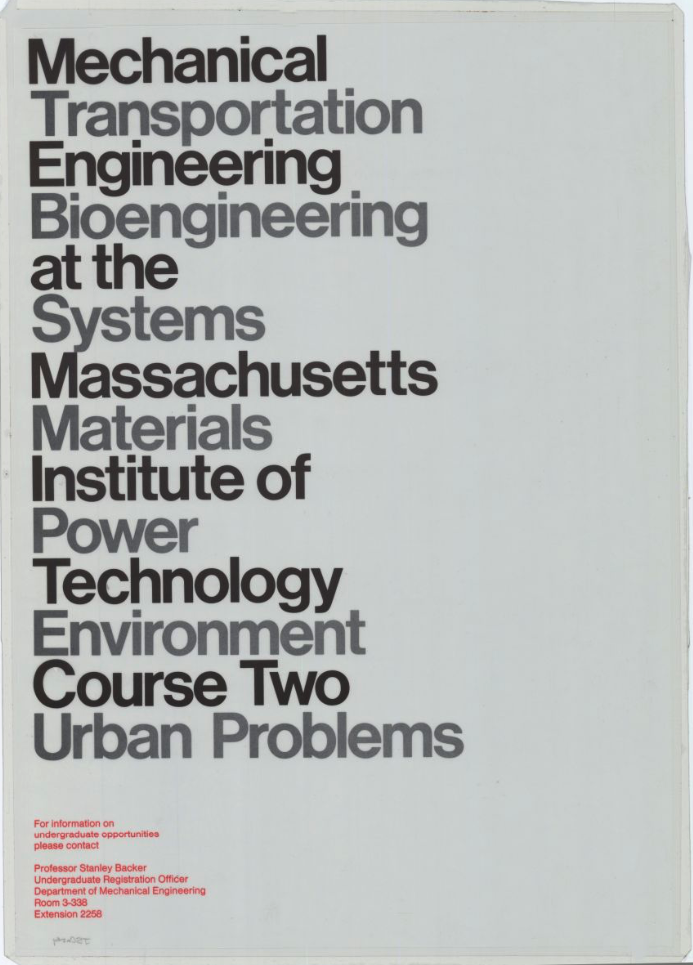
Mechanical Engineering at the Massachusetts Institute of Technology (1971)
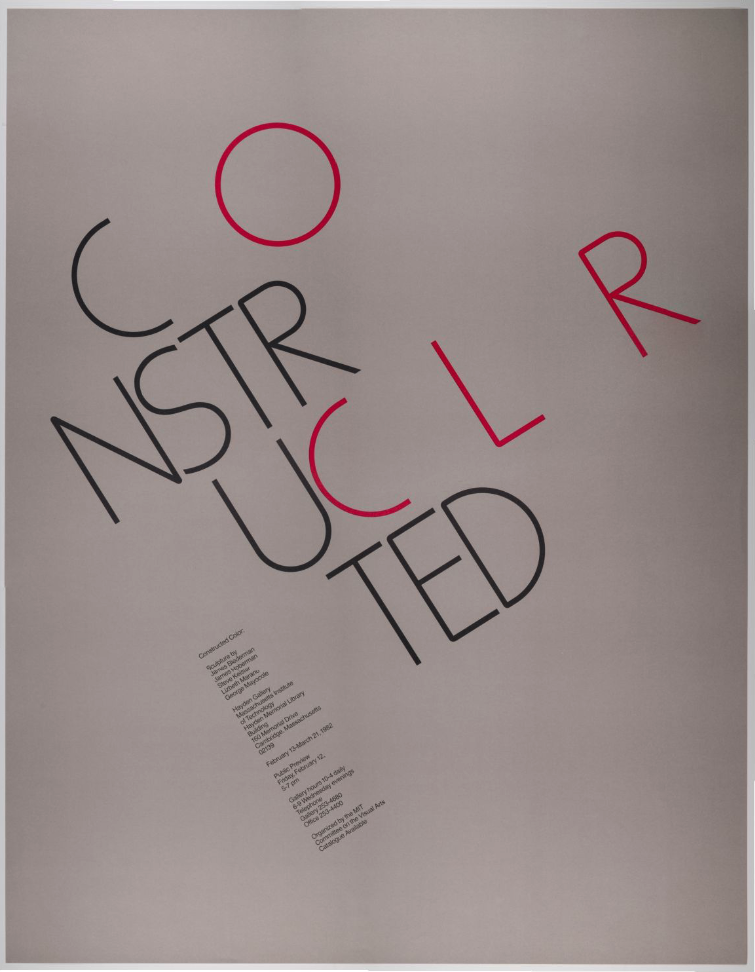
Constructed Color (1982)
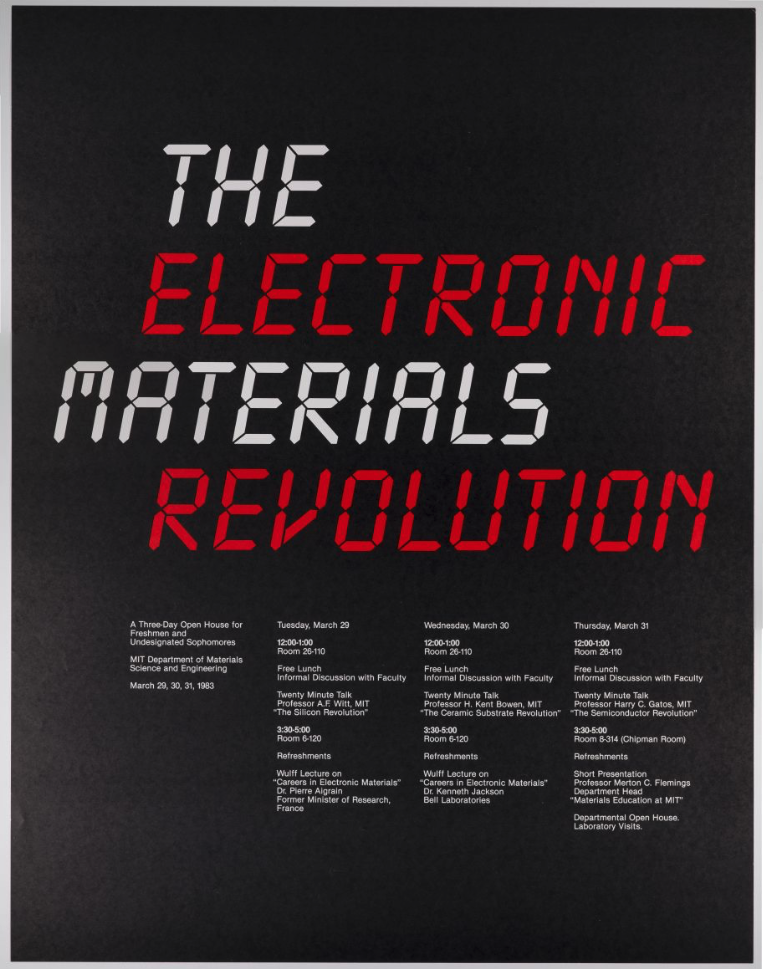
The Electronic Materials Revolution (1983)
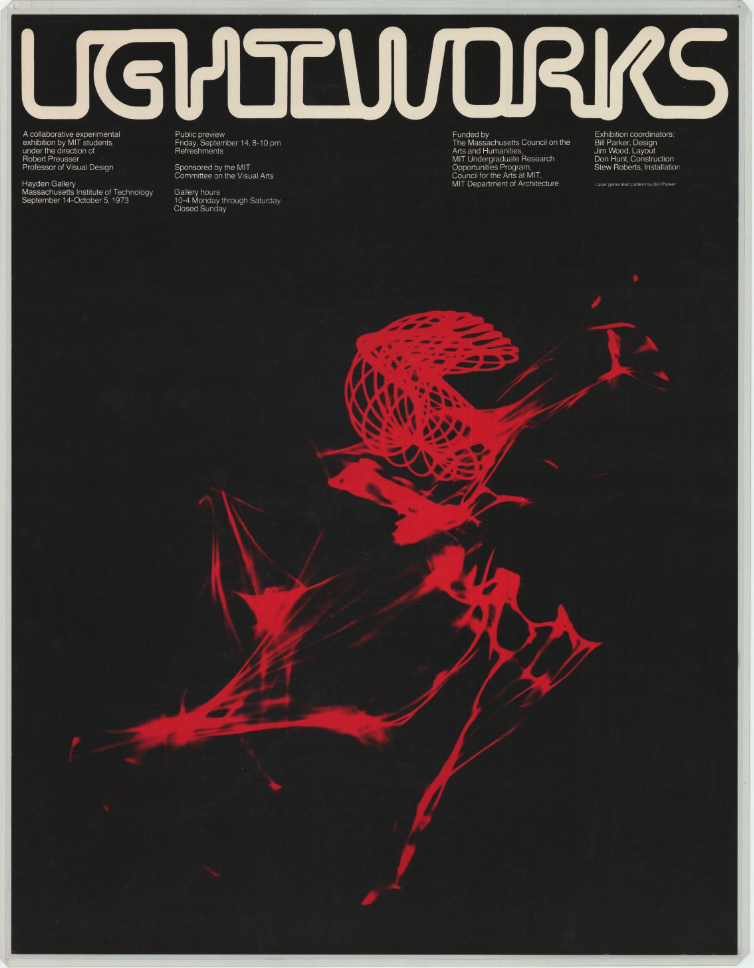
Lightworks (1973)
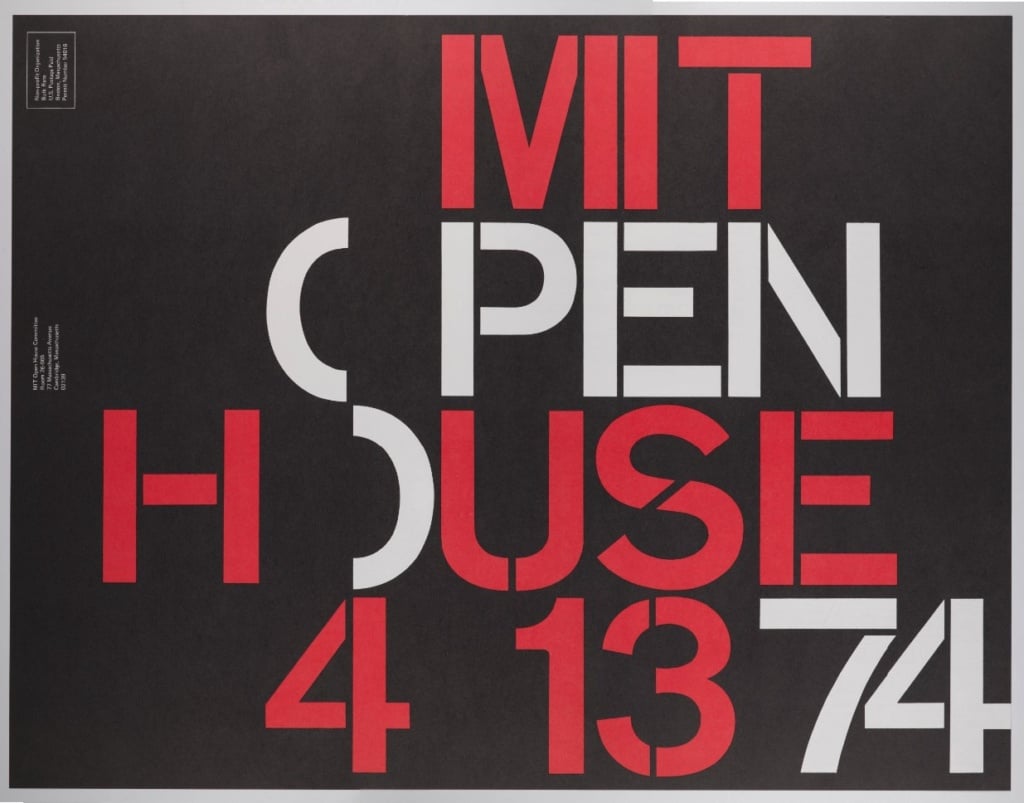
MIT Open House (1974)
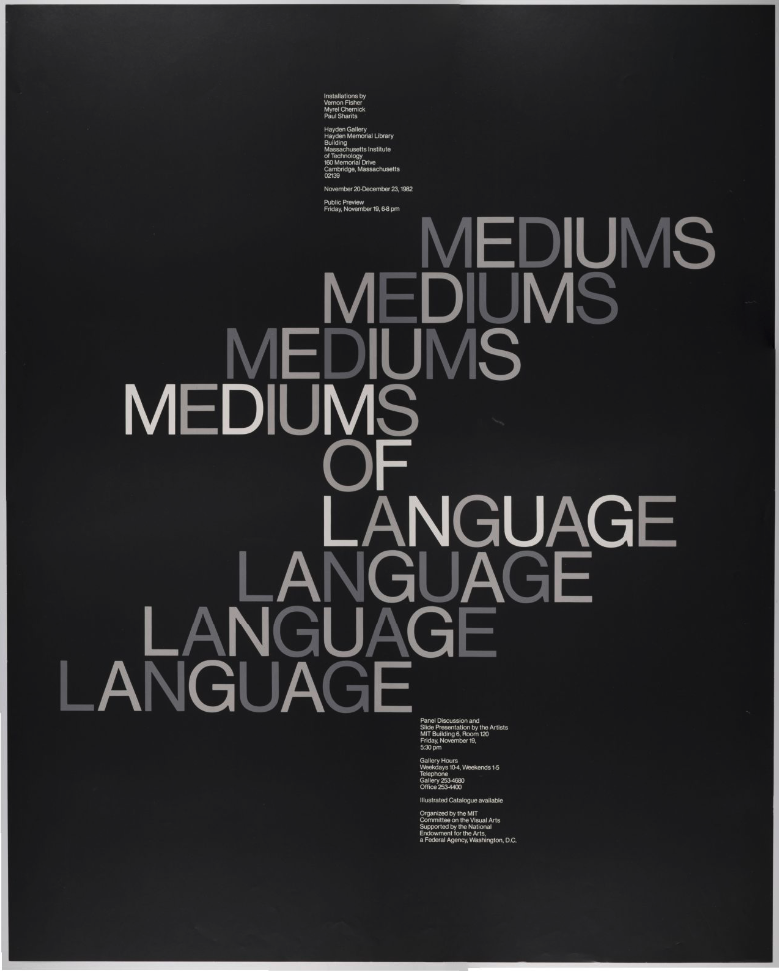
Drawings for Outdoor Sculptures (1978)
Colour as the main design element
In addition to typography and the use of grids to organise information, colour is of vital importance to Jacqueline S. Casey’s work. Many of her posters follow the functional black and white minimalist trend typical of Swedish design in the 60s.
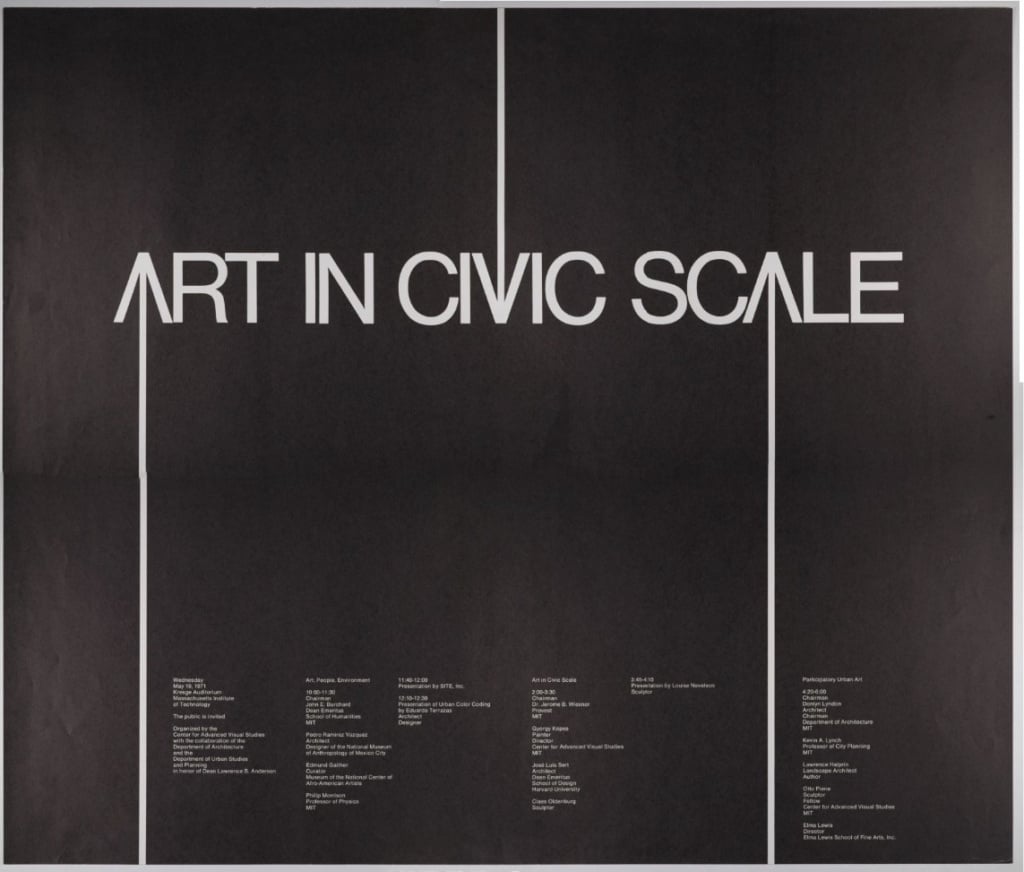
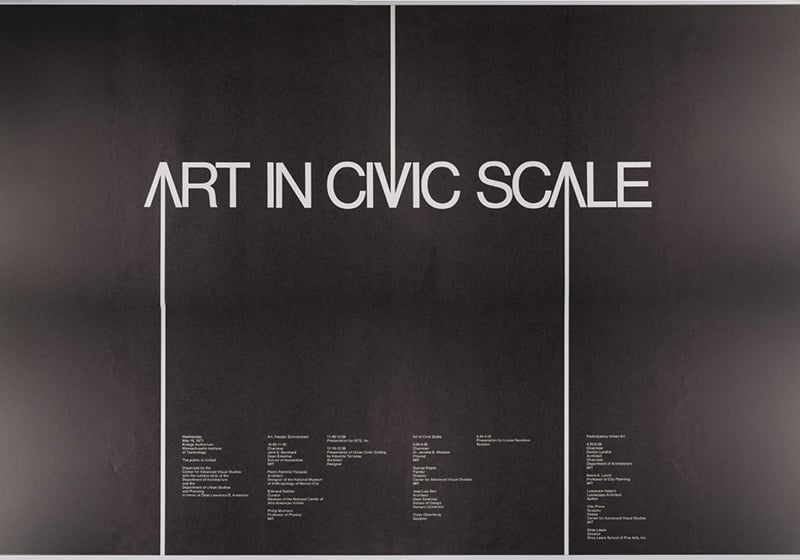
Art Civic in Scale (1971)
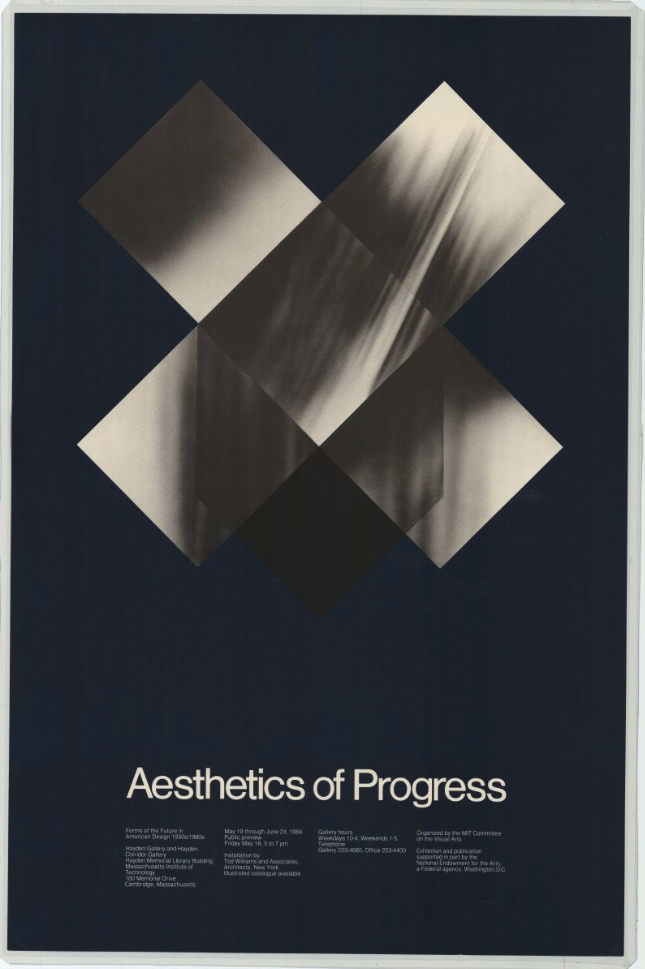
Aesthetic of Progress (1984)
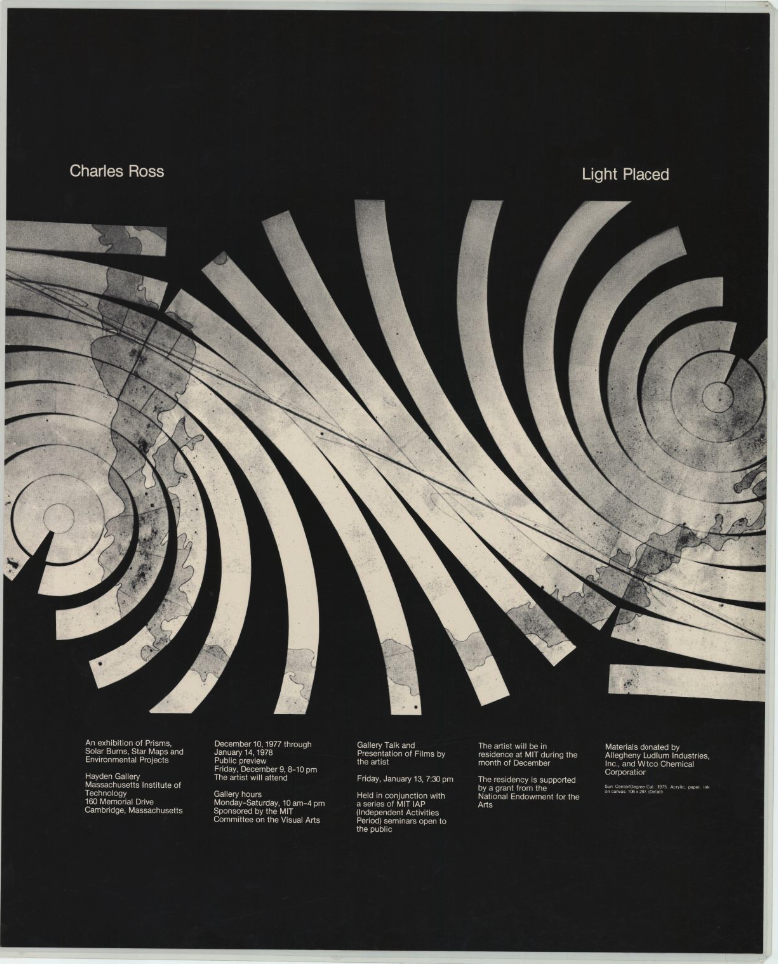
Charles Ross: Light Placed (1977)
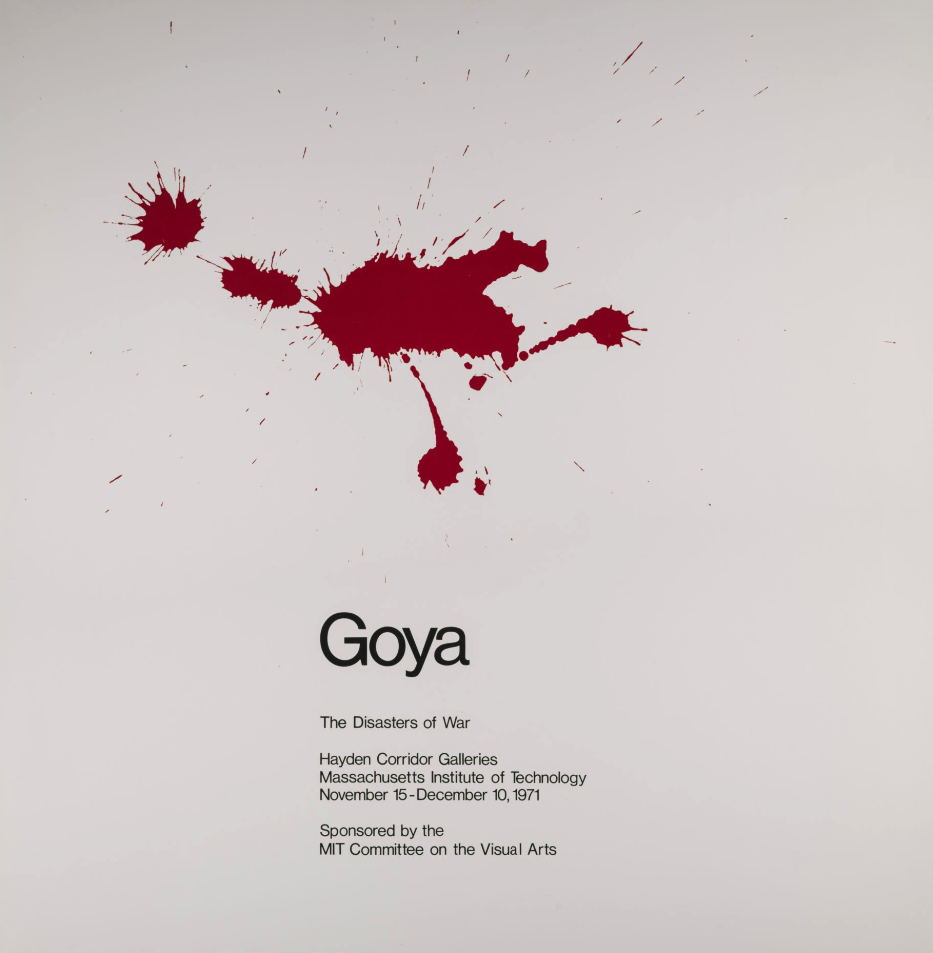
However, colour can also be the main design element, as shown in the poster for Goya: Disasters of War (1971), in which red splatters symbolise the bloodshed of war.
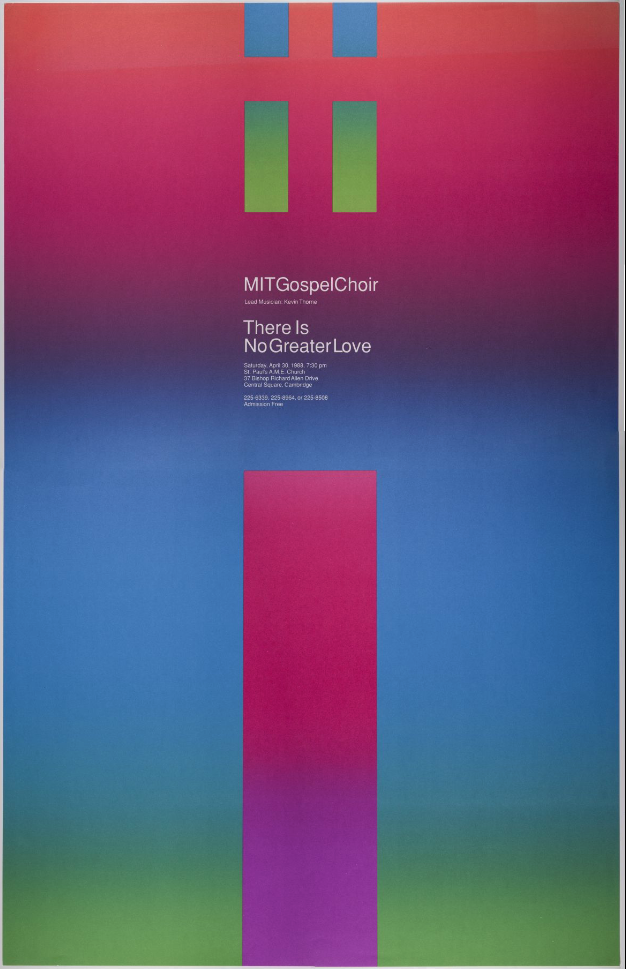
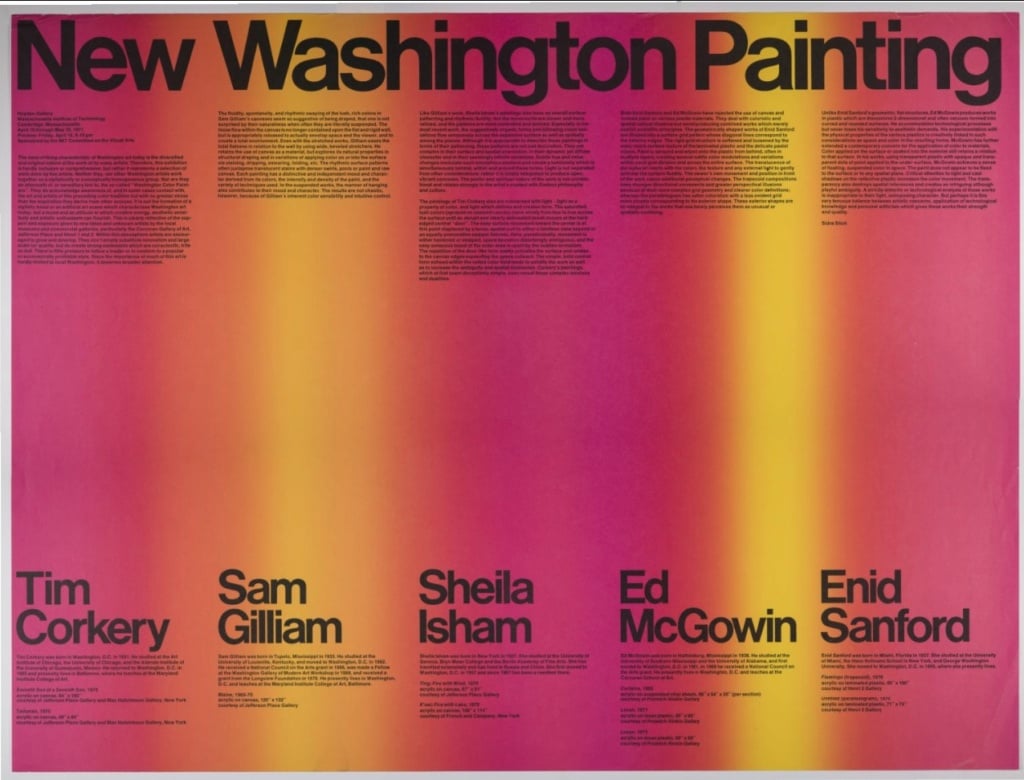
And on the opposite end of the spectrum, there are the intense, bright and highly saturated colours of posters such as Gospel Choir No Greater Love (1988) and New Washington Painting (1971).
Collaborations with scientist
In order to create the innovative designs of her scientific posters, Jacqueline S. Casey attended courses with renowned MIT specialists in disciplines such as nuclear physics, biology and mathematics.
For example, for Cancer: Symposium on the Occasion of the Dedication of the Seeley G. Mudd Building (1975), learned how to understand the complexity of carcinogenic organisms from a biologist. This was a topic she had first-hand experience of, as her husband, William Casey, died of cancer in 1975; she herself battled the disease for several years until her death in 1992.
“I received a mini-course in the laboratory, observing cancer cells through the microscope, seeing them in action. It helped me to overcome some of my fears. For the poster, this experience provided greater precision in my choice of graphic composition, especially in a more exact use of colour,“[1] in the designer’s own words, from the book ‘Posters: Jacqueline S. Casey, Thirty Years of Design at MIT’, provided by the MIT Museum to Pixartprinting.
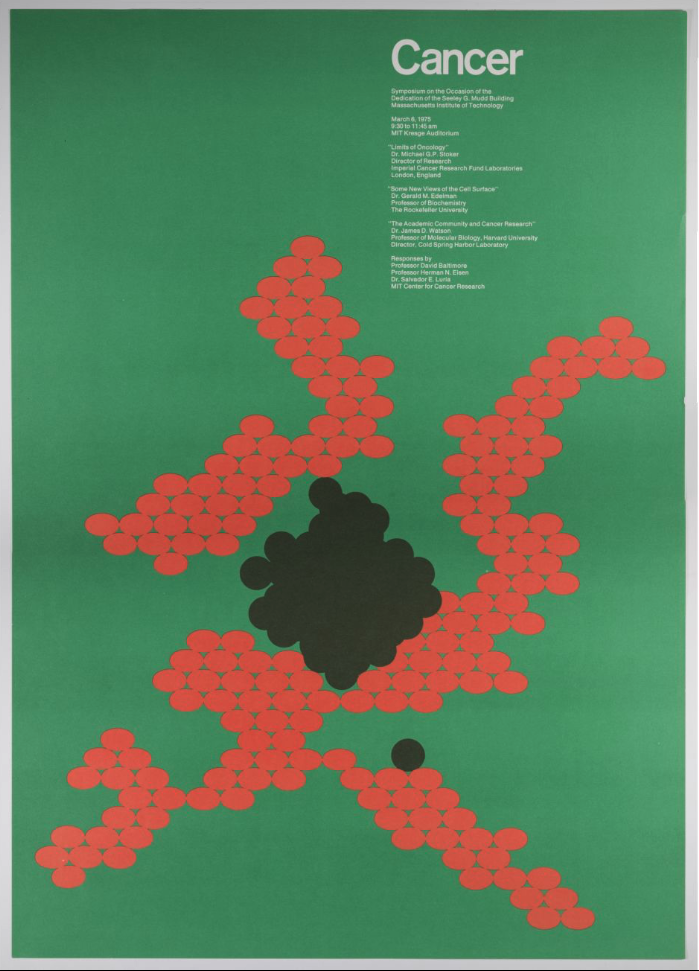
In 1989 she joined the Media Lab, an MIT laboratory dedicated to researching projects at the convergence of design, multimedia and technology, as a Visiting Design scholar. The result of this collaboration is a computer generated image of pigments with different molecular weights, dispersed on paper according to gravity and absorption capacity.
Interest in visual arts and music
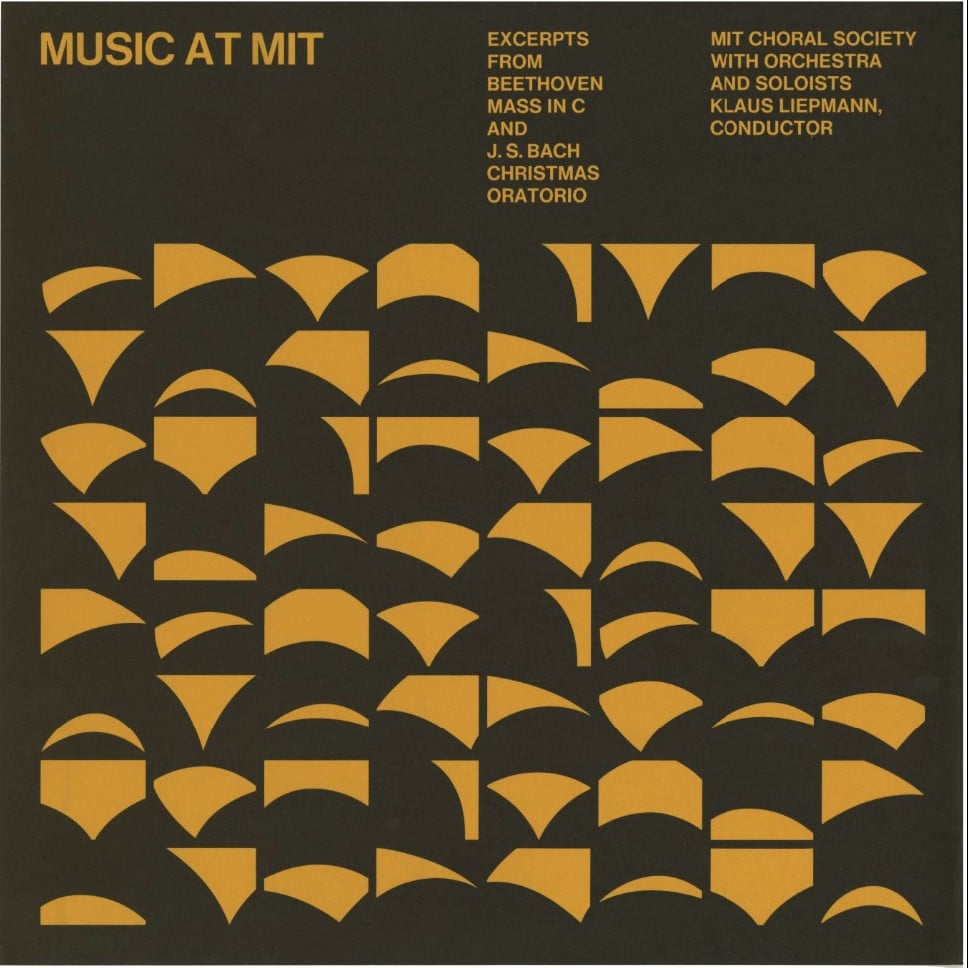
Despite being known for research in science and technology, MIT is an institution dedicated to learning in all its varied facets. As we can see, the graphic designer of the Publications Office combines an extraordinary sense of design with a passionate interest in visual arts, music and literature.
Jazz (60s)
Music at MIT (1972)
For the Humanities Series (1966) concert poster, Jacqueline S. Casey combines the image of a violin or cello – all four concerts included string instruments – with the colours of the flags of the participating countries: the United States, France, Hungary and the Soviet Union.
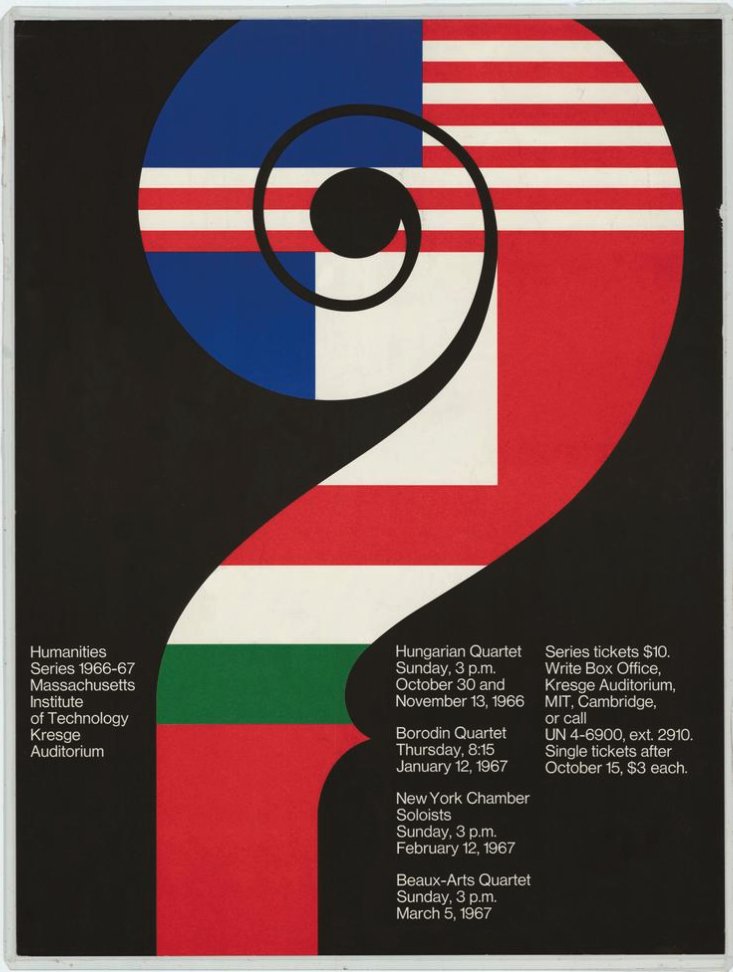
Throughout its history, MIT has hosted numerous art exhibitions in its galleries and museums.
“Much of my design work has been for painters, sculptors and architects of all persuasions, philosophies and points of view. […] When I design for them, I want to do them justice, always maintaining, of course, my integrity as a creator. I know how difficult it is to start with nothing more than an idea and fight to find unique solutions”[2] , she is quoted in the book about her 30 year career at the institution.
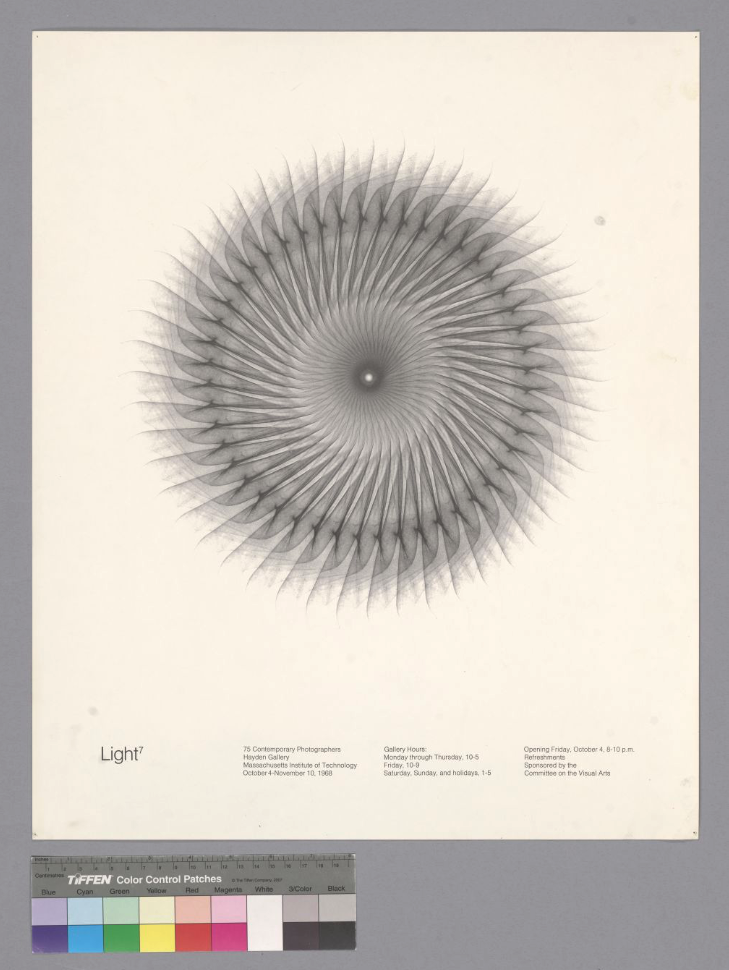
Light7 (1968)
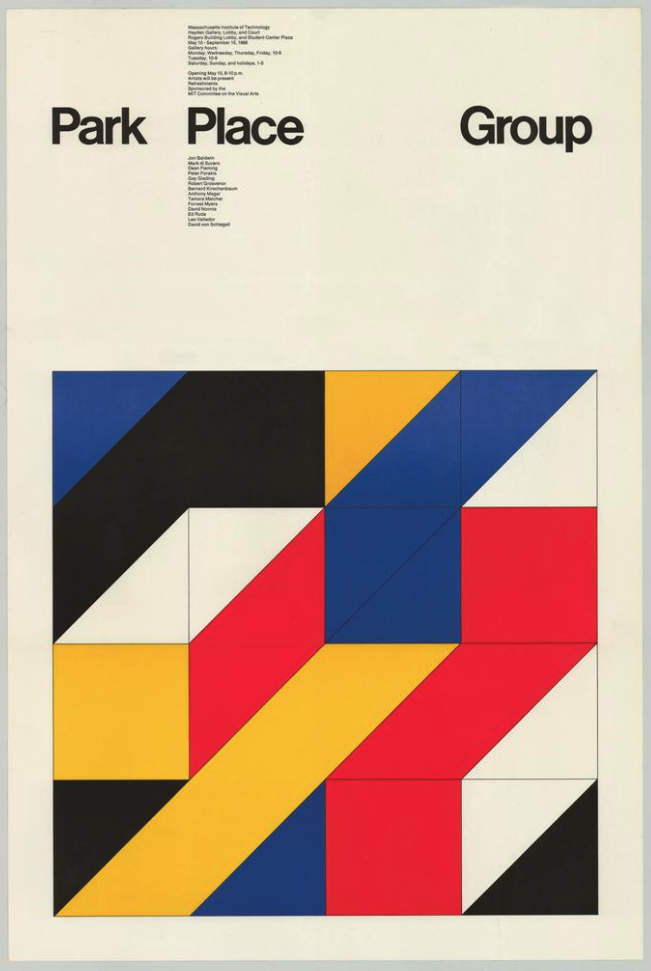
Park Place Group (1968)
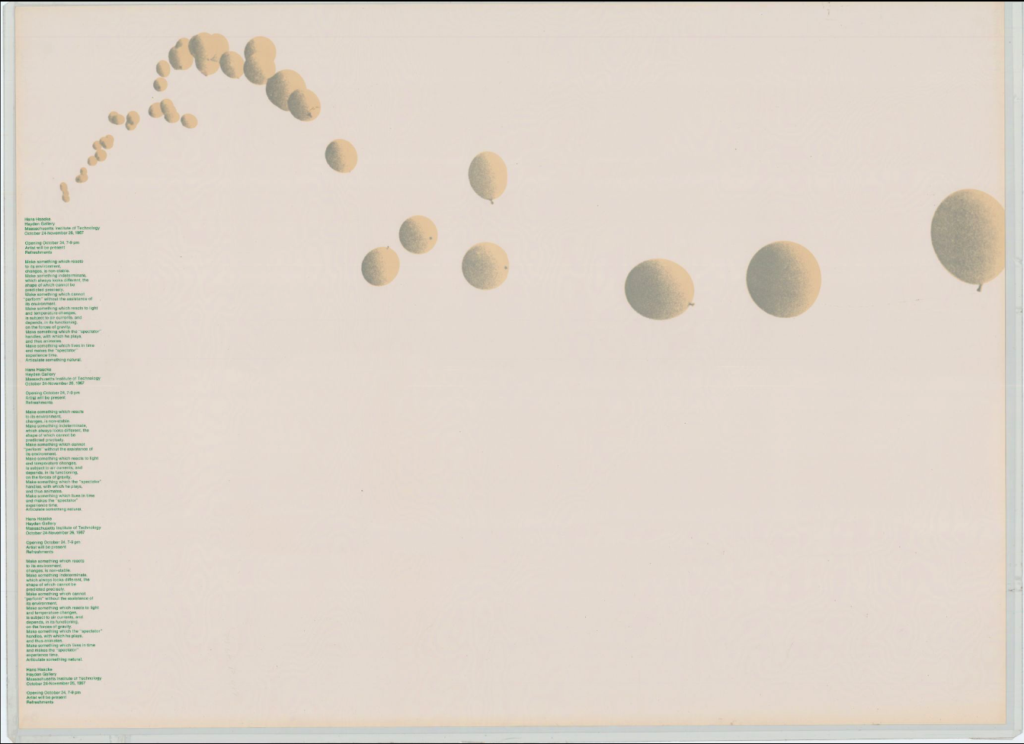
Hans Haacke (1967)
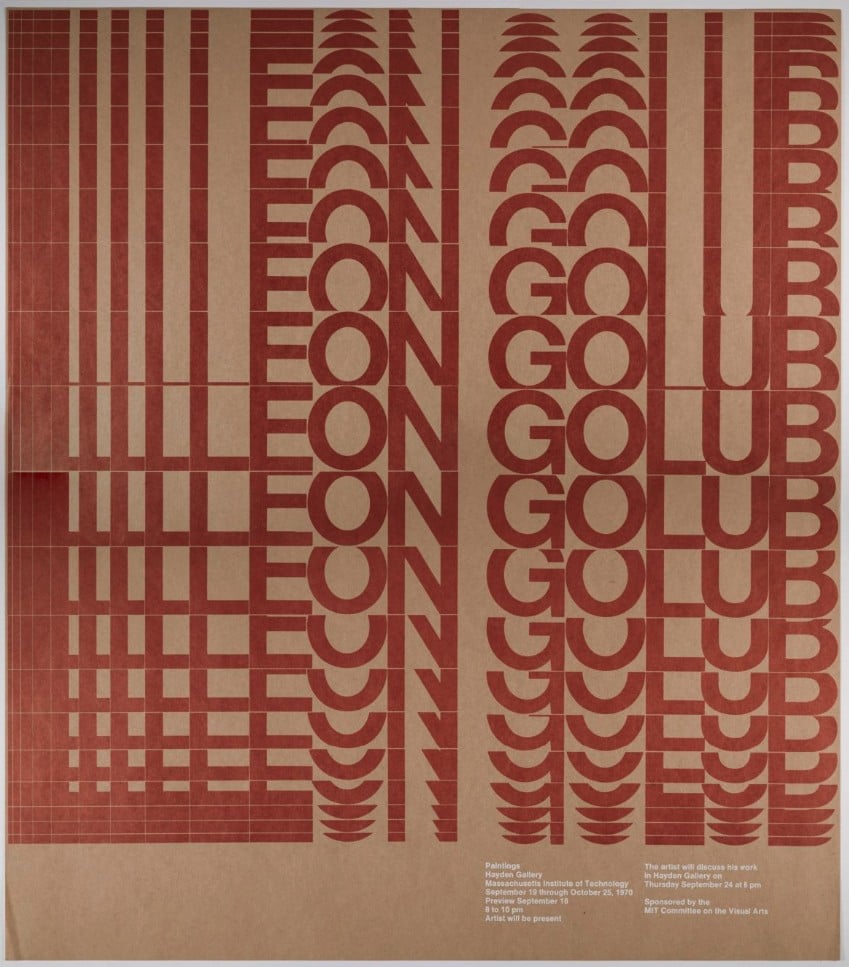
Leon Golub: Paintings (1970)
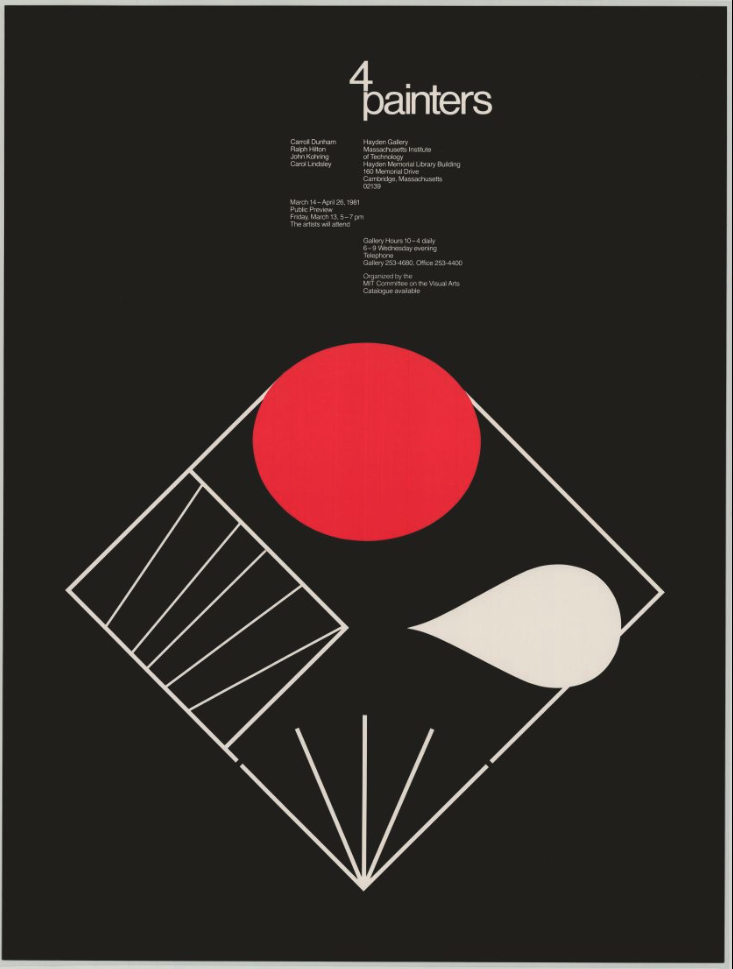
The design of Four Painters (1981) uses an element which represents the work of each artist, fused into a single image.
An indelible mark on modern graphic design
The work of Jacqueline S. Casey teaches us that the poster is not just some minor tool for communication. So much so that many of her posters are part of the permanent collections of the Museum of Modern Art in New York (MoMA), the Cooper-Hewitt Museum, the Rochester Institute of Technology and the Library of Congress of the United States, as well as the MIT Museum itself. They have also been featured in numerous exhibitions, both individual and collective, all around the world.
In 1989, the designer decided to retire from the position of director of the Publications Office – which she had held since 1972 – but continued to collaborate with MIT until her death in 1992, leaving an indelible mark on modern graphic design.
“I received a mini-course in the laboratory, looking at cancer cells through the microscope, seeing them in action. It helped me to overcome some of my fears. For the poster the experience provided a greater accuracy in the choice of graphic arrangement, especially more accurate color”.
“A great part of my design works has been for painters, sculptors and architects of all kind of directions, philosophies and viewpoints. […] When I design for them I want to do them justice, while, of course, maintaining my integrity as a creative person. I know how hard it is to start out with nothing but an idea and struggle for unique solutions”.
Editorial note
We would like to thank the MIT Museum for allowing us to use the images in this article for educational purposes. We invite readers and anyone else who is interested to find out more about Jacqueline Casey’s work and the MIT Museum by visiting its official website and visiting the museum in person.
MIT Museum website: https://mitmuseum.mit.edu/
Section of the MIT Museum website dedicated to Jacqueline Casey: https://mitmuseum.mit.edu/collections/person/7008
To visit the MIT Museum: https://tickets.mitmuseum.org/events/8de12838-39e0-f99a-c7ce-720e5baa0dbc