


In Syracuse, Sicily, on an old street near the Basilica of Santa Lucia, the city’s patron saint, there stands a tiny publishing house “for kids and grown-ups”.
Its name, VerbaVolant, a play on the Italian for “word” and “fly”, neatly encapsulates the vision of its founder, Fausta di Falco: “(…) I want readers to see pictures painted by the words in (our) books, images that stay with them for life”.
The moniker also speaks to what’s inside the imprint’s books: dreamlike language and naive illustrations that carry readers off to enchanting worlds far away.
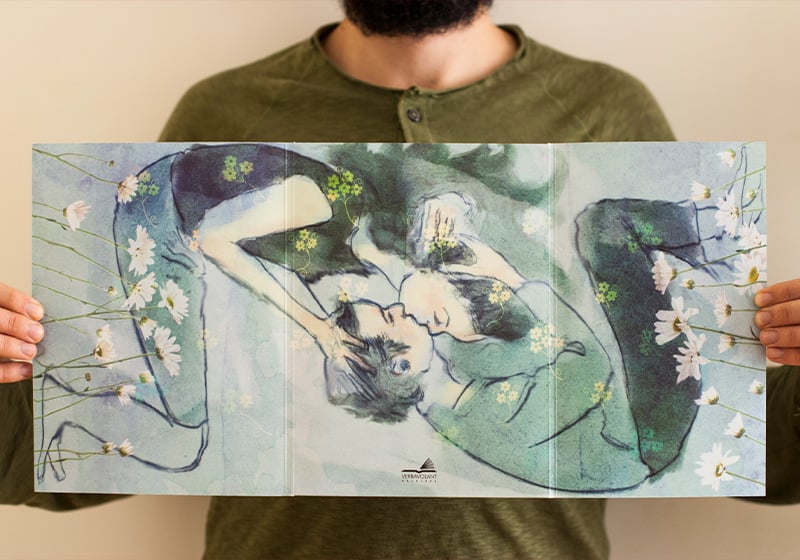
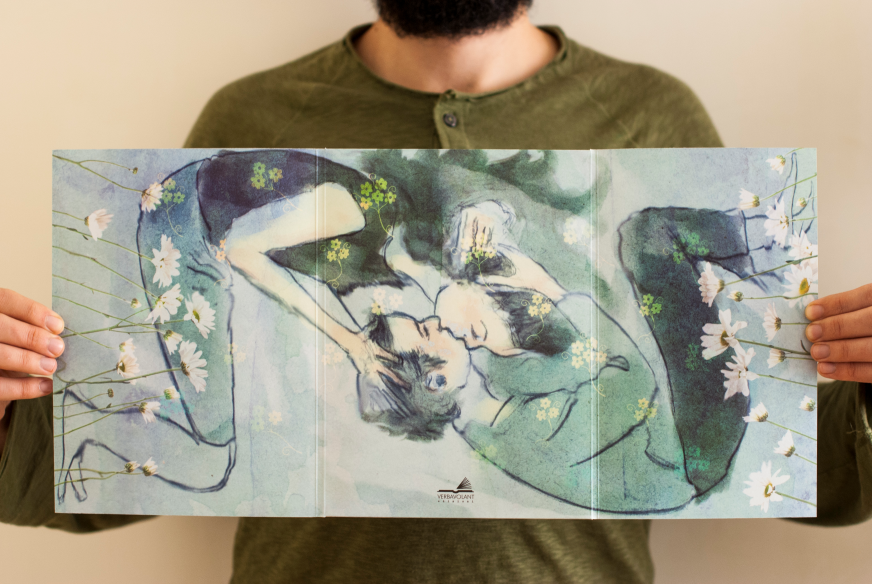
Run by Fausta and her husband Elio, VerbaVolant produces picture books for children and adults, as well as publications in unusual formats, like their Libri da Parati® (Wallpaper books) series of illustrated stories that fold out into posters to hang on the wall.
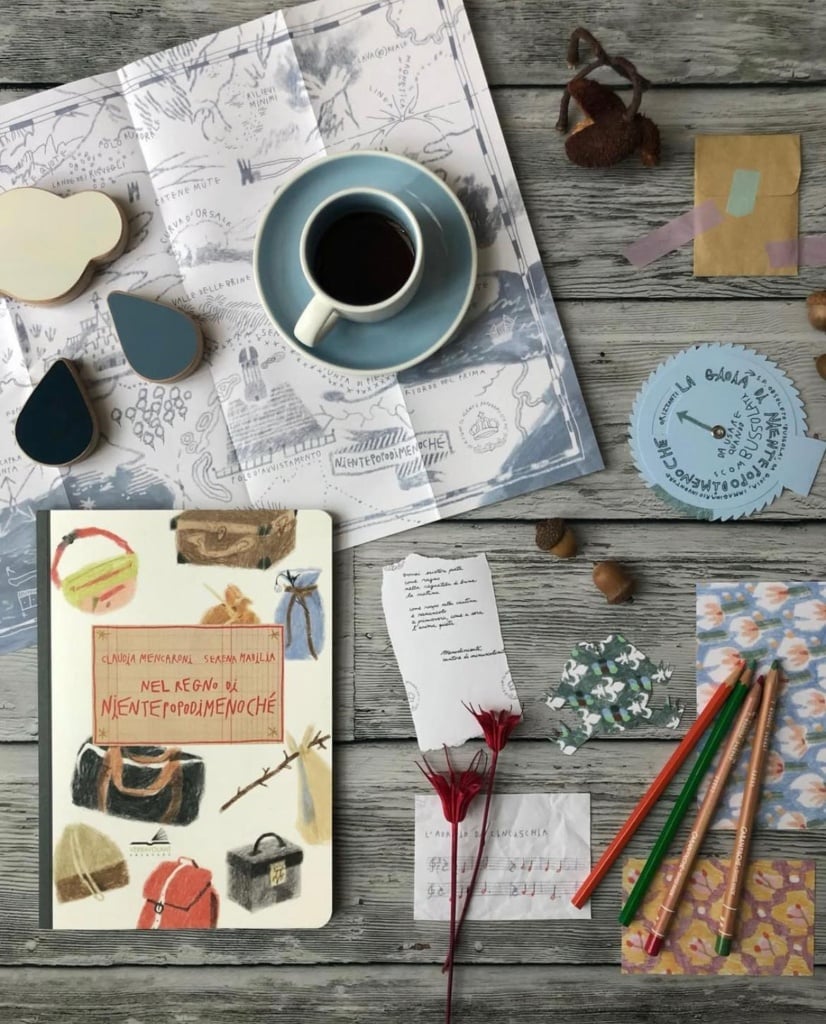
Fausta’s passion for storytelling and paper art is such that in the first 1,000 copies of the picture book “Nel Regno di Nientepopodimenoche“ (In the kingdom of none other than), she painstakingly inserted by hand three pieces of origami, a little handwritten note, some mustard seeds for planting and even a compass for navigating the fantastical world within the book.
Fausta, where did the idea for Libri da Parati® come from?
Libri da Parati® (Wallpaper books) were created almost for fun a few years back. Elio and I love picture books. And I also love design and interior decoration: truth be told, if I hadn’t studied literature and pursued a career in publishing, I would’ve liked to have been an architect.
We wanted a picture book for adults that could also live a “second life” off the bookshelf. So we had the idea of producing a picture book printed on a 70 × 100 cm sheet of paper that unfolds into an artist-designed poster.
The first volume in the series, “Il mare chiuso” (The closed sea), was a collaboration between writer Alessio Di Simone and illustrator Alessandro Di Sorbo. Unsure as to how the public would receive it, we took it to the Turin Book Fair for preview.
When, to our immense joy, we saw readers’ enthusiasm for the book, we pressed on with the project, registering the trademark and design to prevent anyone copying the idea. Today, there are lots of titles in the Libri da Parati® series. Some of our readers even collect and hang them on the walls of their homes and offices! And two volumes, “Seb e la conchiglia” (Seb and the shell) and “I doni degli dei” (The gifts of the gods), were shortlisted for the prestigious Premio Andersen (an Italian award for children’s books).
Which Libri da Parati® would you recommend to readers of the Pixartprinting Blog?
“La principessa che scriveva” (The princess who wrote), written by Nerina Fiumanò and illustrated by Angelo Ruta, because it shows how writing helps us get through tough times. Another title I recommend for typography and writing fans is “Era una nuvola” (It was a cloud) by Ilaria Cairoli and Alberto Casagrande. It’s a poetic telling of the history of typefaces that also turns into the perfect poster for font lovers.
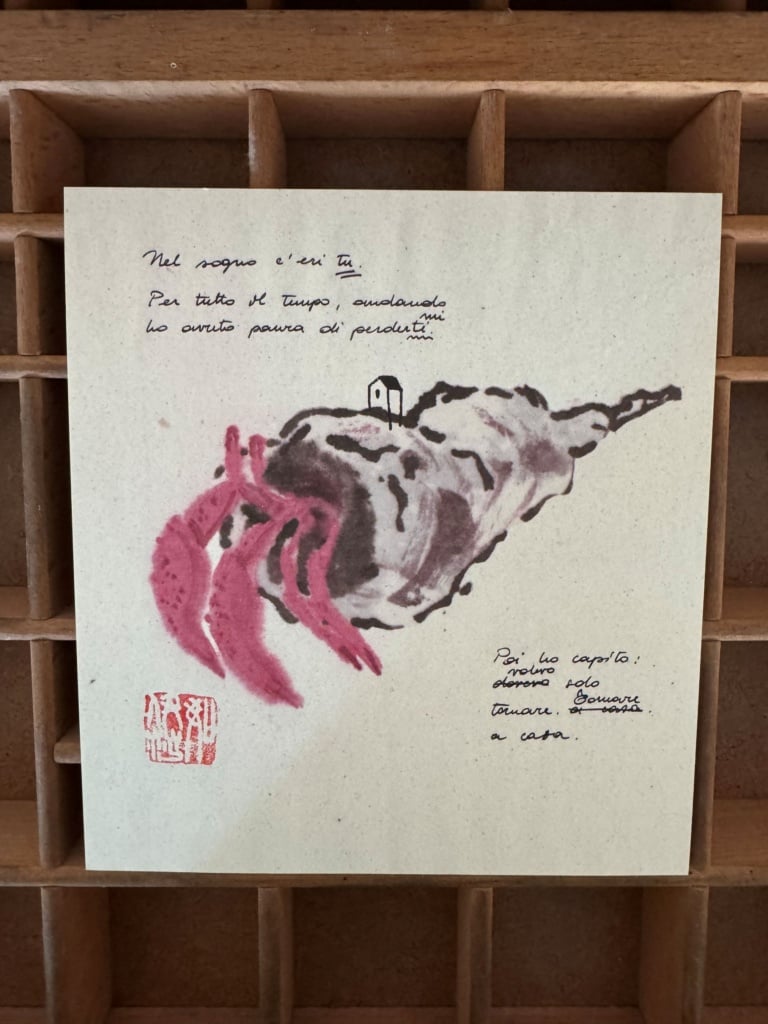
We’ve also just published a new edition of “Seb e la conchiglia” complete with a print produced on Favini Alga Carta paper and hand-stamped with illustrator Claudia Mencaroni’s own stone seal. The illustrations inside were created on rice paper with a traditional Chinese painting technique that uses a bamboo brush.
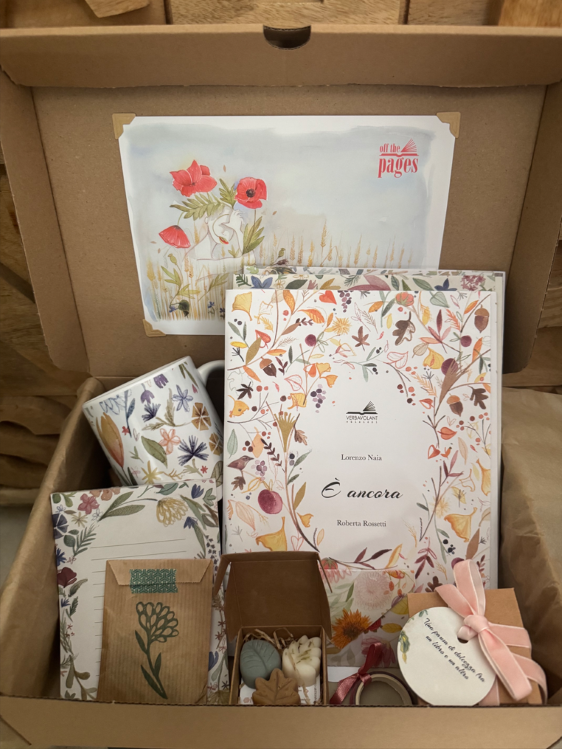
Your latest line, Off the Pages, is a series of box sets containing a picture book and hand-made items for bibliophiles and illustration aficionados. Can you tell us a bit more about it?
Just like Libri da Parati®, the idea was born out of a personal passion of mine – this time for little surprises. When I give someone I’m fond of a present, I love to wrap it meticulously. And if that present is made up of lots little gifts, the satisfaction is all the sweeter.
Once, for a friend’s 40th birthday, I packed a big box with 15 different gifts, all connected by riddles! So I liked the idea of treating our adult readers to lots little goodies carefully picked for them.
Of course, book gift boxes are nothing new, but a couple of things make ours different: there’s a VerbaVolant book inside, along with items in keeping with the story’s theme, all of which have been either sourced from artisans we trust or especially made and packaged, one by one.
This is because we want readers to experience the surprise and delight which they felt as kids when they unwrapped birthday and Christmas presents. Each box in the Off the Pages series is hand stamped and contains a different selection of items – from postcards and bookmarks to stamps and notepads.
As well as Libri da Parati®, there’s also Claudia Mencaroni’s ”Le cose che porto con me. Agenda poetica” (The things I carry with me: a poetry diary). It’s a poetry anthology, a perpetual diary for jotting down tasks and appointments, and a notebook for recording thoughts and drawing sketches, all rolled into one. Journalling is incredibly popular at the moment, and there are even courses on how to keep a personal diary. Do you think this revival in writing by hand might also lead to a revival in reading?
I’m really proud of this project. I had long wanted to move beyond books and add to our range something closer to the world of stationery and journalling. And chatting to Claudia, an author we’ve worked with for years, an idea emerged for a poetry diary which, as you said, combines many things in one.
Studies have shown that handwriting enhances concentration and creative thinking, and that working in analogue mode with books, pencils and colours, is fundamental for our brain’s wellbeing. So, yes, I think that journalling is a great way to reconnect with books, too. What’s more, the journeys in the diary start with reading poetry and observing the world around us.
How has your catalogue evolved over the years?
When I founded the publishing house, I started out with a surreal storytelling series and a graphic novel. Then, as time went by, Elio and I – who in the meantime had quit his job as an engineer and joined VerbaVolant – decided to focus on our passions: picture books for adults and young kids, as well as the sort of storytelling for older children found in our segnaSTORIA (STORYmark) series, complete with colour illustrations and a detachable bookmark on the cover.
On the VerbaVolant website, you write that you have a deep connection with place where you live: how does Sicily show up in the books that you publish?
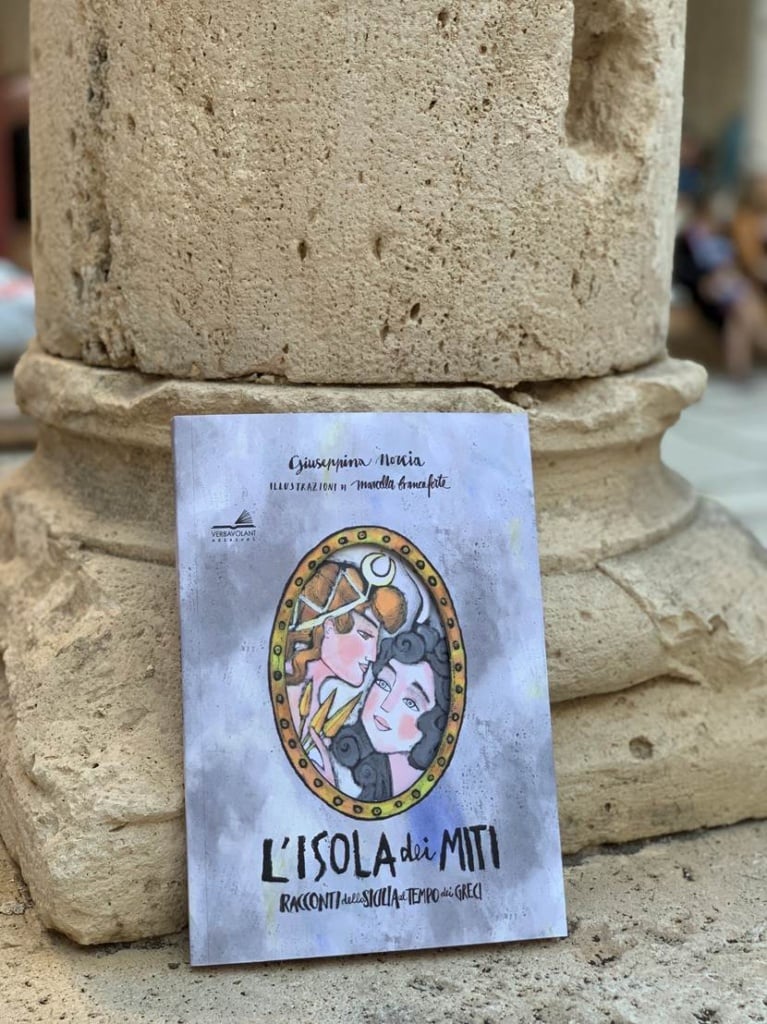
Except in rare cases, like in ’“L’isola dei miti” (The island of myths) or “Archimede, una vita geniale” (Archimedes: a brilliant life), Sicily does not appear in the content of the titles we publish. That said, the fact that we’re southerners, and more so islanders, influences who we are. We’re in the middle of the Mediterranean, but we’re seen as peripheral.
We’ve learnt how to fight for things that other people take for granted, to come to terms with our marginality.
But the margins can sometimes be the best place to observe the world, and being there pushes you to find innovative and creative solutions.
What are the greatest challenges you’ve faced as independent publishers in southern Italy?
One of the biggest problems has been distributing our books. At first, some distributors refused to work with us just because we were based in Sicily.
Luckily, we found other distribution channels, and during the pandemic we got together with other publishers to set up the Associazione degli editori siciliani indipendenti (ADESI – the association of independent Sicilian publishers) to promote our new business and give Sicily’s publishers a louder voice.
Then there’s the obstacle of geographic distance: taking part in festivals and literary events in central and northern Italy is pretty costly for us, because it means buying a plane ticket and booking a hotel, so sometimes we have to pass.
Fortunately, most of our authors live in the centre and north, so it’s easy to organise presentations that help us promote our books. And being a publishing house from the south gives us a distinctive identity and sets us apart from the plethora of small publishers in the north.
Can you give us a sneak peek of your next publishing projects?
Before the Turin Book Fair, we’re releasing a new picture book which we started working on in the pandemic and which has been really complex to put together. Mia Lecomte, a Franco-Italian poet, pitched us a poetic and compelling story about freedom and critical thinking.
The book will have some pages that can be folded out and enlarged, as well as QR codes that take readers to a specially composed soundtrack to accompany reading, whether in their head or out loud.
We’re also collaborating with Alessio Di Simone and Alessandro Di Sorbo on a book about time that will have an innovative format. As with all our titles, we’re trying to create a surprise, be it big or small.
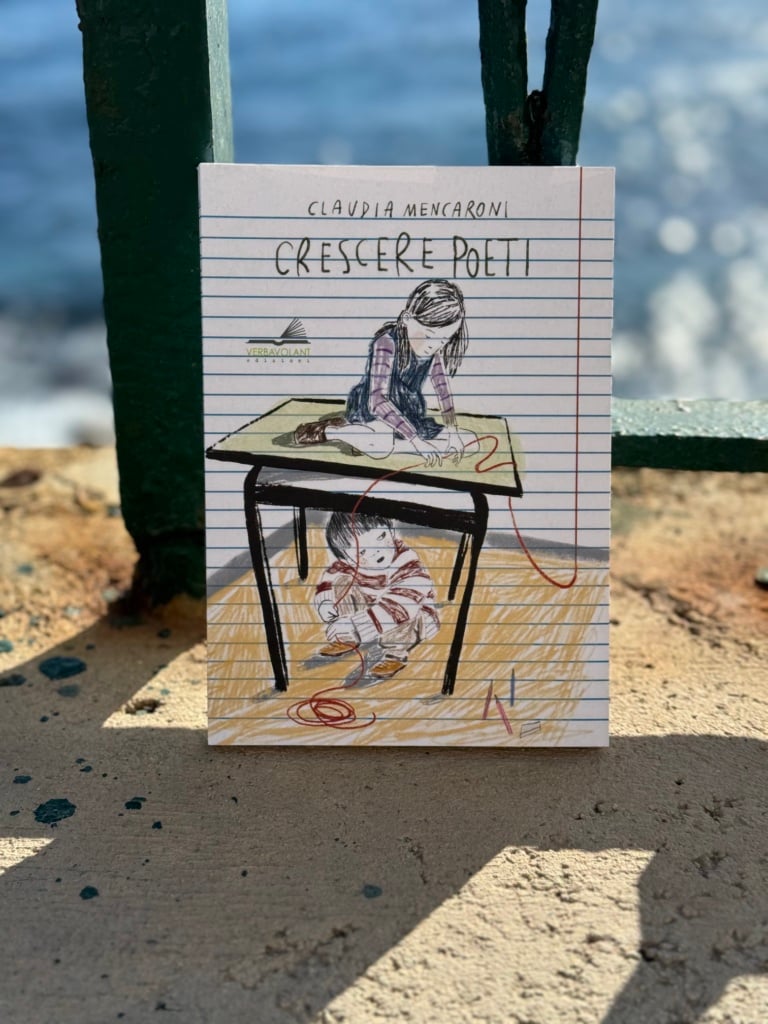
We’re also working on a new series, “Sentieri Maestri” (Teaching paths), aimed at educators, teachers and more knowledgeable parents. The first title, “Crescere poeti. Educare e educarsi allo sguardo e al linguaggio poetico” (Raising poets: teaching and learning the gaze and language of poetry) by Claudia Mencaroni, is already out and kindles kids’ interest in poetry with practical ideas and exercises.
The series will cover different themes, from music to journalism, giving readers young and old activities that encourage thinking and doing. Last of all, we’ll shortly be launching a special Off the Pages advent calendar, but we won’t spoil the surprise of what’s inside!
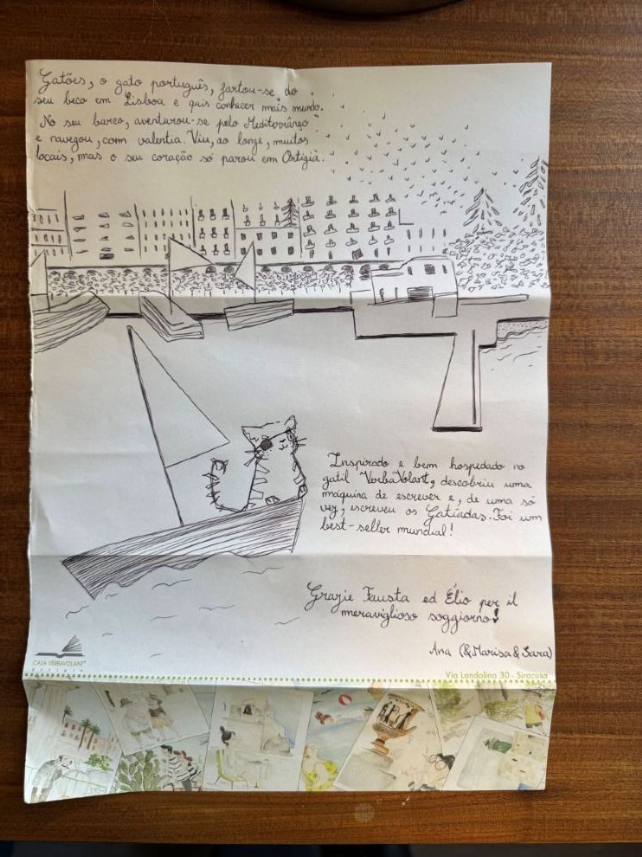
In 2019, you opened a literary B&B in the building you own in the historic heart of Syracuse. As well as rooms and apartments, it has a library where guests are encouraged to bury themselves in a book or write their own short story on an old Olivetti typewriter and pin it up for others to enjoy. What led you to get into hospitality alongside publishing? And what’s the most original story that a guest has left on your pin board?
Opening Casa VerbaVolant took an awful lot of time, and keeping it going is a significant commitment, but it gives us so much satisfaction. We wanted to create an environment that reflected our passions: books, illustration, typewriters and vintage items.
Once they’ve explored our beautiful city, we’d like our guests to unwind in place where time stands still, browsing our collection of books that grows bigger by the day, painting or writing, and even using one of our typewriters: we’ve got 60 of them!
Increasingly, people don’t stay with us by chance, but because they’ve sought us out or friends have recommended us. About 90% of our guests are from abroad, and we recently hosted colleagues from a famous Anglophone publishing house. On our pin board, there’s a great short story in Portuguese written and illustrated by two sisters and their friend. It’s about the voyage of cat who sails around on a boat.
If you want to learn more about VerbaVolant books, head over to https://www.verbavolantedizioni.it/
And if you’re into literary tourism, you can book your stay at Casa VerbaVolant in Syracuse here: https://www.casaverbavolant.it/it