


Table of Contents
In the early 1990s, booklets with incredible covers depicting illustrations of monsters and magical creatures started appearing in newsagents. This was The Ancestral Trail, a now iconic series of books that was a revelation for many of the era’s boys and girls, and in many cases their first contact with the world of fantasy fiction.
Published fortnightly in the UK and elsewhere by Marshall Cavendish and in Italy by Hobby & Work from 1992, the series, comprising a total of 52 partbooks, paired spectacular full-page images with a simplified role-playing game system, challenging readers to complete a different quest in each issue.
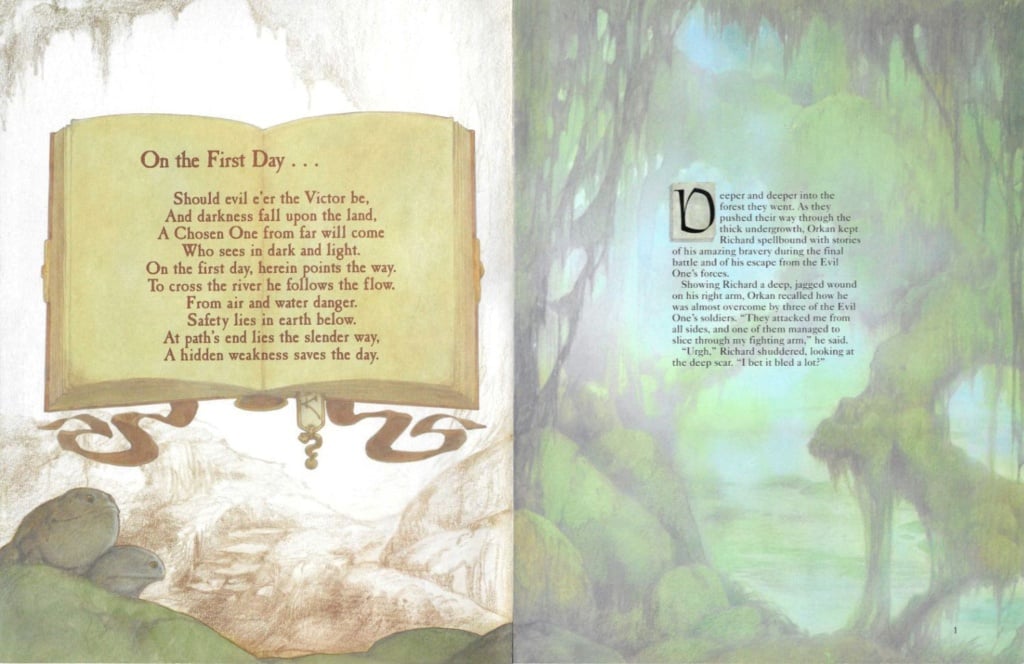
The Ancestral Trail in time became a cult adventure series, in part thanks to its myriad paper-based materials, including maps to complete, trading cards, cardboard miniatures and much more.
So, buckle up and join us on today’s quest, exploring the history of this brilliant adventure!
Where it all began: the history of the series
The Ancestral Trail began life as a short story by the South African writer Frank Graves, who initially envisaged the work as a single, long novel. Following a suggestion by Fergus Fleming, the British publisher Marshall Cavendish convinced him to adapt the story to a periodical format, giving the adventure an episodic structure, perfect for distributing through newsagents.
It was initially published in the UK, Australia and New Zealand, and then in Germany, Spain and Italy, in 1992.
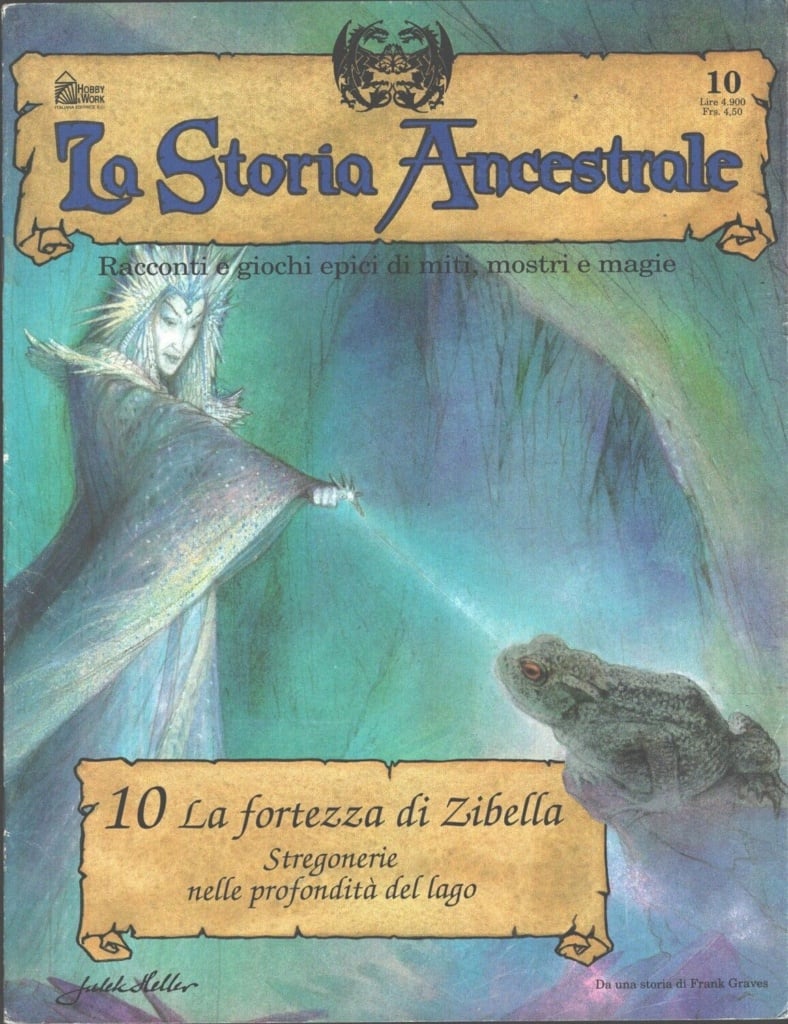
In Italy, Hobby & Work was already well known for its partbooks dedicated to model-making and education, but The Ancestral Trail (translated as La Storia Ancestrale) was a much more ambitious proposition: it lasted two years over a total of 52 volumes, each of which not only contained a chapter of the story, but also new pieces of a fantasy world that could literally be assembled on your dining room table.
The Ancestral Trail and the Cyber World – a story in partbooks
The work was divided into two story cycles of 26 partbooks each. The first cycle was written with an unmistakeably fantasy setting and style, with exceptional illustrations by Julek Heller. The second cycle, meanwhile, turned the story – and the design style – on its head, introducing readers to the Cyber World and Mehau Kulyk‘s illustrations, including early experiments with digital illustration.
The Ancestral Trail’s quests (Vol. 1–26)
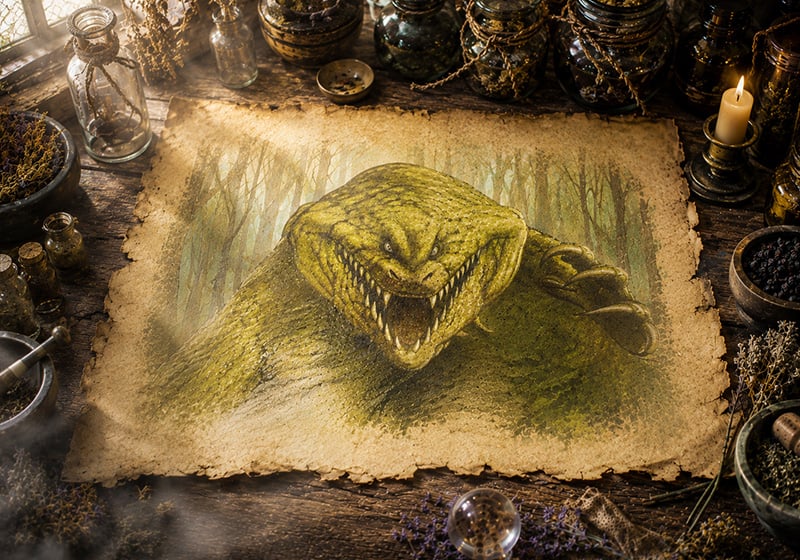
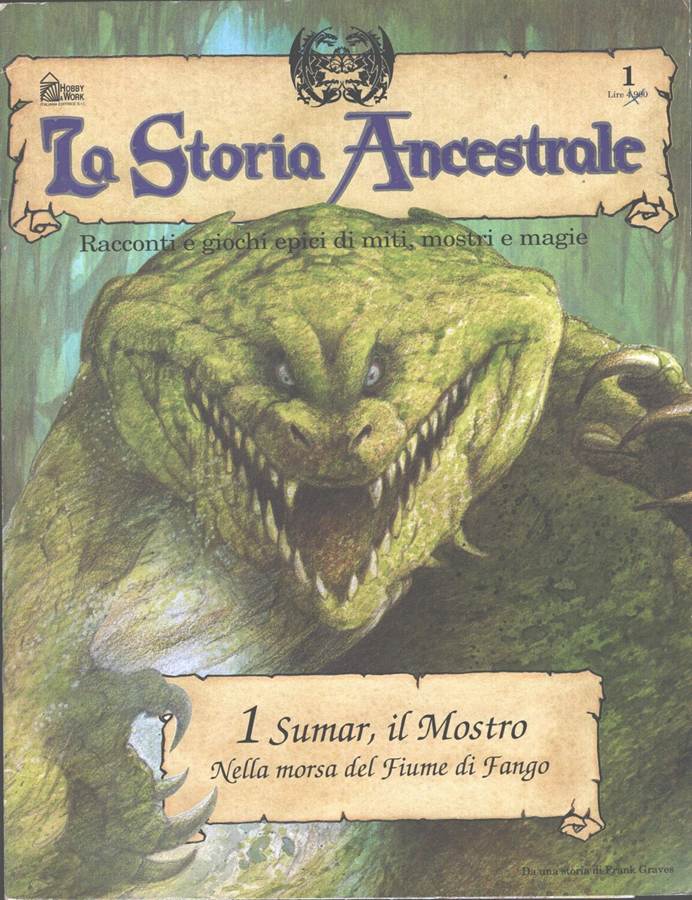
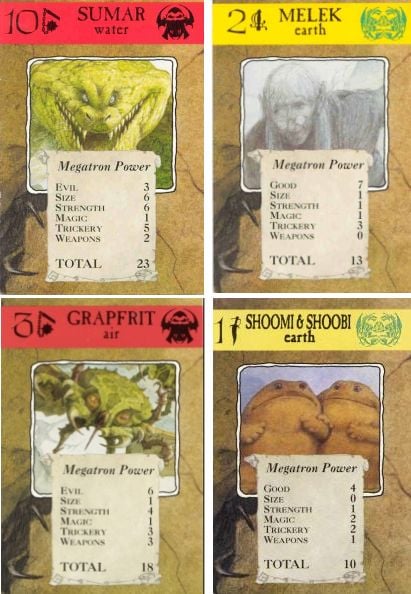
Each issue of The Ancestral Trail featured an image on the cover of the enemy the protagonist would have to face. The first issue, for example, The Moss Beast – In the Grip of the Slime River Ghoul, introduced Sumar, a sort of enormous crocodile with a threatening look and sharp claws.
The story’s protagonist is Richard, a boy aged somewhere between 11 and 14. While running home after staying out too late, he gets his foot trapped in a hole and is literally swallowed up by the ground. He passes out, and when he wakes up, finds himself in the Ancestral World.
Richard is not your everyday hero: he has one green and one grey eye, a feature that – according to an ancient prophecy – marks him out as the Chosen One. The green eye allows him to see light, and by extension the good in people, while through the grey one he perceives darkness and evil.
Richard is welcomed into this new fantasy world by Golan, a sage with a long white beard, the Guardian and the Keeper of the Life Force. He sets Richard an epic mission: to recover the seven Life Force pods stolen by the Evil One, a malign being that has taken over the Ancestral City at the centre of the Earth. However, Richard only has 26 days to reach his goal and restore balance to the Ancestral World: each of the 26 partbooks corresponds to a day of adventure, just as the prophecy foretold.
Richard encounters various secondary characters during his adventure. The first of these is Orkan, a warrior from the Common Beasts race, with a human body and a boar’s head. The second is Melek, a dwarf who carries the Book of Prophecies (or Sacred Runes) containing the clues needed to defeat the various enemies.
Each issue introduces a different enemy that Richard and his companions must defeat, often through cunning or by exploiting a single weakness.
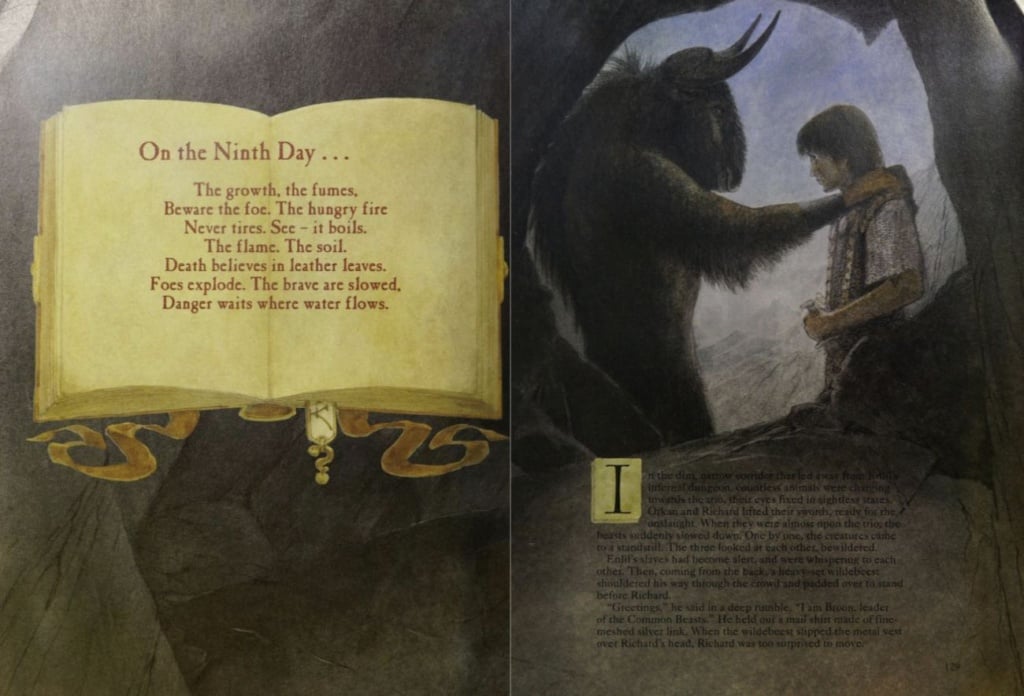
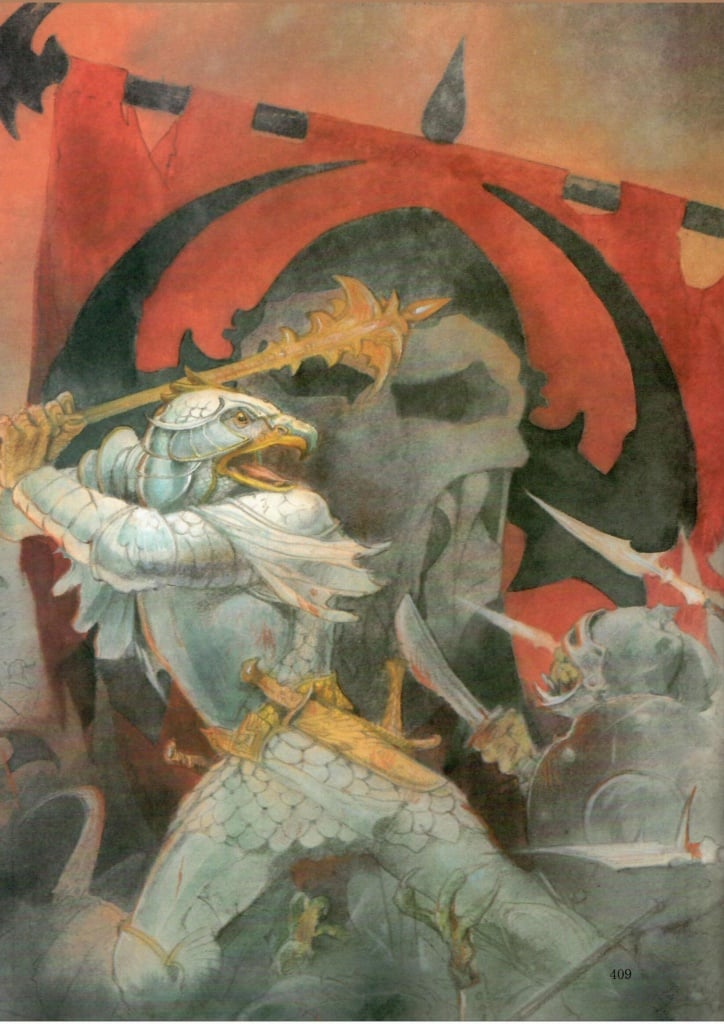
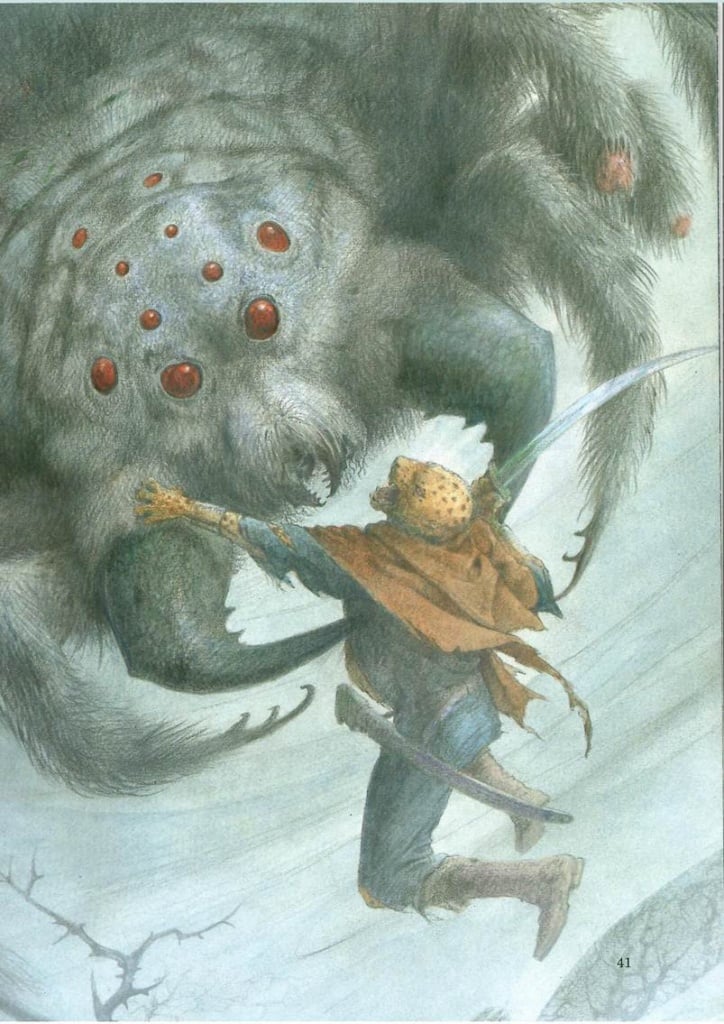
The enemy bestiary is extremely diverse, ranging from giant animals like snakes and spiders to shapeshifters, witches and many other mythical creatures.
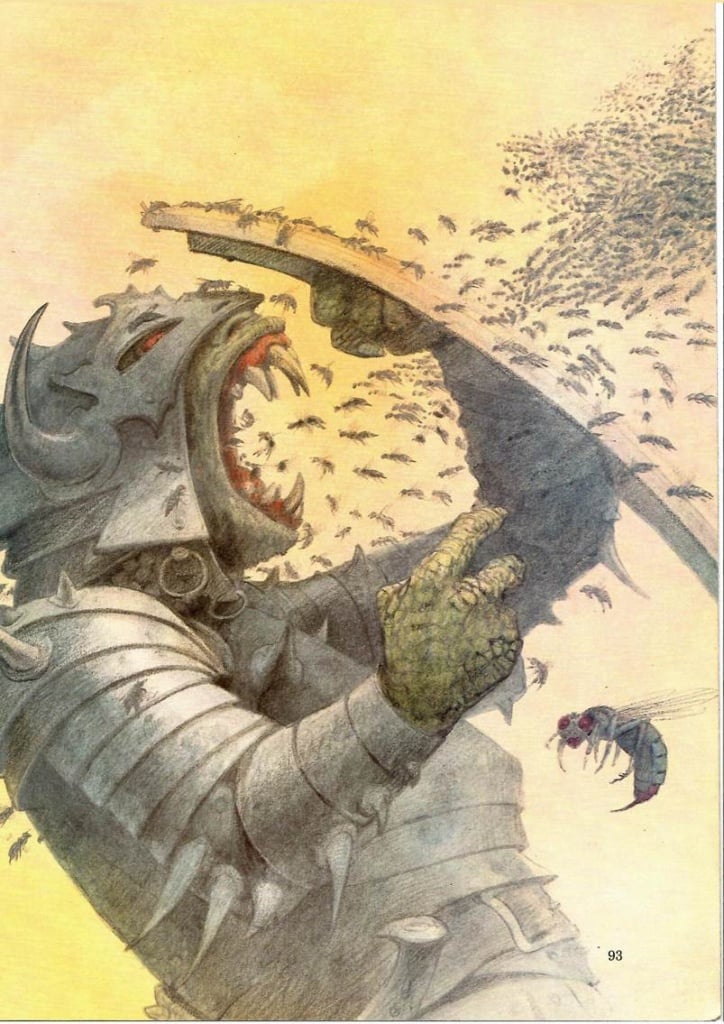
The illustrations were undoubtedly one of the key elements that made The Ancestral Trail a cult favourite. Julek Heller‘s style is full of details and imbued with a dark atmosphere. It is a perfect example of the ‘grubby’, realistic fantasy style that was popular throughout Europe, featuring monstrous creatures with a visual force that immediately grabbed readers’ attention.
As well as being beautifully designed and technically brilliant, the issues of The Ancestral Trail were also full of small secrets to keep the reader’s interest. For example, readers were challenged to find two small toad-like creatures, Shoomi and Shoobi, hidden in Heller’s illustrations, camouflaged amongst the drawings’ details.
One final stroke of genius worth a mention was the secret acrostic. The first letter in each issue of the original series was designed to look like it was engraved on a stele. Reading all these letters in reverse order (from volume 26 back to volume 1) spelled out the phrase ‘Fear not what is only in the mind‘.
The leap into the Cyber World (Vol. 27–52)
There is an epic final battle for the Ancestral World at the end of the 26th volume: eventually, good wins over evil, and Golan thanks the heroes for their help.
However, Richard’s return journey does not go entirely to plan: instead of ending up at home, the protagonist lands in a new, desolate world due to a dimensional passage error. He is now in the Cyber World, and the atmosphere here is drastically different: forests and legends have given way to metallic and dark lands.
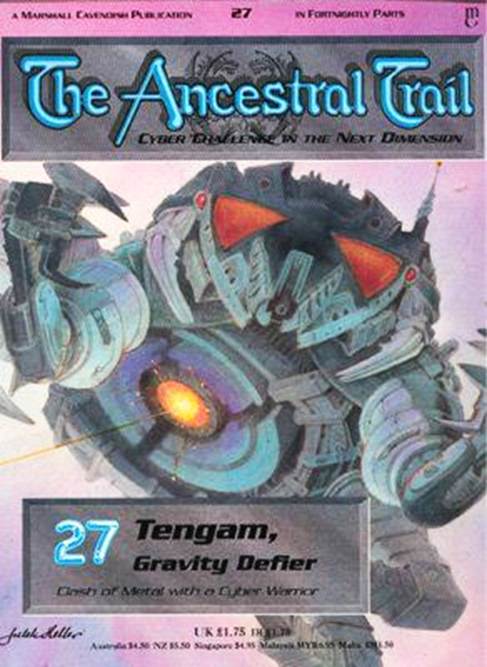
Following this unexpected twist, Richard is forced to continue his adventures in a futuristic version of the Ancestral World. The problem is that here he no longer has a mentor to guide him and, at least to begin with, he doesn’t seem to have a clear mission to follow either. The characters have grown up, and must now fend for themselves.
In this new adventure, Richard is joined by Robo, a cyborg who is initially programmed by the Evil One to kill him. The mission again lasts 26 days, and the goal is to recover the Omni pieces, metal fragments similar to puzzle pieces that, if joined together correctly, can open up the necessary dimensional portals to return home to Earth.
In the Cyber World the enemies are no longer mythological monsters; they are now robots and creatures based on futuristic technologies like lasers, toxic waste, cloning, computer viruses and virtual reality. The danger is palpable, and there is also a final twist that leaves readers stunned.
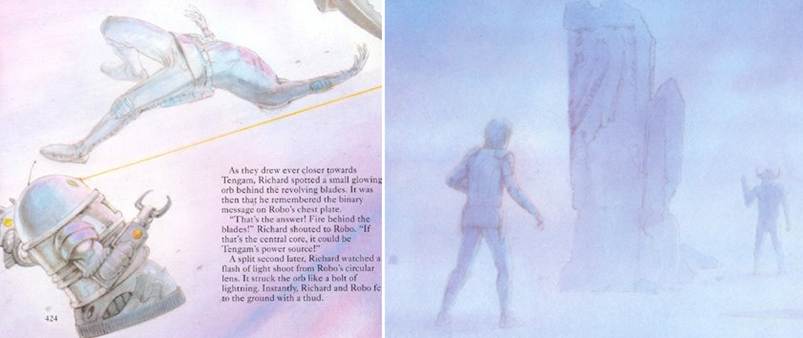
The layout and lettering in the issues changed too. The illustrations were enhanced and embellished by Mehau Kulyk‘s digital processing, which combined traditional drawing with computer graphics. Despite the technological limitations in the early 1990s, the result was an avant-garde look with dazzling colours, fractal structures and paradoxical scenarios that highlighted the Cyber World’s alien and mechanical nature.
There was no shortage of ‘secrets’ here either. You still had to find Shoomi and Shoobi in all the Cyber World illustrations, this time depicted with cyberpunk helmets. In addition, the prophecies at the start of each issue were written in binary code, which the reader had to interpret to discover what awaited them on the subsequent pages.
Print materials and extras: maps, cards and secrets
It was not just the exquisite illustrations and the captivating story that made The Ancestral Trail unique, but all the extra content that came with the partbooks, including many print materials.
Let’s have a look at the partbooks first, though. It’s clear that a lot of care went into the design:
- The 52 booklets were printed on glossy paper of a decent weight, which enhanced the illustrations’ colour, and with stapled paperback binding, allowing them to be consulted easily without damaging the large, double-page illustrations.
- The text was interspersed with information boxes and illustrations that extended beyond the classic grid layout, creating a more dynamic appearance.
In addition, each issue contained various extras:
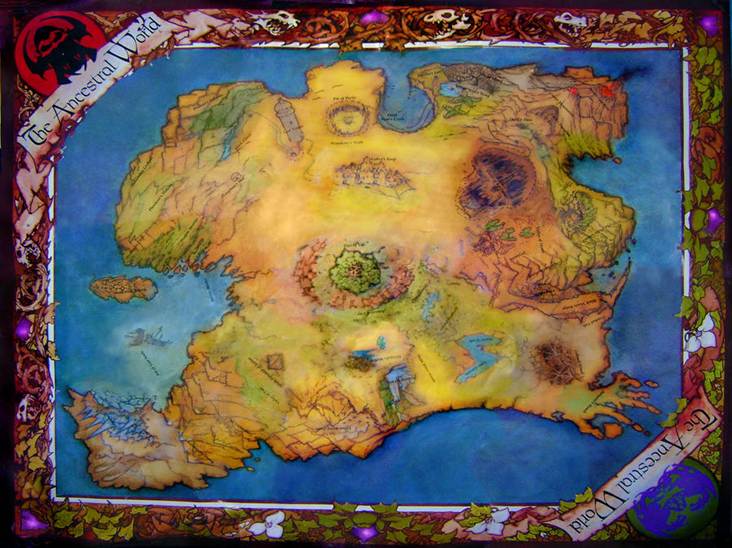
- Lightweight cardboard map puzzle pieces. When cut out and stuck onto a base one piece at a time, they revealed the full geography of the Ancestral World and Cyber World.
- One or multiple trading cards depicting the characters and monsters, to be cut out from a piece of card. These featured an illustration of the creature or person and their game stats (for the role-playing game, which we’ll describe in the next section), meaning that as well as reading material, you also got a bonus game of cards to trade with your friends. Readers assembled their pack one card at a time as they bought each issue, although the complete rules on how to use them in the RPG were only included at the very end.
- In the Cyber World partbooks, the trading cards were replaced with Techscan cards containing encyclopaedic entries on all the scientific and technological ideas introduced in that particular issue.
- Morbane’s Book: a page from this book of spells was printed on the inside back cover of each partbook, containing two tales of legends from all over the world. The reader could cut the pages out and bind them all together inside a cover provided in one of the series’s issues.
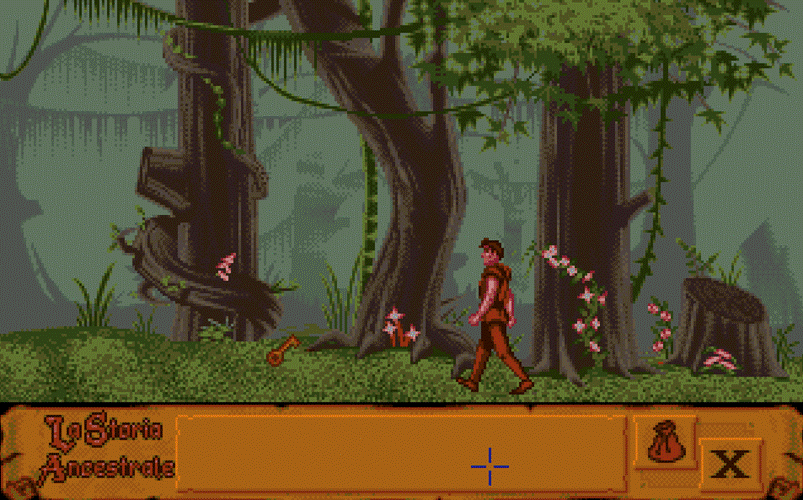
A video game for PC was even included with a reprint of the Italian version – a graphic adventure game developed by Holodream Software and released in 1994 by Hobby & Work for the MS-DOS and Amiga operating systems, which told the entire story of Richard and his allies. The video game is currently available to download from the website of one of its programmers, Fabrizio Farenga.
The Ancestral Trail: an RPG for children
In addition to the 52 partworks, in 1994 Hobby & Work released a ‘red box’ (a clear reference to the colour of the basic Dungeons & Dragons set) for the Italian market – a simple role-playing game based on The Ancestral Trail designed to introduce young players to RPGs.
This box contained all the materials needed to play and create new stories:
- An 80-page rulebook, put together by Giuliano Bezzi
- 46 colour cards depicting the monsters and characters along with their stats
- 2 cards for creating personalised monsters
- 10 sheets of monster miniatures to cut out, with 46 monsters in total
- 2 sheets of card for the character sheets, one already filled in with the character’s data
- 2 sheets of card featuring colour maps to start the introductory adventure
- 2 six-sided dice
It was, in other words, a box packed full of high-quality print materials. But how did the game work?
The system was based on six main characteristics, the values of which were determined by throwing a six-sided dice (d6), and a final score known as the Megatronic Power. The characteristics were as follows:
Good/Evil: determining the character’s moral alignment and their ability to read and write the universal language.
Size: showing how big they are and used to calculate Stamina Points (or Hit Points).
Strength: measuring their physical power and damage bonuses.
Magic: needed for using spells and calculating Magic Points.
Trickery: representing their craftiness and cunning.
Weapons: describing their offensive and defensive ability when in combat.
Players could choose from three classic professions: Fighter, Hunter (similar to the thief in other RPGs) and Wizard. One truly original element was the choice of race, which drew directly on the creatures encountered in the partbooks:
- Boar-Man: strong and tough, ideal fighters.
- Leopard-Man: agile fighters with natural claws.
- Wasp-Man: small wings allow them to fly.
- Unicorn-Man: wise, empathetic and brilliant at magic.
- Dwarf: clean-shaven and less belligerent than J.R.R. Tolkein’s stereotypical creations.
The action resolution system was extremely simple: the Master decided on a difficulty level (chosen from a basic table) and the player threw two six-sided dice (2d6), adding the Ability level in the relevant skill to the action they were completing. If they got a total equal to or higher than the stated difficulty level, the action was a success.
We’ve reached the end of our journey through The Ancestral Trail, a work that made the best possible use of the periodical press to create an extensive universe, where the boundary between story and game was as thin as a sheet of coated paper. We hope this technical (and in some places rather nostalgic!) analysis will inspire new designers and authors to create similarly captivating, mysterious and interactive print products.