


Table of Contents
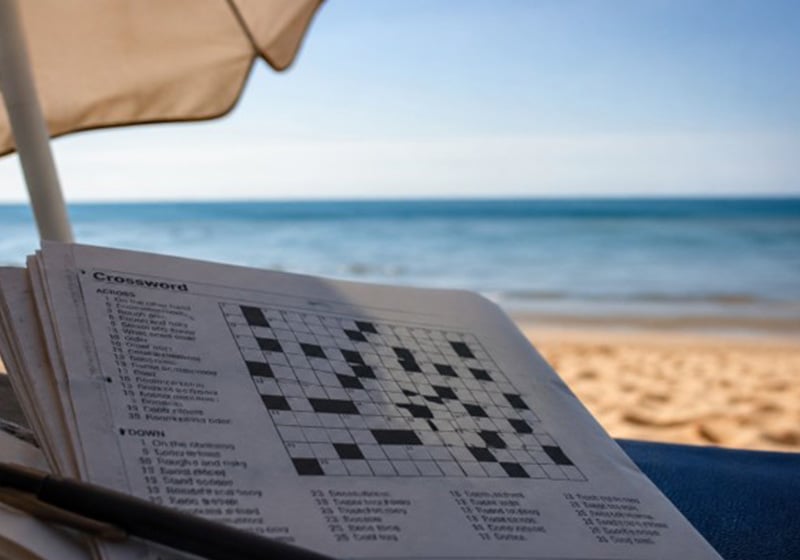
A page of black and white squares. A slightly sweaty pen between your fingers, and a word that just won’t come into your head! All while comfortably sat under a sunshade on the beach… is this image familiar to you?
It certainly is to us! Like many other people, we always love relaxing with a good puzzle, particularly in the summer. There’s no two ways about it: puzzles are one of the timeless hobbies linked inextricably to the smell of the sea and sun cream. And they’re also one of the simplest ways to keep your brain in shape, even once the summer holidays have come to an end.
People say that puzzles are perfect for keeping our brains young… but is that really true? As we prepare to rummage around in our beach tote to extract our favourite puzzle magazine, let’s see what science has to say about it all!
Are puzzles really good for your brain?
It’s certainly nice to think that something you’re doing is a panacea for your cognitive function! If a passion you’re spending time on feels not just harmless, but actually beneficial, you can relax even more and banish any lingering sense of guilt!
Crosswords, sudoku, riddles and puzzles in general are some of the most commonly cited tools for keeping your brain young.
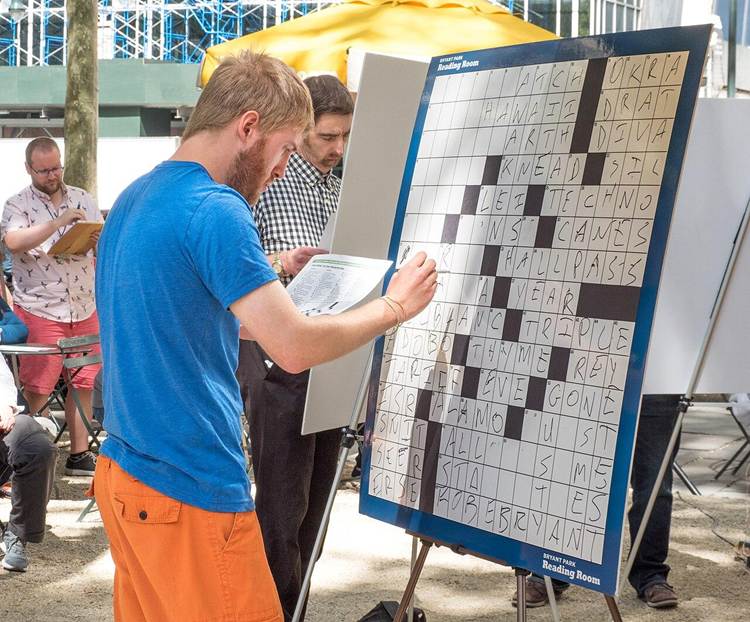
As is always the case when discussing something as complex as the human brain, however, the answer is anything but straightforward. Essentially it boils down to this: yes, puzzles promote cognitive function, but only in certain conditions. Let’s take a look at what the latest scientific research says.
Why do puzzles keep the mind in shape?
Some well-known studies have shown that crosswords have a very positive effect on the mind. In particular, an oft-cited piece of research from 2022 seemed to show that people with mild memory problems noticed an improvement after solving crossword puzzles for several months.
Another study from 2024 that analysed the lifestyle habits of almost 10,000 people found that regularly doing activities like puzzles and board games is a predictive factor for better mnemonic, verbal and reasoning skills (although it’s worth saying that video games were classified at the same level).
The scientific reasons that explain why puzzles are good for your brain are summarised nicely in an interesting article published by Harvard Health Publishing. Here are some of the main points that emerge:
- it’s good for you to face (moderate) difficulty. A good crossword should tease your brain, making it work hard to solve a problem. When repeated regularly, this equates to a training schedule!
- Puzzles help keep different parts of your brain working well. As you search for the right word, a good crossword activates a wide variety of skills – memory, reasoning, intuition, and linguistic skills – and stimulates new connections in the brain.
- Puzzles can be a sociable pastime: you with a pen in one hand and the magazine in the other, and the rest of the family trying to guess. Scientists say this is the best way to solve a crossword; puzzles seem particularly beneficial to your health when done in company!
Crosswords are great for brain training, but not in isolation
As you’ll have gathered from all these studies, there are lots of other things to consider when it comes to taking care of your brain.
One of the most important, for example, is socialising. Research has shown that more isolated people with fewer social ties tend to have worse cognitive function as they get older. This was explained in the Guardian by Davangere Devanand, professor of psychiatry and neurology at Columbia University and a leading expert on the link between puzzles and healthy ageing. “When we socialise, many things are happening in terms of communication, brain function and just general awareness of the world around you. You learn things”.
Another factor that should not be underestimated is staying active and exercising. The Romans used to talk about ‘mens sana in corpore sano‘ – a healthy mind in a healthy body – and they were absolutely right! Indeed, some medical experts believe that physical exercise is the most effective way to reduce the risk of Alzheimer’s disease and cognitive decline.
Regular exercise helps your body regulate blood sugar levels, bringing significant benefits for your brain. And some research has even shown that staying fit increases the volume of the hippocampus: the part of your brain linked to memory and learning.
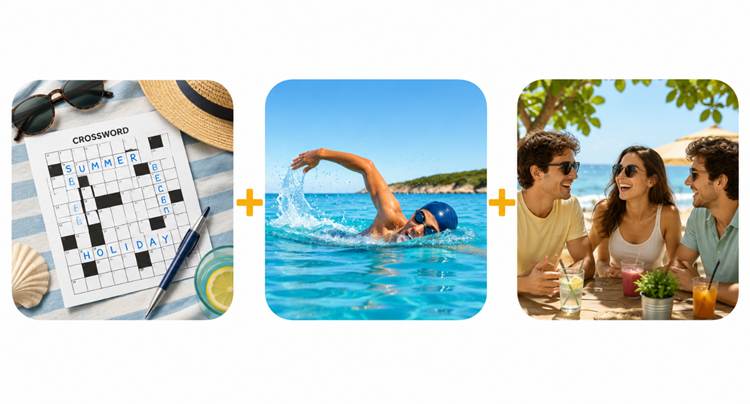
So, a practical lesson for summer from science: spending time on the beach tackling a crossword is good, but it would be even better to do it with some company and to alternate it with a swim and a walk along the shore!
The best puzzle magazines from all over the world
Feeling a bit more relaxed now? Now you’ve learned why puzzles are good for the brain and the best ways to enjoy them, it’s time to get started with this brilliant summer pastime.
To celebrate, we’ve prepared a small review of the world’s best-known and most iconic puzzle magazines – a list to take with you on your travels!
The one and only La Settimana Enigmistica

One of La Settimana Enigmistica’s slogans is ‘the magazine that others have tried to imitate countless times’. There are two others: ‘the first and biggest-selling puzzle magazine’ and ‘the healthiest and cheapest pastime’. These three slogans combined do a pretty good job of describing the essence of this genuine institution that has been published in Italy since 1932, with distribution across Europe and dizzyingly high sales figures.
Its legendary status comes in part from the secrecy of its editorial team – very few people have ever been allowed inside its offices, and its members do not give interviews – and the iconic graphic design: a safe haven that only changes a few small details every decade.
Interestingly, La Settimana Enigmistica is completely self-sufficient in its publishing process. Back in the 1940s, its founder bought a printing press, a paper mill and ink production plants so the publication was not reliant on anyone else!
Troll, the puzzle magazine from East Germany
The idea for La Settimana Enigmistica came to Giorgio Sinisi, a Milan-based engineer descended from an aristocratic Sardinian family, while flicking through the Austrian puzzle magazine Das Rätsel. This publication was reincarnated so many times it lost its identity (unlike its Italian equivalent). But there’s another historic magazine in the German-speaking world that’s worth a mention: Troll, which has been published for 70 years.
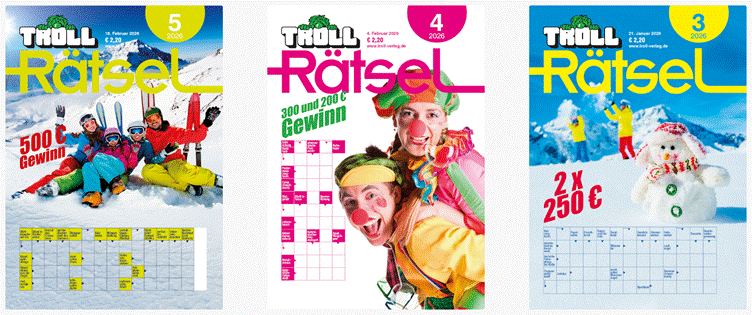
Troll was founded in the German Democratic Republic (GDR), the socialist state better known as East Germany that existed until 1990. Still today, it is predominantly stocked by newsagents in the country’s eastern regions!
Puzzler, the British puzzle magazine
Puzzler is a classic magazine in the UK, where it has been published for over 50 years. It was founded by Alfred Guttman, a mysterious businessman of Swiss origins who wanted to launch a completely new puzzle magazine for the British market.
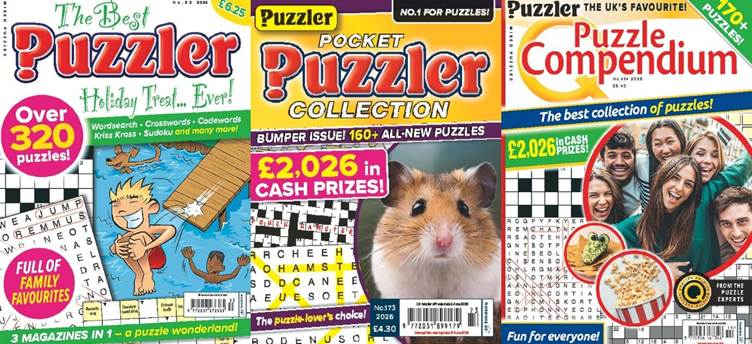
The first issue was released in 1972, taking inspiration from its French and German competitors. Today the group publishes over 30 different titles in the UK, Australia and New Zealand!
Nikoli, the Japanese magazine that invented sudoku
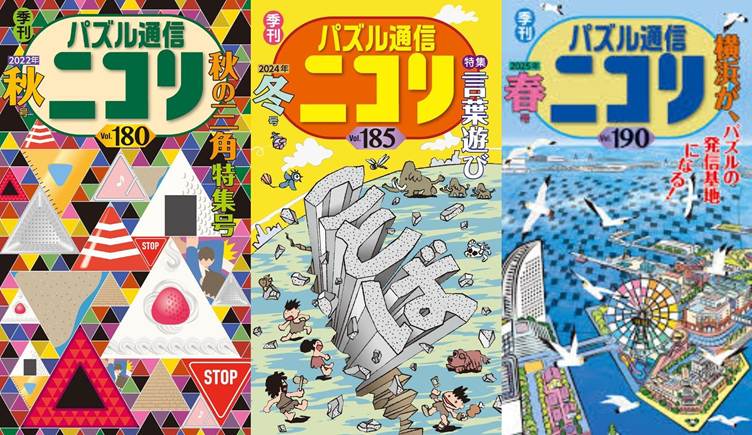
Heading further east, one publication that definitely deserves a mention is Nikoli, Japan’s first puzzle magazinehttps://www.nikoli.co.jp/en/! Best known for having invented sudoku – the wildly popular number puzzle – the magazine mostly features logic and number games. Its full name is Puzzle Communication Nikoli and a lot of the contents are created by a very active community of readers. Indeed, as Nikoli’s editorial team state on the official website: ‘Human-crafted puzzles will always have a special place in this tech-dominated world we live in today’!
Do you love doing puzzles in the sun? And do you have a favourite crossword magazine? Let us know!