


Table of Contents
A team of researchers led by University College Dublin recently discovered that some of Europe’s most ancient tomes contain traces of a deadly virus.
Fortunately, it wasn’t people who paid the price, but thousands of sheep!
Reading the news story (which made headlines around the world) more closely, it turns out to have involved traces of DNA of the sheeppox virus, a disease that is harmless to humans but not to the livestock of Europe, which has had to deal with this dangerous disease for over 3000 years! Analysing the parchment of some medieval works – including the York Gospels, which were written and beautifully illustrated in Canterbury in the late tenth century – has allowed scientists to reconstruct the history of this fatal virus more accurately.
Reading this news, and with Halloween just around the corner, we couldn’t manage to get one image out of our heads: a book that is deadly to whoever reads it!
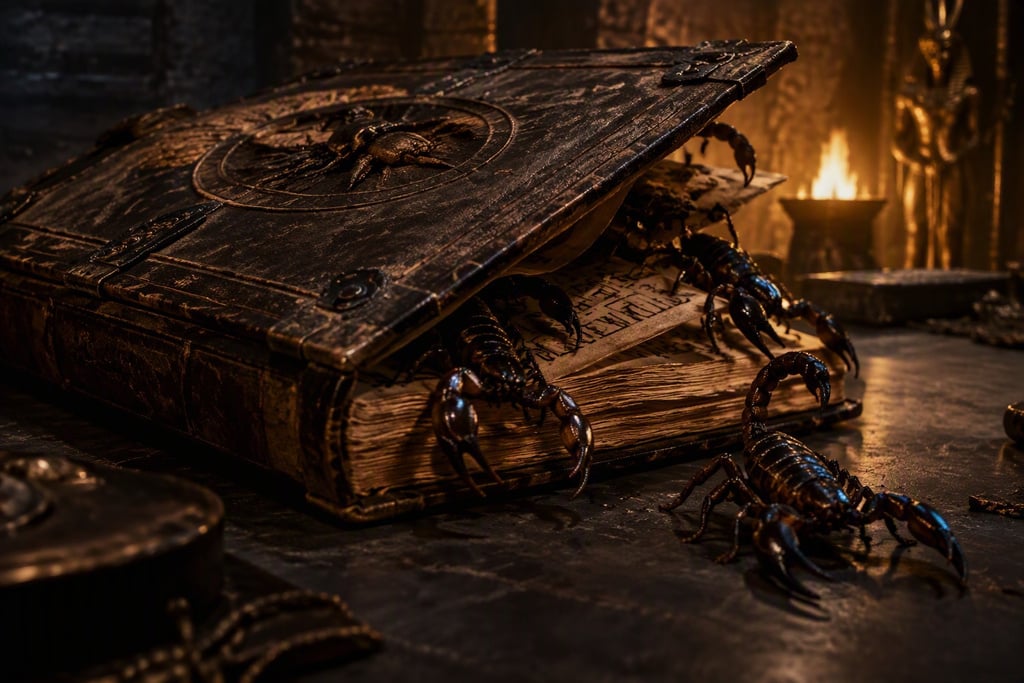
And we’re not alone. It is widely known, for example, that Umberto Eco came up with The Name of the Rose – his most famous novel, a 1980s bestseller than became a true cult favourite – after becoming fascinated by the image of a monk who took his final breath while reading in a library.
So, inspired by these ideas, today we’ve got a suspenseful round-up of deadly books for you: volumes that, either in reality or fiction, turned out to be fatal – explosive books, murderous plots and revenge achieved ‘in print’, literary fashions with extremely dangerous implications, and more.
So… happy Halloween, and watch out for that book in your hand!
The explosive book in British India
India, 1908. At the time the country was still a British colony, and Gandhi’s peaceful revolution was still a few years away.
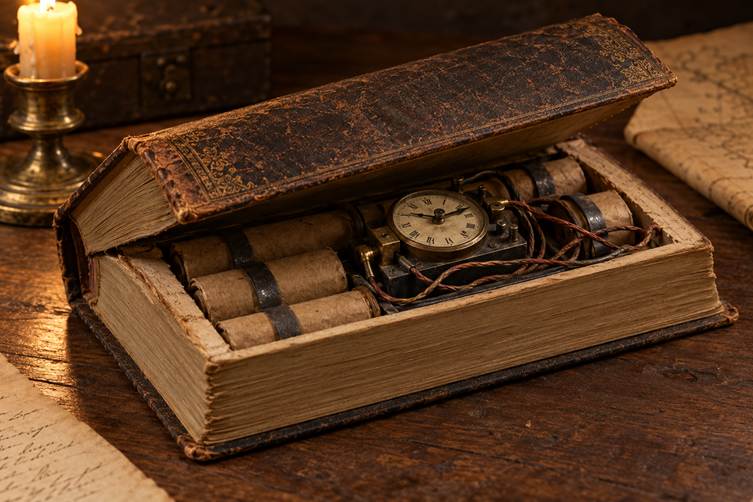
Some Indian nationalists at the time used rather unorthodox methods to promote their cause. One group from Bengal came up with a plan to take out the British magistrate Douglas Kingsford with a film-worthy method: an explosive book.
The attackers took an empty cocoa tin, filled it with explosives and detonators, and placed it in a cut-out section of a book. They chose a classic nineteenth-century English legal treaty, Commentaries on the Common Law by Herbert Broom, for the plot, and had it delivered to Kingsford’s house.
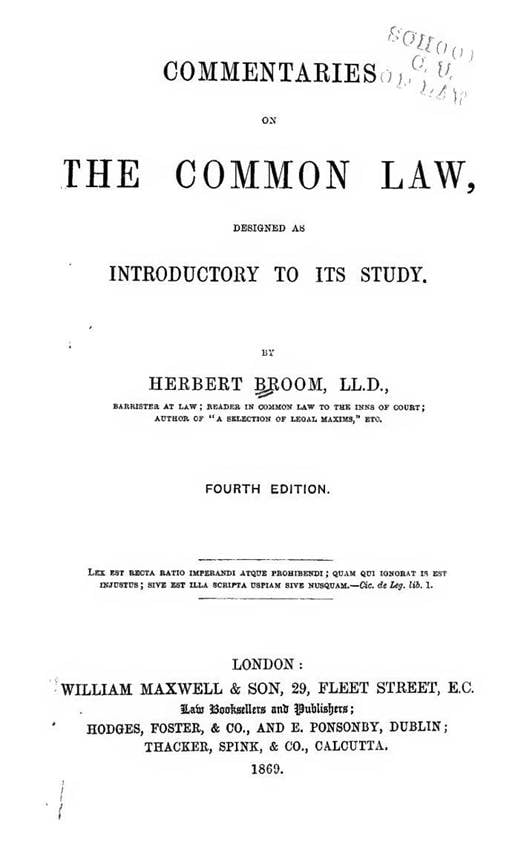
This dull legal tome could have turned out to be a dynamite read for the unfortunate magistrate! Luckily for him, he didn’t open the volume, and just left it on a shelf until he got around to reading it. Time passed and the book stayed there gathering dust, until eventually the magistrate was transferred.
The diabolical plan failed… but who knows how it might have gone if the imaginative revolutionaries had chosen a slightly more interesting book!
The poisoned book: the wise old man’s revenge in The Thousand and One Nights
The legendary Middle-Eastern stories collected in The Thousand and One Nights describe a different kind of treacherous book – one with pages laced with poison.
This (fictional) story revolves around the wise doctor Douban, an avid reader, who had acquired all his medical knowledge from books. The doctor saved the life of King Younan, who was sick with leprosy, and, as a reward, Douban was welcomed into the king’s court, with every honour bestowed upon him. But, as often happens, his luck turned: the doctor fell into disgrace, and was unjustly sentenced to death by the king.

Before he died, the clever Douban came up with a way to get his revenge… using a book! Douban gave the king a volume that he said would reveal the secret to eternal life, and urged him to read it after his death. However, in addition to being glued together, the pages of the book had also been poisoned. When the king licked his fingers to flick through it, he ingested the poison, and the condemned doctor’s plan to get revenge succeeded. A finale worthy of a Greek tragedy!
From Alexandre Dumas to Umberto Eco: beware of the books!
Did you know this juicy anecdote from The Thousand and One Nights? If not, you’ll almost certainly have run into a book with poisoned pages at some time in your reading life, as it’s a literary device that crops up in lots of other works.
Perhaps the most famous example is the plot of The Name of the Rose, the bestselling novel by the Italian author and semiologist Umberto Eco. At the centre of his story set in the Middle Ages is a book with pages that are deadly to whoever flicks through them – in this case the second volume of Aristotle’s Poetics dedicated to laughter and comedy.
The only remaining tome of this work, now lost, is kept in the library of a Benedictine monastery in northern Italy. But the librarian monk Jorge has poisoned its pages, not for revenge this time, but to preserve its secrets. This sets in motion a monk massacre, as the monastery’s unsuspecting inhabitants lick their fingers to turn the pages and so gradually consume the poison.

In French writer Alexandre Dumas’s novel La Reine Margot, meanwhile, it is a rare treatise on hunting that does the killing. The novel is set at the court of the king of France, and the book-related plot revolves around the wicked Catherine de’ Medici. Catherine wants to eliminate her son King Charles IX’s rival Henry of Navarre. And so she gets this very rare book on hunting – poisoned, naturally – delivered to Henry.
But the plan goes wrong: the king sees the book before it’s delivered, and eagerly sits down to read it. He can’t tear himself away from it, and devours 50 pages, again using his saliva to wet his fingers. You can probably guess how things turned out…
The nineteenth-century fashion for deadly arsenic-laced covers
Turning back from fiction to reality, did you know that an aesthetic fad that was hugely popular in the Victorian era could turn out to be fatal?
This was the nineteenth century, and high society was going mad for a particular shade of green: emerald green. This colour was used everywhere: in interior decor, to dye fashionable clothes and, of course, to colour the covers of people’s favourite books.
It’s just a shame that this beguiling pigment included copper acetoarsenite, a highly toxic substance containing arsenic.

Title page of Shadows from the Walls of Death by Robert C. Kedzie (1823–1902), a work dedicated to the dangers of arsenic-based pigments widely used during the nineteenth century. Public domain image preserved by the U.S. National Library of Medicine and made available through Wikimedia Commons.
It has been estimated that the arsenic in just one of these covers could be enough to kill three or four people. And it seems even the most common books could be a hidden danger without the right precautions. One of these volumes with an arsenic cover discovered in a library in Leeds in the UK was a seemingly innocuous book on gardening!
Now a research group, the Poison Book Project, is working to identify and survey the books with emerald green covers, as well as providing information on how to store them safely, as the bindings pose a risk to the health of the librarians, booksellers, collectors and researchers who come into contact with them.
So, if you’re mad about old books… check the colour of the book you’re handling!
The Necromicon, H.P. Lovecraft’s cursed book
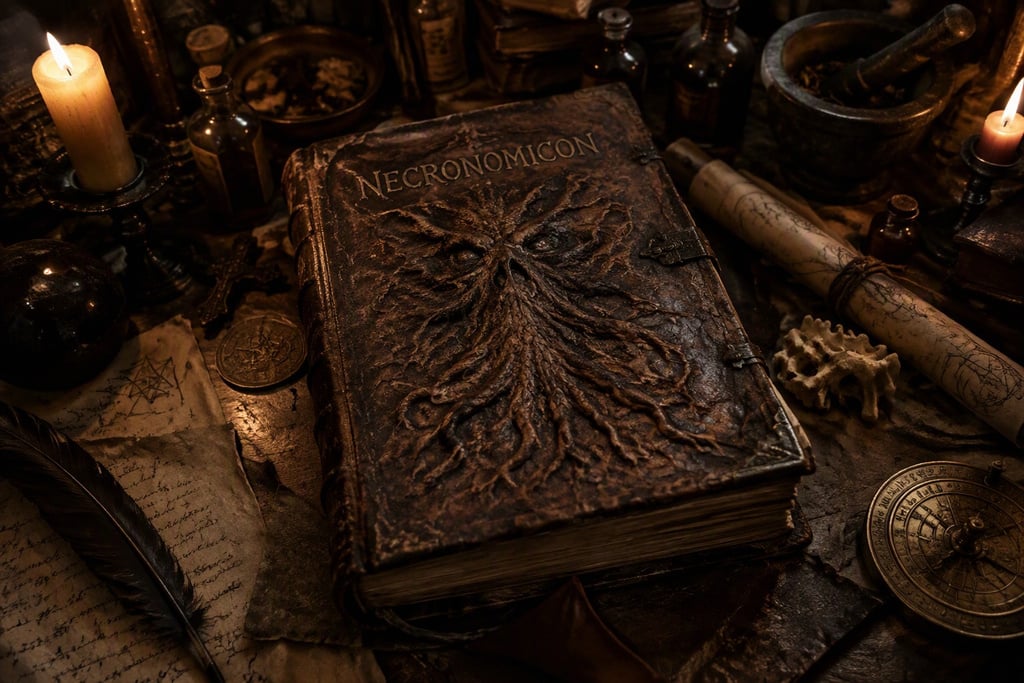
Finally, somewhere halfway between fiction and reality… a book that doesn’t actually exist! This is the Necromicon, a grimoire of black magic that can summon the dead and evil spirits!
Although many people believed it was real, it was actually a pseudo-book – a literary device invented by H.P. Lovecraft, the writer who created his own genre with his unique blend of horror, sci-fi and fantasy.
The author first mentioned the tome in a 1922 short story The Hound, before masterfully outlining its plausible history as his works went on: the Necromicon was apparently written in the eighth century by a mad Yemeni poet who died in mysterious circumstances, before being translated into Greek and Latin. The few copies of this dangerous book, he wrote, are jealously guarded in just five institutions around the world.
Lovecraft’s invention worked so well that many people believed the Necromicon really existed. The book appeared in the catalogue of various libraries, and an antiques dealer claimed to possess a copy. Gradually, although it didn’t cause any real fatalities, the demonic book conquered popular culture: it is mentioned in TV series, video games, films (who can forget Sam Raimi’s The Evil Dead?) and other works of literature!
Do you know any other stories of killer books? And are you considering using a book as a costume prop this Halloween? Tell us about your most dangerous tomes!