


Table of Contents
Ask ten people what a brochure is and you will get at least two answers. For some it is the sheet folded in three that you pick up from a hotel reception desk; for others it is a small booklet with a cover and a spine. Both are right, and the reason lies in the history of a word that arrived in English from French meaning one thing, then took on another, without ever quite losing the first.
Let’s start with the short answer: a brochure is an informative or promotional printed piece, made of one or more sheets that are folded or bound, used to present a company, a product, a service or an event. The rest of this guide explains how it differs from a leaflet, a flyer, a booklet and a catalogue, and which one you actually need.
One word, two meanings
Open a dictionary and the brochure is not described as a folded sheet at all. The Oxford Learner’s Dictionaries define it as “a small magazine … containing pictures and information about something or advertising something” (Oxford Learner’s Dictionaries). A magazine, in other words: a number of pages, not one sheet.
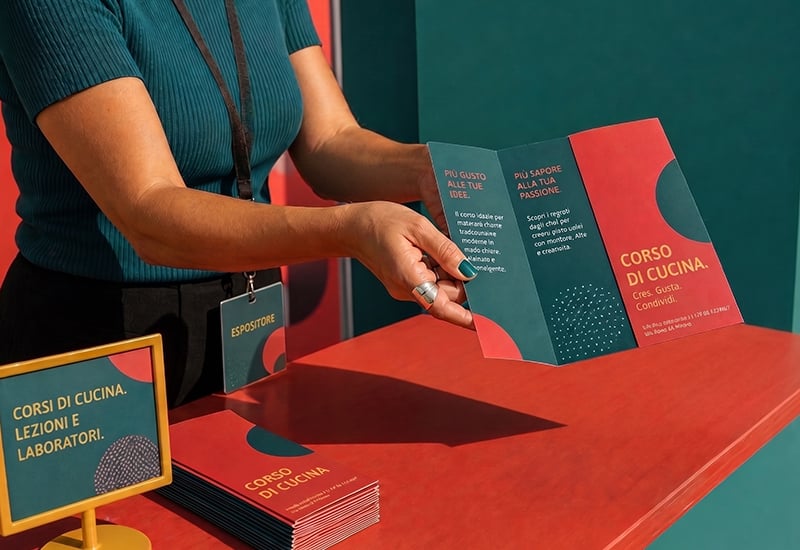
In printing and marketing, though, things look different. Here the brochure is very often a single sheet folded into two or three parts: Wikipedia defines it as a promotional document used to introduce an organisation, product, service or event, “traditionally produced as a folded paper piece” (Wikipedia, Brochure).
Even a printer’s own catalogue uses the word both ways. On Pixartprinting’s booklets and brochures page, the same range covers “a practical staple-bound brochure” and “an easy-to-browse folded design”; on its brochure page a brochure is “a set of sheets that are printed, cut and bound together”; and in its guide How to make a leaflet, the leaflet is “also called a folded flyer or brochure”, a product “printed on a single sheet that’s folded once or more”.
So the same word names two objects that are close but not identical: a folded sheet and a bound booklet. When “brochure” appears in a project brief, the first useful question is exactly this: which of the two do we mean?
Where the word comes from
According to the Online Etymology Dictionary, brochure entered English in 1748, from French brochure, “a stitched work”, from brocher, “to stitch” (sheets together). Its first English sense was “pamphlet”: a short written work stitched together (Etymonline, brochure).
There is a nice detail further back. Brocher itself comes from Old French brochier, “to prick, jab, pierce”, from broche, a pointed tool or awl: the tool used to pierce the sheets before stitching them. The word for a leaflet advertising your business began as the name of a binder’s tool.
The move into marketing is the most recent chapter of this story. A short printed piece found a natural home in advertising, and Wikipedia notes that the term “marketing brochure” dates back many decades. Along the way the idea of stitching faded: in everyday speech the sheet folded in two or three took over.
The two families of brochure
Put in order, the confusion resolves into two families.
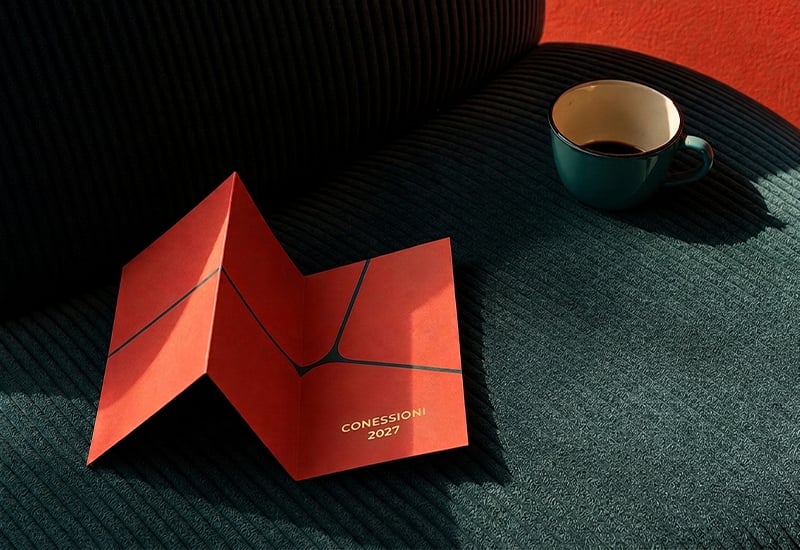
The folded leaflet (or folded brochure). A single sheet, printed on one or both sides and folded. The number of folds decides the number of panels: one fold gives four panels (a bi-fold), two folds give six (a tri-fold), and there are further options such as the Z-fold or accordion fold and the gatefold, where the two outer panels fold in towards the centre like a pair of gates (Wikipedia, Brochure). In the Pixartprinting catalogue you will find these among the folded leaflets, in formats from A5 to A2 and with anything from four to 36 panels.
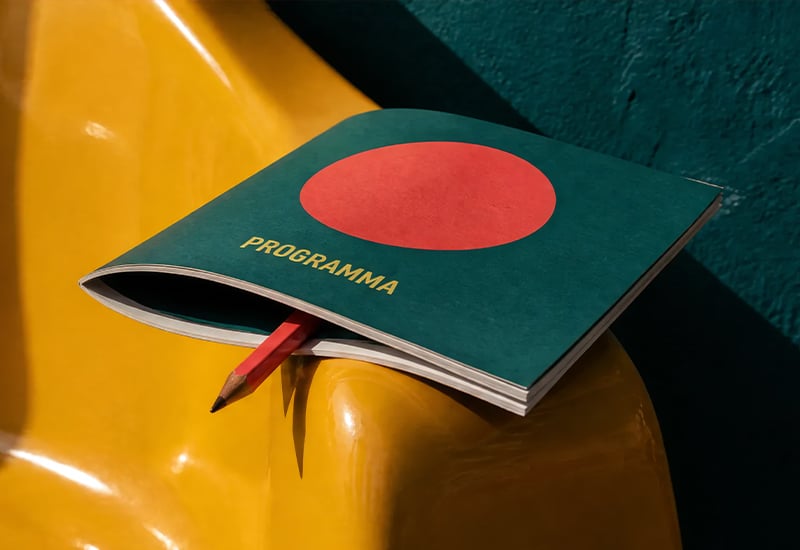
The bound brochure (or booklet). Several sheets joined together, usually with staples through the spine, read like a small book. Wikipedia describes a booklet as several sheets with a card stock cover, bound with staples, string or plastic binding, and says booklet brochures run to eight or more pages. On the site you will find them under booklets and brochures, where stapled binding is described as “fast to produce and highly cost-effective”, ideal for brochures, price lists, programmes and short publications.
Brochure, leaflet, flyer, booklet, catalogue: the differences
Comparison with other printed pieces is the part most guides skip over. This table puts the most common terms in order:
| Printed piece | What it is | What it is usually for |
| Flyer / flat leaflet | A single flat sheet, unfolded, printed on one or both sides | A short, immediate message: an offer, an event, an announcement |
| Folded leaflet / folded flyer / folded brochure | A sheet folded into 2, 3 or more parts | Presenting a business or service with more content and a reading path |
| Booklet / bound brochure | Several sheets bound together, usually stapled | Programmes, guides, price lists, content to be flicked through |
| Catalogue | A publication with many pages, organised by product | Presenting a wide range |
The most useful distinction is the one with the flyer. Wikipedia notes that, compared with a flyer or handbill, a printed brochure usually has higher-quality paper and more colour, and is folded or stapled at the seam (Wikipedia, Brochure). Note that terminology is not fully consistent even within one company: Pixartprinting’s brochure page describes the leaflet as “the classic flyer”, a printed sheet, and the folded flyer as a sheet that is “printed, folded and distributed for promotional or information purposes”, while its leaflet guide uses “leaflet” for the folded version. If what you need is a flat sheet, you will find it under leaflets and flyers; for sizes, see our flyer size guide.
The catalogue is a different story: it has many pages and is designed for anyone who needs to present a wide range. If that is you, the route is catalogues.
What is a brochure for?
The basic job is a single one: to put into someone’s hands, in an orderly way, the information they need to understand who you are and what you offer. Pixartprinting’s guide to company brochures describes a company brochure as “your firm’s business card” that showcases your business to potential customers (How to create the perfect company brochure).
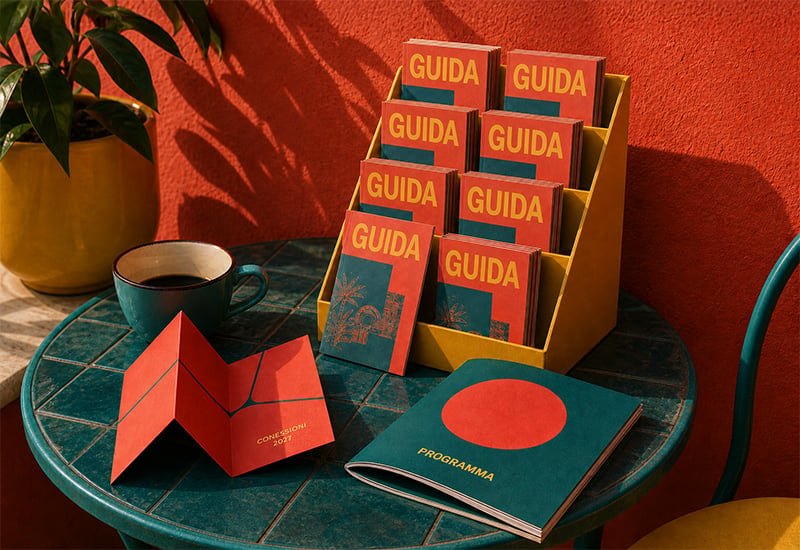
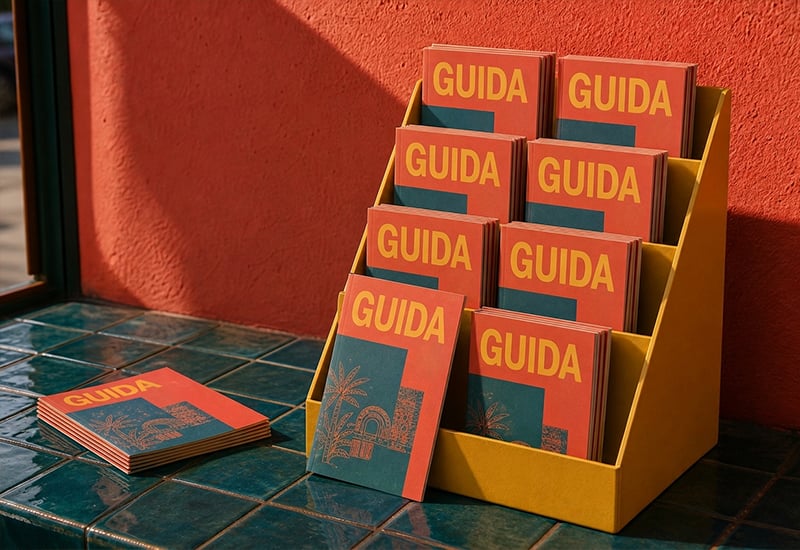
The practical occasions are many. According to Wikipedia, brochures are handed out in person, sent by direct mail, slipped into newspapers as inserts or into folders, and displayed in brochure racks in busy places, especially in tourist areas (Wikipedia, Brochure). In practice:
- At a trade show or event, as an extended business card: something you take away and read later.
- In a shop or office, to explain a service without the customer needing to hear it all out loud.
- By post, in an envelope, when the message needs more room than a postcard.
- In a counter display, to catch the eye of passers-by.
Compared with a flyer, the advantage of a brochure is that it has room to build an argument: more panels, more images, a reading path.
Which one do you need? A small guide
If you do not know where to start, begin from what you want to achieve:
| If you want… | Choose… |
| A single, immediate message | A one-fold leaflet, or a flyer |
| To tell a story in sequence: services, benefits, contact | A two-fold (tri-fold) leaflet |
| Content to flick through: programmes, guides, price lists, portfolio | A stapled booklet |
| To present many products | A catalogue |
If you would rather start from a ready-made layout, the brochure templates page offers a selection of ready-made models.
What goes into a good brochure
There is no formula, but a few principles hold almost every time:
- a headline that says at once what it is about
- a clear hierarchy of information
- images that fit the message
- a call to action and clearly visible contact details
If you want to go deeper into structure, layout and file preparation, see our guides How to make a leaflet and How to create the perfect company brochure.
The most common mistakes when choosing
- Mixing up the folded leaflet and the booklet, and ordering a booklet when you needed a folded sheet (or the other way round).
- Choosing a flyer when the content needs more space: if the message does not fit on one sheet, a brochure works better.
- Choosing too many panels for a message that needs only a few: more pages does not mean more effectiveness.
- Not thinking about distribution: a format that does not fit the display or the envelope stays in the cupboard.
Frequently asked questions
What is a brochure in simple terms? It is an informative or promotional printed piece, made of one or more sheets folded or bound, used to present a company, a product, a service or an event.
Are a brochure and a leaflet the same thing? In everyday use, often yes: Pixartprinting itself says a leaflet is “also called a folded flyer or brochure” when printed on a single folded sheet. Strictly speaking, “leaflet” can also mean a flat, unfolded sheet, while “brochure” can also mean a bound booklet.
What is the difference between a brochure and a flyer? A flyer is a single flat sheet, printed on one or both sides. A brochure has more panels, because it is folded or bound, and usually uses better paper and more colour.
Are a brochure and a booklet the same? In many contexts, yes. A booklet is the bound kind of brochure: several sheets stapled together along the spine, usually with a card stock cover.
Where does the word “brochure” come from? From French, where it means “a stitched work” and comes from the verb brocher, “to stitch”. It is recorded in English from 1748, first as a word for a pamphlet.
How many pages does a brochure have? It depends on the type. A folded leaflet has panels rather than pages: four with one fold, six with two, and up to 36 in the Pixartprinting range. A booklet usually has eight pages or more.
From theory to practice
Once you know what you need, the starting point is folded leaflets, if your content fits on a folded sheet, or booklets and brochures, if you need pages to turn. If you would rather start from a ready-made layout, take a look at the brochure templates.
Sources
- Oxford Learner’s Dictionaries, brochure: dictionary definition.
- Online Etymology Dictionary, brochure: French origin, brocher, first English use in 1748, Old French brochier and broche.
- Wikipedia, Brochure: definition, fold types, booklet, distribution, difference from a flyer, “marketing brochure”.
- Pixartprinting UK: booklets and brochures, brochure page, folded leaflets, leaflets and flyers, catalogues, brochure templates.
- Pixartprinting UK blog: How to make a leaflet, How to create the perfect company brochure, Flyer size guide.