


Table of Contents
Anachronistic is a word that derives from the Greek anachronikós, from the combination of the words ana (“against”), cronos (“time”) and ikos (“relevant to”), which thus describes something that does not correspond to the relevant period. This is the framework we should use to approach the protagonists of this story, professionals who largely come from the worlds of art, design and illustration who, faced with an increasingly digital world, have decided to embark on an adventure of reviving artisanal printing techniques such as letterpress.
What is letterpress
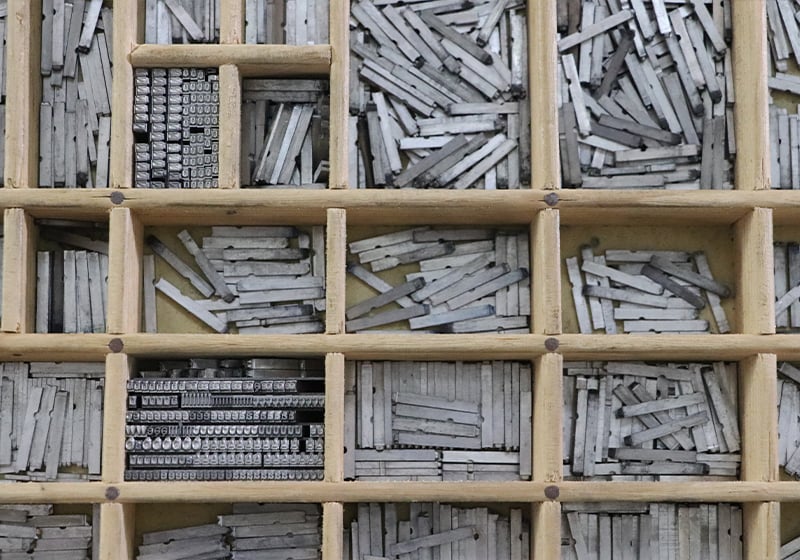
Letterpress printing consists of inking movable type – letters and symbols made of lead – which are then pressed directly onto the paper, leaving a characteristic indentation, the depth of which depends on the force that the printer exerts on the equipment.
Woodblock printing was first developed in China in the 2nd century AD. By the 11th century, a printing press with movable clay type was already in use, but it was Johannes Gutenberg who, in the 15th century, introduced an alloy of lead, tin and antimony which exerted a quick, uniform pressure on the paper, allowing for production on an industrial scale – and with it, the revolution of culture. This technique remained in force until, over the course of the 20th century, it was relegated by other more efficient formats, such as offset and digital printing.
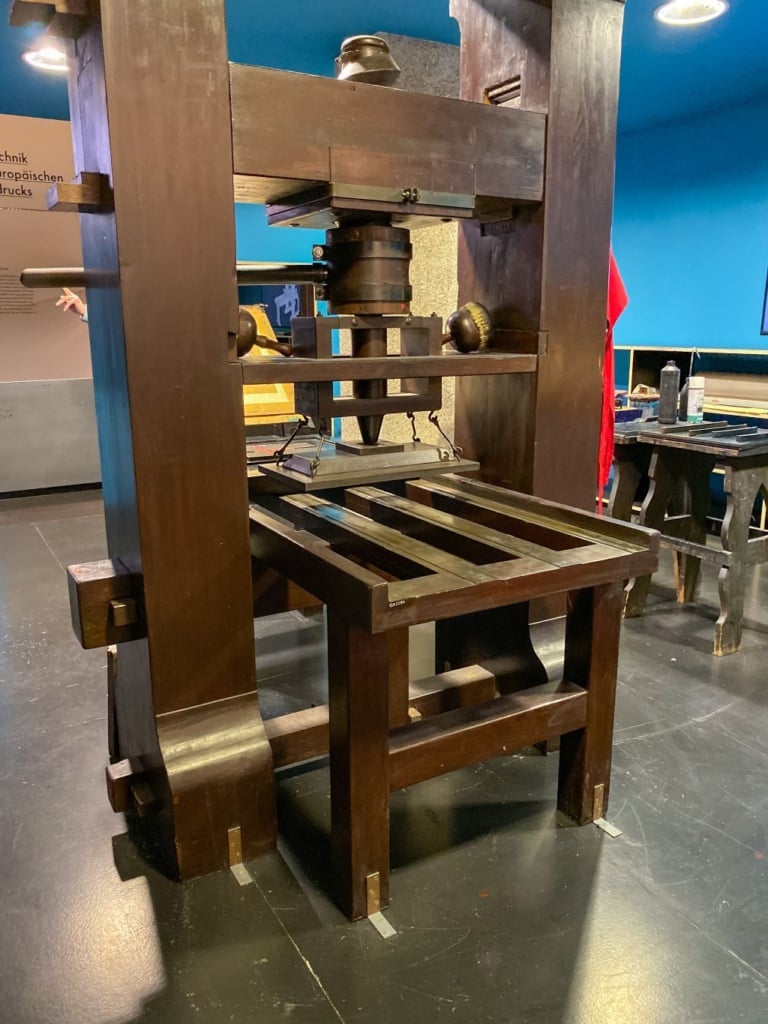
Gutenberg Museum, Mainz. Creative Commons licence. Source
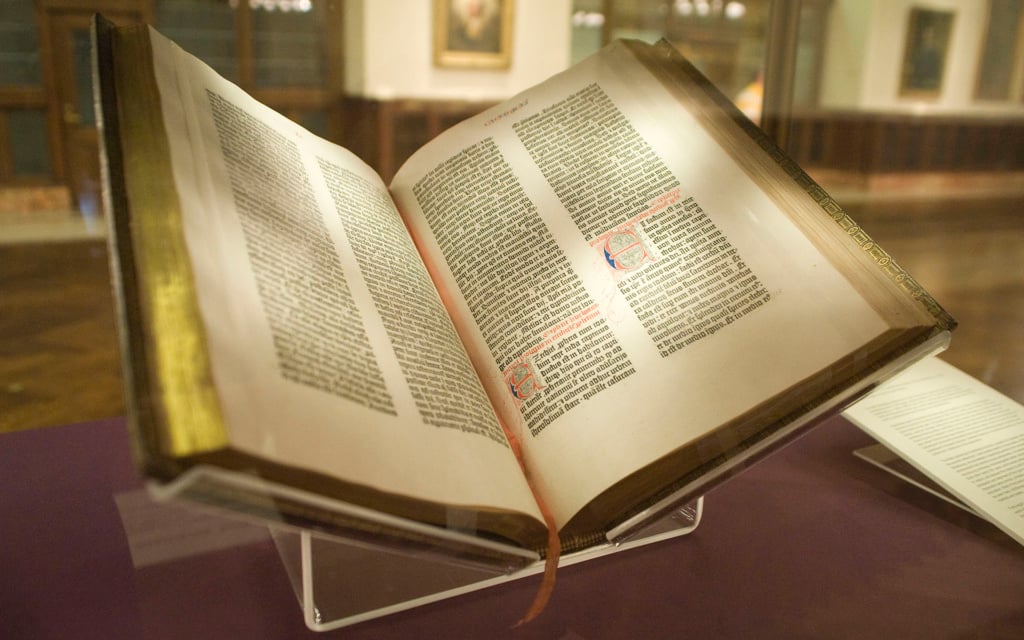
Rare Books Section, Lenox Library. Creative Commons licence. Source
However, our current century has seen letterpress make a strong comeback, thanks to specialised workshops that have rescued old presses to lend character to their projects, from business cards to wedding invitations, calendars, books and even album covers and wine labels.
Enthusiastic movement in Barcelona
The city of Barcelona has given a huge boost to this movement, with initiatives such as L’Anacrònica, which started out in an old tool factory with a 1905 Minerva machine, and now combines letterpress with techniques such as hot stamping, die-cutting and screen printing. At Letter Cotton, two industrial engineers set out to create unique graphic projects for brands and companies, while BunkerType focuses on personal and artistic projects.
Images of L’Anacrònica:
Images of Letter Cotton:
Images of BunkerType:
When Gerard Altaió opens the doors of L’Automàtica to us, in the heart of Barcelona’s Gràcia district, it is immediately clear that we are not dealing with a simple printing operation. The member of this self-managed cultural association explains that the enterprise was created in 2011 by a group of mostly graphic designers, artists and creatives, with the goal of reviving and keeping operative the machinery of an old printing press in the neighbourhood, IFA Talleres, Gráficos, which was in danger of disappearing. In addition, Ferran Fandos, the printer, became a kind of mentor, educating them in the trade he had been practising in his family business since he was 15 years old.
And this is one of the fundamentals on which L’Automàtica’s work is structured – the survival of traditional techniques such as letterpress, imparted in the traditional way of guilds – from person to person, starting from scratch. The first works that came from those machines were projects of the members themselves, as well as certain commercial commissions such as business cards, books and album covers.
However, Gerard Altaió tells us that today one of the organisation’s most important activities is the form’s dissemination in graphic arts through workshops. Groups of students from schools, colleges and universities pass through the space almost daily, to stain their hands with ink and lead letters. But there are also introductory or in-depth workshops for all audiences, including children, who can learn about the world of fanzines from the age of three, as well as personalised workshops for companies.
Lastly, L’Automàtica regularly organises concerts, experimental film series, fairs, meetings with professionals in the industry, and artistic residencies.
The defence of heritage
If projects such as L’Automàtica are to succeed, this is largely thanks to the personal efforts of individuals who fight to bring culture to neighbourhoods in spite of adversity. One of the biggest challenges is real estate speculation, which has also forced L’Anacrònica to move premises due to the impossibility of paying rent in a city like Barcelona – despite the fact that the traditional trade of printing is not only a tangible, but also intangible piece of cultural heritage.