


Table of Contents
Kiyoshi Nagai, better known as Go Nagai, is unanimously considered one of the most important, influential and prolific mangaka of all time, in both the comics and animation worlds. Some compare him to Stan Lee for his ability to build entire universes rather than just characters, and for having invented new genres that have influenced countless artists worldwide.
From Devilman and Steel Jeeg through to UFO Robot Grendizer and Mazinger, Nagai is credited with creating the wildly popular genre of mecha – huge robots piloted by humans – in the 1970s.
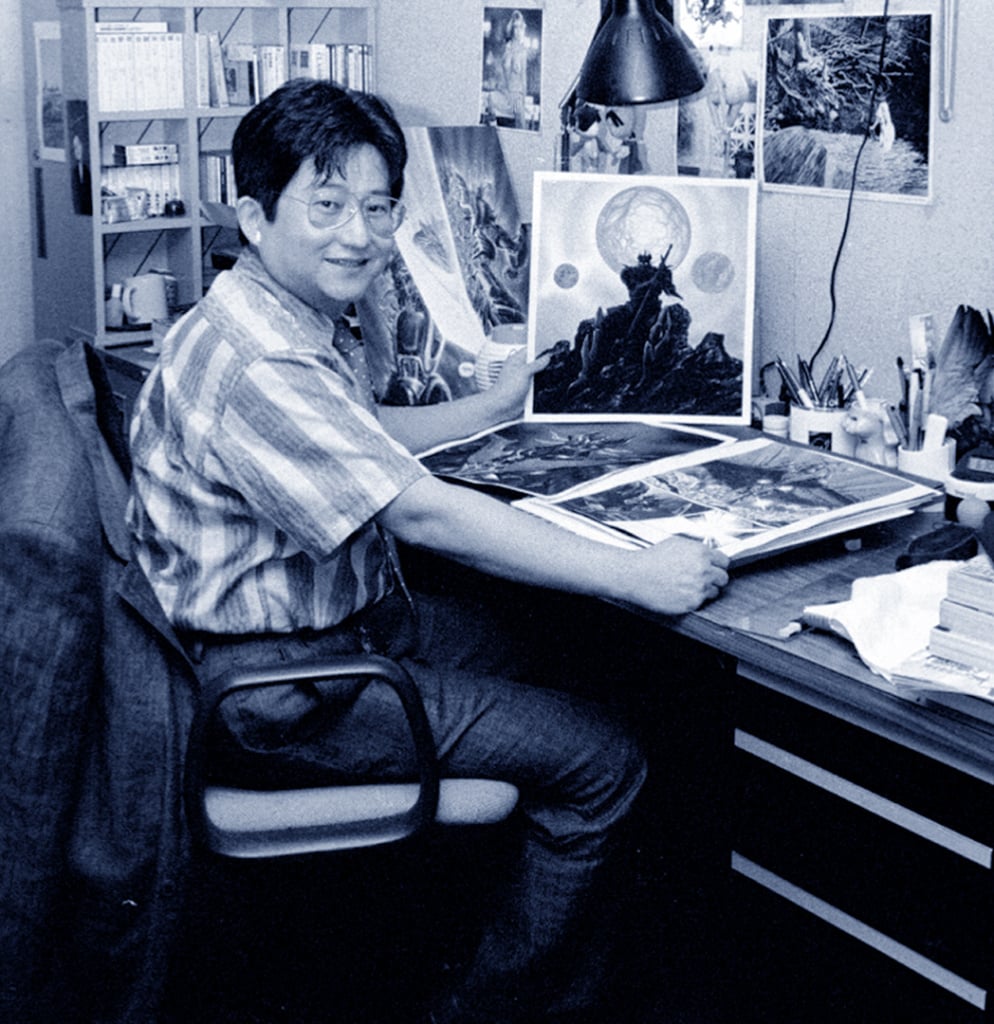
The artist has never been afraid to push against the limits imposed by the market, writing stories that have laid the foundations for new genres and above all touching on taboo themes like sexuality and violence. He is a great innovator, whose stories have made their mark on entire generations of readers, viewers and cartoonists.
Childhood, influences and his drawing revelation
Go Nagai was born on 6 September 1945 in Wajima, in the aftermath of the Second World War, into a Japan scarred by the trauma of the atomic bombs recently dropped on the country. At the age of six, he had to deal with his father’s untimely death, and so, from a very young age, he sought refuge in his imagination. He was influenced by works like Lost World – one of Osamu Tezuka‘s first sci-fi manga creations – and by an edition of Dante’s Divine Comedy illustrated by Gustave Doré.
However, his real creative spark came in the years when he was studying to pass his university entrance exams. He contracted an intestinal disease, and, convinced that his days were numbered and driven by a wish to leave a mark of his existence, he began drawing manga. Although he then recovered, he decided he ought to continue on this path.
He began sending his early works to various magazines, but received no response. Apparently his mother called up the publishers, asking them to reject her son’s creations. But he didn’t give up, and eventually he caught the eye of the magazine Weekly Shonen Sunday, and was made an assistant to Shotaro Ishinomori, author of the famous Cyborg 009 series.
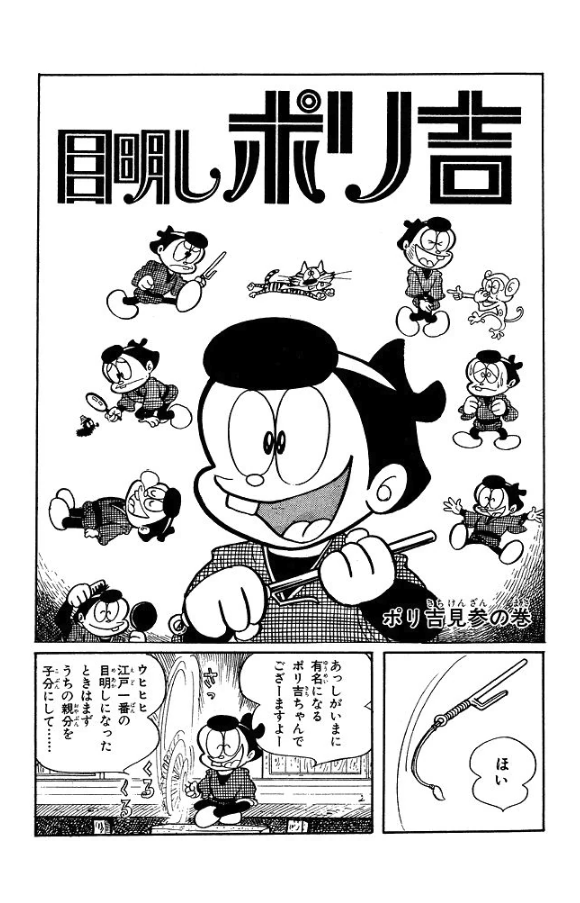
After working as an assistant for a while, in 1967 he published his first manga, Meakashi Polikichi – a one-shot story describing the adventures of a policeman in gag manga style, a comic subgenre based on rapid-fire jokes and absurd humour.
From Shameless School to Dynamic Production
The real turning point in Go Nagai’s career came in 1968, when the publisher Shueisha launched a new weekly magazine in direct competition with more established rivals that would go on to make history: Weekly Shonen Jump. Nagai published the first chapter of Shameless School (Harenchi Gakuen) in this magazine, a story that shook the world of children’s comics by introducing humour imbued with eroticism, something that had never been done before.

Until this point, shōnen manga had told Osamu Tezuka-style adventure stories, where the lead characters were essentially heroes with a rather rigid moral compass. In Shameless School, however, Go Nagai described life in a school full of incompetent teachers, where the students were constantly coming up with ways to rebel against authority and to peek under their female classmates’ skirts (although the latter were well equipped to defend themselves).
Featuring the raging hormones of groups of teenagers and stories that sometimes descended into open warfare between the pupils and the authorities, Shameless School is undoubtedly not aligned with modern sensibilities, but like all creative works, it should be seen in the context of the period when it was created.
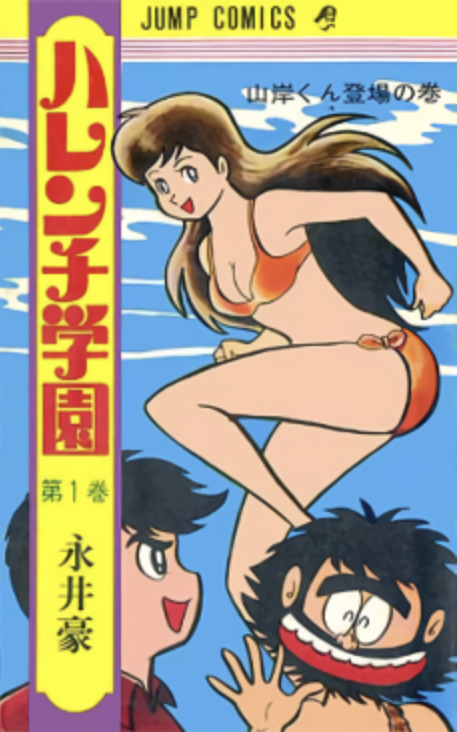
Here, Nagai’s drawing style is rounded and caricatured, and set inside a grid of regular and symmetrical panels with very traditional staging. As the story progresses, however – and especially during the final war scenes – Nagai literally breaks out of the grid, with explosions that invade the white space between the individual panels.
The erotic scenes and violence caused media uproar in Japan at the time it was published, but this didn’t stop the author; on the contrary, he set to work adapting it into anime.
To protect his interests, in 1969 Nagai and his brothers founded Dynamic Production. This was a pioneering move in Japan: it was not merely a studio for his assistants, but an agency that handled everything from copyright to licensing and merchandising. This business structure ensured Nagai maintained creative and financial control over the animated versions of his works and the toys derived from them, giving him freedom and financial independence that would allow him to become even more daring in the years that followed.
Devilman, his masterpiece
Following the success of his comic/erotic manga, Go Nagai wanted to try his hand at something deeper, and to move beyond the restrictions of gag manga, which gave him little freedom in the way he laid out the panels or in his drawing style generally. He wanted to create a broader story manga that tackled more adult themes.
His first experiment in 1971 was Demon Lord Dante, with a drawing style inspired by Gustav Doré’s illustrations for Dante’s Divine Comedy. The story describes a boy who frees a demon and is then possessed by it, unleashing death and destruction in Japan in the process.
In Demon Lord Dante you can start to see a change in the artist’s style, and the use of a much more complex page structure. The panels are oblique, his pen strokes are less clean, and his figures overlap: in general, the drawings convey a sense of movement much more effectively.
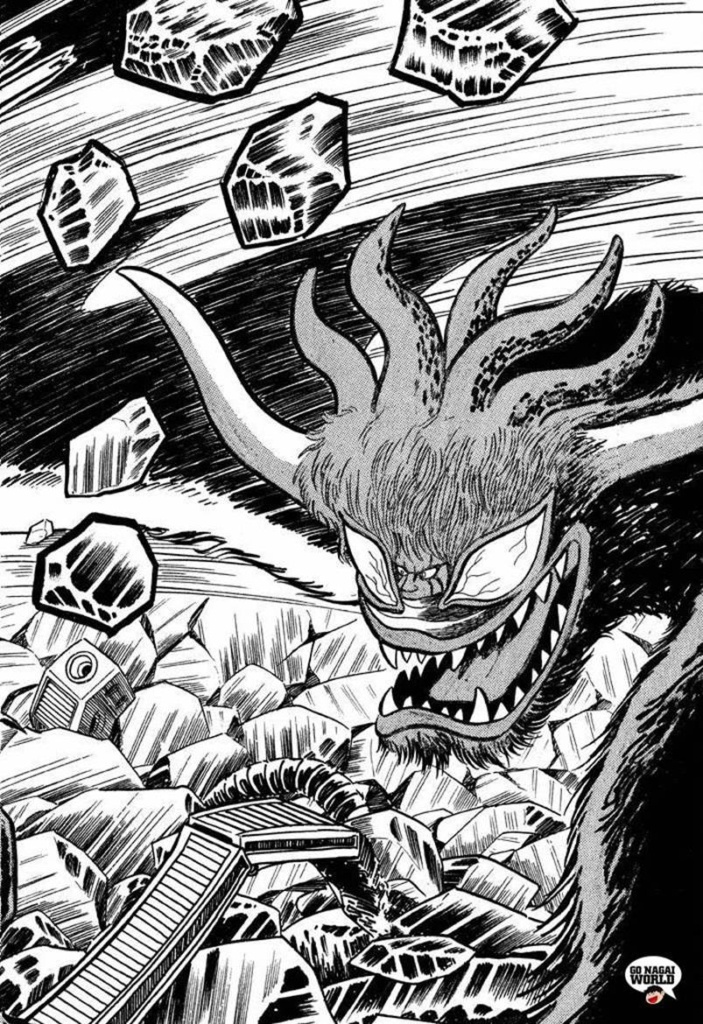
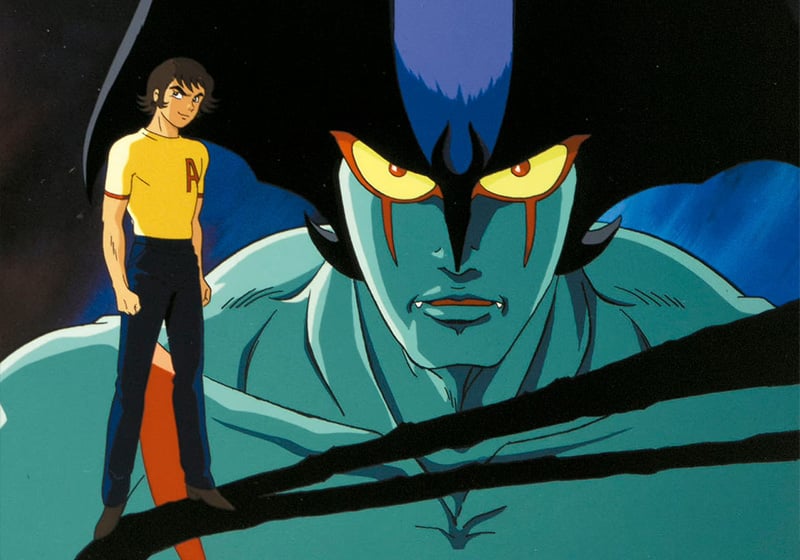
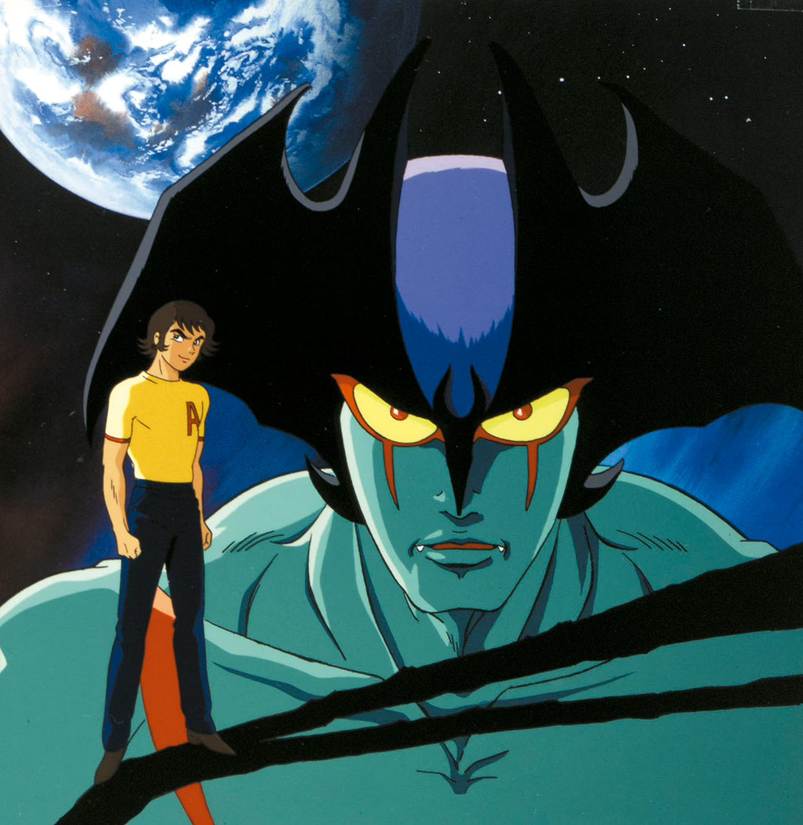
The author then developed a new animated series for Toei: Devilman, one of Go Nagai’s most famous and best-loved works.
Devilman followed two distinct paths: a 1972 animated series, toned down and closer to superhero style, and a manga published in Weekly Shonen Magazine, with a darker and more violent plot than the anime. The Devilman manga is a more visceral and complex work: in it, the young Akira Fudo is persuaded by his childhood friend Ryo Asuka that the only way to defend humanity from the awakening of the ancient lineage of demons is to merge with one of them. Akira sacrifices himself, merging with the powerful devil Amon during a debauched and violent ritual (the Sabbath), but his pure heart means he manages to keep control of his conscience, and so becomes a ‘devilman’.
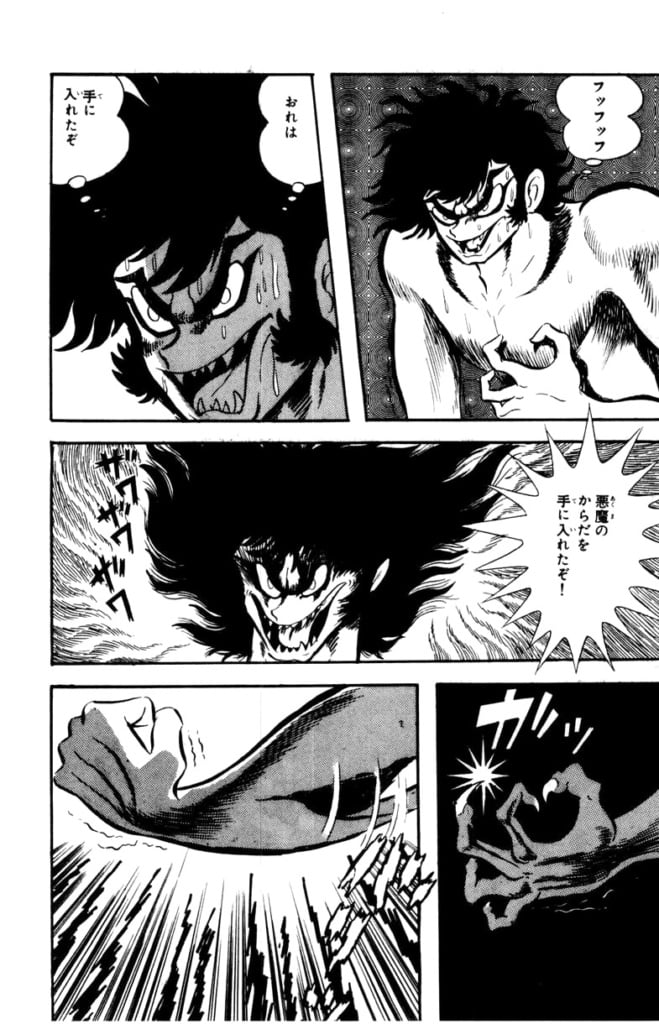
What starts out as a fantasy action comic quickly descends into hell. Nagai openly reveals his loathing of war through pages steeped in body horror, dismemberment and visceral violence. The demonic possession in the story represents mandatory conscription, where young citizens are given a weapon and told to go and kill their contemporaries.
In the manga’s epilogue, the humans end up destroying each other, and Nagai leaves us with a warning about the senselessness of all war. The artist’s style is even ‘dirtier’ here, and he introduces his iconic splash pages – large full-page illustrations – for the first time. His anatomy is grotesque and his blacks are even darker than before, with the contrasting dark and shade emphasising the horror of the story.
The invention of mecha and the success of Mazinger and Grendizer
While Devilman plumbed the depths of the human soul, another of his creations, from 1972, was a watershed moment in global pop culture. It all happened by chance, when Go Nagai was stuck in one of Tokyo’s suffocating traffic jams. Frustrated at having to wait, he fantasised about his car sprouting arms and legs to bypass the other cars. And this gave him the idea for Mazinger Z, which first introduced the concept of mecha.
Until this moment, robots in animation and manga, like Tezuka‘s Astro Boy, had been either autonomous or controlled remotely. But Go Nagai placed the pilot inside the robot: Koji Kabuto, a young man and the manga’s main protagonist, who controls Mazinger Z from a control centre inside the robot’s head, literally becomes the brain of the steel giant.
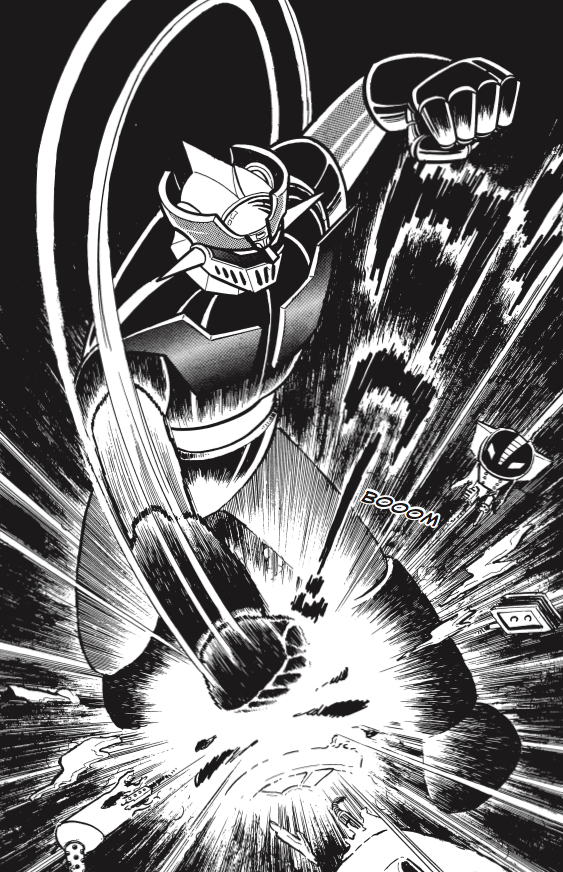
The work officially introduced the mecha genre, giving rise to an inexhaustible line of creations and a vast empire of merchandise and toys. A unique feature of this robot is that it is neither good nor evil; its outlook depends on the pilot controlling it. The mecha becomes an extension of human will, an enormously powerful tool that brings with it great responsibility.
The drawings and the page layout display the robot’s titanic scale, using highly cinematic shots, including low-angle views (to make the robots seem even bigger) and wide shots to show the scale of the destruction in the city.
Go Nagai followed the success of Mazinger Z with Great Mazinger (1974), with even darker and more dramatic tones. That same year, he came up with Getter Robo, which introduced the innovative concept of ‘modular mecha‘, born from the union of three spacecraft.
The peak of his success came in 1975 with UFO Robot Grendizer and Steel Jeeg. Grendizer became a real cultural phenomenon, shaking up TV schedules and attracting the attention of sociologists and teachers alike.
Beyond robots: Cutie Honey and Violence Jack
Despite his commitment to drawing giant robots, Go Nagai’s creativity took him in multiple directions. In 1973 he released Cutie Honey, which describes a robot that takes on seven different identities to fight the organisation Panther Claw. The female protagonist, Honey Kisaragi, blends Western superhero themes with mischievous eroticism, paving the way for the combative ‘magical girl’ subgenre, which would have an enormous influence on works like Sailor Moon. The school-based Kekko Kamen (1974), in which the heroine tackles criminals wearing only a red mask and a cape, belongs to the same subgenre.
In 1973 Nagai also started to publish Violence Jack, a brutal post-apocalyptic epic set in a Japan that has been destroyed by a natural disaster, and where whoever is strongest rules supreme. This long-running work, which continued all the way through to 1990, pre-empted masterpieces like Fist of the North Star and Mad Max, as well as resolving some complex narrative plots linked to the Devilman universe.
Go Nagai’s legacy
Go Nagai’s impact on the world’s collective imagination is incalculable. Contemporary manga would be very different without his creativity. He effectively invented mecha, and moved beyond the classic fearless and faultless heroes, forcing readers to see aspects of themselves in tormented and fallible lead characters.
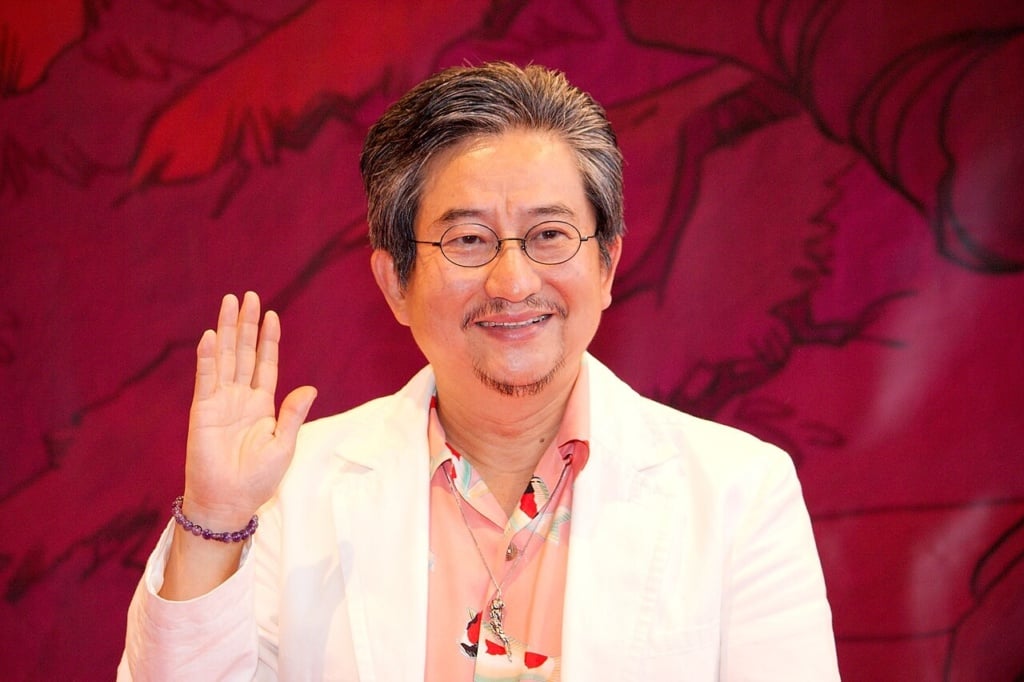
He has also inspired a vast number of authors whose works are now considered masterpieces, from Hideaki Anno (Neon Genesis Evangelion) to Kentaro Miura (Berserk). And, most importantly of all, he has given the world a series of deeply scarred characters, who are constantly wavering between good and evil, imperfect, furious, and profoundly human.