

Table of Contents
Paper therapy: how paper and creativity can improve your wellbeing
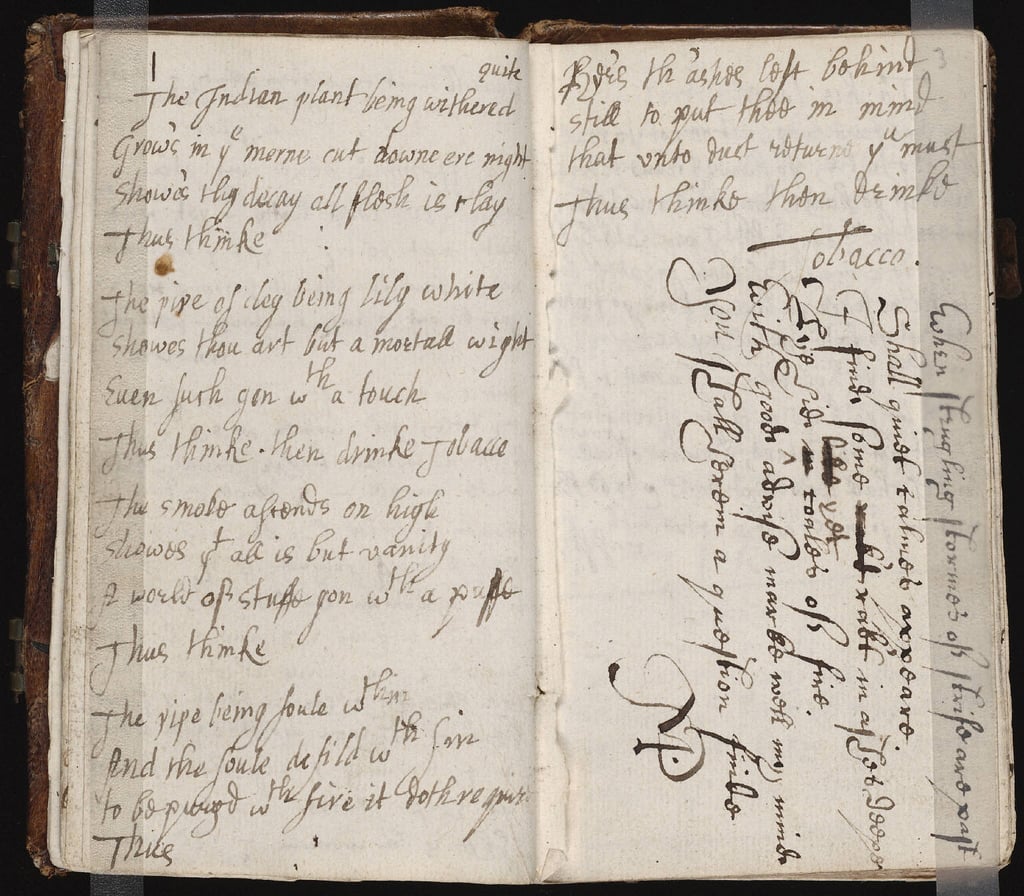
Although the term paper therapy is a recent invention, the process of expressing one’s thoughts on paper has ancient roots: people with a good level of education have been noting down their thoughts and describing their everyday events in diaries since medieval times. Commonplace books – notebooks collecting all sorts of information, including recipes, prayers, proverbs, quotes and even tables of weights and measures – became very popular during the Renaissance.
Following the invention of movable type printing the first books began to circulate, most notably the Bible, and people started recording their family histories on the empty pages of sacred tomes, entering dates, newspaper clippings and paper documents recording births, deaths and marriages. From the late eighteenth century the practice of personalising books by adding illustrations, drawings and article clippings became widespread, and by the mid-nineteenth century publishers were adding pre-printed pages inside the sacred texts for family photographs.
During the nineteenth century, as printed materials became increasingly accessible, people started buying blank albums to fill with clippings, letters and other memorabilia from family or public events. These were the first scrapbooks: albums containing a mix of personal notes, drawings and documents from various sources. The invention of photography gave this hobby a further boost, and people started including family photos in their scrapbooks too. These visual diaries were so successful that in 1873 the writer Mark Twain, himself a keen scrapbooker, patented a special version in which the pages came coated with a substance that became sticky when dampened with water, speeding up the application of newspaper articles and clippings.
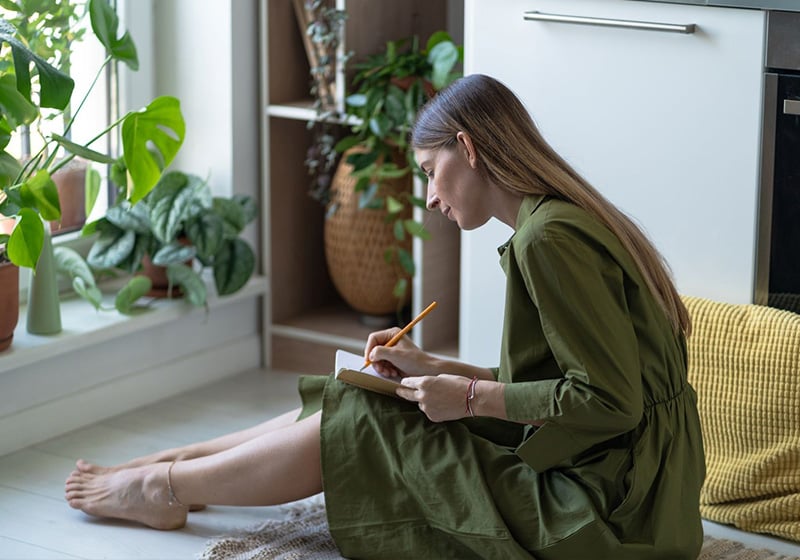
Nowadays, as well as remaining popular hobbies, writing a personal diary (journaling) and scrapbooking are also recommended as creative ways to reduce stress levels, increase self-awareness and rediscover inner balance. In our fast-paced world, paper therapy is an antidote to the hectic nature of modern life and digital tools. According to Lianca Frigelli, the owner of the bookshop and creative stationer’s Il Cuore di Lianca who organises monthly creative journaling workshops, keeping a diary helps you “remember, make the most of every day, and make room for your inner child, who is still capable of play and wonder”.
What is paper therapy?
Paper therapy is a set of techniques that use paper both as an expressive medium and as a tool for reflection that allows people to give voice to their ideas, emotions and dreams and keep track of the major events in their lives. It is based on the concept that transferring your thoughts and emotional states onto paper allows you to observe them ‘from the outside’ and better understand them, and so tackle everyday life more serenely and with greater awareness.
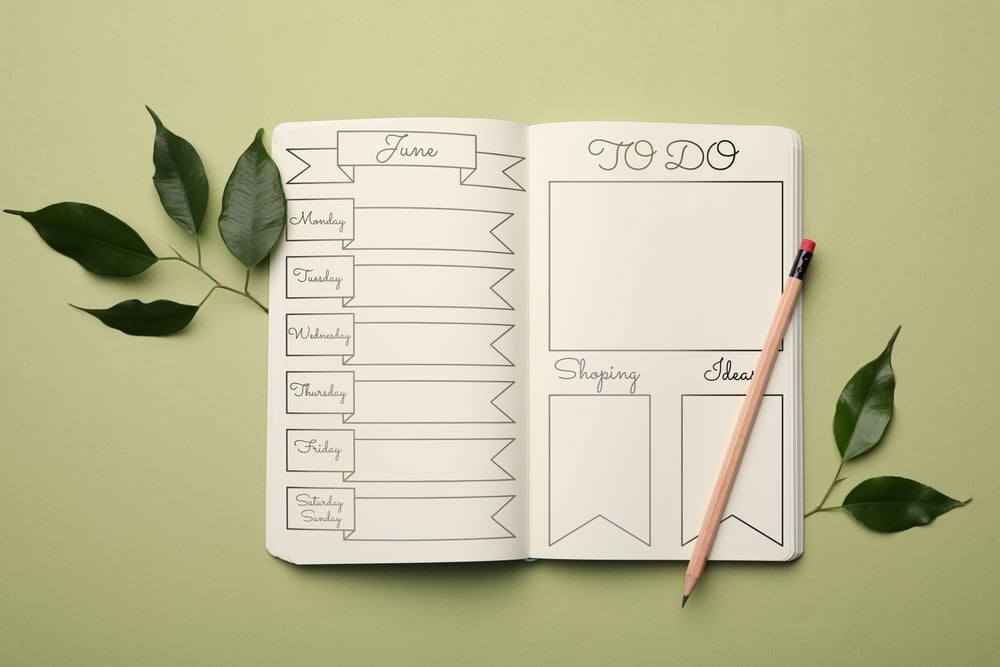
One of the most widely practised forms of paper therapy is journaling – writing a personal diary, either free-form or guided by specific questions. This technique can then be broken down further into different methods, including bullet journaling, where you plan your activities and compile information in bulleted lists, and keeping a gratitude journal, in which you list three or more things every day you feel thankful for as a way of promoting positive thinking. Scrapbooking, meanwhile, as we have seen, involves creating visual albums containing photos, postcards, clippings, memorabilia and all sorts of decorations: ribbons, washi tape, labels, stamps, eyelets, buttons and so on. It is great for keeping track of the most important moments in your life and as a way to freely express your emotions using collage.
The health benefits of writing
In the 1980s and 1990s, the psychologist James W. Pennebaker demonstrated in numerous studies how getting his patients to document their issues and traumas in a journal had significantly improved their psychophysical wellbeing. He claimed that writing about emotionally challenging events for just 15–20 minutes a day for four consecutive days produced measurable effects on people’s physical and mental health. This therapeutic effect stems from the fact that writing helps the brain to process emotions better: it activates the prefrontal cortex, the part of the brain tied to reasoning and emotional regulation, and it provides a safe way to express your feelings, therefore reducing stress and rumination.
From a neurological perspective, research has shown that writing things by hand stimulates various areas of the brain, including the motor cortex and the visual cortex, improving neuronal connectivity and promoting cognitive and emotional development. In other words, according to several studies, when we use a pen we not only think more slowly and deeply, we also tend to remember information better.

Paper therapy’s various benefits
The techniques we’ve described above allow you to embark on a path of self-expression with a profound healing effect. Transferring your thoughts to paper provides a way to recognise, describe and process emotions, a mental process known as ‘affect labelling’ that reduces anxiety and stress.
On a cognitive level, paper therapy helps to externalise your thoughts, freeing working memory and stimulating creativity. Moreover, in time the diary starts to reflect the way you act and think, helping you to identify repetitive patterns of behaviour and cognitive biases and to gain greater self-awareness, with positive effects on your personal development.
Finally, keeping a diary or scrapbook is a gesture of self-care that can produce deep contentment. Carving out time every day to allow your ideas and emotions to take centre stage means you learn to unpack the emotions holding you back and grasp happy moments with greater awareness.
Getting started with paper therapy
You don’t need to be an artist or writer to do journaling or scrapbooking: you just need to dedicate a bit of time to it. Here are a few hints and tips if you’re just getting started:
- Choose a technique that plays to your strengths. If you love writing, give journaling a try. If you find it easier to express yourself with arts and crafts, a visual album is probably more up your street.
- Get the right materials. For journaling, all you’ll need is a notebook and a pen. If you want to create a scrapbook, you could begin with a starter pack of an album, cutter, cutting mat, glue and tape.
- Choose a time of the day or week to dedicate to paper therapy, turning it into a small yet essential personal ritual.
- Let go of any judgemental feelings towards the things you write or create: the aim is to enjoy the process, not to produce artistic masterpieces.
- Be consistent, but don’t feel guilty if you don’t find time for your journal every once in a while. Journaling and scrapbooking are hobbies that should be developed calmly and serenely, not seen as yet another goal to tick off!
Useful resources for paper therapy newbies
Here are some useful resources – books, courses and websites – for people wanting to pick up this hobby:
- XXXX
- Personal and business coach Emma Brown‘s free online journaling course, designed to help people get into the habit of writing about themselves through themed ideas, techniques and exercises.
- Renee Day‘s book Creative Journaling: A Guide to Over 100 Techniques and Ideas for Amazing Dot Grid, Junk, Mixed-Media, and Travel Pages, ideal for honing a range of journaling and scrapbooking techniques.
- The Get Messy Art website, which contains a vast number of resources – workshops, online courses and various materials – for people interested in learning more about art journaling and scrapbooking.
In a fast, hyperconnected world that demands constant productivity, paper therapy offers you the chance to slow down and let your thoughts and emotions flow, and to live in the here and now without worrying what other people think. By putting your interior universe, your best memories and your unexplored ideas down on paper, you can build new worlds and discover new versions of yourself.