


Table of Contents
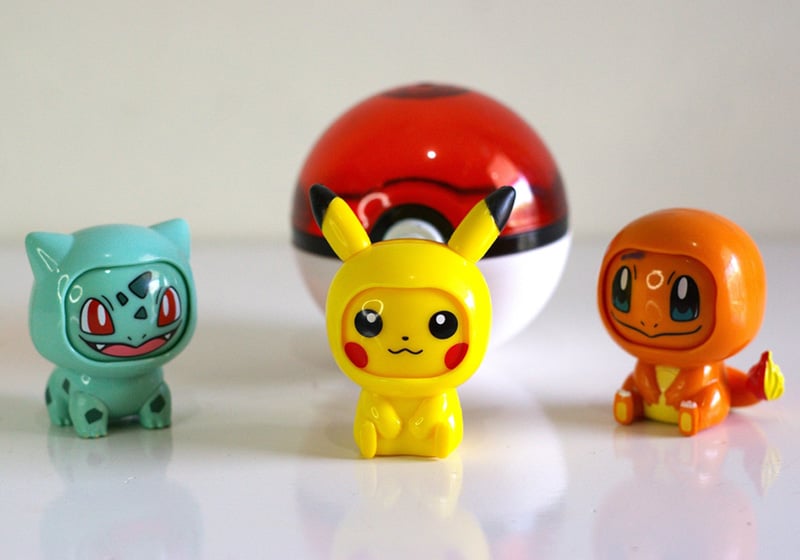
Four hundred and ninety million videogames sold and 75 billion (!) playing cards printed; 23 films made and 1300 cartoon episodes aired… these are just some of the mind-boggling numbers that tell the story of the commercial (and imaginative) juggernaut that is Pokémon.
These bizarre creatures burst onto our screens 30 years ago, when in February 1996 Nintendo released the first Pokémon videogame. Their creator, Satoshi Tajiri, had begun working Pokémon on six years earlier in 1990. Today he’s a titan in the industry, but in the early nineties he was just another up-and-coming game designer.
Tajiri had a dream: to give kids all over the world the incredible feeling of freedom that he himself enjoyed growing up exploring his neighbourhood through an unconventional hobby…
What was this hobby? And can such a simple dream really spark a global cultural phenomenon?
In this post, we’re celebrating 30 years of Pokémon by telling their incredible story and explaining how these strange creations became an obsession for millions – and an unstoppable merchandising machine.
The Pokémon origin story: it all began with bugs
Ever wondered how Pokémon were born? Well, it all began in the imagination of their Japanese inventor Satoshi Tajiri, and a childhood passion of his.
Tajiri grew up in Machida, a commuter town on the outskirts of Tokyo. Machida has since been swallowed up by Japan’s capital (if you’re curious, you can take a virtual stroll around the area), but in the early seventies, the place was still surrounded by forests and fields. It was here that young Tajiri loved to roam, hunting for insects to catch, collect and swap with his friends.
As the years passed and Tokyo’s concrete sprawl gradually engulfed Machida, Tajiri – now a videogame developer – began to harbour a dream: to create a game that would bring kids the same sense of adventure and excitement that he experienced as child when he and his little mates caught and traded creepy crawlies.
The idea for Pokémon gestated for years in Tajiri’s head, until one day Nintendo announced a new feature for the Game Boy, its groundbreaking handheld console: by using a cable – called Game Link – two players could now connect their devices and play games together.
The concept for Pokémon was this: players would have to explore Japan’s Kanto region looking for creatures to collect, train and pit against one another in battle. And by linking their Game Boys, players would be able to swap these little monsters, just as Tajiri did as a kid with insects.
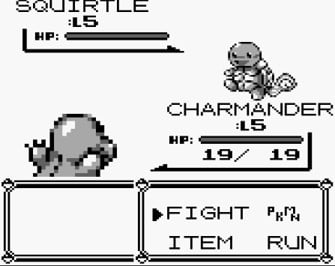
Pokémon launches on the Game Boy in 1996
Turning the idea into a game took a good six years of hard work for a small team led by Tajiri and guided by another videogame legend: Shigeru Miyamoto, creator of Super Mario, Donkey Kong and The Legend of Zelda.
Fun fact: did you know that Pokémon were originally going to be called Capsule Monsters? This was the first name given to them by their creator, but for copyright reasons, he had to instead go with Pocket Monsters, which was then abbreviated to Pokémon.
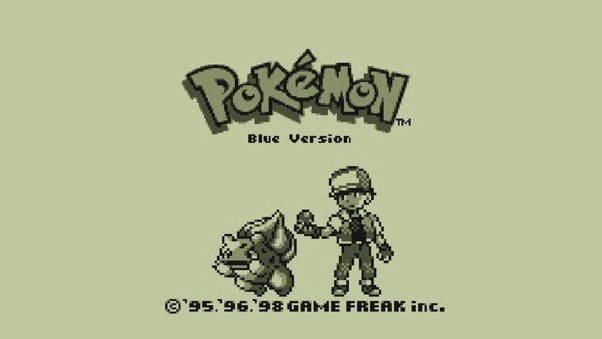
The game was eventually launched in Japan in February 1996 on the Game Boy, the leading handheld console of the era. Unusually, it came out in two different versions: Pokémon Green and Pokémon Blue (in the rest of the world the game was released as Pokémon Blue and Pokémon Red).
Each version contained different Pokémon, thereby encouraging players to swap creatures with one another. In fact, Shigeru Miyamoto claims that Tajiri once told him that the only way he could beat Super Mario’s sales would be to sell customers the same game twice…
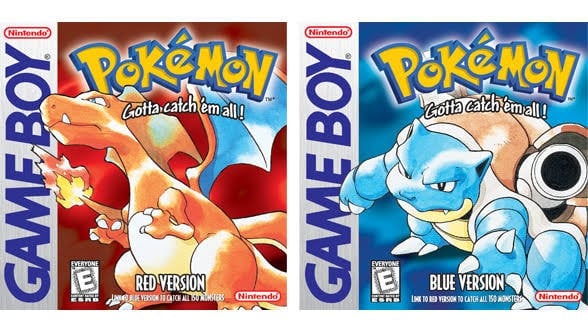
Regardless of the reasons behind it, bringing out two different versions was a winning strategy, so much so that it became a tradition: in its 30-year history, every new release of the Pokémon game has come in two different versions.
And the first release was an instant hit: between its launch in February 1996 and September of the same year, the game sold 1 million copies.
Pokémania and the birth of the Pokémon empire
In a few short years, Pokémon grew into a global phenomenon. The year of its launch also saw the release of collectible playing cards, while artists and animators worked around the clock to produce a cartoon based on the game.
Pokémon’s fame grew by the day, fuelled in part by sensationalist stories in the media: in 1997, for instance, an episode of the anime version caused epileptic fits in over 700 people. Immediately baptised as Pokémon Shock, it only added to the hype around this curious Japanese craze in the rest of the world.
In 1998, Pokémon hit the international market with the triple whammy of videogame, cartoon and collectible card game, sending a wave of Pokémania around the planet.
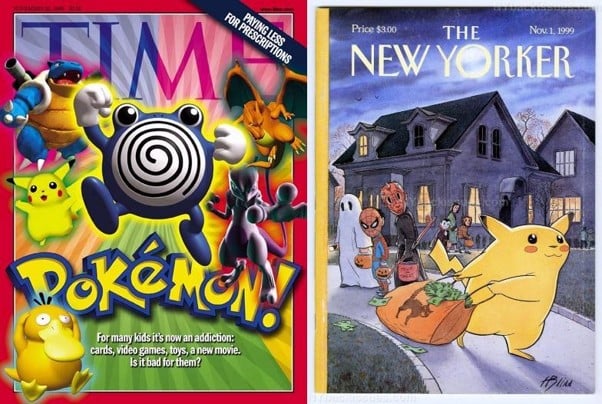
More games followed and The Pokémon Company kept fans engaged with gimmicks (like making the game follow the actual day-night cycle in the player’s time zone), changes in gameplay and, of course, new Pokémon.
Later, in 2016 when Pokémania had faded from memory, Nintendo pulled off another masterstroke with a ground-breaking new game: Pokémon Go. By harnessing recent advances in augmented reality technology, the game allowed players to find and capture Pokémon out in the real world. This innovation rekindled a passion for Pokémon in millions who had grown up playing the game as kids in the nineties.
Pokémon: a global merchandising phenomenon
Pokémania was more than just a flash in the pan: Pokémon is now the highest-grossing media franchise of all time, ahead of heavyweights like Mickey Mouse, Winnie the Pooh and even Star Wars.
In just 30 years, these weird beasts from Japan have conquered the world’s collective imagination and generated an estimated $147 billion in revenue in the process.
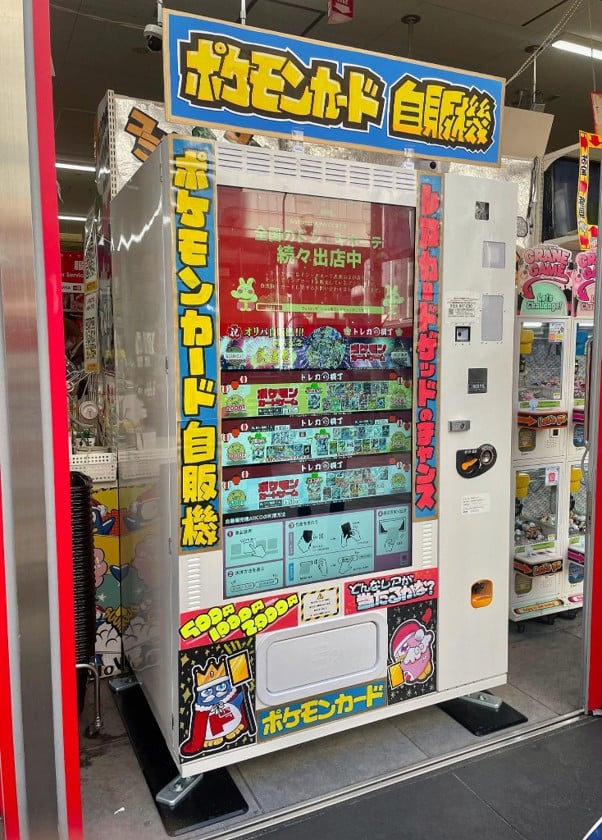
The Pokémon brand has expanded far beyond videogames and trading cards – the rarest of which will currently fetch $6 million – to build a marketing empire.
As soon as Pokémania arrived, Satoshi Tajiri creatures began popping up on every product under the sun: from baked beans to breakfast cereals, from ice-creams to hamburgers. And they haven’t gone away: Pokémon continues to generate some $10 billion a year in revenue from merchandising.
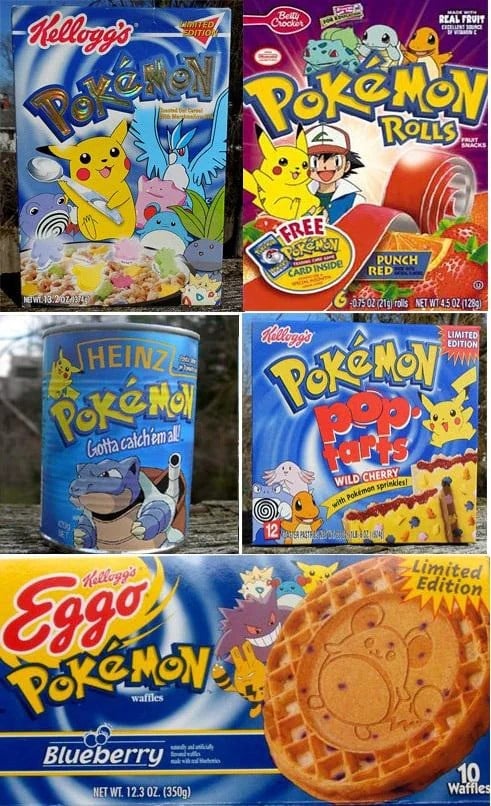
These days, you can find Pokémon-branded anything: from cuddly toys – from Dachshund sized to Alsatian sized – to sportswear, thanks to collaborations with brands like Puma. There are Pokémon Lego sets, Pokémon mugs, Pokémon rucksacks, Pokémon pin badges, Pokémon headphones – the list goes on. And, of course, there’s a plethora of Pokémon-themed printed products: stickers and notepads, diaries and posters, ring binders and books.
Pokémon 30th birthday celebrations
Passion for Pokémon still burns today. Around the world, fans are itching to celebrate 30 years of these beloved creatures. Unsurprisingly, consumer brands are all too happy to help them…
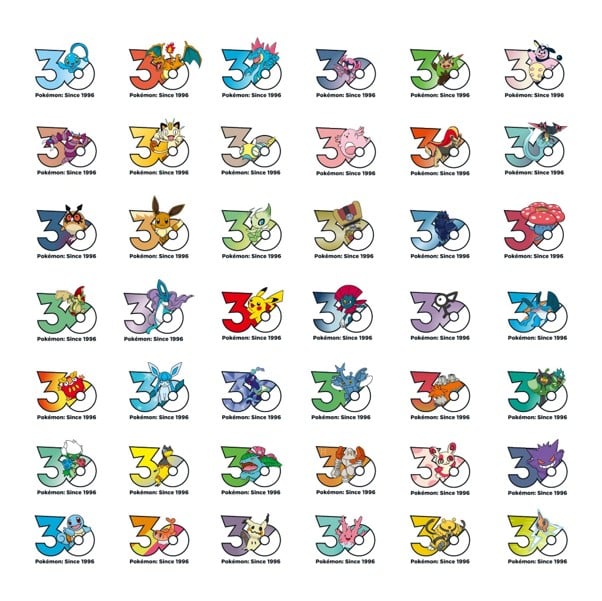
To mark the occasion, The Pokémon Company has brought out not one, but one thousand plus anniversary logos: one for each Pokémon. If you want to see what they look like, fan site Serebii has painstakingly catalogued them all.
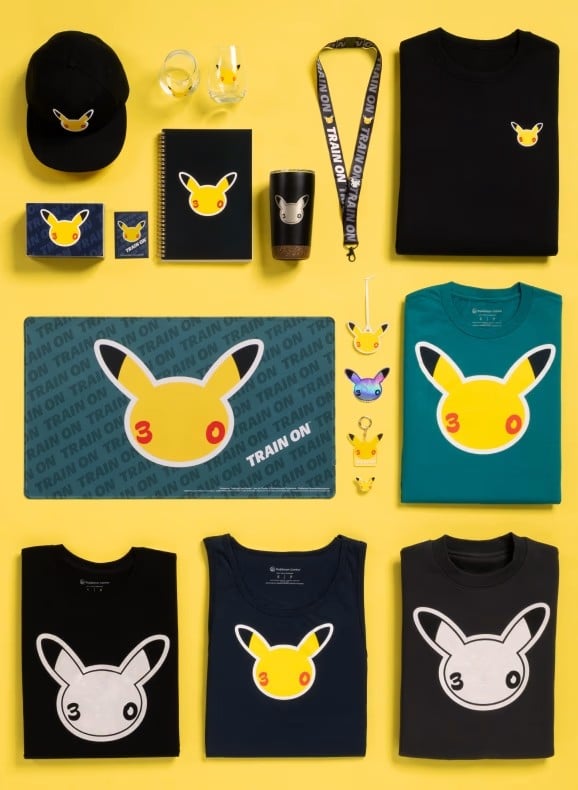
The company has also launched a special line of merchandise, including holographic clothing, pin badges, trading card accessories and a special sheet of stickers.
Nintendo has re-released the Pokémon FireRed and LeafGreen games for its Switch console and they’ve shot straight to the top of the charts.
Under the banner “What’s your favourite?”, official birthday events will be held around the world, from Mexico to the UK. There’ll also be a Pokémon Go tour in Southeast Asia, while collectors will be eagerly awaiting 16 September – the 30th anniversary of the Pokémon Trading Card Game – when a special set of cards will be launched.
So Pokémon may have turned 30, but they show no sign of slowing down!
How will you celebrate Pikachu and company’s birthday? Had you already heard creator Satoshi Tajiri’s story? And what do you think about the avalanche of Pokémon merchandise?
Official Pokémon website: https://www.pokemon.com/it
Official Pokémon YouTube channel: https://www.youtube.com/@PokemonUfficiale
Pokémon Trading Card Game website: https://tcg.pokemon.com/it-it/expansions/30th-celebration/