


Table of Contents
When a team doesn’t live up to expectations, it causes ructions on the pitch… and off it too. Sporting failures can also produce tangible consequences in other areas. The Italian men’s football team knows this all too well – having failed to qualify for their third World Cup in a row, they have faced a lot of turbulence on the commercial and marketing side.
How did sponsors react to their failure to qualify for the tournament in Canada, the USA and Mexico? Did they run for the hills, or keep on supporting the azzurri?
What do you think happens after an unexpected, heavy defeat?
Let’s use this embarrassing failure that made headlines all over the world to explore how brands behave when the athletes they represent… flop!
What did sponsors do when Italy failed to qualify for the World Cup?
History repeated itself. 31 March 2026 was another night to forget for fans of the Italian men’s football team – the lottery of penalties, this time against Bosnia and Herzegovina, decreed another failure to qualify for the World Cup, the third time in a row.
Beyond the tears and the widespread public despair, failing to qualify also had off-the-pitch repercussions. And this time, the bill, from a marketing and sponsorship perspective, was rather steep.
The total impact – when you consider lost revenue and the reduction in the value of contracts signed by the FIGC, the federation responsible for promoting Italian football and which manages, among other things, the national teams’ marketing – has been calculated at around €30 million (£26 million).
Let’s take a look at the details of what happened after 31 March 2016, when the team’s failure to qualify for the World Cup in America was confirmed.
- Adidas applied a penalty
The Italian national team has an agreement with Adidas, the team’s technical supplier, worth around €35 million (£30 million), one of the world’s heftiest contracts between a national team and a technical sponsor. It was signed in January 2023, after the team’s victory in the 2021 European Championship and failed qualifying campaign for the Qatar World Cup, and will expire in 2030. The German brand protected itself by including penalties that would apply if the team failed to achieve certain levels of success. Failing to qualify for the world cup, for example, triggered a penalty of around €9 million (£8 million) – almost one-third of the entire sum! - Telepass cancelled the contract
Telepass, an Italian company in the mobility services sector, with a particular focus on motorways, parted ways with the azzurri. The brand announced in a press release that their sponsorship will end in 2027 following the conclusion of their four-year contract, and gave the failure to qualify for the World Cup as the reason why. - Many companies – from Esselunga to Eni – are still waiting
Many contracts between the national team and its sponsors expire in 2026, after the World Cup. These include Eni, the team’s top partner and long-standing sponsor, Volkswagen and Poste Italiane (the Italian post office), plus official partners like water firm Acqua Lete and the premium partner, the supermarket Esselunga. These sponsors seem to be taking a ‘wait and see’ approach.
Will they continue to follow the Italian team through these turbulent years, hoping their form will pick up? Or will they abandon the sinking ship?
When a ‘sports product’ loses its appeal…
When sporting performances fall well below expectations the issue can become more entrenched than just the loss of a few individual sponsors.
From a marketing perspective, sports teams and individual players act as a magnet for brands who are desperate to associate their image with something positive. When performances dip, the ‘sports product’ loses its appeal. And this brings myriad issues with it: when the sponsors leave, it also means less money to invest.
The Italian men’s football team is a case in point: the crisis began in 2010 when, despite arriving as defending champions, they were knocked out of the World Cup in South Africa in the group stages. The same happened four years later in Brazil. And since then they have failed to qualify three times, with just that one unexpected – and welcome – victory at the 2021 European Championship in between.
But that’s not all. Failing to qualify for the World Cup means less media exposure and therefore less income from sponsorship contracts. The FIGC had already planned for this eventuality by reducing the predicted income from advertising and sponsorship in the 2026 budget: they estimated around €70 million (£60 million), lower than the €74.2 million (£64 million) expected for 2025 and the €81 million (£70 million) collected in 2024.
Vanishing sponsors: Liverpool in 2012
As we saw with the Italian team, it is quite rare for sponsors to just cut ties overnight. When it comes to poor performances and sporting failures, the most common outcome is that brands manage to agree more advantageous contracts (for them, meaning less profit for the teams) or add clauses that protect them from the athletes’ sporting debacles.
For example, Adidas added a clause to its multi-million-pound (and decades-long) contract with Manchester United that allowed it to terminate the contract within a season in the event of relegation. Something that seemed like it might come in handy in United’s terrible 2024–25 season, when they ended up in 15th place.
But there is another example of a long-standing sponsor suddenly abandoning ship!
We’re still talking about football, and indeed the same German sportswear brand: in 2012 Adidas left Liverpool after a lengthy period as their technical sponsor. According to Adidas, the English squad, which was going through one of the most challenging periods in its history, asked for too much money.
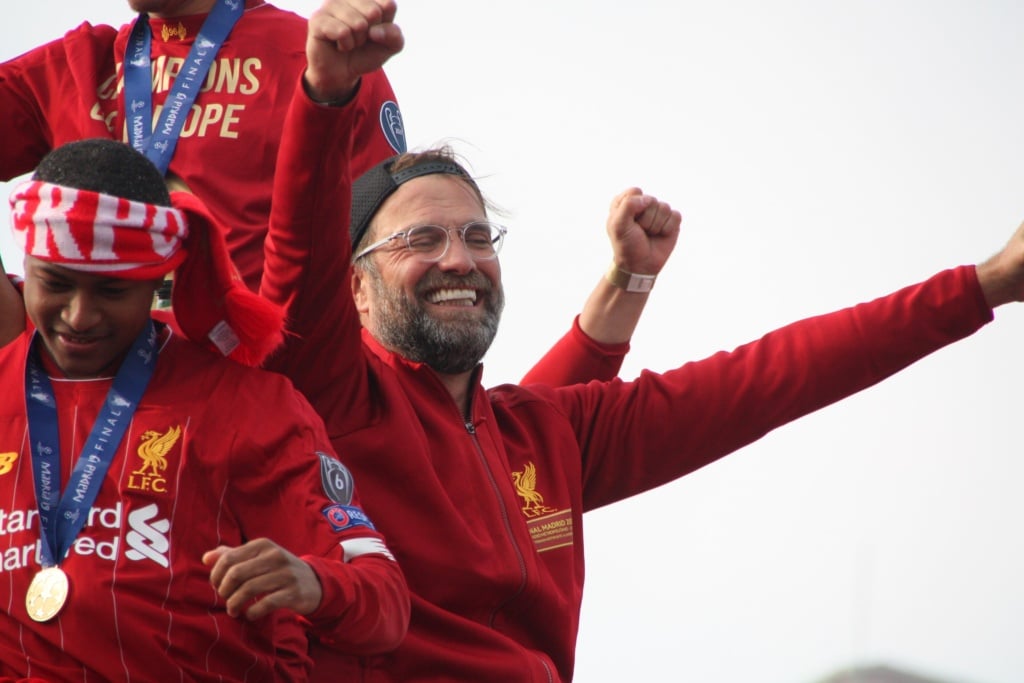
‘It all depends on the success and the effort and the popularity, the exposure on TV, revenue you can generate by merchandising […] We thought their [Liverpool’s] asking and the delivering is not in the right balance’, Adidas’s then CEO Herbert Hainer said to explain why they were not renewing the contract, summarising in just a few pointed words what a brand is looking for in a team.
However, the story had a happy ending. In 2020, Jurgen Klopp’s Liverpool won the Premier League, having won the Champions League the previous year. And in 2025 Liverpool once again returned to wearing Adidas gear, resuming their historic partnership!
Could this be a good omen for Italian fans too?
When scandals are involved… it’s another story!
Sponsors tend to act much more quickly to terminate contracts when there’s a scandal.
One of the most famous examples of this came from the world of cycling. When in 2012 seven-times winner of the Tour de France Lance Armstrong turned out to be at the centre of the most complex doping systems ever seen, his sponsors Nike, Anheuser-Busch and Trek not only immediately ended all relations with the cyclist, they also filed a lawsuit for substantial damages.
The same thing happened to Russian tennis player Maria Sharapova, who testing positive for banned substances in 2016. Once again, the leading sponsors – Nike, Porsche and TAG Heuer – either ended or did not renew their contracts.
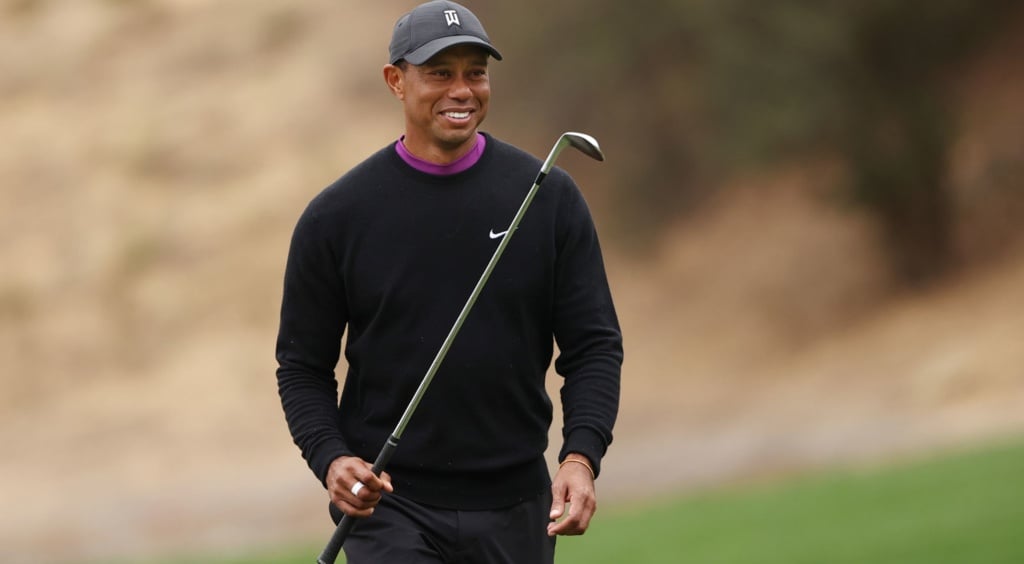
Athletes are not only required to achieve success on the field, but to respect ethical values off it. And when these are called into question, the marketing revolving around the athlete suffers.
One person who knows this all too well is Tiger Woods, the most famous golfer of all time, who in 2009 was involved in a scandal related to extra-marital affairs. By the end of 2010 the storm had passed, but Woods was left with just two major sponsors – EA Sports and Nike – while Accenture and AT&T abandoned him. His losses were estimated at around $34 million (£25 million).
What do you think about these stories? Can you think of any others? How else do brands link their value to athletes’ image? Let us know!