


Table of Contents
The history of bookplates: from property marks to collector’s items
The bookplate or ex libris – a paper label applied to a book’s cover or endpaper to show who owns it – has a long and enthralling history, closely tied to the invention of movable type printing and the launch of the first private libraries. As books became increasingly widespread, demand for bookplates – which were initially limited to religious environments and the nobility – spread to the middle classes, offering artists the chance to experiment with a range of different techniques and visual languages.
Over the centuries, these labels evolved from purely functional objects to a fully fledged figurative art genre. They described the owner’s identity, tastes and culture, and became sought-after collector’s items from the twentieth century onwards. In this article we’ll run through their history, examining their origins and the various printing techniques and styles applied over the centuries, from the Renaissance courts through to the present day.
The origins
Bookplates originated in Germany in around the late fifteenth and early sixteenth century, as a form of branding for early publishers. They were created using woodcut printing and attached to books’ frontispieces as a way to protect printers from their competitors in a pre-copyright era. These early bookplates normally included an illustration, sometimes accompanied by the publisher’s name and a motto in Latin.
The rise of humanism and the spread of private libraries meant that bookplates were increasingly also made for private citizens, predominantly monks and noblemen. German woodcut art made a major contribution to the spread of these labels, which were printed then glued onto the book’s cover or endpaper. Artists like Albrecht Dürer, Lucas Cranach the Elder and Hans Burgkmair created sophisticated reproductions of coats of arms, mottos and images that symbolised their client’s status, interests or activities.
The oldest known surviving bookplate belonged to Johannes Knabensberger, a Bavarian chaplain with the nickname Hans Igler. Although it isn’t dated, it is thought to have been produced in the late fifteenth century. It is not dissimilar in appearance from modern bookplates: it is rectangular and features the image of a hedgehog and a cartouche with the words ‘hanns Igler das dich ein igel ku[e]s‘ (Hanns Igler the hedgehog kisses you), a play on words based on the owner’s nickname and the word Igel, which means ‘hedgehog’ in German.
Printing techniques
There are three key variables affecting a bookplate’s appearance:
- The printing method used, which determines the weight of the lines and the colours;
- The artist, who may have adopted the dominant artistic style of the time or rebelled against it in his or her aesthetic choices;
- The client’s requests, which mostly guided the subjects depicted.
Let’s take a look at the main printing techniques used to create bookplates in different eras.
Xylography
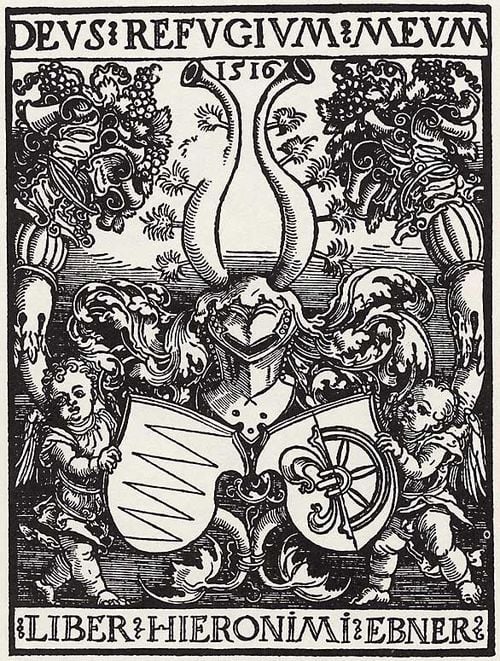
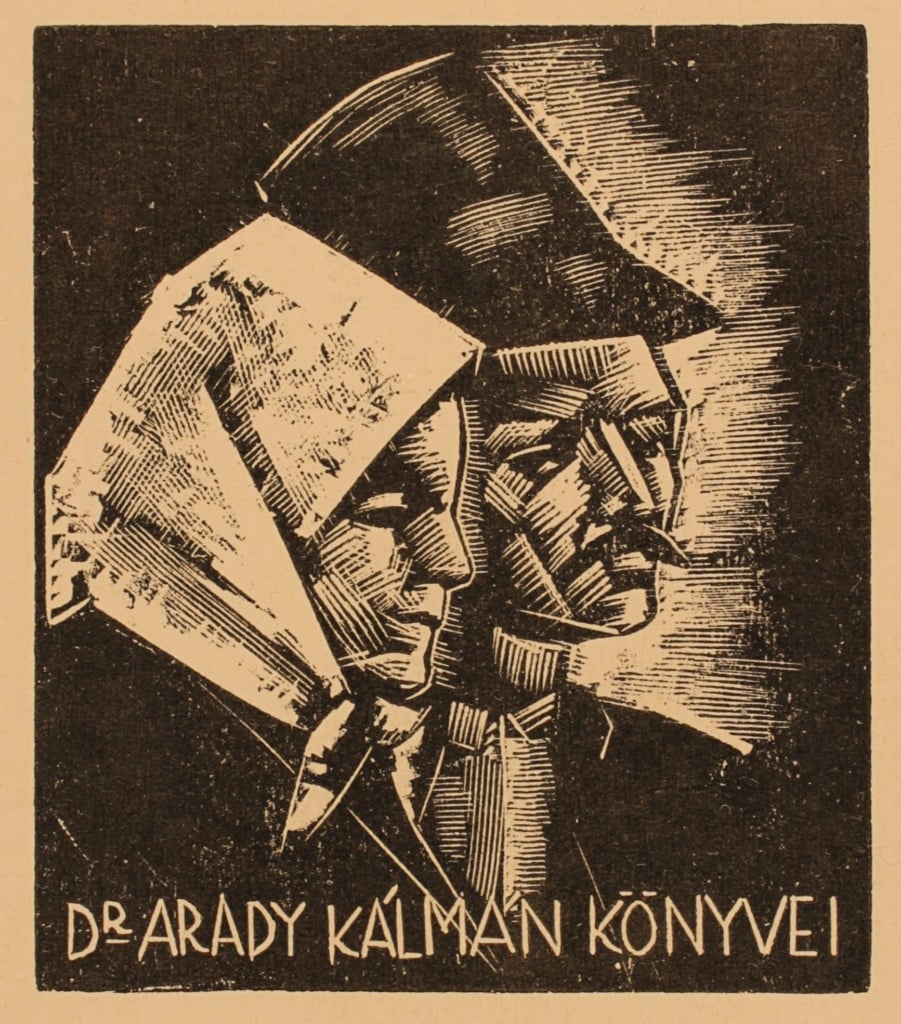
In the fifteenth and sixteenth centuries, bookplates’ style was greatly affected by the woodcut printing technique used to create them. The engravings made on the wooden block produced clear, thick lines, well-defined edges and strong contrasts between white and black surfaces.
Copper engraving
Copper engraving began to take hold in the late sixteenth century, opening up new expressive potential for artists. This technique allowed thinner lines and more nuanced shading to be produced than with woodcut, meaning the elaborate and sumptuous images typical of the Baroque style could be reproduced more faithfully. In some cases, bookplates started taking up the entire surface of the endpaper in the large tomes in monks’ and noblemen’s libraries, becoming true illustrations.
Lithography
Lithography, first introduced in the nineteenth century, used stone (and later metal) plates, on which the artist drew directly. This printing technique could obtain halftones and delicate shades of grey and clearly defined text, and it also allowed the introduction of colour printing, which began to flourish in the late nineteenth century.
Screen printing
This ancient printing technique – which originally used a silk mesh, later replaced by other textiles – could be applied to any surface and produced prints with dense, bright and slightly embossed colours. These characteristics made it popular for bookplates designed for collectors, but the high production cost severely limited its use.
Modern techniques
All the more modern image reproduction systems – photography, heliography, photocopying and laser printing – can be used to print bookplates quickly and cheaply. In recent years, custom stamps have also become popular as a way of marking books, although they are not bookplates in the true sense of the word. In general, the aesthetic quality of the bookplates created using more modern printing methods is not comparable with those produced using traditional techniques, which remain the gold standard for collectors and fans of the genre.
A journey through different symbols, subjects and shapes
The variety of styles, themes, sizes and shapes of bookplate created over the centuries bears witness to the power of this small printed item to spark the creativity of artists, engravers and illustrators all over the world. However, despite the many differences between them, you can still identify some recurring themes in bookplates both old and new.
Heraldic style
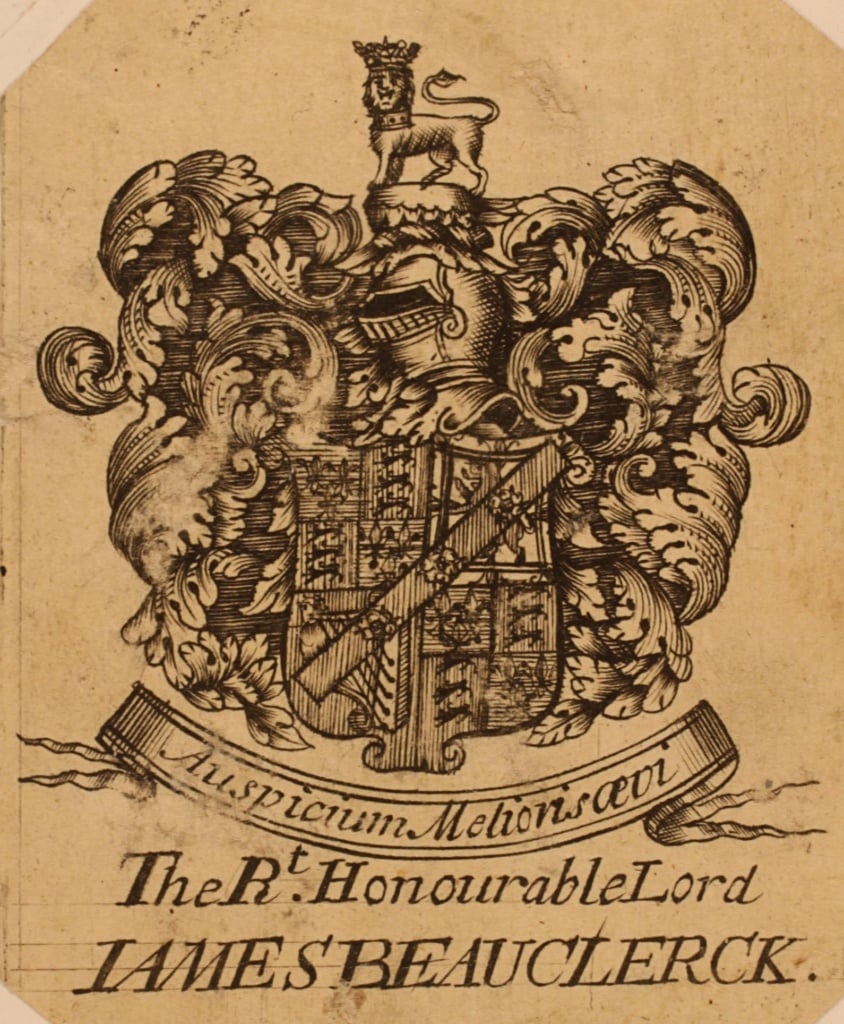
Until the late eighteenth century, heraldry dominated bookplate compositions, leaving little room for artists to add their own creative touch. Clients commissioning bookplates were predominantly members of aristocratic families, who would mark all the items they owned with their coat of arms. In some cases, the coat of arms was embossed on the leather binding and enhanced with precious metals to create a supralibros, in addition to the actual bookplate inside the volume. The compositional structure was relatively inflexible: a shield with the family’s symbols at the centre of the image, surrounded by additional elements like festoons, crowns, helmets and winged figures.
Calligraphic style
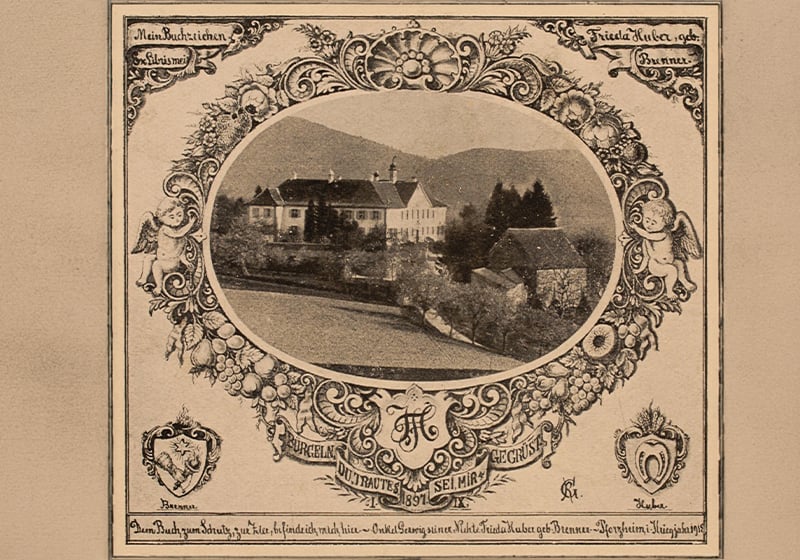
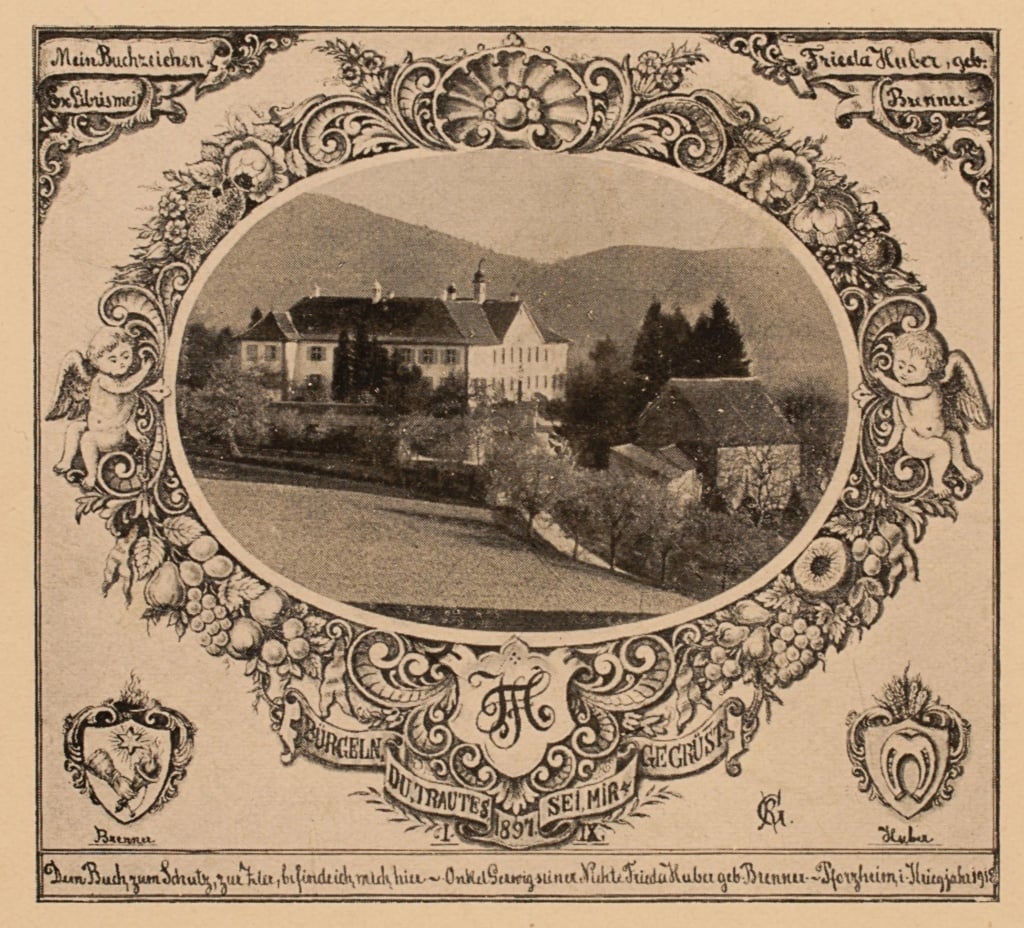
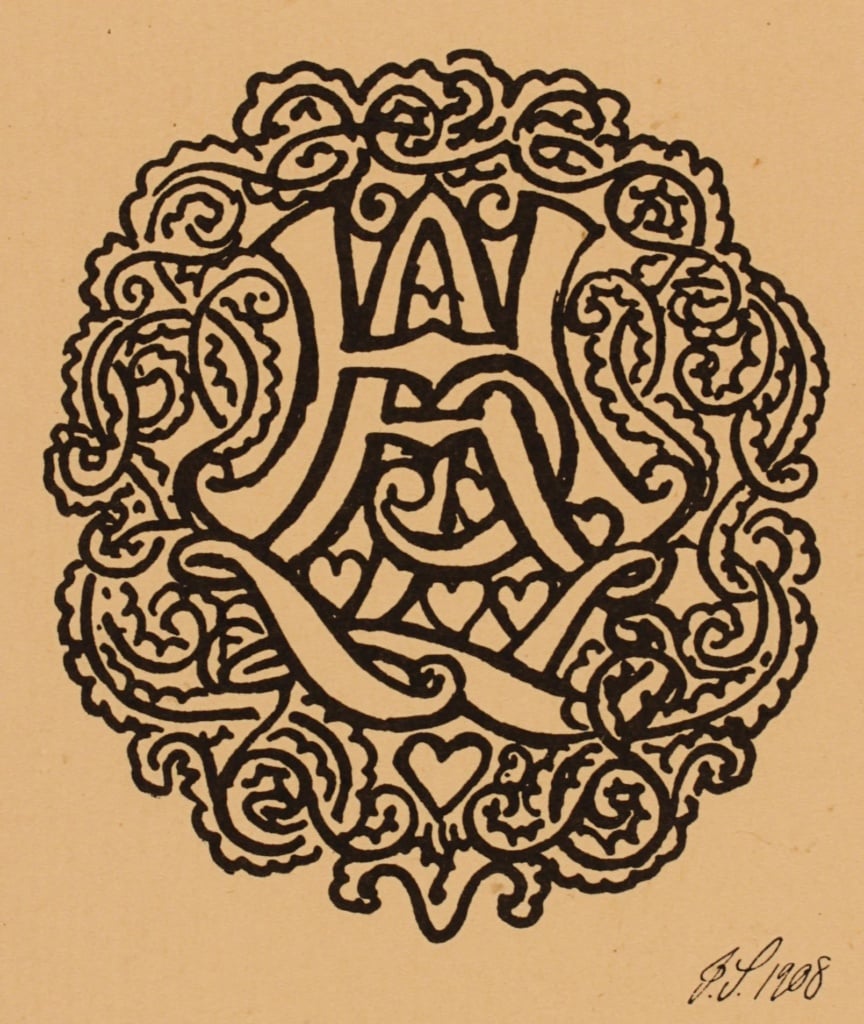
Calligraphic bookplates take inspiration from the bookplate’s earliest origins – a book’s owner penning their name on the endpaper of handwritten codices. The calligraphic style, which spread from the mid-nineteenth century and was particularly popular in the UK, simply involved adding the owner’s name, in some cases accompanied by the words ‘ex libris’, without any images or mottos. English labels generally preferred simple, pared-back fonts, while German bookplates often used arabesques and Gothic-style letters.
Typographic bookplates
This style of bookplate contains the words ‘ex libris’ in a type font accompanied by the owner’s name, with no accompanying images, with the occasional exception of small typographical friezes. Typographic bookplates originated in the UK, and completely removed the artist’s creative input in favour of a minimalist style.
Graphical style
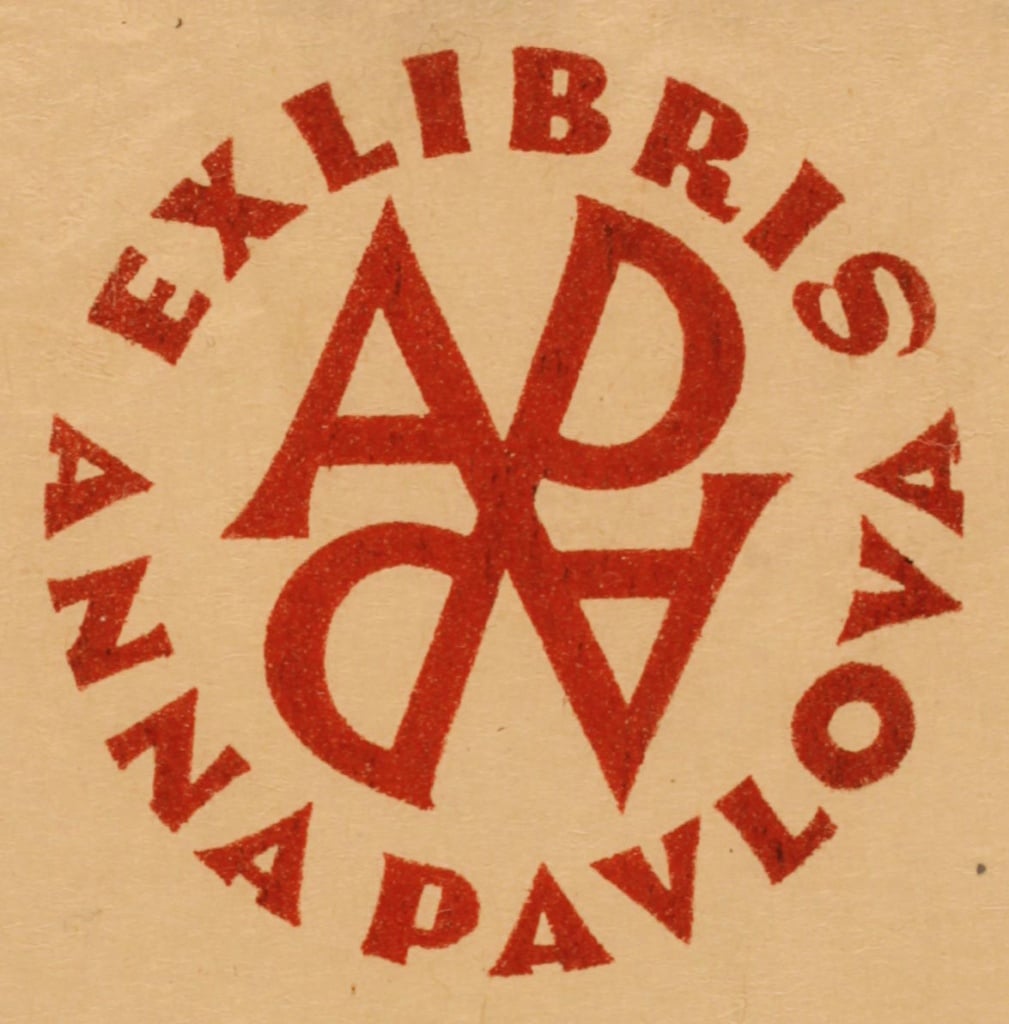
In these bookplates, the typeface becomes a key figurative element in the composition; it is altered and interwoven with images and decorative patterns to such an extent that it is difficult to tell the text and the image apart. This style started to become popular among the European artistic avant-garde in the early twentieth century, and reached its peak between the 1920s and 1940s, during the Art Déco period.
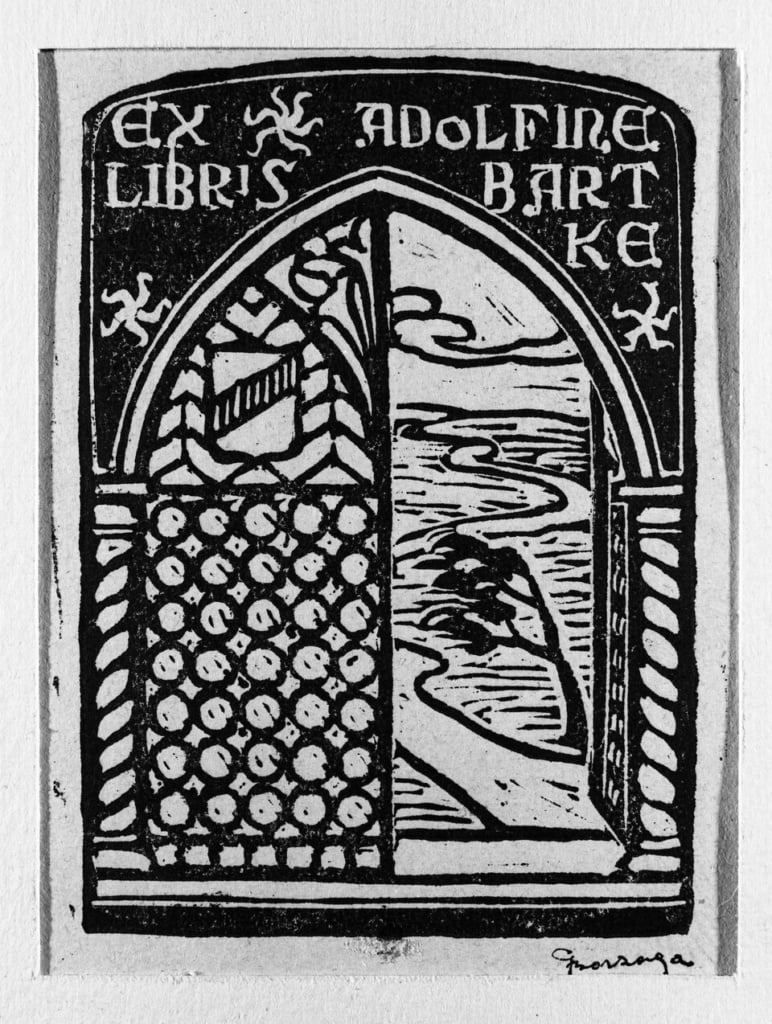
In addition to the genres we’ve listed here, the artistic currents of the various eras also influenced bookplates’ appearance, as proven by a raft of extraordinary Baroque, Neoclassical and Modernist examples produced by renowned artists. In the twentieth century, with a wide variety of printing techniques available and collecting growing in popularity, bookplates became an established art form, employing myriad visual languages.
Specialist bookplates deserve a mention too! They originated following the spread of themed libraries dedicated to specific subjects ranging from cooking and medicine to erotic fiction, chemistry and sheet music. There are some beautiful examples of bookplates created for music, sometimes known as ex musicis, with compositions featuring symbols and notation from some of the most famous musical works.
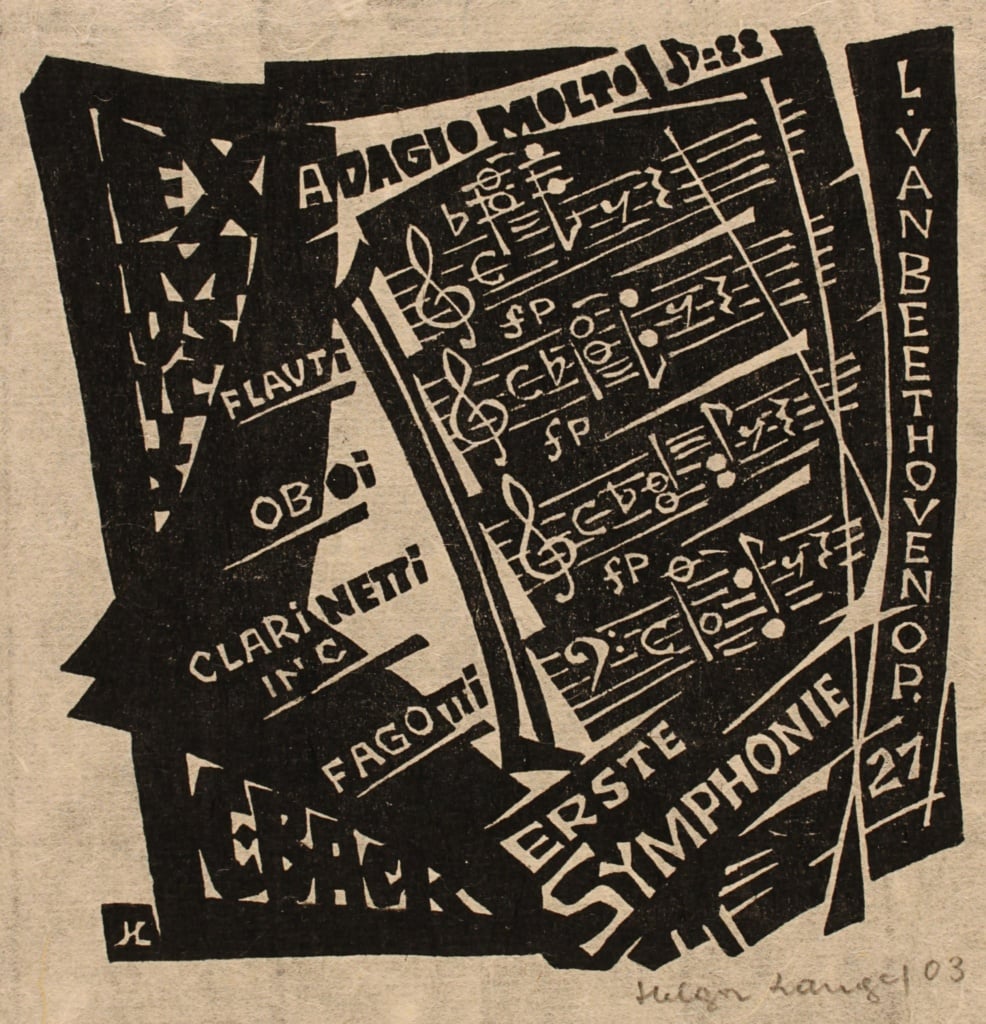
Nowadays, the bookplate has almost entirely lost its original function of proving ownership, and instead has become an art object bought and traded by collectors. However, avid bibliophiles can still commission a real bookplate from graphic designers and illustrators as a nice way to customise books with a hint of nostalgia.
If you’d like to explore the wide variety of bookplates produced over the years, you can browse the Digital Exlibris Museum‘s collection and Emanuela Pulvirenti’s selection on Pinterest, as well as Achille Bertarelli and David Henry Prior’s book Gli ex libris italiani and 3500 ex libris italiani by Jacopo Gelli. And the Achille Bertarelli Print Collection at Sforza Castle in Milan and the collection of over 50,000 examples that Sir Augustus Wollaston Franks donated to the British Museum provide an opportunity to see some original bookplate designs in the flesh.