


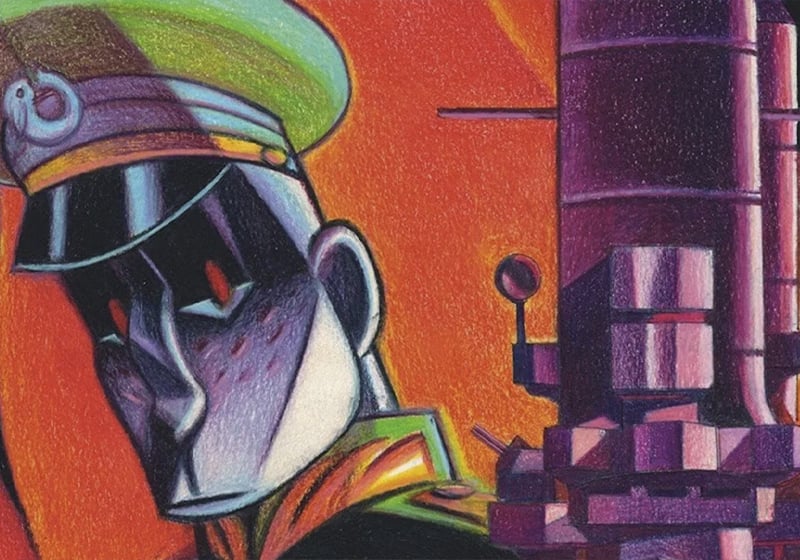
Table of Contents
Lorenzo Mattoti, born in Brescia, northern Italy on 24 January 1954, is considered one of the greatest Italian cartoonists and illustrators of all time. Fires, his best-known work, revolutionised the world of comics, taking it into the realm of fine art by blending illustration with new drawing techniques and approaches to colour.
The artist is known worldwide for his unmistakeable expressionist drawing style and his use of coloured pencils. His silent drawings have free-form, flowing lines that spread across the page like music.
Mattotti therefore produces drawings that touch the reader’s soul: while Jack Kirby said that ‘comics will break your heart’, Mattotti believes drawing can literally save your life, becoming a form of meditation that brings you face to face with your unconscious self.
Childhood, training and influences
Mattotti was the son of an army officer, and spent his childhood moving from city to city, wherever his father was posted. This life spent on the move undoubtedly helped forge his curiosity and varied view of the world.
One perk of his father’s job was that he and his brothers could watch films for free, and the dark of the cinema gave him his first lessons in visual culture. He developed a fascination with military uniforms, which later cropped up repeatedly in his works.
When he left school, he went to Venice to study architecture. Althrough he never finished the course, his studies had a significant impact on his comics.
Countless influences can be seen in his style, drawn liberally from both the history of art and literature. From the clean pen strokes of the Argentinian José Muñoz and Carlos Sampayo to great painters like Arnold Böcklin (particularly his use of black), Claude Monet, Paul Cézanne, Pierre Bonnard, Félix Vallotton and Joan Mirò.
In 1979, his teacher, the artist and engraver Enzo Borgini, encouraged him to start filling notebooks with ‘drawings of myself’: somewhere he could be creative without the pressure of having to produce anything beautiful. This helped in his early years as an artist, while he was searching for his own style and voice, but even today the illustrator continues to fill these now legendary notebooks with his art.
Early days: from Alice Brum Brum to the Valvoline group
It took a lot of experimentation to make Mattotti the master of colour the world knows today. His drawings were first published in France in 1975 in the magazines Circus and Biblipop. That same year, in Italy, his work appeared in the Como-based countercultural magazine King Kong, and he later received commissions from Re Nudo and the monthly music magazine Gong.
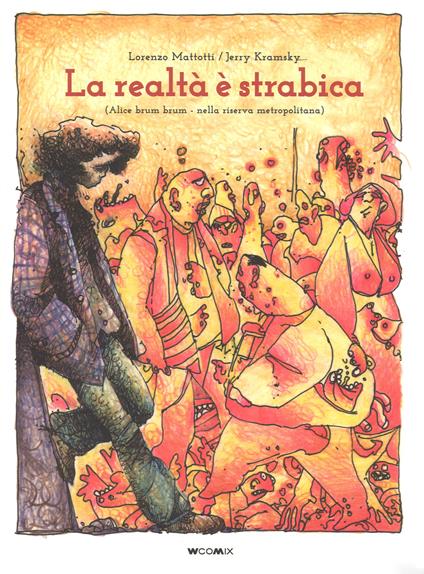
In this period of his life, Mattotti was a restless young man who just wanted to ‘draw for a living – anything at all’. In 1977 he launched a major partnership with his close friend Fabrizio Ostani (AKA Jerry Kramsky), and together they published Alice Brum Brum nella riserva metropolitana (‘Alice Brum Brum in the Metropolitan Reserve’, initially titled La realtà è strabica, or ‘Reality is Cross-Eyed’), an irreverent and ironic attack on capitalism.
After producing a few covers for the publisher Ottaviano, a comic book adaptation of The Adventures of Huckleberry Finn and some short stories for the newspaper Lotta Continua, in 1978 Mattotti and Jacopo Fo launched an underground magazine called Macondolore Macondolcezza. In 1981 he made his debut in Linus magazine with Incidents, a cartoon that showed the first glimpses of his own personal style: he had to start thinking about drawing in a more structured way to ensure he met the editorial deadlines.
However, the real turning point in his career came in Bologna in 1983, with an event that would prove pivotal both for his development as an artist and for the history of Italian comics: the founding of the Valvoline group. Oreste del Buono, the renowned editor of Linus (and other magazines) decided to ask a group of young cartoonists to create an insert for Alter Alter.
Together, Mattotti and Igort, Daniele Brolli, Giorgio Carpinteri and Fabrizio Ostani formed a genuinely avant-garde collective. The group established some informal yet clear rules, most notably bidding farewell to the 1970s psychedelic compositions often seen in magazines and self-published works at the time (and in some of Andrea Pazienza‘s creations, although these had a more cynical edge than most 1970s underground drawings).
The Valvoline group’s panel grid was largely fixed, and each frame had to carry meaning within a fairly rigorous structural framework. However, Mattotti was brave enough to break these rules; the group provided him with a kind of creative laboratory that allowed him to develop complete authorial awareness.
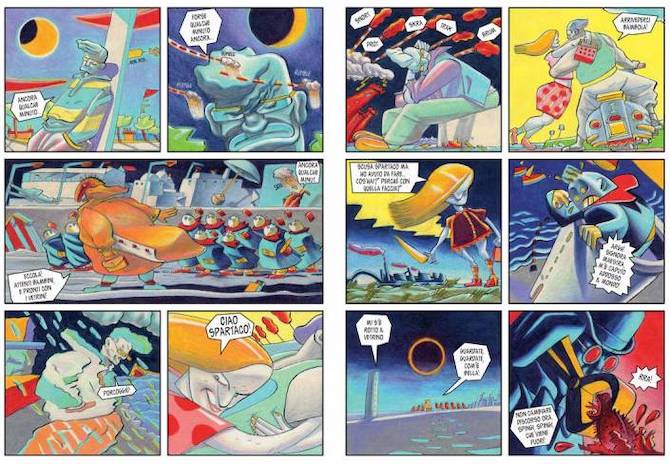
Some of Mattotti’s best work was published in Alter Alter. In 1982 he produced Il signor Spartaco (Mr Spartacus), recounting a train journey (actually a figment of the lead character’s imagination) that becomes an inner dialogue between dreams and reality. This work was a watershed moment in the artist’s development, both technically and poetically. Mattotti’s bright colours and crayons provided incredible expressive power, combined with dreamlike and highly evocative storytelling.
Next came Doctor Nefasto, another comic with a script by Kramsky, this time a dreamlike adventure telling the story of the evil scientist Jeronimus Nefasto and his nemesis, Prof. Dittongo Notorius, who wants to save humanity. The story is surreal in parts, and is drawn in thin, sepia-colour lines, with flashbacks and dreams in even thinner black lines.
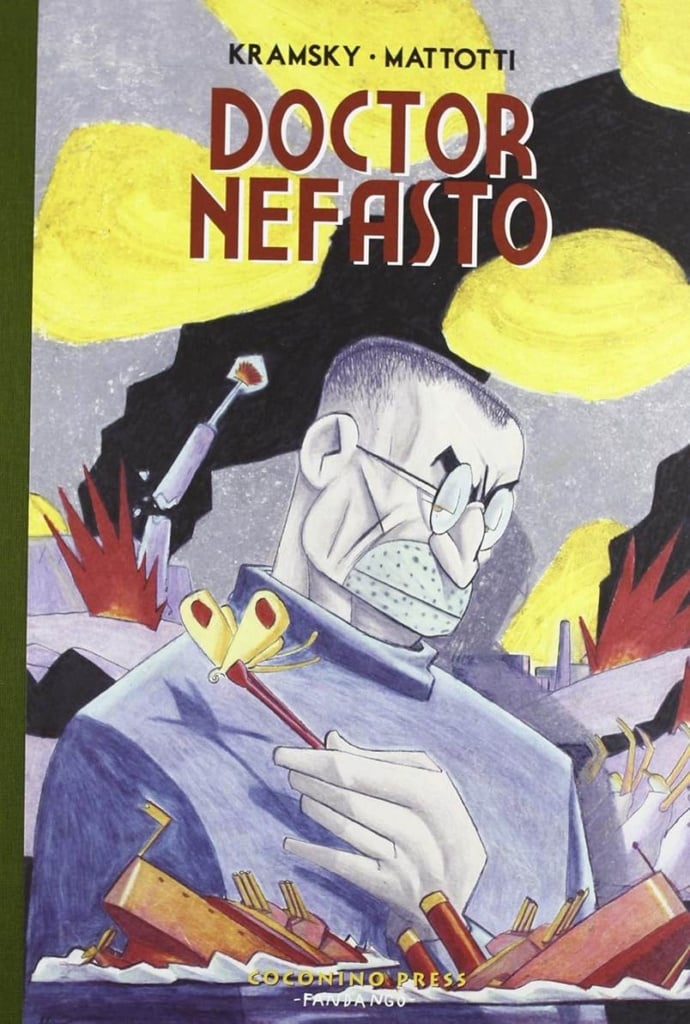
And it was while drawing Doctor Nefasto that Mattotti came up with the inspiration for his most popular work.
Fires: storytelling through colour
Fires is unanimously considered Lorenzo Mattotti’s greatest work. First developed while the author was working on Doctor Nefasto, it cemented his reputation both in Italy and internationally.
One day, the artist was drawing a classic adventure scene featuring the lead character on board a boat approaching an island. He decided to make the boat tiny, dominated by huge walls representing the nature of the island. And at that moment, he realised that human figures can be stripped of their identity and turned into pure forms. The stark contrast between the linearity of the boat and the power of nature provided a ‘visual shock’ for the artist, and that single image led to his masterpiece, Fires.
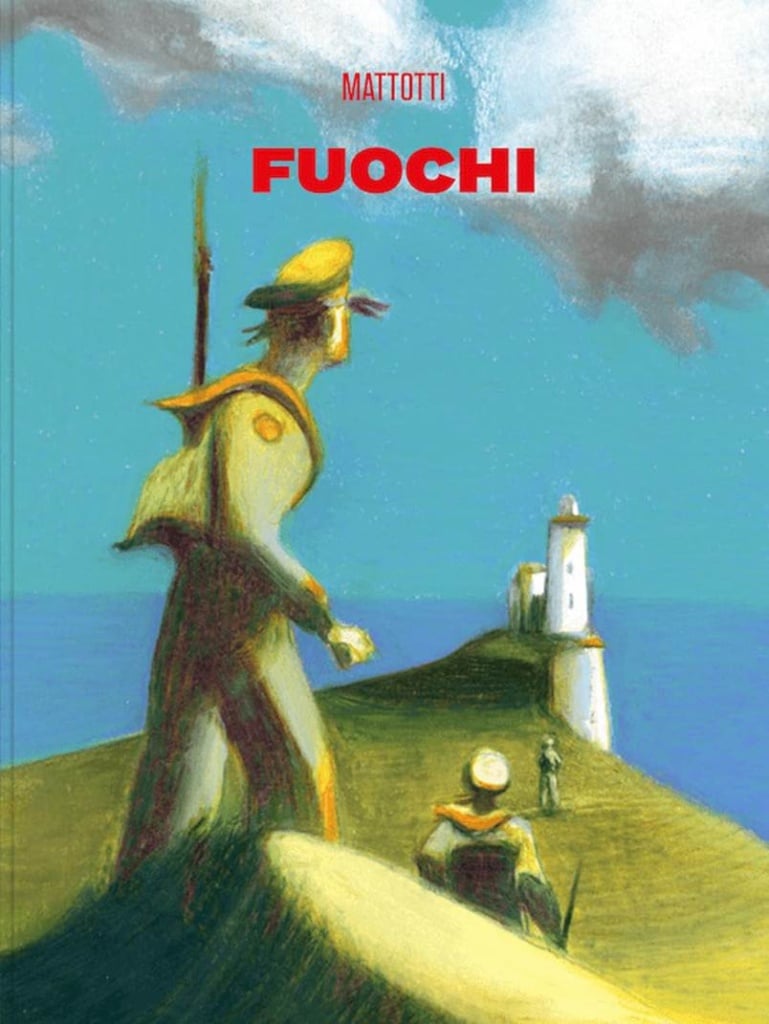
It was serialised in Alter Alter in 1984 and 1985, and then published by Dolce Vita in 1988. And it quite literally changed everything – not just for the artist, but also for the comics medium as a whole, as it was the first time that colour was used to guide the narrative.
The story sees the main character Lieutenant Absinthe (named after the nineteenth-century hallucinogenic liquor) arriving at a mysterious island on board his battleship, to investigate some rather strange events.
But Absinthe is almost devoured by the island, divided between loyalty to his uniform and the almost mystical allure of invisible creatures. The artist started off using the classic coloured pencils seen in Il signor Spartaco, but soon progressed to a more painterly style.
He moved onto wax crayons, creating abstract pages depicting just the landscapes first, then adding the soldiers afterwards. As he continued developing this technique, the crayons literally started to ‘eat away’ at the forms. Absinthe’s face is transformed almost into a shamanic figure, and the colours stop simply filling in gaps and start telling the story.
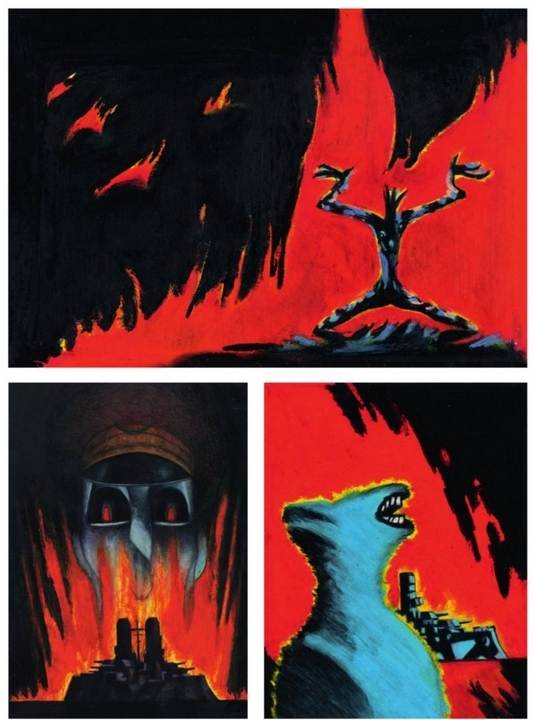
The way he removed all the onomatopoeias and expressed sounds using the drawings themselves was even more revolutionary. When the cannons are fired, the roar can be felt through the textural power of his crayon strokes and the syncopated rhythm of the frames. The drawings in Fires can therefore be considered ‘silent’: Mattotti added the text later by cutting and sticking pieces of paper onto the finished page to show where the balloons should be added.
Subsequent works: Caboto, The Man at the Window, and Jekyll & Hyde
After Fires‘ huge success, Mattotti’s career really took off, and he won a plethora of awards.
In 1992 he published The Man at the Window, with the story written by Lilia Ambrosi, introducing a technique he called ‘fragile line‘: black and white with a rippling intensity and a wobbly, expressive stroke.
Caboto was released in 1997, and here Mattotti went back to colour, but this time used it to tell an epic story. Stigmata in 1998 returned to a darker black and white, with a scratchy, tragic stroke. And in 2002 he paired up again with Kramsky to make an adaptation of Robert Louis Stevenson’s classic work Dr. Jekyll and Mr. Hyde. This won him an Eisner Award – the Oscars of the comics world – in 2003.
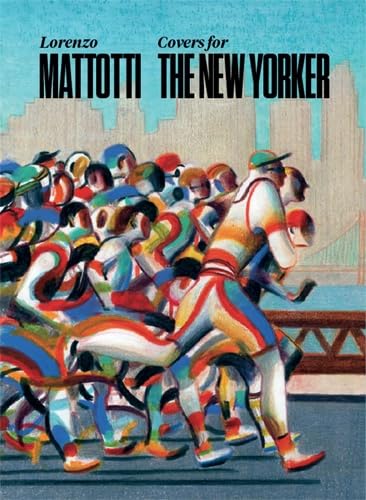
He has combined all these books with a lot of illustration work, ranging from various editions of Pinocchio to covers for the New Yorker, Glamour, Vanity Fair, Cosmopolitan and Le Monde. He has also made frequent forays into the world of animated films, for example creating the painted interludes between the three episodes in Michelangelo Antonioni, Wong Kar-wai and Steven Soderbergh’s work Eros, set to music by Caetano Veloso.
And in 2019 he directed The Bears’ Famous Invasion of Sicily, based on Dino Buzzati’s novel.
Lorenzo Mattotti’s legacy
Lorenzo Mattotti’s impact on comics and the visual arts is practically impossible to measure. He brought incredible innovation to the comics medium, through his painterly techniques and almost musical approach to page structure.
Since his time with Valvoline, he has used the grid as a sort of metronome to measure the pace of the story, while at the same time proving that comics are a suitable repository for great art and abstract poetry.
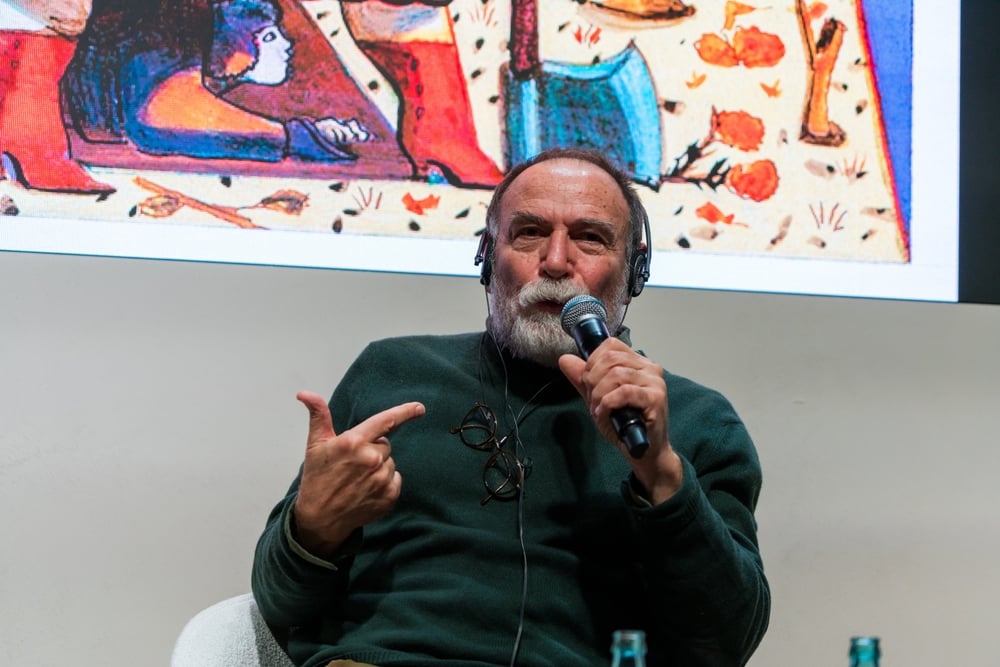
His legacy can be seen clearly in the generations of artists who have followed him. Artists like Manuel Fior, Guido van Driel, Nathalie Carpentier and Thierry Van Hasself have all taken inspiration from his creations.
Despite his global success, the essence of Mattotti’s work remains the same: using drawing as a way to urgently examine our inner selves and discover who we really are.
Disclaimer: All images featured in this article belong to their respective owners and are used for informational purposes only, to pay tribute to the great masters of the art of comics and their works. Readers are encouraged to purchase the works mentioned and to enjoy them in accordance with the law.