


Table of Contents
Stanley Martin Lieber, better known as Stan Lee, was born on 28 December 1922 in New York City. He is probably the world’s most famous comics writer and for good reason: his original ideas and marketing nous helped turn a genre once derided as just something for kids into a global pop-culture phenomenon.
For decades he set the creative direction of Marvel Comics, growing it from a tiny publisher into a multinational powerhouse.
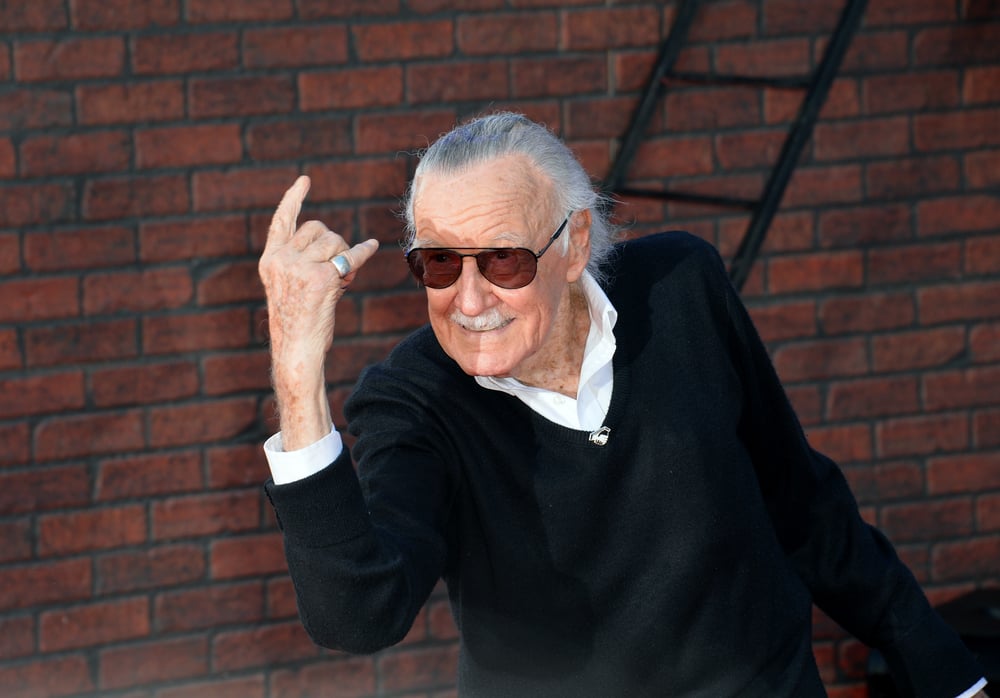
Stan Lee was a visionary who, together with artists like Jack Kirby and Steve Ditko, revolutionised the concept of superheroes in the 1960s. But Stan Lee was also a consummate marketing man, accused by the people he worked with of taking more credit than he really deserved. Yet he remains a towering figure in the comics world for his role, however contested, in creating stories and characters that have become etched into the collective imagination – and none more so than Spider-Man.
Childhood, influences and early work
Born to Celia and Jack Lieber, Romanian Jewish immigrants who arrived in the United States at the turn of the 20th century, Stanley Lieber grew up poor. His father was a dress cutter who struggled to find work in the Great Depression, and money worries meant the family frequently moved from one cramped apartment to another.
As a child, Lee’s passions were books and films. He devoured newspaper comic strips, as well the work of Dickens, Shakespeare, Mark Twain, H. G. Wells and Edgar Allan Poe. He also read the King James Bible: the rhythm of scripture moulded his writing, which was always rich and theatrical. This style can be heard in every caption, from Doctor Doom’s rants to Thor’s monologues. Lee once said that the eponymous protagonist from another of his favourite childhood books, Baroness Orczy’s The Scarlet Pimpernel was “the first character who could be called a superhero”: by day, the English gentleman pretended to be a well-to-do idler, while by night he saved condemned aristocrats from the guillotine in revolutionary France. The story is also notable for the trope of the mask that hides the face of the real hero, a device much loved by the author.
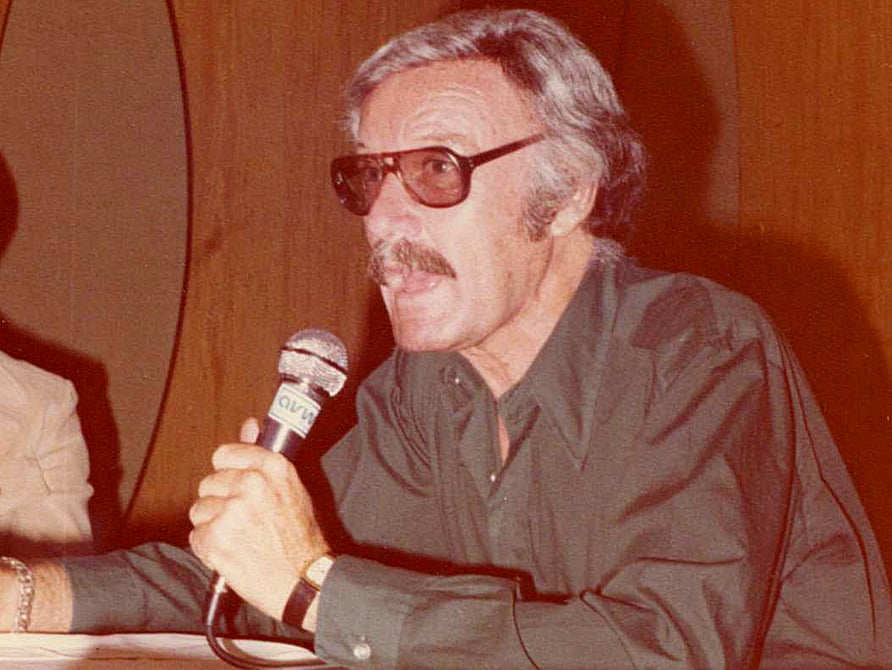
Young Lieber’s dream was certainly not to create comic books, which at the time were considered as no more than throwaway stories for kids. No, he wanted to write the Great American Novel. But in the meantime, he needed to earn money and found work variously as a mailman, obituary writer, theatre usher and switchboard operator.
A pivotal moment came in 1939 when, aged just 17, he joined Timely Comics, the small publishing house run by Martin Goodman that decades later would become Marvel. He started at the bottom, filling inkwells, correcting proofs, erasing pencil marks from finished panels, but always watching and learning from the professionals around him.
In 1941, Lieber finally got the chance to write something of his own, a story printed in U.S.A. Comics #1 and drawn by Charles Wojtkoski. He published his first comics under the pen name Stan Lee, because the genre was still looked down upon back then, and he wanted to save his real name for the literary novel he planned to write. But he would never write that novel.
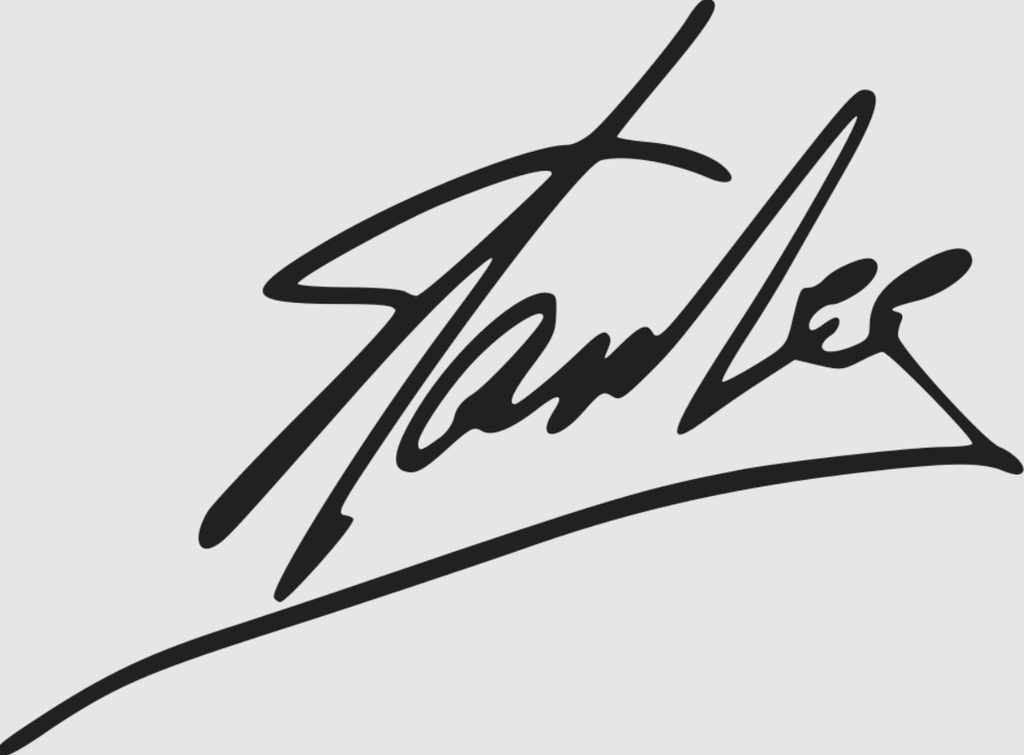
So famous did his pseudonym become that in 1971 Stanley Lieber legally changed his name to Stan Lee.
Debut work, Captain America, Kirby and the war
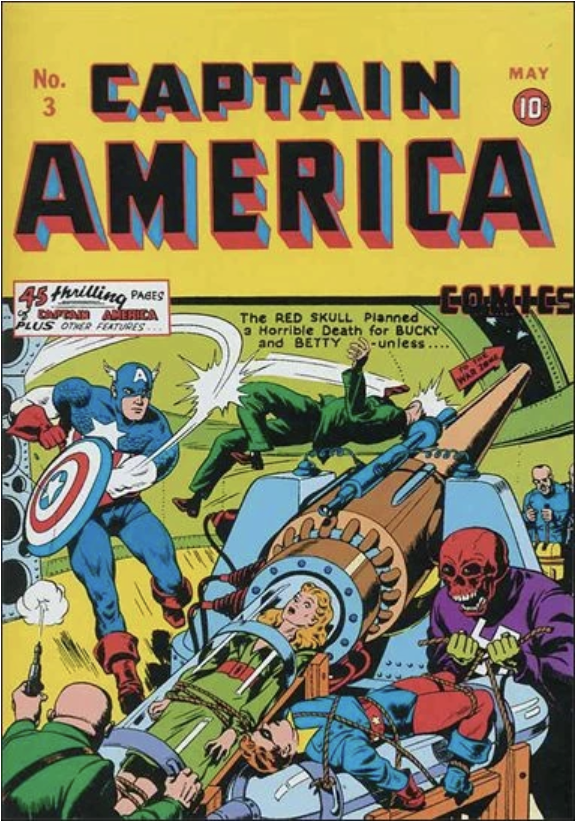
That same year, Lee wrote the words for Captain America Foils the Traitor’s Revenge as part of Captain America Comics #3. In the episode, Captain America throws his shield like a boomerang for the first time. Until this point, the weapon had been purely defensive, but from then on the shield throw would become the superhero’s trademark manoeuvre.
The key people inside Timely Comics during this period were editor Joe Simon and art director Jack Kirby, who between them created Captain America. At the end of 1941, the pair abruptly left Timely for a competitor over a salary dispute. Caught in a bind without his star authors, Goodman promoted a 19-year-old Lee to interim editor, a role he held for decades.
The next year, 1942, Lee was drafted into the US Army. The Second World War was raging, but Lee wasn’t sent into combat. Instead, his writing skills got him assigned to the Signal Corps and then the Training Film Division, where he penned scripts and motivational slogans for army training films.
The young writer continued working for Timely Comics while he served, corresponding with the publisher by post. And it was in this period that an amusing episode occurred – one that also revealed much about his character. One day, Lee asked the unit’s mail clerk if there was anything for him. Nothing, replied the clerk. But Lee could see with his own eyes that there was an envelope from Timely Comics in his letter box. Enraged that military bureaucracy was getting between him and his work, Lee, never one to let anything go, literally took apart the letterbox with a screwdriver. He was promptly reported to his commanding officer and only escaped court martial thanks to the intervention of a sympathetic colonel.
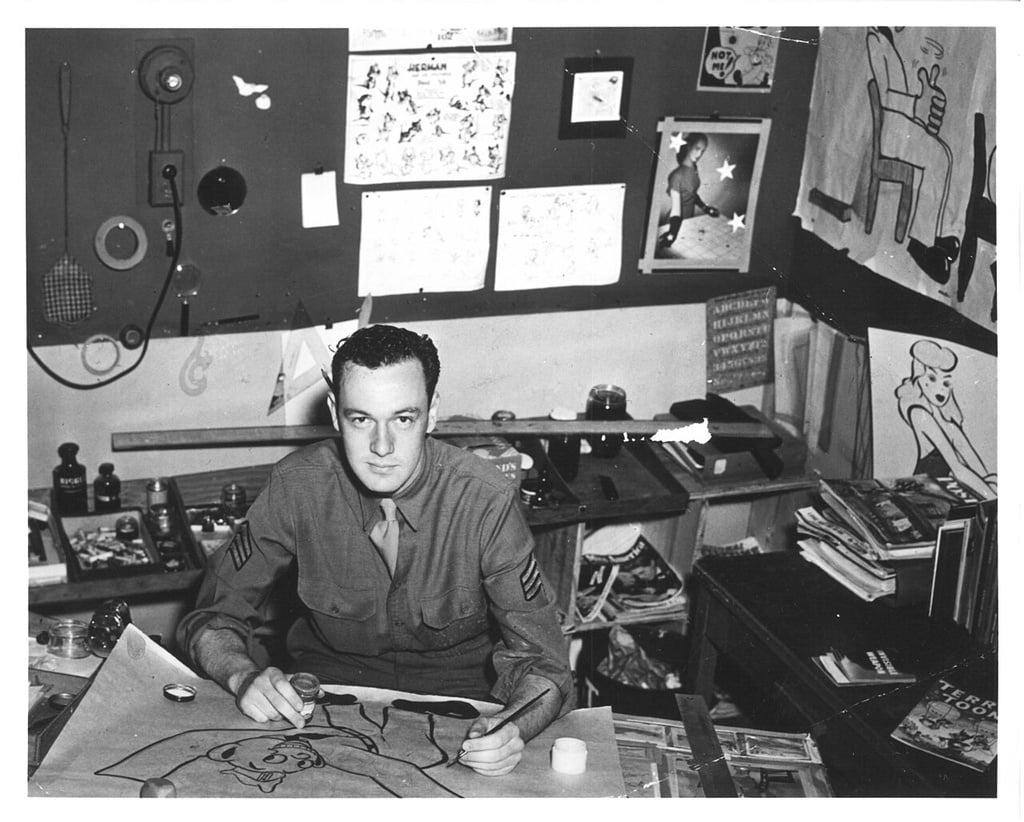
At the end of the war, Lee returned home to find that the comics industry had changed completely. Readers had tired of superheroes and were instead turning to genres like Westerns, science fiction and love stories. Timely Comics was now Atlas Comics and trying to adjust to these new tastes: they had Lee work on stories about astronauts, cowboys and characters like Millie the Model, Patsy Walker and Homer the Happy Ghost.
Just over a decade later in 1957, Atlas Comics imploded: while it had survived the wave of censorship unleashed by the Comics Code, created following publication of the scaremongering Seduction of the Innocent by psychiatrist Fredric Wertham, its distribution network collapsed and the firm had to drastically cut back its titles. In a further blow to Lee, Joe Maneely, one Atlas Comics’ most talented artists and a personal friend, died in a train accident in 1958.
These were tough times for comic book publishing and Lee was seriously thinking about leaving the industry. It was only his wife Joan who stopped him.
The Marvel revolution: the Fantastic Four and the Silver Age
Lee had married model and actress Joan Clayton Boocock in 1947. Though she makes only fleeting appearances in the official Marvel universe, Joan exerted a huge influence over the author. Indeed, for decades she was the first to read every new piece of work – and his harshest critic.
As the 1950s drew to a close, Lee was tired and disillusioned with the world of comics. It was at this low point that Joan gave him a piece of advice that would change his career – and comics – forever: “Why not write it the way you want to write it? If it doesn’t work, the worst that’s going to happen is that they’ll fire you. And you want to quit anyway.”
Opportunity knocked in 1961 when Goodman asked Lee to create a team of superheroes that could rival the Justice League from DC Comics. So he and Jack Kirby got together and came up with the Fantastic Four.
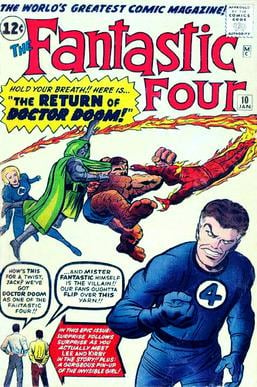
The result revolutionised the genre. With The Fantastic Four, Lee threw out all the well-worn clichés. For the first time, superheroes doubted themselves. They worried about paying the bills. They didn’t hide behind secret identities, but were recognised in the street and besieged by the media. And their headquarters were not a dark cave but a gleaming skyscraper in downtown Manhattan. It was a complete departure from the idea of superheroes as demi-gods: Reed Richards (Mister Fantastic), Susan Storm (the Invisible Woman), Johnny Storm (the Human Torch) and Ben Grimm (the Thing) were characters to whom readers, and not just teenagers, could relate. We had entered the Silver Age of American comics where superheroes were depicted as humans with their own problems, dreams and failures.
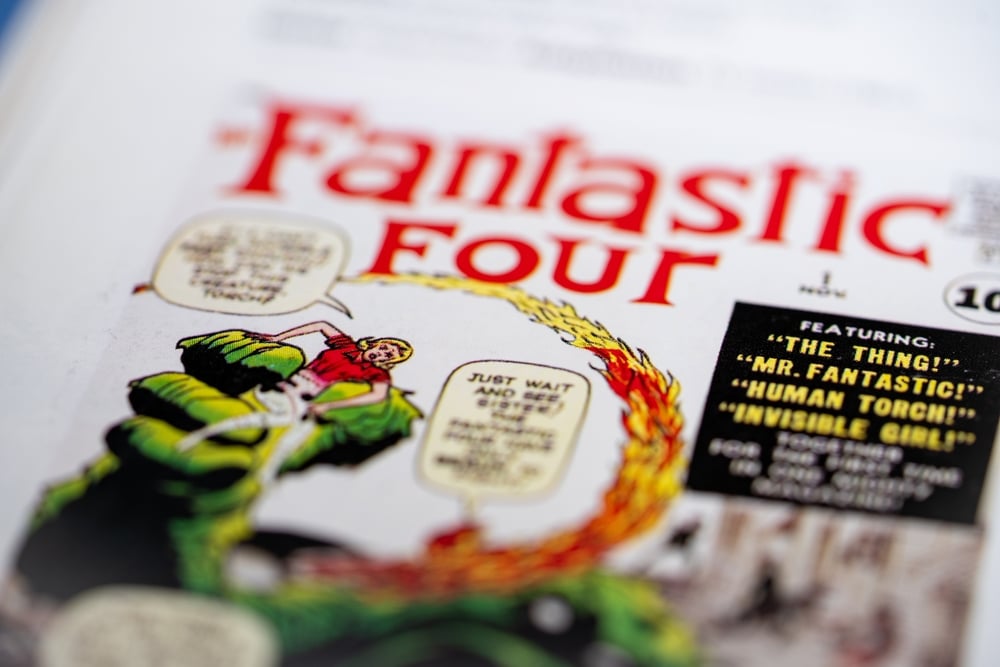
Following the success of the Fantastic Four, Lee hit a rich vein of creative form, bringing a cast of new characters to comics between 1961 and 1965.
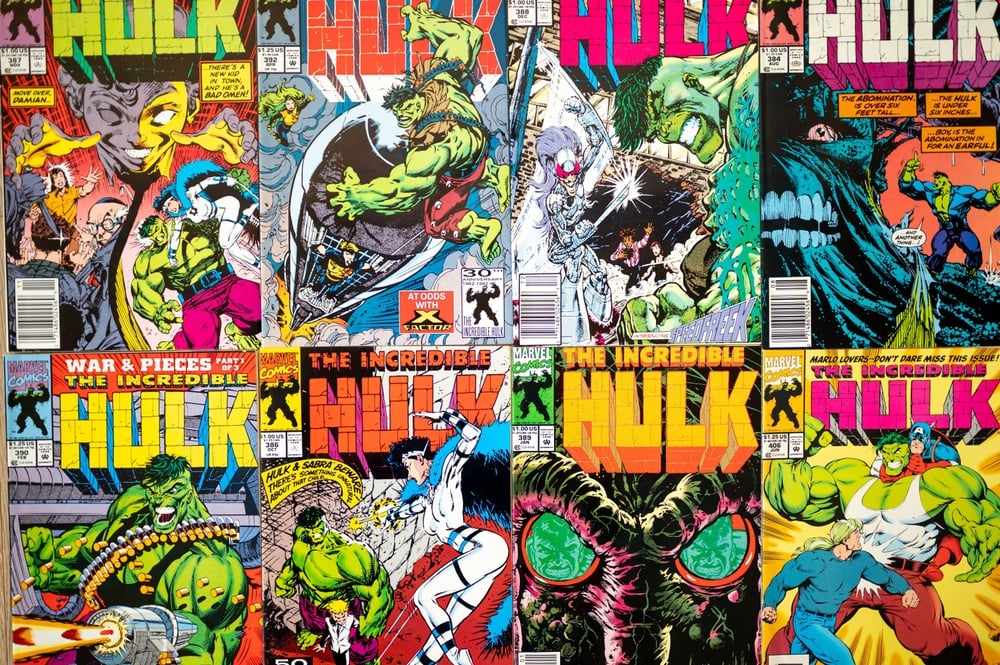
The Incredible Hulk arrived in May 1962, inspired by Robert Louis Stevenson’s The Strange Case of Dr. Jekyll and Mr. Hyde. Though the central conceit (a scientist is turned into a monster with superhuman strength after he is accidentally exposed to gamma radiation) is based on a common science-fiction trope, the heart of the story is the relationship between Bruce Banner and his inner beast.
Fun fact: in the first issue, Hulk isn’t green, but grey. Lee deliberately chose this colour because he didn’t want the character to be associated with any race or ethnicity. The only problem was that printing presses at the time struggled to maintain a uniform tone of grey throughout print runs, meaning every copy came out with a slightly different shade of grey. So from the second issue onwards, Hulk’s colour was switched to green, which was easier to print. (Grey Hulk would return years later in the form of a character called Joe Fixit, an almost gangster version of Hulk invented by Peter David and Todd McFarlane.)
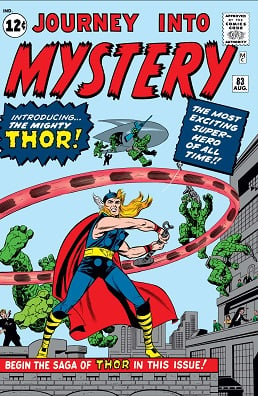
Thor (in The Mighty Thor) debuted a few months later, in August 1962 inside Journey into Mystery #83, drawn by Jack Kirby. Thor was the first Marvel superhero inspired by existing mythology, in this case Norse, and the first to explicitly come from another world. Lee had him speak in an archaic English, clearly inspired by Shakespeare and the King James Bible, making the god of thunder sound at turns majestic and comical.
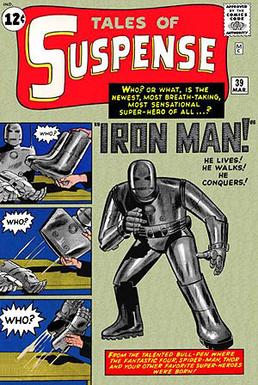
Iron Man landed the next year, 1963, with an initial design that would be barely recognisable to modern readers. The character was controversial for the era, because as a multimillionaire businessman and arms manufacturer, Tony Stark embodied everything that the youth of the 1960s counter-culture hated. But readers soon grew to love him, and Iron Man would eventually become the centre of the Marvel Cinematic Universe (MCU).
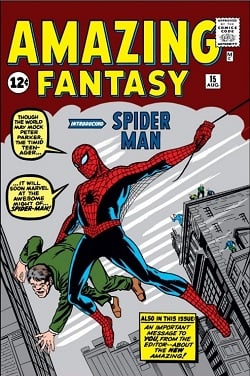
Spider-Man is a whole other story. After the success of the Fantastic Four and Thor, which started out as standalone comics, the next crop of superheroes were introduced to readers in anthologies. It was in the last issue of Amazing Fantasy, published in August 1962, that Spider-Man made his first appearance. Jack Kirby was initially slated to draw the character, but Lee didn’t like Kirby’s interpretation, and he instead gave the job to Steve Ditko. Once again, what made Spider-Man stand out was the normality of his alter ego, Peter Parker: he’s a bit of a nerd, he’s weighed down the responsibilities of everyday life, homework, money problems, bullying, social anxiety and a sense of guilt for the death of his uncle Ben. Relatable problems hitherto absent from the pages of comics.
The X-Men came along the following year, 1963, in what is probably Marvel’s most political comic. The story of a band of mutants with incredible powers who are persecuted by a society that hates them, it’s also an allegory for the marginalisation of minorities and fear of the other. And the clash between Professor X (who advocates non-violent integration) and Magneto (who instead argues for armed resistance) mirrors the real-life friction between Martin Luther King and Malcolm X.
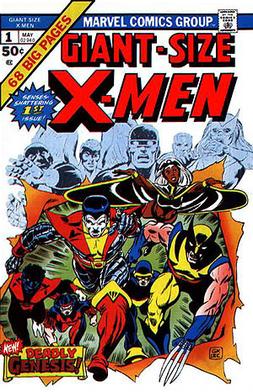
These are just some of the more than 350 characters, major and minor, created by Stan Lee.
Style, storytelling innovations and the Marvel Method
Stan Lee was not just a writer with a head full of character ideas: he revolutionised comics with the way he wrote, the language he used and, more than anything, his ability to forge a special bond with readers. He did this with dialogue that was slangy and funny, crammed with jokes and meta-humour.
Memorable catchphrases – from the Thing’s “It’s clobberin’ time!” to “Your friendly neighborhood Spider-Man” – contrast clearly with the stiff, old-fashioned style prevalent in comics at the time.
But Lee wasn’t afraid to use more sophisticated language, either: in an interview with The Atlanta Constitution, he explained that he “tried to use college-level vocabulary, or even above. We didn’t lose any younger readers at all. At worst, they had to use the dictionary a little.”
Lee published a monthly column called Stan’s Soapbox in Bullpen Bulletins. In these opinion pieces delivered as if chatting with a friend, he tackled themes like racism, war and diversity with a straight-forward but never preachy tone. In 1968, in one of his most famous Soapbox columns, he wrote:
“Racism and bigotry are among the deadliest social ills plaguing the world today. But, unlike a team of costumed supervillains, they can’t be halted with a punch in the snoot or a zap from a ray gun. The only way to destroy them, is to expose them – to reveal from the insidious evil they really are.”
To keep on top of his mountain of work, Lee adopted an approach that would become known as the Marvel Method. Instead of assigning each artist a scene complete with ready-written captions and dialogue (the standard approach at the time used by editors like Julie Schwartz at DC), Lee would speak to each artist and give them a brief summary (sometimes just something like “Reed and Sue argue”), and grant the artist complete freedom in creating the panels. It was only once the pages had been drawn and inked that Lee wrote the captions and speech bubbles.
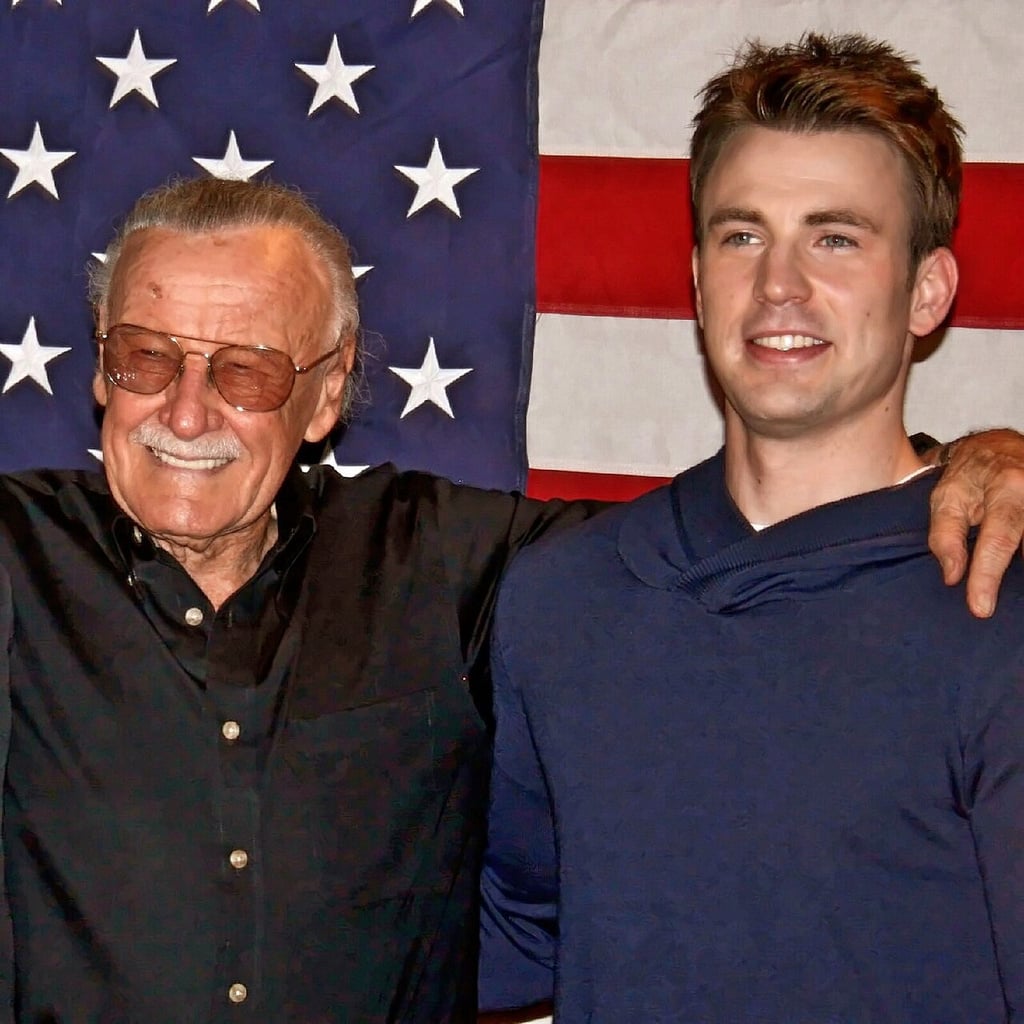
The Marvel Method might have been highly productive, but it had a flip side. Because plot lines came out of oral conversations with no written record, and because it was Lee who wrote in the final story, the actual paternity of the material was ambiguous. As a result, Lee fell out with many artists over authorship disputes.
While Lee was accused of passing off the work of others as his own, it’s also true that he introduced full credits at the beginning of every story – not just for the writer and artist, but for the inker and letterer too, at a time when they were almost always anonymous.
During the turbulent 1960s and 1970s, Lee took a stand on social issues like civil rights in his comics. In 1966, he and Kirby created The Black Panther, the first black superhero in mainstream American comics. And in 1969, together with Gene Colan, he introduced another, Falcon.
The Marvel editor-in-chief’s most curious entanglement with politics involved Spider-Man. In 1971, the US The Department of Health, Education, and Welfare asked Marvel to publish a story about the dangers of drugs. Lee agreed and penned a three-part series (The Amazing Spider-Man #96–98) in which Harry Osborn, a friend of Peter Parker, gets addicted to pills. The story is clearly and unambiguously anti-drugs. And yet the Comics Code Authority (CCA), the self-regulatory body set up by the comics industry in 1954, refused to sign off on the story because the rules forbade any depiction of drug use in any context. Backed by publisher Goodman, Lee decided to publish it anyway, without the CCA’s seal of approval. It was the first time in decades that a major publisher had done so. But the gamble paid off: copies flew off the shelves and the secular press applauded the decision. Noting its rival’s success, DC followed suit with a similar story in Green Arrow and Green Lantern. Not long afterwards, the Comics Code was reformed and the drugs ban lifted.
From writer to pop-culture icon
In 1972, Lee stopped writing monthly comics to take up the position of publisher at Marvel. Over the subsequent years, his role gradually changed as he became the company’s public face in the media and ambassador at conventions and conferences. It shifted again in 1981, when he moved to Los Angeles to develop Marvel’s intellectual property for cinema and television.
Results were modest at first, with just a few cartoons and TV shows making it onto the screen in the eighties. It wasn’t until the late nineties and early noughties that the hits started flowing with the likes of Blade (1998), X-Men (2000) and Spider-Man (2002). But the real cinematic triumph came in 2008 with the birth of the Marvel Cinematic Universe.
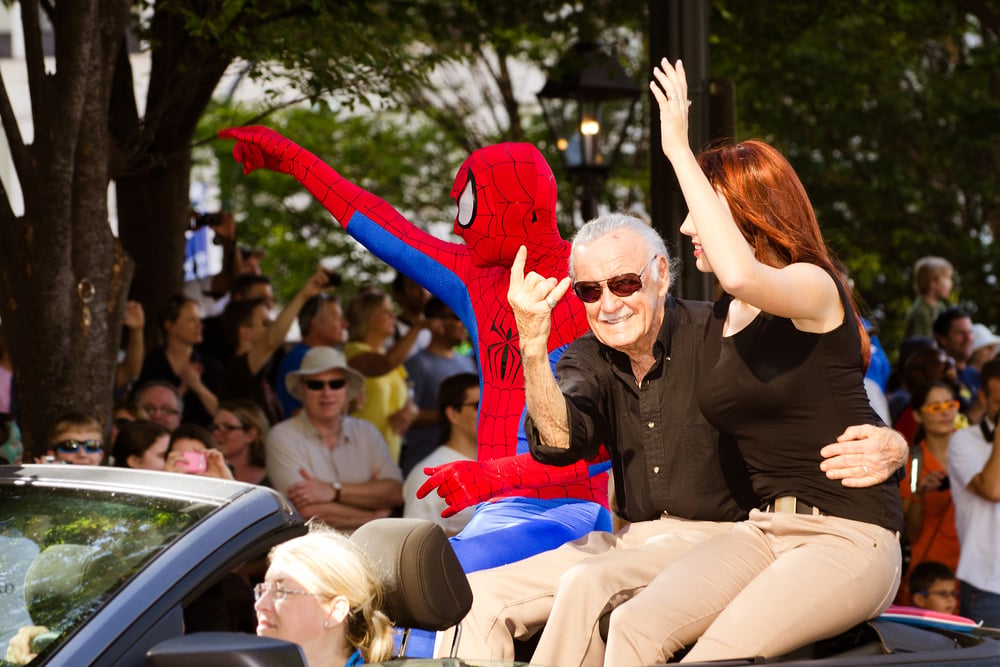
Lee made his first on-screen appearance in 1989 in the TV film The Trial of the Incredible Hulk, where he had a walk-on part as a juror. But from Iron Man (2008) onwards, he popped up in pretty much every MCU film with small, often self-deprecating roles. In one of his best-loved cameos, in the Fantastic Four (2005), Lee played Willie Lumpkin, a postman he originally created for a newspaper comic strip.
Stan Lee’s legacy
Stan Lee passed away on 12 Novembre 2018 at the age of 95. Two days earlier, his successor at Marvel, Roy Thomas, went to see him to discuss a book in the making. As they parted, Lee said: “God bless. Take care of my boy, Roy”. Many have interpreted “boy” as a reference to Spider-Man.
This iconic author leaves behind the idea of the imperfect superhero who is also fragile and human. It’s an intuition that forever changed mainstream American comics and remains the cornerstone for some of the most successful entertainment franchises in the world. Indeed, the Marvel Cinematic Universe, with revenues in the billions, still rests in large part on the characters and stories that Lee first brought to the page in 1960s New York.
Then there’s the concept of the shared universe, a narrative framework since imitated everywhere, from the cinema to video games. And we can’t forget the perennial debate on whether Lee really was a master storyteller or just a master self-promoter. The truth probably lies somewhere in between.
Editor’s note
The images used in this article are reproduced in accordance with the right to criticise and debate.
We strongly recommend purchasing and reading Stan Lee’s works and Marvel comics, thereby supporting the comic book industry.
Marvel Comics Italy website: https://www.panini.co.uk/shp_gbr_en/magazines-comics-books.html
Official Marvel website: https://www.marvel.com/comics